

Why does a wearable camera need a wide field of view, and what can be lost when FOV becomes too wide? Learn how coverage, detail, distortion and stabilization interact.
A wearable camera cannot rely on the user to frame every scene accurately.
That is why wide-angle imaging is common in body-worn and hands-free devices.
The Looki L1 is listed with a 109-degree field of view, which reflects the need to capture more surrounding context while the device is attached to clothing, a lanyard or another changing position.
But the correct engineering question is not:
Is 109 degrees wide enough?
The more useful question is:
Does the field of view capture the required activity area from the actual wearing position?
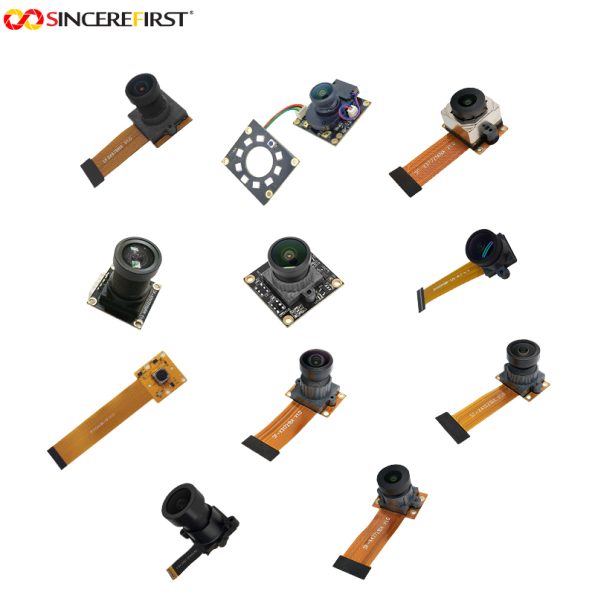
Wider Coverage Reduces Framing Dependence
A wide field of view gives the system a better chance of capturing:
- Nearby people;
- Hand movements;
- Objects on a desk;
- The direction of travel;
- Environmental context;
- Unexpected events outside the image center.
This is especially important when the device has no screen and the user cannot constantly check the composition.
Wider Coverage Can Reduce Useful Detail
A wider image does not automatically contain more useful information.
When the same image resolution covers a larger scene, fewer pixels may be available for each individual object.
This can affect tasks such as:
- Reading small text;
- Recognizing distant objects;
- Identifying fine product details;
- Capturing facial detail;
- Supporting AI classification of small targets.
A design intended for general memory capture may accept this trade-off. A device intended for inspection or recognition may not.
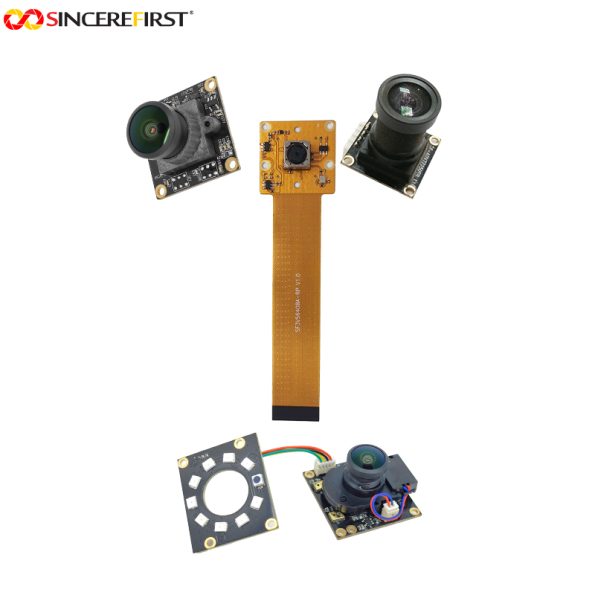
Edge Distortion Also Matters
Wide-angle lenses may introduce stronger distortion near the image edges.
Objects can appear stretched, curved or different in proportion from those near the center.
Software correction may improve the image, but it can also:
- Crop part of the original field of view;
- Reduce usable edge resolution;
- Increase processing demand;
- Change the final image dimensions.
The quoted optical FOV and the final usable FOV may therefore be different.
Stabilization Needs Image Margin
Electronic stabilization normally requires room to crop or shift the image.
If the full sensor area is already required to achieve the advertised field of view, stabilization may reduce the final visible area.
Developers should confirm:
- The optical field of view;
- The field of view after distortion correction;
- The field of view after stabilization;
- The field of view inside the final enclosure.
Wearing Position Changes Everything
A camera worn on the chest does not see the same scene as one worn near the collar.
Even a small mounting angle can change whether the image captures the user’s hands, the horizon, the floor or mainly the upper environment.
Testing should therefore include:
- Real mounting height;
- Real attachment angle;
- Different clothing;
- Walking and sitting;
- Indoor and outdoor use;
- Natural body movement.
For wearable imaging, field of view should not be selected from a number alone.
It should be validated against the real wearing position, target subject size, required detail, distortion tolerance and stabilization method.
A wider view is valuable only when the additional coverage remains useful.