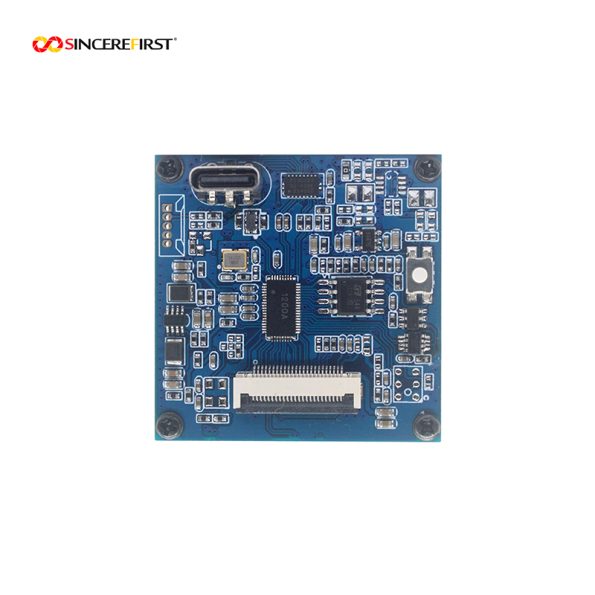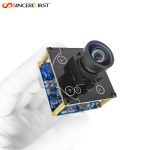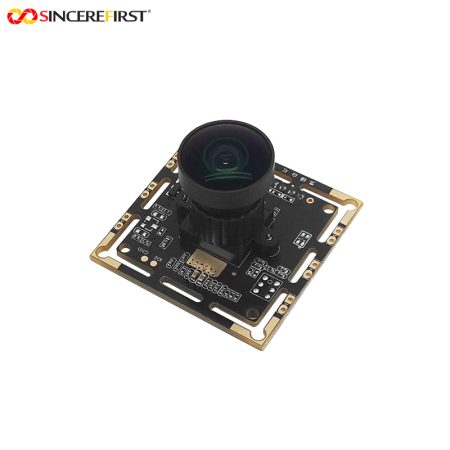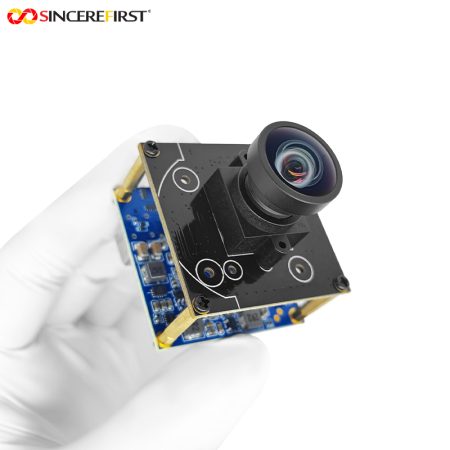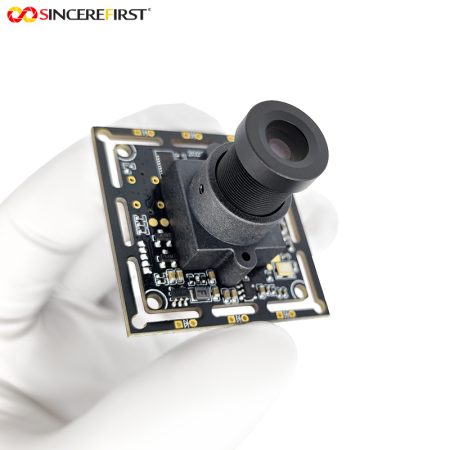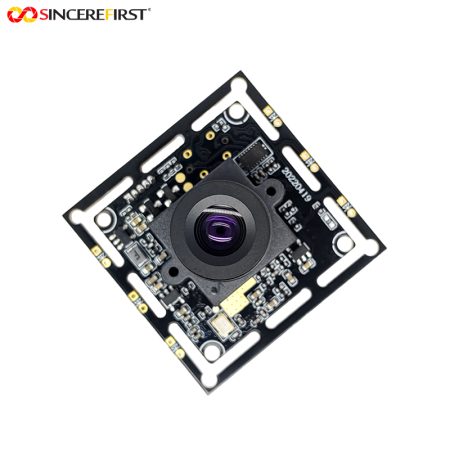

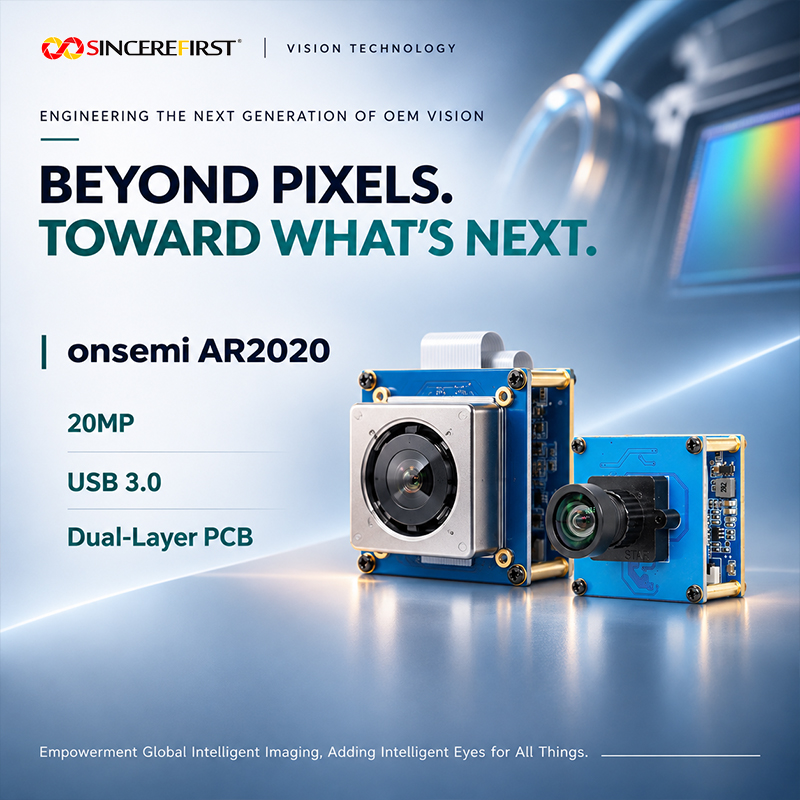
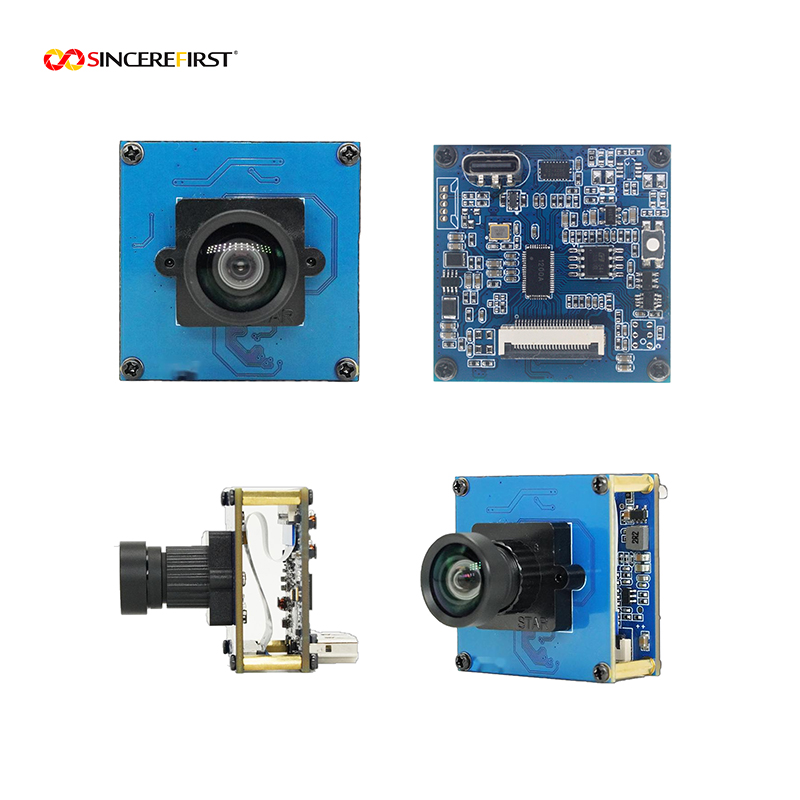
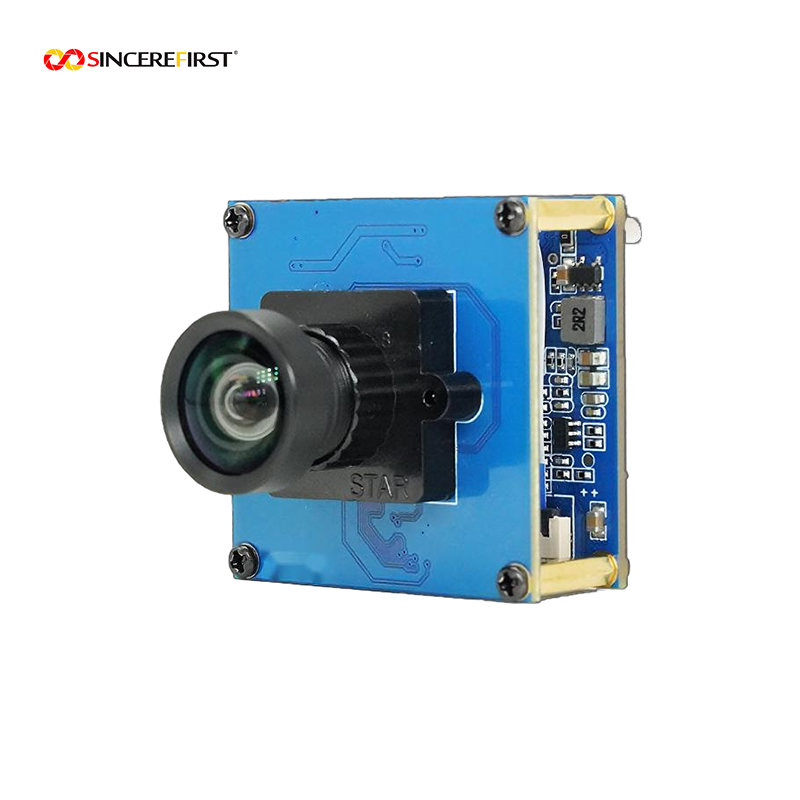
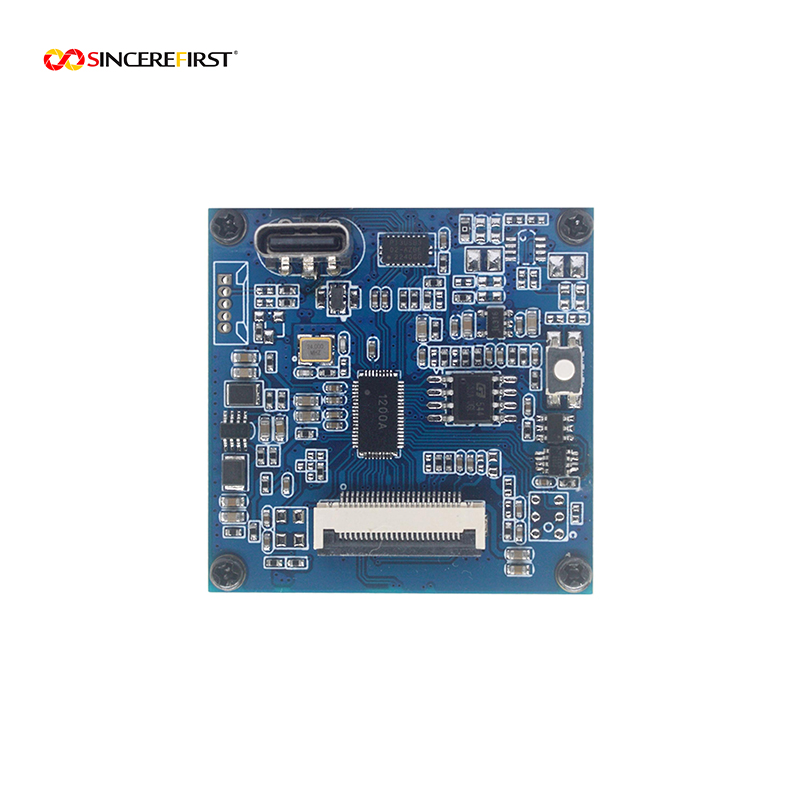
Onsemi AR2020 CMOS 20MP 4K FF USB 3.0 Camera Module for Label Verification and Assembly Inspection

$1.00

Capture label text and assembly details with an AR2020 20MP USB camera. Match M12 or C/CS optics to your inspection station with SincereFirst.

—————————————————————————————–
Price is for reference only. Please contact us for the latest quotation.

+ −
  • Onsemi AR2020 CMOS 20MP 4K FF USB 3.0 Camera Module for Label Verification and Assembly Inspection
    $1.00

    Request a Call Back

    • Onsemi AR2020 CMOS 20MP 4K FF USB 3.0 Camera Module for Label Verification and Assembly Inspection

      $1.00

      Ask a Question

        ... people are viewing this right now

        Share

      Introduction

      This manual-focus USB camera combines 5120×3840 image capture with support for 1/1.8-inch-format M12 and C/CS lenses. It gives fixed inspection and text-capture devices a starting platform for matching image detail to a defined working area. Separate 4K30 video, UVC integration and an optional waterproof housing address live viewing, host connection and installation needs.

      Applications in Real Devices

      Production Inspection Image-Capture Stations

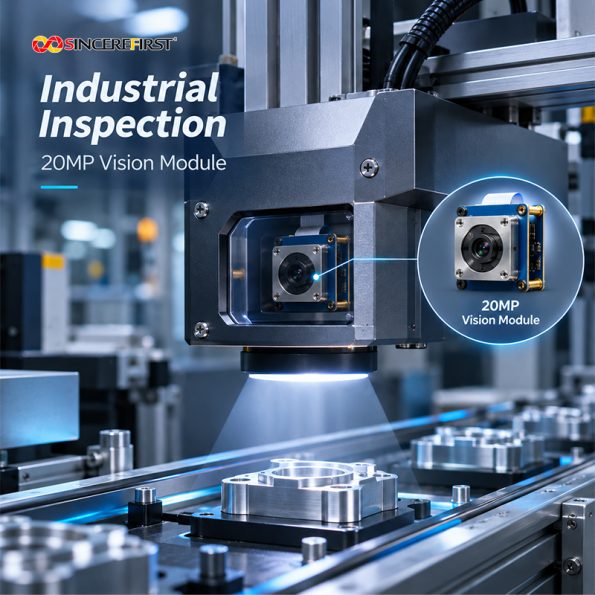
      A production station may need detailed records of a part for defect review or inspection-software development. A fixed camera and a repeatable part position allow the image to be concentrated on the required surfaces. The high-resolution mode is relevant when the part can be presented at a pace compatible with detailed acquisition, rather than assumed to suit every moving production line.

      Printed Label and Packaging Verification Stations

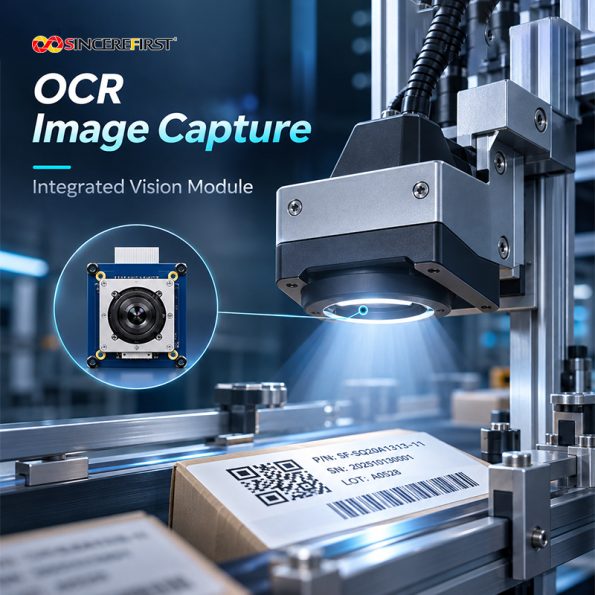
      An inspection device needs enough detail to distinguish small characters, printed symbols and other label elements within the complete package view. More pixels across that area can help retain those elements for host-side verification. The lens, print size and lighting must work together; the module itself does not perform OCR or decide whether a label is correct.

      Electronics Assembly Review Equipment

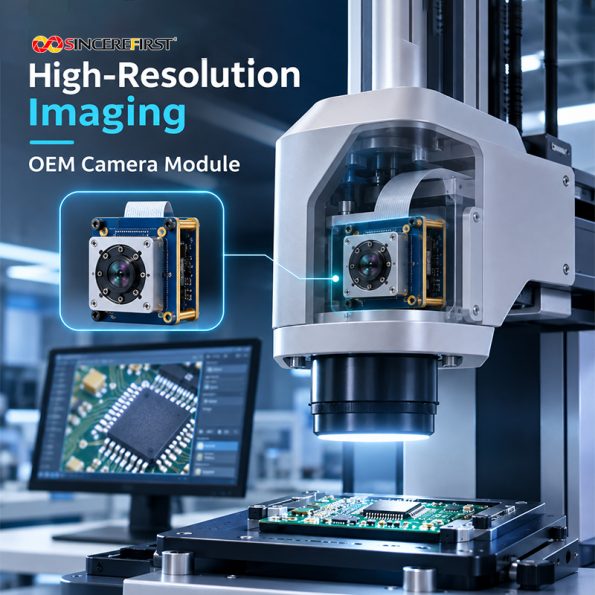
      A bench station may need to review component placement, connector seating or printed board markings from a repeatable camera position. Manual focus and a lens selected for the inspection area suit that arrangement. Image coverage should be based on the smallest feature that matters, rather than capturing the whole assembly so broadly that the relevant detail becomes too small.

      Overhead Document Capture Terminals

      A fixed document terminal needs text and fine graphics to remain useful across the page. 

      A high-resolution camera with optics chosen for that page area can supply detailed images to the host. This direction suits a repeatable document position where focus can be set during installation and the capture rate fits the handling workflow.

      Project Evaluation Guide

      • Start with the feature and the inspection area.
        Choose this direction when a defined surface must be captured in enough detail for review or host-side processing. Check the smallest text, mark or assembly feature across the complete view before deciding whether 20MP is sufficient.

      • Match acquisition rate and subject movement.
        The largest listed mode delivers up to 15fps in MJPG, while 4K delivers up to 30fps in MJPG. For continuously moving targets whose geometry must be preserved, a rolling-shutter camera needs separate assessment; a global-shutter product may be the more appropriate direction.

      • Check the installed optical and protection requirements.
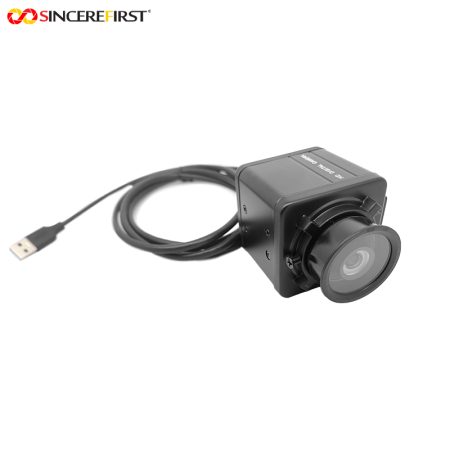
        The manual-focus configuration suits a known working position. Select a lens covering the 1/1.8-inch sensor and the required area, then include the complete lens assembly in the enclosure assessment. If water exposure is expected, specify the protection requirement for the optional housing; the bare board is not waterproof.

      How This Module Supports Device Requirements

      Sample Small Features Across a Defined Area

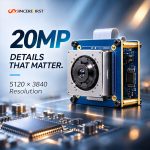
      The 5120×3840 output gives an inspection system a detailed image grid for labels, printed surfaces and assemblies. That sampling can be directed toward a small inspection region or a larger overall view through lens selection, with usable feature detail determined by the complete optical setup.

      Select Optics Around the Workstation

      Support for suitable M12 and C/CS lenses gives a project more than one route to the required field of view and working distance. This is useful when camera height is constrained by the equipment but the inspected area and feature size are already defined.

      Connect Detailed Acquisition to a USB Host

      USB 3.0 and UVC provide the connection path for live viewing and image acquisition. The supplied SDK and C++ acquisition examples can help start software integration, while the host application remains responsible for inspection, recognition and recording functions.

      Key Specifications

      Specification

      Details

      Model

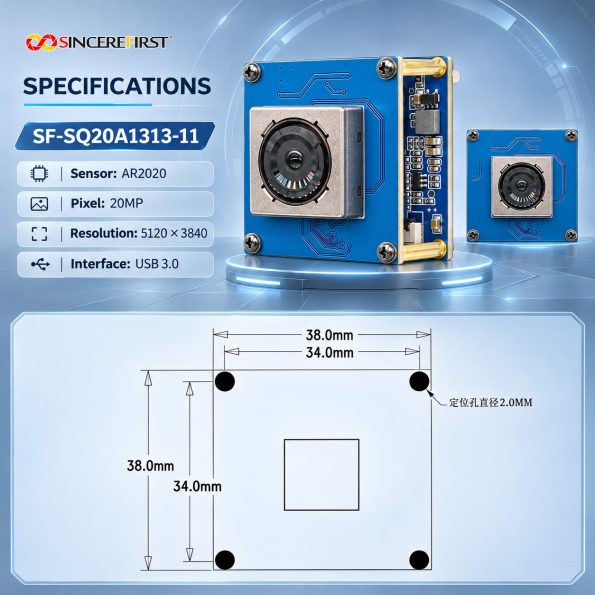
      SF-SQ20A1313-11

      Product Name

      Onsemi AR2020 4K NIR USB 3.0 Camera Module

      Sensor

      Onsemi AR2020 CMOS

      Resolution

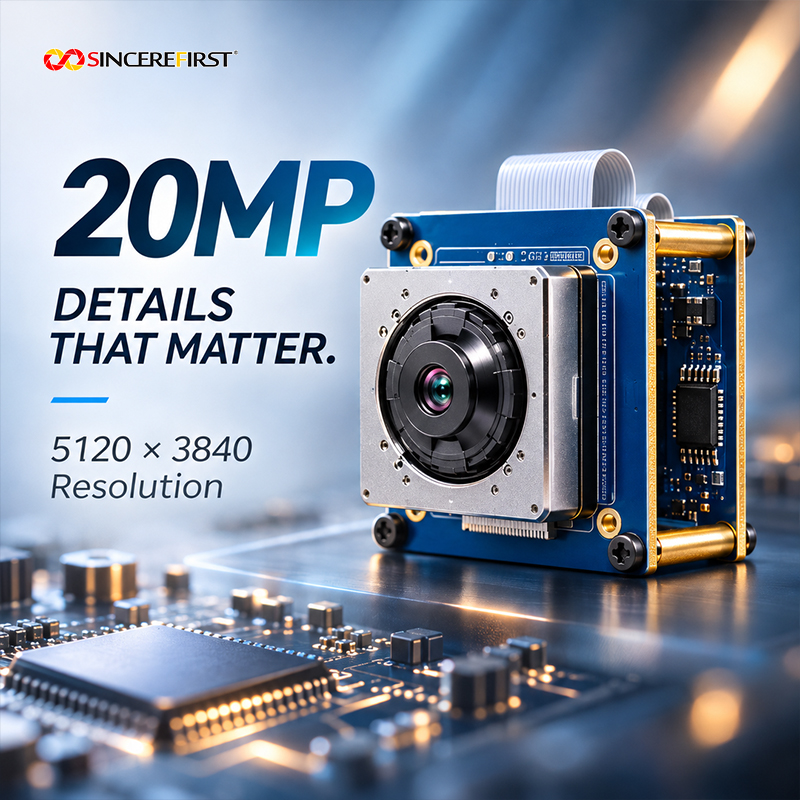
      20MP / 5120×3840

      Video Output

      3840×2160 at 30fps

      Sensor Size

      1/1.8 inch

      Pixel Size

       1.4×1.4μm

      Feature

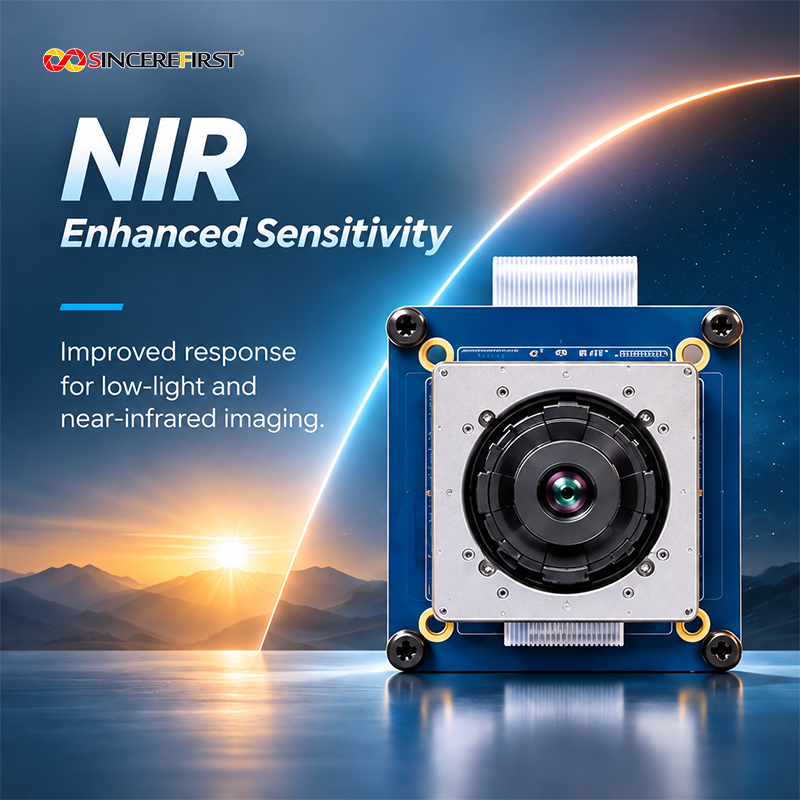
      Enhanced NIR

      Output Format

      MJPG / YUY2

      Focus

      Autofocus / Fixed Focus

      Focus Range

      1cm–Infinity

      Structure

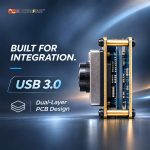
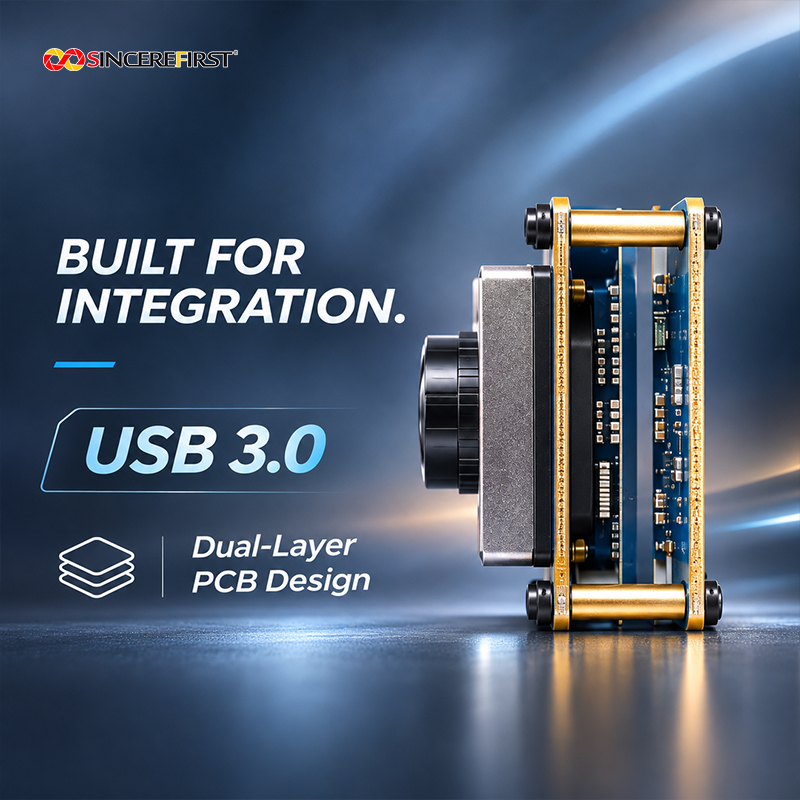
      Double-layer PCB Board

      Module Size

      38×38mm

      Protocol

      UVC

      Interface

      USB 3.0 Type-C

      SincereFirst Customization

      Lens and Filter Configuration

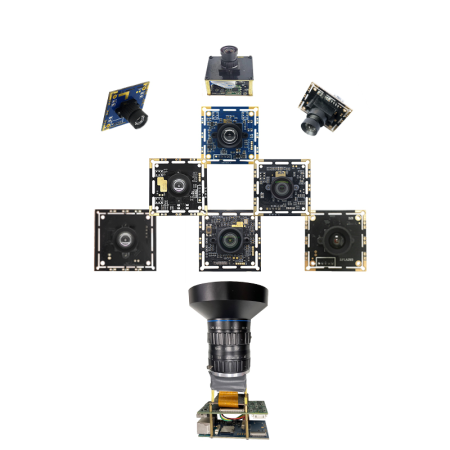
      SincereFirst can assess suitable M12 or C/CS optics around the working distance, required field of view and feature size. Filter alternatives can be considered when the inspection lighting or required color rendering calls for a change from the factory IR650 configuration.

      Mechanical Fit and Protective Housing

      The standard 38×38mm double-layer board can be assessed with the lens, mounting positions, connector access and cable route. A waterproof housing is an available option; its suitability depends on the required exposure conditions and the completed assembly, without an unspecified IP rating being assumed.

      Electrical and Lighting Integration

      Power requirements and illumination coordination can be assessed for the selected camera hardware and inspection station. This is useful where the camera must operate alongside station lighting and other electronics within a defined equipment layout.

      Firmware and Image-Processing Configuration

      Image tuning, supported output settings and UVC host integration can be scoped around the inspection workflow. LI-HDR implementation is a separate customization direction requiring work on the camera’s imaging pipeline; the standard module’s listed output modes do not establish its customized HDR performance.

      Final configuration should be validated with the actual host platform, enclosure, optics, software, and lighting environment before sampling.

      FAQ

      Is LI-HDR available in the standard USB camera?

      No. The AR2020 sensor supports LI-HDR, but it has not been implemented in this standard module. SincereFirst can provide customization support for projects that need it. The required contrast handling, output mode and host workflow should define that scope; standard-module frame rates should not be assumed to apply to the customized HDR mode.

      Can an existing inspection lens be reused?

      It may be suitable if its mount, sensor coverage and optical performance match the camera and the required view. An M12 or C/CS designation alone is not enough: check the lens’s image circle, working distance and ability to resolve the required features. SincereFirst can assess a lens specification or sample as part of the camera configuration.

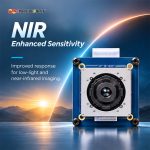
      Can the camera use the near-infrared lighting already installed in our inspection station?

      The sensor’s enhanced NIR response makes this a configuration worth assessing, but it does not establish compatibility with the existing light source. Start with its wavelength and the light available at the target, then match the lens and filter transmission. The standard camera uses an IR650 filter; a project filter configuration may be needed. For a station that also judges visible colors, include that requirement when selecting the optics.

      Build the Camera Around Your Inspection Area

      Send SincereFirst the inspected area, the smallest feature you need to see and the available camera position. We can help select the lens and filter configuration, then assess mounting, housing and host integration for your sample setup.

      Send Inquiry

        Close
        Close My Cart
        Close Recently Viewed
        Close
        Close
        Categories