
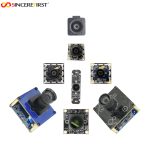

A camera module fails in the field far more often because of a small interconnect issue than because of the sensor itself. For product teams building medical devices, robots, handheld systems, security equipment, or industrial machines, choosing the right camera module connector supplier is not a purchasing detail. It is a design decision that affects signal integrity, assembly yield, maintenance, and long-term product stability.
Connectors sit at the point where optics, electronics, mechanics, and manufacturing all meet. If the connector is underspecified, difficult to assemble, or inconsistent across batches, the entire imaging system becomes harder to scale. That is why experienced OEM teams evaluate connector suppliers with the same discipline they apply to sensors, lenses, and image processing hardware.
What a camera module connector supplier actually needs to deliver
At a basic level, a supplier must provide the right connector type, pitch, mating durability, and electrical performance for the camera design. In practice, that is only the starting point. A qualified camera module connector supplier should also understand how the connector behaves inside a real camera system, not just on a datasheet.
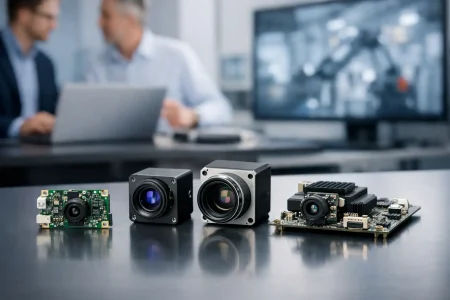
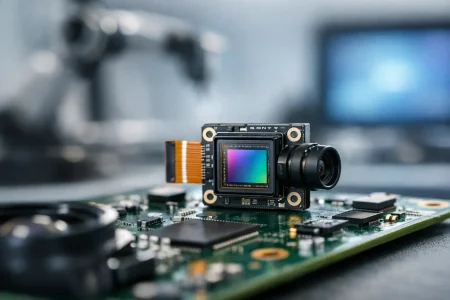
For embedded imaging products, the connector choice affects board space, cable routing, EMC behavior, insertion force, and tolerance stack-up. A compact MIPI module in a robotics housing has very different connector constraints from a USB camera module used in industrial inspection. The same is true for endoscope modules, medical imaging assemblies, and FPC-based systems where repeated bending or tight enclosures create additional risk.
That is why supplier capability matters as much as part availability. If a supplier can discuss interface matching, cable length limits, shielding considerations, and assembly process windows, they are operating as an engineering partner. If they can only quote part numbers, they are a parts broker.
Evaluate the connector in the context of the camera module
The most common sourcing mistake is treating the connector as an isolated component. In reality, it should be qualified as part of the complete camera path, including sensor output, PCB layout, cable structure, and final device enclosure.
Signal requirements come first
High-speed camera interfaces such as MIPI CSI-2 are far less forgiving than many buyers expect. Connector geometry, contact quality, impedance consistency, and cable design all influence performance. A connector that works in a low-data-rate prototype may become unstable in mass production when cable routing changes or environmental stress increases.
For DVP and USB camera modules, the failure modes are different but still significant. You may see intermittent contact, power instability, data errors, or reduced durability under vibration. A capable supplier should be able to explain where the connector sits in the signal chain and what design limits apply.
Mechanical fit is not a minor issue
In compact products, the connector often determines whether the module can be assembled efficiently at all. Mating height, locking method, insertion direction, and cable exit angle directly affect enclosure design and production workflow. If operators need excessive force to connect the cable, or if the latch is prone to damage, production yield suffers.
This is especially relevant in products that use very small camera modules or irregular internal geometries. In those cases, customization may be more valuable than choosing a standard connector that almost fits.
What to ask a camera module connector supplier
The right questions quickly separate an engineering-led manufacturer from a trading company.
Start with material and plating consistency, contact resistance, and cycle life. Then move into dimensional tolerance control, coplanarity, and process capability. If the supplier cannot provide clear answers on these fundamentals, scaling the program will be risky.
Next, ask how the connector is validated in production. Is there incoming inspection for contact geometry? Are there test standards for insertion and retention force? How is lot-to-lot consistency managed? Buyers in regulated or quality-sensitive markets should also ask about traceability and change control. A small undocumented material substitution can create large problems months later.
It is also worth asking whether the supplier supports co-development. Many camera programs do not fail because the original concept is wrong. They fail because the interconnect was chosen too late, after the mechanical stack and PCB layout were already fixed. A supplier that can review drawings, recommend pin definitions, and align connector selection with the module architecture can reduce redesign cycles.
Manufacturing capability matters more than catalog breadth
A broad catalog can look impressive, but serious buyers usually care more about process control and repeatability. A supplier with strong engineering, tooling discipline, and stable production quality is more valuable than one with hundreds of connector variants and inconsistent execution.
This is where manufacturing depth becomes visible. Clean production conditions, precision assembly, inspection systems, and documented quality procedures all influence connector reliability. For buyers planning an OEM or ODM program, speed also matters. Fast samples are helpful, but only if the sample build reflects real production capability.
An experienced manufacturer should be able to support the full path from prototyping to ramp-up. That includes sample turnaround, pilot build support, and volume manufacturing with consistent electrical and mechanical performance. For customers launching commercial hardware, that continuity reduces risk far more than a low initial unit price.
Custom versus standard connector supply
There is no universal rule here. Standard connectors are often the fastest route when the camera module is being integrated into a straightforward design with known interface requirements. They can shorten validation time and simplify sourcing.
Custom or semi-custom solutions become attractive when space is limited, the environment is harsh, or the camera system has unusual routing or durability demands. Medical devices, wearable systems, industrial automation equipment, and compact robotics frequently fall into this category. In these applications, a connector that is optimized for the exact cable path and module layout can improve both performance and manufacturability.
The trade-off is obvious. Customization requires more engineering coordination and often longer front-end development. But when a product is headed for volume production, that extra effort can pay back through lower defect rates, easier assembly, and fewer field returns.
Warning signs during supplier qualification
A weak supplier usually reveals itself early. One warning sign is vague technical communication. If every answer stays at a sales level and no one can discuss impedance, pin mapping, tolerance control, or mating reliability, the support will likely be limited once issues appear.
Another warning sign is inconsistent documentation. Drawings, specs, and test data should align. If dimensions change between revisions without explanation, or if qualification reports are incomplete, the buyer is being asked to absorb unnecessary risk.
Pricing can also be misleading. A connector that appears cost-effective on paper may create hidden cost through assembly difficulty, inconsistent contact quality, or unstable lead times. Procurement teams know this already, but it is worth stating clearly: total cost is measured across yield, support, inventory planning, and field reliability, not just piece price.
Why integration experience gives a supplier an edge
A supplier that works across camera modules, optics, cables, and embedded imaging systems generally makes better connector recommendations than one focused only on interconnects. That broader perspective matters because connector decisions are rarely independent. They affect image quality indirectly through power delivery, signal stability, and module packaging.
For example, a machine vision project may require a compact connector with strict routing limits inside an industrial enclosure. A medical imaging program may need a small-diameter assembly with tight mechanical tolerance and dependable repeatability over many cycles. In both cases, the supplier needs to understand the camera module as a working subsystem, not just a BOM line.
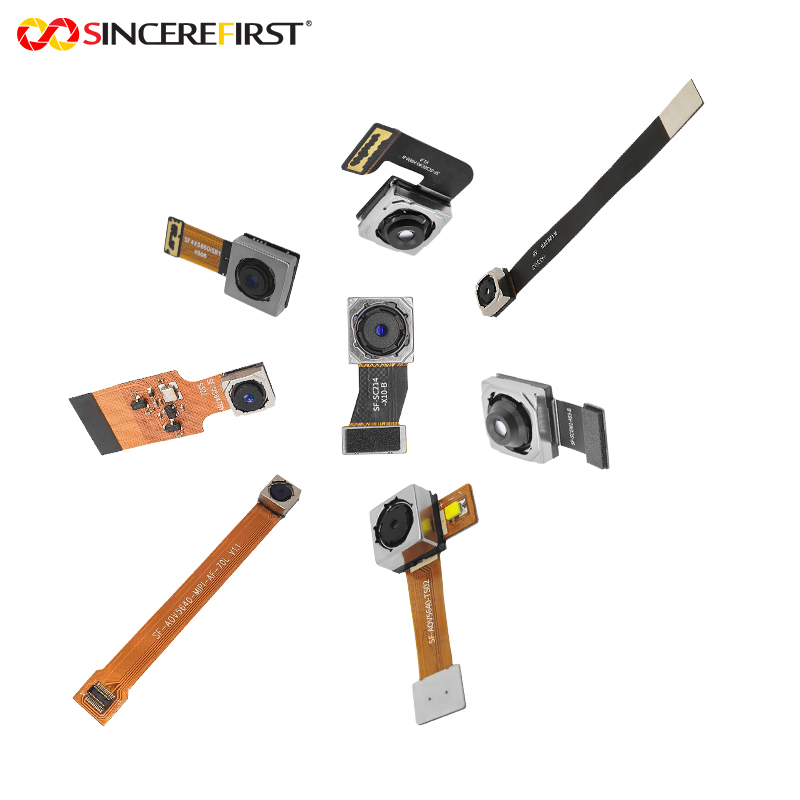
This is one reason many OEMs prefer manufacturing partners that can support both standard module supply and custom development. The engineering conversation becomes faster, and trade-offs are addressed earlier. A company such as SincereFirst, with long-term imaging R&D, high-volume manufacturing, and customization capability across camera modules and connectors, fits that model well when buyers need more than off-the-shelf sourcing.
Choosing for the next product, not just the current build
The best supplier choice holds up after the prototype stage. A connector that works for ten engineering samples may still become a problem at 10,000 units if the tolerance window is too tight or the supply chain is unstable.
That is why forward-looking teams ask about capacity, tooling life, EOL planning, and revision control before they finalize the source. They also evaluate how responsive the supplier is when requirements change. In real hardware programs, requirements almost always change.
A dependable camera module connector supplier should help you reduce risk, not just ship parts. That means consistent product quality, practical engineering input, predictable lead times, and the manufacturing discipline to support volume without performance drift.
When the connector is selected with that standard in mind, the camera system becomes easier to build, easier to scale, and far more likely to perform as designed in the real world. That is the kind of decision that protects a product launch long before anyone sees the first image.