

A traffic camera that misses plates at dusk, a parking system that fails in rain, or a roadside unit that overheats in summer all point to the same issue: the smart city imaging module was not matched to the real deployment environment. In municipal infrastructure, imaging performance is not judged in a lab. It is judged at intersections, curbsides, stations, tunnels, and perimeter zones where lighting changes fast, maintenance windows are limited, and failure has a direct operational cost.
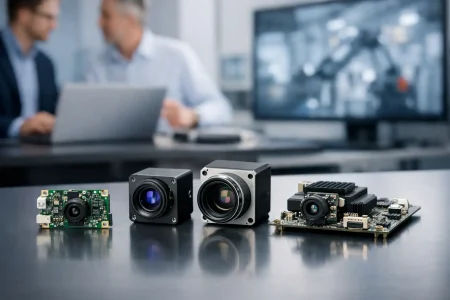
For OEMs, system integrators, and public infrastructure developers, the camera module is not just a component. It is the sensing foundation behind traffic analytics, public safety monitoring, smart parking, waste management, environmental observation, and machine vision at the edge. Choosing the right module means balancing sensor performance, interface constraints, enclosure limits, AI workload, and long-term manufacturing stability.
What a smart city imaging module needs to do
A smart city imaging module has a broader job than a standard embedded camera. It may need to identify vehicles under mixed lighting, read signs in motion, support occupancy detection, or feed analytics models running on edge processors. In many deployments, it also has to operate for years with minimal intervention.
That shifts the buying criteria. Resolution matters, but only when the optical format, frame rate, pixel size, and lens pairing support the actual scene. A 13MP module sounds attractive on paper, yet a lower-resolution sensor with larger pixels may perform better for low-light traffic monitoring or street-level event detection. The right answer depends on mounting height, target distance, field of view, compression strategy, and whether the image is for human viewing or algorithmic inference.
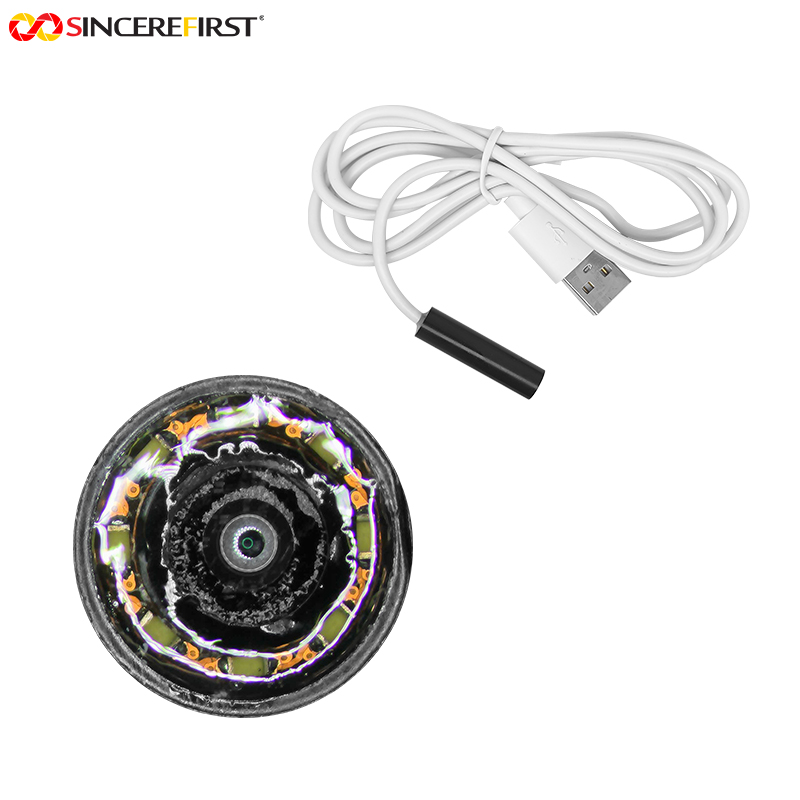
Interfaces matter just as much. MIPI camera modules are often preferred in compact embedded designs with tight latency and power targets. USB modules can simplify prototyping and speed up validation for edge gateways or industrial PCs. DVP still has a place in simpler legacy architectures, but it is rarely the first choice for advanced city systems with higher data demands.
Image quality is only useful if it survives the field
In smart infrastructure, image quality is not a static specification. It is a system result. Sensor selection, ISP tuning, lens quality, infrared behavior, housing design, and thermal management all influence whether the final output is usable.
Low-light and high-contrast scenes
City environments create some of the hardest imaging conditions. Headlights, reflective plates, shadowed sidewalks, and direct sun in the same frame can break weak camera designs. Wide dynamic range is often essential, but the implementation matters. Some sensors handle moving objects under HDR better than others. If the application includes vehicle capture, pedestrian recognition, or curbside analytics, motion artifacts can become a serious problem.
Low-light performance also needs a practical review. Buyers should look beyond lux claims and ask what the module can actually deliver at the target shutter speed. A camera that produces a bright image at long exposure may still fail in a moving traffic scene. Pixel size, sensor architecture, lens aperture, and noise reduction tuning all affect the result.
Optical design and mechanical fit
Lens selection is often underestimated early in development. In a smart city deployment, focal length, distortion profile, CRA matching, and IR response can determine whether the analytics engine sees useful data or edge noise. A wide-angle lens may cover more space, but it can also reduce pixel density on the target. That trade-off matters for license plate capture, occupancy verification, and object classification.
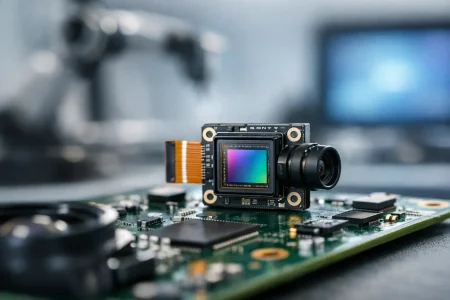
Mechanical constraints are equally real. Roadside equipment, kiosks, charging terminals, and access control units usually have strict size and thermal limits. The imaging module must fit the enclosure, align with the protective window, and maintain stability under vibration and temperature swing. A module that performs well on a bench can fail after integration if connector orientation, FPC routing, or heat buildup are ignored.
The smart city imaging module and edge AI
More city systems now process images locally to reduce bandwidth, improve response time, and support privacy-focused architecture. That changes module requirements. The camera is no longer feeding only a recorder. It is feeding a model.
For edge inference, stable image output is often more valuable than maximum resolution. Consistent color response, controlled noise, predictable exposure, and low latency help models perform reliably across conditions. If the module output shifts too much between day and night, seasonal weather, or hardware batches, detection accuracy can drop even when the nominal specifications remain unchanged.
This is where customization becomes valuable. Tuning image parameters for a fixed use case, such as lane monitoring, bin fill detection, or parking occupancy, can improve downstream analytics more than simply increasing megapixels. In many projects, sensor-lens-ISP co-optimization delivers a better field result than choosing the highest published spec.
Reliability, supply continuity, and qualification
Municipal and infrastructure programs move slower than consumer electronics, but once approved they often require years of supply consistency. That makes supplier capability a major part of camera module selection.
A qualified imaging partner should be able to support sample iteration, interface adaptation, connector changes, optical tuning, and volume manufacturing without restarting the design every few months. Buyers should also evaluate production controls, cleanroom standards, module alignment processes, and outgoing quality inspection. In smart city deployments, inconsistency between batches can create major service and recalibration costs.
Component lifecycle planning is another issue that deserves attention early. Sensor availability, ISP roadmap, and connector standardization can directly affect the long-term viability of a project. A low-cost module is less attractive if it forces a redesign in 18 months. For smart city OEMs and integrators, production stability is not a purchasing detail. It is part of system risk management.
Customization usually beats off-the-shelf alone
Standard modules are useful for early testing and fast proof-of-concept work. They reduce development time and help teams validate image direction quickly. But many smart city applications eventually need customization to meet enclosure, optics, interface, or performance targets.
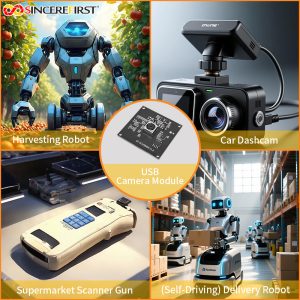
A few common examples make this clear. A parking guidance system may need a specific field of view and cable layout. A roadside AI unit may require a compact MIPI module with low power draw and tuned HDR behavior. A public kiosk may need a USB camera module with fixed-focus optimization, anti-glare tuning, and mechanical reinforcement. These are not exotic requests. They are normal deployment realities.
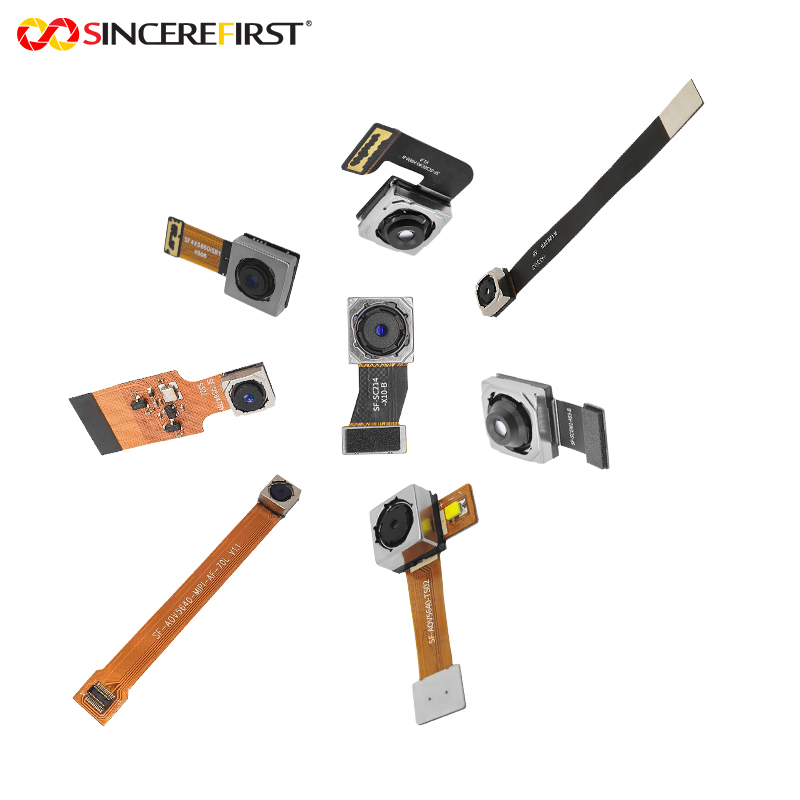
That is why engineering support matters as much as product range. A manufacturer with experience across FPC, MIPI, DVP, and USB camera modules can often shorten the path from concept to qualified unit. When the same partner can also support optical adjustment, connector customization, and scaled production, the handoff between prototype and mass manufacturing becomes much cleaner.
How buyers should evaluate a smart city imaging module
The fastest way to make a poor camera decision is to compare only resolution and price. A better process starts with the scene and the system goal. What is the target object size? How far is it from the lens? What lighting failures are most likely? Is the output for recording, real-time alerts, or AI inference? How much bandwidth and compute are available?
From there, evaluate the module as part of the full imaging chain. Check sensor type, lens fit, distortion behavior, dynamic range, interface, power, board size, thermal profile, and software support. Ask for test samples under realistic conditions, not just indoor demo images. A capable supplier should be ready to discuss ISP tuning, integration constraints, and production repeatability in detail.
For teams building at scale, responsiveness also matters. Fast sample turnaround, practical engineering communication, and manufacturing depth can save months in a city infrastructure project. SincereFirst operates with that model in mind: combining standard embedded vision modules with custom development support for commercial systems that need precision, consistency, and production readiness.
Smart city imaging works best when the module is chosen for the deployment, not for the brochure. The most effective design is usually the one that keeps delivering clean, stable, usable image data long after installation, when weather changes, traffic builds, and the system still has to perform.