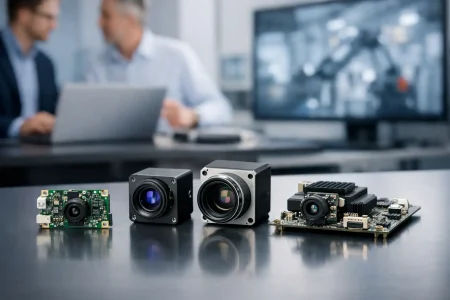

A camera module that looks good on a spec sheet can still fail inside a finished product. The trouble usually shows up late – weak low-light output, thermal drift, mechanical fit issues, interface instability, or image tuning that does not match the actual use case. That is why oem camera module development has to be treated as a system-level engineering process, not a simple component purchase.
For product teams building medical devices, robotics platforms, handheld terminals, smart security equipment, or industrial vision systems, the camera module sits at the intersection of optics, electronics, firmware, mechanics, and manufacturing. A supplier that only ships standard modules may help with sourcing, but not necessarily with integration risk. Real development work starts when the imaging target, host platform, enclosure limits, and production plan are all considered together.
What OEM camera module development really involves
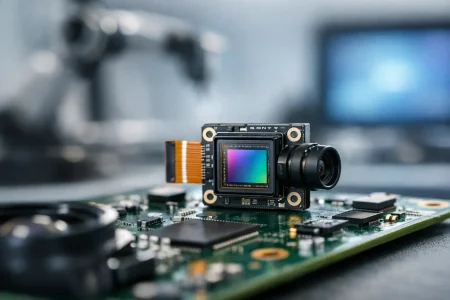
At the early stage, buyers often focus on headline specs such as resolution, sensor size, field of view, or interface type. Those parameters matter, but they rarely tell the full story. In practice, camera performance depends on how the sensor, lens, image signal path, PCB layout, connector, cable, housing, and tuning profile work together under real operating conditions.
OEM camera module development usually begins with application definition. An autofocus consumer module may be wrong for a fixed-focus barcode device. A high-resolution sensor may create bandwidth problems on an embedded platform. A tiny endoscope design may need unusual stack-up constraints, heat control, and illumination coordination. In machine vision, consistency can matter more than maximum pixel count.
This is where experienced engineering support changes the project timeline. If the development partner can evaluate sensor options, lens combinations, interface constraints, board shape, and production feasibility at the same time, the team avoids rework that otherwise appears during EVT, DVT, or pilot builds.
The design decisions that shape module performance
Sensor selection is often the first major decision, but it should not be made in isolation. A 2MP sensor may be enough for presence detection in industrial automation, while a medical imaging tool may require higher resolution, better color reproduction, and tighter image uniformity. Global shutter versus rolling shutter is another classic trade-off. Global shutter helps with motion capture and machine vision accuracy, but it can raise cost and narrow the field of suitable lens and board configurations.
Lens choice is equally decisive. Field of view, distortion, relative illumination, chief ray angle compatibility, and depth of field all affect image usability. A wide-angle lens may solve framing requirements but introduce edge softness or distortion that complicates downstream algorithms. A narrow lens may improve detail but reduce installation tolerance. If the final device works at a fixed distance, a locked-focus optical path often delivers better consistency in production than a general-purpose setup.
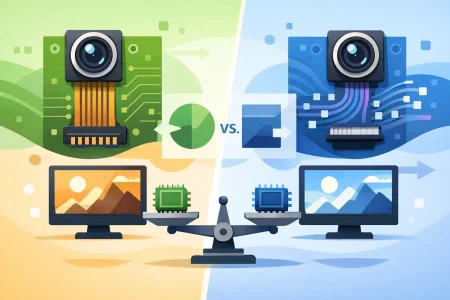
Interface planning is where many projects either stay efficient or become expensive. MIPI is common for embedded devices that need compact integration and low latency, but it demands host-side compatibility and careful signal design. USB camera modules are easier to bring up and are often practical for external devices, diagnostics, and rapid validation. DVP still has a place in some legacy or cost-driven designs. The right choice depends on processor support, cable length, EMI conditions, throughput, and software resources.
Mechanical constraints also shape success more than many buyers expect. Module outline, lens height, connector orientation, FPC routing, shielding, adhesive selection, and mounting tolerances all influence assembly yield. A module that works on a bench may become unstable once squeezed into a sealed enclosure exposed to vibration or temperature cycling.
Why prototyping speed matters in OEM camera module development
Camera projects lose time in small but painful ways. A module clears the electrical test, then the lens holder conflicts with the industrial design. The image is sharp at center but not at the working distance. The host board accepts the sensor, but startup timing is unstable. Each correction seems minor, yet together they stretch launch schedules.
Fast prototyping matters because imaging problems are easier to fix before the enclosure, firmware, and production tooling are locked. In effective oem camera module development, the prototype stage is not just about proving that a camera can output an image. It is about confirming fit, interface behavior, image tuning, thermal response, and manufacturability under the intended application conditions.
This is especially critical in sectors where validation windows are tight. Medical and industrial customers often need repeatable image output, long-term supply confidence, and controlled change management. Robotics and smart device teams may move faster, but they still need predictable engineering response when revisions are required. A supplier with both module design capability and factory execution can usually move from concept to sample with fewer handoff delays.
From sample approval to mass production
A strong development sample is only the midpoint. The harder question is whether the approved design can be built consistently at volume. That depends on process control, optical alignment discipline, component sourcing stability, and inspection standards.
For camera modules, manufacturing quality is not just electrical pass or fail. Lens alignment, sensor bonding accuracy, dust control, focus locking, color consistency, and connector reliability all affect field performance. Cleanroom production, calibrated test procedures, and defined outgoing inspection matter because minor process drift can create visible image variance.
Buyers evaluating an OEM partner should look beyond catalog breadth. The useful questions are practical. Can the supplier support custom PCB shapes and connector positions? Can they tune for a specific working distance or lighting condition? How quickly can they build revised samples? Do they have the capacity to hold quality when volumes rise from pilot quantities to full production? Can they support long lifecycle products with controlled revisions?
Those questions matter because many commercial devices are not built around off-the-shelf conditions. A warehouse scanner, surgical imaging handle, agricultural smart sensor, or in-vehicle vision unit may all require a different balance of compactness, sensitivity, durability, and interface behavior. Manufacturing discipline is what turns that custom balance into a repeatable product.
Matching development to the application
Different sectors place different demands on camera architecture. In industrial automation, image repeatability, low distortion, and stable integration with embedded processors are often more valuable than consumer-style image enhancement. In healthcare and endoscopic systems, size, illumination coordination, biocompatible design constraints, and consistent color response can become primary engineering concerns. Security and smart city devices may prioritize low-light capture, thermal durability, and long cable or interface stability. Robotics teams often need low latency, synchronized capture, and a module footprint that fits tightly packed hardware.
That is why a generic recommendation rarely works. The best path depends on the exact operating distance, target object, lighting environment, enclosure design, processor platform, and expected production volume. An engineering-led manufacturer will usually narrow the design faster by asking those application questions up front rather than pushing a standard module into every use case.
For buyers comparing suppliers, this is also where responsiveness becomes measurable. A serious partner can discuss sensor alternatives, lens trade-offs, ISP behavior, and board-level constraints in concrete terms. They can explain why a smaller module may increase thermal sensitivity, why a wider field of view may reduce edge performance, or why a lower-cost sensor may create more software compensation work later.
How to evaluate an OEM camera module development partner
The right partner should reduce risk, not just quote a part number. Technical depth matters, but so does production credibility. A capable manufacturer should be able to support concept review, prototype iteration, image tuning, reliability validation, and high-volume execution within one organized workflow.
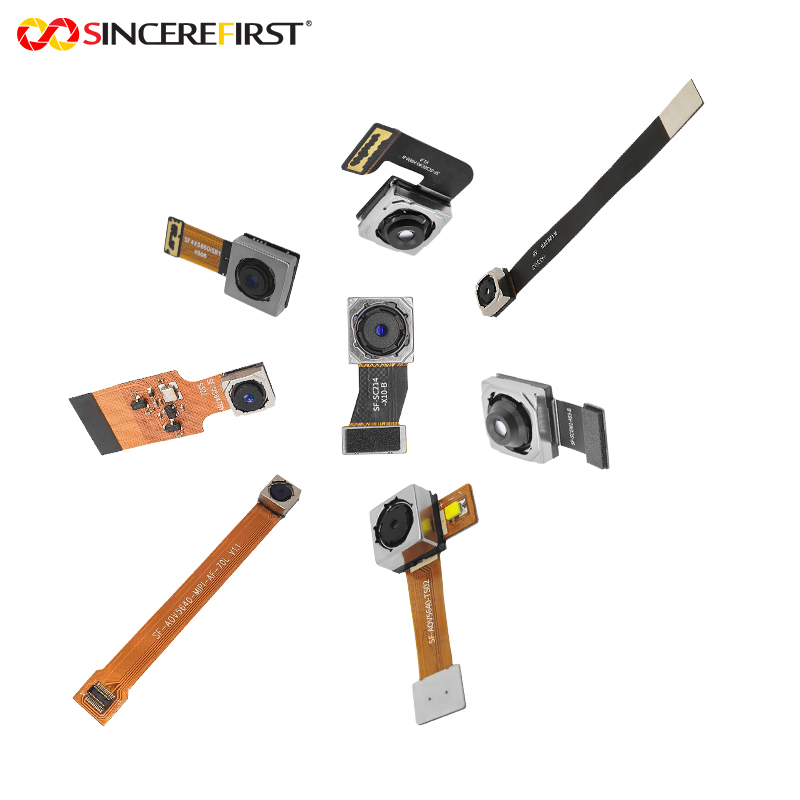
It also helps when the supplier can support multiple interfaces and module types rather than steering every project toward one familiar platform. Flexibility across MIPI, USB, DVP, FPC, UVC, medical, and embedded machine vision modules gives the customer more room to optimize the final device instead of compromising around supplier limitations.
For many OEMs and integrators, the best supplier is the one that can bridge engineering and operations. SincereFirst is positioned around that model: custom development, broad camera module coverage, fast sample response, and scaled manufacturing support for embedded and intelligent imaging products. That combination is often what keeps a camera program on schedule when requirements shift between prototype and launch.
A camera module should fit the product, the host system, and the production plan at the same time. If your team treats development that way from day one, you are far more likely to end up with an imaging system that performs reliably long after the first sample looks good.