
A camera module that looks perfect on paper can still delay your product by months. The usual failure points are not only image quality or sensor choice. They show up later – unstable supply, weak ISP tuning support, connector changes, inconsistent assembly, and slow response when your team needs a design revision. That is why choosing a mipi camera module supplier is a product decision, not just a sourcing task.
MIPI camera modules are deeply tied to system architecture. They affect image performance, thermal behavior, power consumption, PCB layout, cable routing, mechanical fit, and software integration. If the supplier cannot support those realities, a low unit price quickly becomes expensive.
What a MIPI camera module supplier should really provide
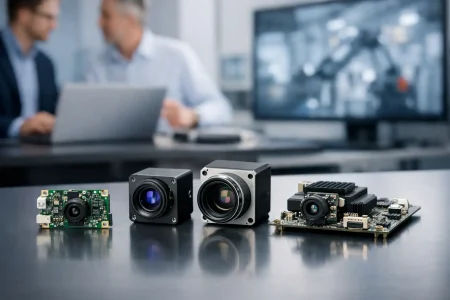
A qualified mipi camera module supplier should do more than quote a part number and ship samples. In embedded vision projects, the supplier becomes part of the engineering chain. That means they need the capability to align optics, electronics, manufacturing, and customization around your device requirements.
For a product manager, that usually means reducing project risk. For an R&D engineer, it means getting practical support on sensor selection, lens matching, interface compatibility, and bring-up. For procurement, it means stable lead times, consistent quality, and scalable manufacturing once the design is approved.
This is where many suppliers separate into two groups. Some are trading-oriented and focus on available modules only. Others are manufacturing-oriented and can support both standard products and custom development. If your product has tight space limits, specific field of view targets, low-light demands, or unusual connector requirements, that difference matters immediately.
How to evaluate a mipi camera module supplier
The first question is not price. It is whether the supplier understands your application well enough to recommend the right architecture. A module for a smart lock, a medical device, an AGV, and an industrial inspection terminal may all use MIPI, but the design priorities are completely different.
Sensor and optics matching
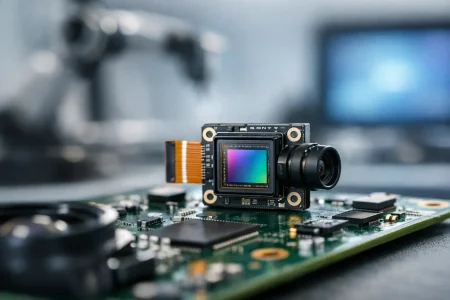
A strong supplier should be able to explain why a certain sensor fits your target better than another one. Resolution alone is not enough. You may need better sensitivity, lower noise, global shutter behavior, HDR capability, or a smaller optical format to match your enclosure.
The lens side is just as important. A poor lens choice can waste a good sensor. Ask whether the supplier can adjust focal length, field of view, distortion targets, IR performance, and focus method. If your device will work at a fixed distance, the module should be tuned for that use case rather than treated as a generic camera.
Interface and platform compatibility
MIPI CSI-2 sounds straightforward until teams start integrating across different processors, boards, and operating systems. The right supplier should understand lane configuration, data rates, power requirements, pin mapping, connector options, and driver-level considerations.
If you are working with an embedded Linux board, Android platform, FPGA, or custom SoC, compatibility support should be part of the discussion early. Some issues are solvable in software, but others come from hardware mismatch and are much more expensive to fix after EVT.
Mechanical and electrical customization
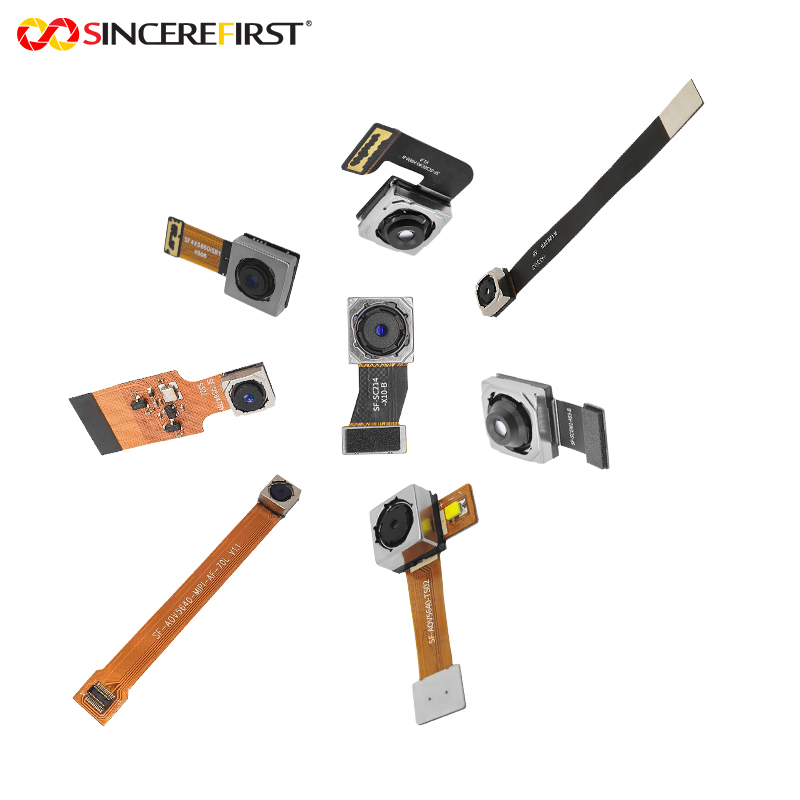
This is often where real-world projects succeed or stall. Many commercial devices cannot accept an off-the-shelf form factor. You may need a different FPC length, board shape, mounting hole pattern, connector orientation, shielding approach, or stack height.
A supplier with engineering depth can modify these details without turning a simple project into a full redesign. That flexibility matters in wearables, handheld devices, robotics, medical instruments, and compact industrial systems where every millimeter counts.
Why manufacturing capability matters as much as engineering
A module that works in ten samples but drifts in mass production is not a finished solution. Supplier qualification should include manufacturing discipline, not just development responsiveness.
Ask how modules are assembled, tested, and controlled. Cleanroom production, lens alignment consistency, sensor handling, ESD control, and final inspection all influence yield and field reliability. If your product is going into a regulated or mission-critical environment, process consistency becomes even more important than initial prototype speed.
The better mipi camera module supplier is usually the one that can support both fast sampling and stable volume manufacturing. Fast samples help your team move, but scalable production protects your launch.
Sample speed versus production stability
Speed matters, especially when your team is under launch pressure. But fast sample turnaround only helps if the sample configuration can transition cleanly into mass production.
Some suppliers are quick with early prototypes but weak on change control, documentation, or long-term component planning. That creates trouble later when your approved sample is no longer buildable at scale. A reliable manufacturing partner should be transparent about component lifecycle, revision control, and production readiness from the start.
Questions buyers should ask before approving a supplier
The best supplier conversations are specific. Instead of asking whether customization is available, ask what kind of customization is routine, what requires NRE, and what affects lead time.
Ask how the supplier handles sensor sourcing, optical tuning, and module validation. Ask whether they can support image parameter adjustments for your lighting conditions. Ask what happens if your enclosure changes after the first prototype. Ask how they manage production scaling from pilot runs to larger volumes.
It is also worth asking how they support failure analysis. When image artifacts, FPC damage, focus inconsistency, or boot issues appear, you need a supplier that can troubleshoot methodically instead of replacing parts without root-cause work.
Red flags when comparing MIPI camera module suppliers
Not every weak supplier looks weak at the quoting stage. The first warning sign is vague technical communication. If answers stay generic when your engineers ask about sensor behavior, timing, connector definition, or customization limits, that usually means the supplier is not leading the design work.
Another red flag is a catalog that looks broad but lacks application depth. A long product list does not guarantee capability. What matters is whether the supplier can explain how a module performs in your operating environment and what changes are possible without introducing new risk.
Be careful with unusually low pricing as well. In camera modules, aggressive pricing can reflect weaker component traceability, lower assembly control, less test coverage, or limited after-sales engineering support. That does not mean the highest quote is best. It means cost should be measured against failure risk, support level, and production reliability.
What a strong partnership looks like
The most valuable supplier relationship starts before the PO. It begins when your requirements are still moving and the supplier can help narrow the right configuration quickly. That includes recommending practical sensor options, identifying interface constraints, and suggesting design changes that improve manufacturability.
Later, the same partner should be able to support EVT, DVT, and MP with consistent communication. That means faster feedback on revisions, tighter control over approved configurations, and clearer expectations around lead times and capacity.
For companies building smart devices, automation equipment, medical electronics, security hardware, or machine vision systems, this kind of partnership shortens development cycles. It also reduces hidden costs tied to redesign, qualification delays, and inconsistent incoming quality.
An engineering-led manufacturer such as SincereFirst is positioned for this model because the value is not only in supplying modules. It is in aligning sensor choice, optical design, customization, and production execution around the end product.
Choosing a mipi camera module supplier for long-term growth
If your current project may expand into multiple SKUs or future generations, think beyond the first module. A supplier that supports a broader imaging portfolio can simplify roadmap planning. You may start with one MIPI module today, then later need a different resolution, board shape, lens stack, or even a parallel interface for another product line.
Working with a supplier that can support those transitions reduces requalification effort and preserves engineering continuity. That is especially useful for OEMs and device makers managing several programs at once.
The right choice is usually not the supplier with the biggest catalog or the fastest quote. It is the one that can support your technical requirements, adapt to your mechanical and electrical constraints, maintain quality through scale, and respond like a real manufacturing partner when conditions change.
When a camera module is central to product performance, supplier selection should be handled with the same rigor as processor selection or system design. Make that decision early, ask harder questions, and choose a partner that can still support your product when volumes rise and specifications tighten.