
A prototype usually fails for predictable reasons. The image is noisy in low light, the interface does not match the processor, the lens stack is too tall for the enclosure, or the supplier can ship samples but not stable volume. That is why selecting an embedded vision camera module is not just a sensor decision. It is a system decision that affects image quality, integration speed, certification risk, and production continuity.
What an embedded vision camera module actually includes
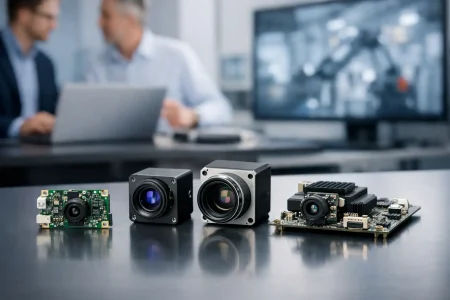
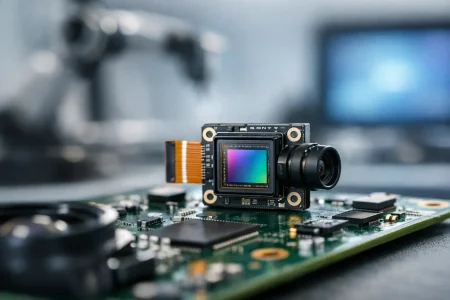
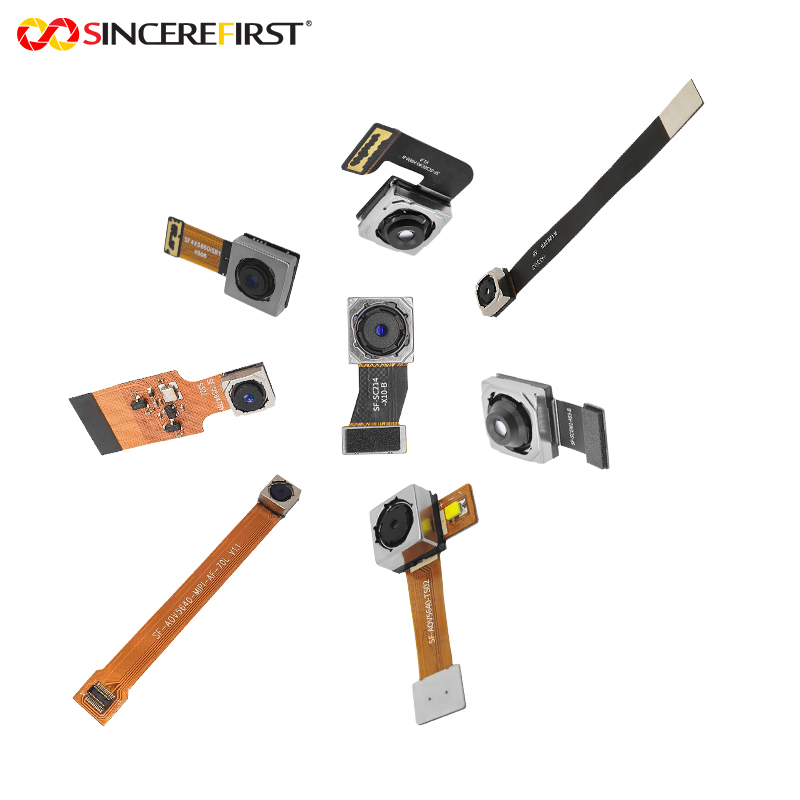
An embedded vision camera module is a compact imaging unit designed to be integrated directly into a device or machine rather than used as a standalone camera. In practical terms, it combines the image sensor, lens, optics tuning, PCB or FPC structure, electrical interface, and often supporting features such as IR filter options, connector selection, and ISP tuning.
For OEMs and system integrators, this matters because the module is only one part of the imaging chain. Sensor selection influences sensitivity and dynamic range. Lens choice affects field of view and distortion. Interface choice determines bandwidth and software complexity. Mechanical dimensions decide whether the module fits the final product without thermal or assembly issues.
That is why camera module sourcing should be handled as an engineering and manufacturing process, not as a catalog-only purchase.
Why the right embedded vision camera module depends on the application
The correct module for a service robot is rarely the correct module for a patient monitor or an agricultural device. Resolution alone does not define performance. A 2MP sensor with better low-light behavior and faster integration may outperform a higher-resolution option in a real machine vision environment.
In industrial automation, consistency is usually more valuable than headline specs. Exposure stability, color accuracy, distortion control, and repeatable module assembly can have more impact on inspection results than pixel count. In medical or endoscope applications, size constraints, image clarity at short working distances, and compliance-related documentation often carry more weight. In smart city or security deployments, day-night performance and supply continuity become central.
This is where trade-offs start. Smaller modules support tighter industrial design, but they may limit lens options or thermal margin. Higher frame rates improve motion capture, but they increase bandwidth demand and processor load. A lower-cost sensor can reduce BOM pressure, but poor tuning may add months to software compensation and field troubleshooting.
Sensor, interface, and optics are the three core decisions
Sensor selection
The sensor is the foundation of the image pipeline. Buyers usually begin with resolution, but experienced teams also look at pixel size, shutter type, sensitivity, dynamic range, signal-to-noise behavior, and long-term availability.
Global shutter sensors are often preferred for motion analysis, barcode reading, robotics, and industrial inspection because they reduce motion distortion. Rolling shutter sensors can still be the right choice for static scenes, consumer devices, and applications where cost, power, or compactness matter more than motion accuracy.
Low-light performance also deserves a realistic review. If the device will be used in warehouses, outdoor edges, surgical environments, or mobile equipment, exposure control and noise behavior should be tested in actual lighting conditions, not ideal lab setups.
Interface selection
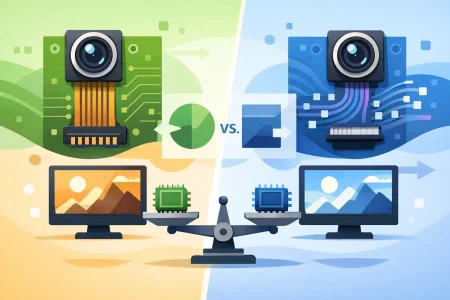
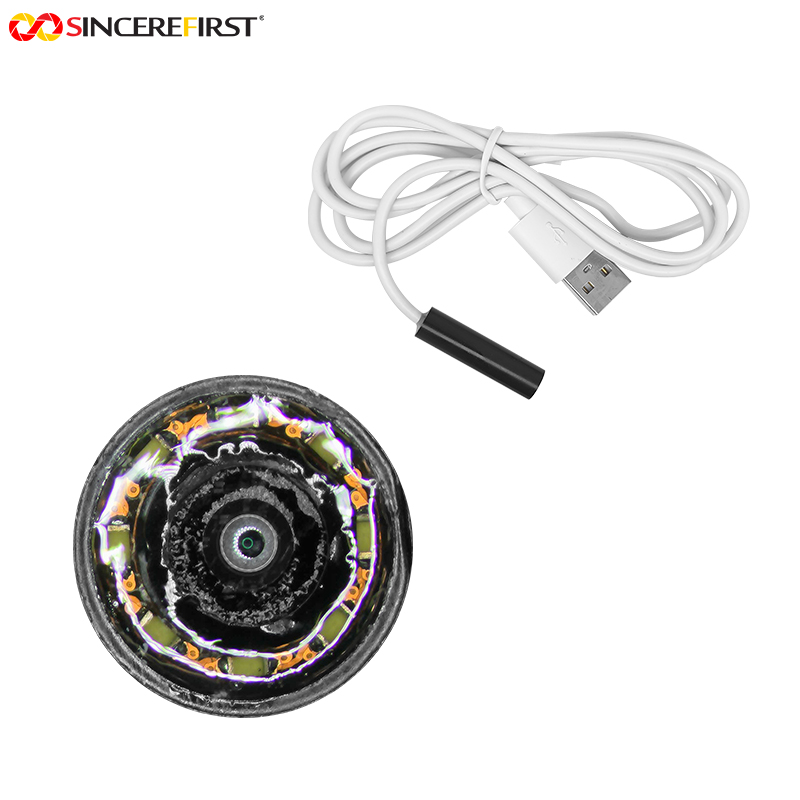
The interface affects electrical design, software workload, and system architecture. MIPI camera modules are common in compact embedded platforms where low latency, high bandwidth, and tight processor integration are required. DVP modules may fit legacy designs or simpler processor environments. USB camera modules are often selected when integration speed, plug-and-play development, or external processing flexibility is more important than board-level compactness.
There is no universal best interface. MIPI is efficient and compact, but it can increase integration complexity depending on the host platform and driver support. USB can reduce development friction, especially with UVC compatibility, but it may not be ideal for every power or mechanical constraint. The right choice depends on the compute platform, cable distance, thermal design, and software resources available on the project.
Optics and module structure
The lens stack and mechanical package directly shape image performance. Field of view, depth of field, chief ray angle, distortion profile, and IR response all influence whether the camera sees what the system actually needs to measure or identify.
This is often where custom development becomes necessary. Standard modules can accelerate early validation, but custom optics, board shape, connector position, or focus distance may be required for the final product. A module that looks acceptable on paper can still fail once placed behind a cover glass, inside a narrow housing, or near a heat source.
Integration issues that slow down projects
Many imaging projects are delayed by problems that are not obvious during initial sourcing. One common issue is host compatibility. The module may support the expected interface, but driver adaptation, clocking constraints, ISP behavior, or power sequencing can still cause instability.
Another issue is mechanical mismatch. A few millimeters in height, connector direction, or cable bend radius can force a full enclosure revision. This is especially common in handheld devices, medical tools, and compact robotics.
Supply risk is another overlooked factor. Engineering teams sometimes validate with one sensor revision, then face redesign work when availability changes. For commercial products, the supplier’s ability to manage lifecycle planning, component substitution, and production consistency matters almost as much as the first sample.
That is why experienced buyers ask early about revision control, traceability, cleanroom production, test standards, and mass production readiness. A camera module is not qualified by image quality alone. It is qualified by whether it can be manufactured repeatedly and integrated without recurring support issues.
Where standard modules work and where custom development wins
A standard embedded vision camera module is the right starting point when speed matters and the application fits established sensor, lens, and interface combinations. It can reduce NPI time, simplify pilot testing, and help teams prove image feasibility before committing to custom tooling or dedicated tuning.
Custom development becomes the better path when the product has strict size limits, nonstandard connector needs, unusual optics requirements, medical integration constraints, or software-specific tuning targets. It is also the better choice when an OEM needs product differentiation and does not want to build around a widely available off-the-shelf module.
For many manufacturers, the most efficient path is a staged model. Start with a proven standard module for proof of concept. Then refine toward a custom version once enclosure, ISP settings, lens parameters, and manufacturing goals are locked. That approach reduces technical risk while still protecting long-term product fit.
What business buyers should verify before selecting a supplier
Technical specifications matter, but supplier capability determines whether the program stays on schedule. Buyers should evaluate whether the manufacturer can support both prototyping and scale, whether sample turnaround is fast enough for active development, and whether engineering teams can adapt the module to the host platform and use case.
Production control is equally important. Cleanroom manufacturing, optical alignment consistency, electrical testing, and outgoing quality procedures all affect field performance. A supplier that offers many interfaces and sensor options is useful, but what matters more is whether those options are backed by real engineering support and stable production discipline.
For OEM and ODM projects, responsiveness is a commercial requirement, not a soft benefit. If design changes take weeks to evaluate, the project timeline slips. If the supplier cannot document revision changes clearly, validation becomes harder. SincereFirst serves this part of the market by combining standard module availability with custom imaging development, fast sample support, and scaled manufacturing for industrial and smart device programs.
Embedded vision camera module use cases keep expanding
Demand is growing across robotics, healthcare devices, industrial automation, agriculture, security, and smart infrastructure because more systems now require local image capture and machine-led decision making. But growth does not simplify selection. It makes application fit more important.
A warehouse robot may prioritize fast frame capture, low latency, and compact MIPI integration. A diagnostic device may need high image fidelity, miniaturized optics, and tightly controlled assembly. A smart access system may require balanced day-night performance and dependable volume supply over a long product cycle.
The common thread is that imaging hardware has moved closer to the core function of the device. It is no longer an accessory. It is part of the product’s operational logic.
When you evaluate the next module, look beyond sensor resolution and interface labels. The better question is whether the camera module fits your full product path – from prototype to validation to mass production – without forcing costly redesigns later. That is usually where the strongest imaging decisions are made.