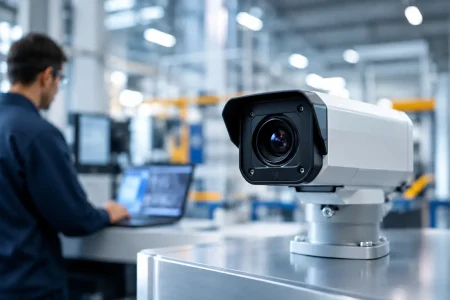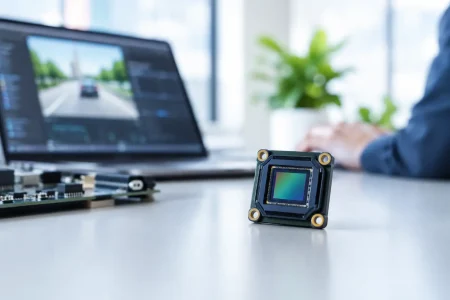

A camera module is no longer a passive component that simply supplies pixels to a host processor. It is becoming a tightly engineered sensing subsystem that must deliver usable data under real operating constraints: limited power, compact mechanical envelopes, variable illumination, thermal load, compliance requirements, and production-scale consistency. The embedded vision trends 2026 point to a clear shift for OEMs and system integrators: imaging performance will be judged by decision quality, integration speed, and lifetime manufacturability, not resolution alone.
For product teams building robotics, medical devices, industrial equipment, security terminals, agricultural systems, and smart infrastructure, the practical question is not which trend is most impressive. It is which combination of sensor, lens, interface, processing architecture, and supplier capability creates a stable commercial product.
Embedded Vision Trends 2026: Intelligence Moves Closer to the Sensor
The most consequential change is the continued movement of image processing and AI inference toward the edge. Many systems that once streamed full video to a central computer or cloud service now need to detect, classify, measure, or trigger an action locally. This reduces latency, protects sensitive visual data, and lowers bandwidth requirements.
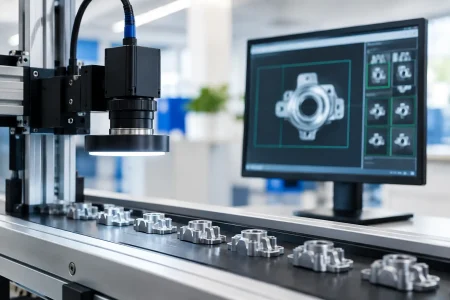
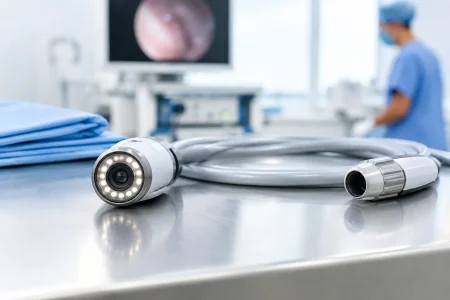
For an automated inspection station, local processing can separate defective parts from acceptable parts without waiting for a remote server. For a mobile robot, edge vision supports faster obstacle detection and more reliable navigation when connectivity is inconsistent. In medical and endoscope applications, processing close to the imaging source can improve responsiveness while limiting unnecessary data transfer.
This does not mean every camera module needs an AI processor. In many designs, the best approach remains a compact MIPI or USB camera module connected to a capable application processor. The architecture depends on where compute resources already exist, what latency the application can tolerate, and how much heat the enclosure can dissipate. The camera supplier must understand these system-level trade-offs, because a sensor selected without considering the processor, memory path, and interface can create avoidable redesign work.
Better data matters more than more pixels
Higher resolution remains valuable for metrology, document capture, inspection of fine features, and digital zoom. But a larger pixel count can increase data rates, memory use, processing load, and optical demands. If the lens cannot resolve the sensor’s available detail across the required field of view, higher resolution may add cost without improving the detection result.
In 2026, more buyers will specify performance in application terms: smallest detectable defect, recognition distance, barcode success rate, low-light identification range, or measurement accuracy. These are stronger requirements than a request for 4K or 12 megapixels because they define the outcome the imaging system must achieve.
That change favors early camera-lens validation. A module should be evaluated with the actual working distance, target motion, illumination angle, enclosure window, and software pipeline. Bench images taken under ideal lighting are useful, but they do not prove field performance.
Low-Light Imaging Becomes an Engineering Requirement
Many embedded products operate outside controlled factory lighting. Warehouse robots move from bright loading areas into shadowed aisles. Security devices face headlights, street lighting, and fast exposure changes. Agricultural equipment works at dawn, dusk, and under dusty conditions. These conditions make dynamic range, sensor sensitivity, noise control, and illumination design central purchasing criteria.
Larger pixel sensors, back-side illumination, improved high dynamic range modes, and more effective image signal processing are expanding what compact modules can capture. Yet low-light capability is not a sensor specification alone. Lens aperture, transmission efficiency, infrared response, LED wavelength, exposure time, and motion all affect the final image.
A wide-aperture lens may improve sensitivity but reduce depth of field. Longer exposure can brighten a scene but introduce motion blur. Infrared illumination can support night operation but may be unsuitable where color fidelity is necessary or where reflective materials create hotspots. The correct choice depends on the target and operating environment, not a single headline specification.
For production programs, module consistency is equally important. Variation in focus position, lens alignment, infrared-cut filter selection, or illumination geometry can change algorithm performance between units. Suppliers should be able to define optical tolerances, perform appropriate inspection, and maintain process control as volumes increase.
Interface Decisions Are Becoming More Application-Specific
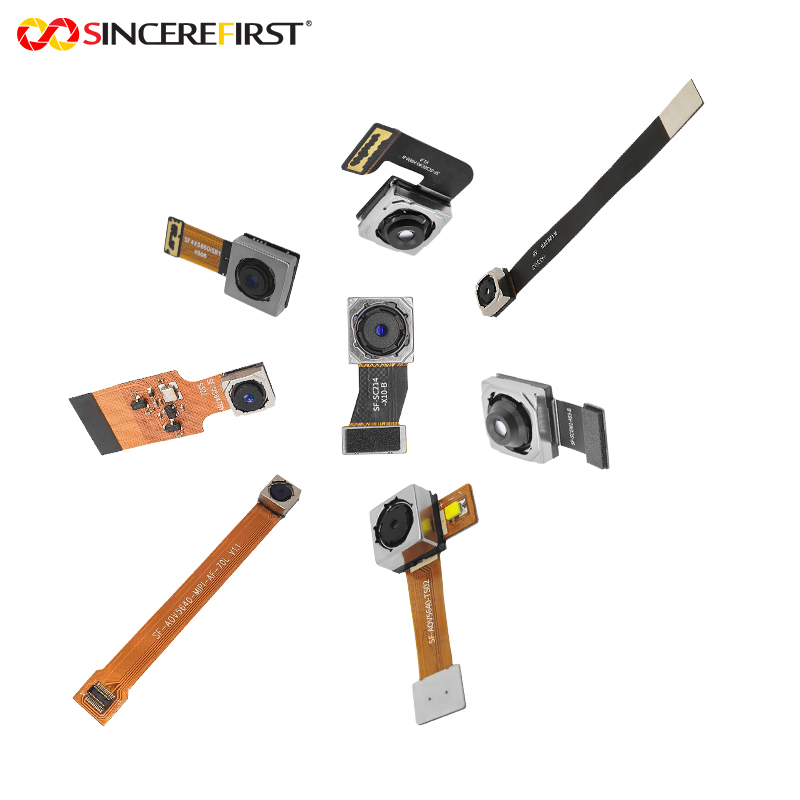
MIPI CSI-2 remains a leading choice for compact mobile, robotics, and embedded computing platforms because it supports high data throughput with low power consumption. It is especially practical when the camera connects directly to a processor board over a short, controlled interconnect. FPC camera modules can help designers fit imaging into thin or space-constrained products, though cable routing and electromagnetic design need careful attention.
USB camera modules remain highly relevant for industrial PCs, kiosks, laboratory equipment, rapid prototypes, and systems requiring plug-and-play integration. UVC support can shorten software development in applications where standard video-class compatibility is sufficient. USB 3.0 is often preferred when higher resolution or frame rate demands more bandwidth, while USB 2.0 can remain cost-effective for lower-data applications.
DVP interfaces continue to have a place in cost-sensitive legacy designs and certain microcontroller-based platforms. They are not automatically the wrong choice, but their bandwidth and scalability must match the product roadmap. A design that works with a low-resolution sensor today may not accommodate a future upgrade.
The trend is not one interface replacing all others. It is a more disciplined matching of interface, cable length, processor support, power budget, electromagnetic requirements, and expected production life. Camera module selection should begin with the full signal path, not just the connector on a reference board.
Custom Optics and Mechanics Move Earlier in Development
Off-the-shelf camera modules are useful for feasibility studies, early prototypes, and common applications. However, many commercial products need changes that standard modules cannot provide: a specific field of view, fixed focus distance, low-distortion lens, custom FPC length, board shape, connector orientation, infrared configuration, LED placement, or housing integration.
In 2026, experienced engineering teams will bring these requirements forward rather than treating them as late-stage mechanical adjustments. A lens that is marginal for the required working distance cannot be corrected fully in software. A poorly placed camera can suffer from reflections off a cover glass, vibration from a motor, or shadowing from the product housing. Small mechanical decisions often determine whether vision algorithms perform reliably.
Custom development also has commercial implications. Every custom feature should be justified by performance, integration, compliance, or supply continuity. A fully custom module may produce the best fit, but it can require additional tooling, validation, and change control. A modified standard platform can sometimes offer a faster path to production with fewer qualification risks.
Embedded Vision Is Becoming More Multispectral
Visible-light RGB remains the core format for many smart devices, but it is increasingly paired with infrared, near-infrared, depth sensing, thermal imaging, or specialized illumination. The purpose is not to add sensors for marketing value. It is to solve problems that RGB cameras handle poorly.
Near-infrared can improve performance in darkness or support material and feature detection. Depth data can assist picking, measurement, access control, and robot navigation. Thermal imaging can reveal temperature differences that ordinary cameras cannot see. In healthcare and industrial inspection, specialized illumination can make surface structures or internal features easier to identify.
These configurations introduce calibration challenges. Multiple cameras need stable alignment, synchronized capture, and controlled optical behavior across temperature and vibration. They also increase the need for a supplier that can coordinate sensors, optics, flex assemblies, connectors, and manufacturing inspection under one engineering plan.
Supply Stability and Test Data Become Design Inputs
The most overlooked embedded vision trend is procurement-led engineering. Product teams are increasingly evaluating supply continuity while they select image quality. A module that performs well in a lab but relies on a difficult-to-source sensor, unqualified lens, or changing firmware package can create production risk later.
Buyers should ask whether the design has a defined bill of materials, traceable component management, incoming and outgoing quality controls, and a change-notification process. They should also ask what test data is available. Depending on the application, useful evidence may include resolution checks, color performance, dark-field behavior, focus verification, interface validation, aging tests, vibration evaluation, or environmental testing.
This is where a manufacturing partner has to provide more than catalog specifications. With more than three decades of imaging development and scaled production capability, SincereFirst supports standard and customized camera module programs that require prototype speed alongside controlled volume manufacturing. The value is not merely supplying a camera. It is reducing the uncertainty between a promising prototype and a repeatable product build.
What buyers should prioritize next
When evaluating an embedded vision program for 2026, start with the decision the image must support. Define the object, working distance, movement, illumination, accuracy threshold, and response time. Then select the sensor resolution, lens, interface, and processing architecture around that requirement.
Request samples early, but test them in representative conditions rather than only on a development desk. Review optical and mechanical tolerances before enclosure design is finalized. Finally, qualify the supply path with the same care used for image quality. The strongest camera module program is the one that continues delivering usable vision after the product leaves the lab and enters volume production.