
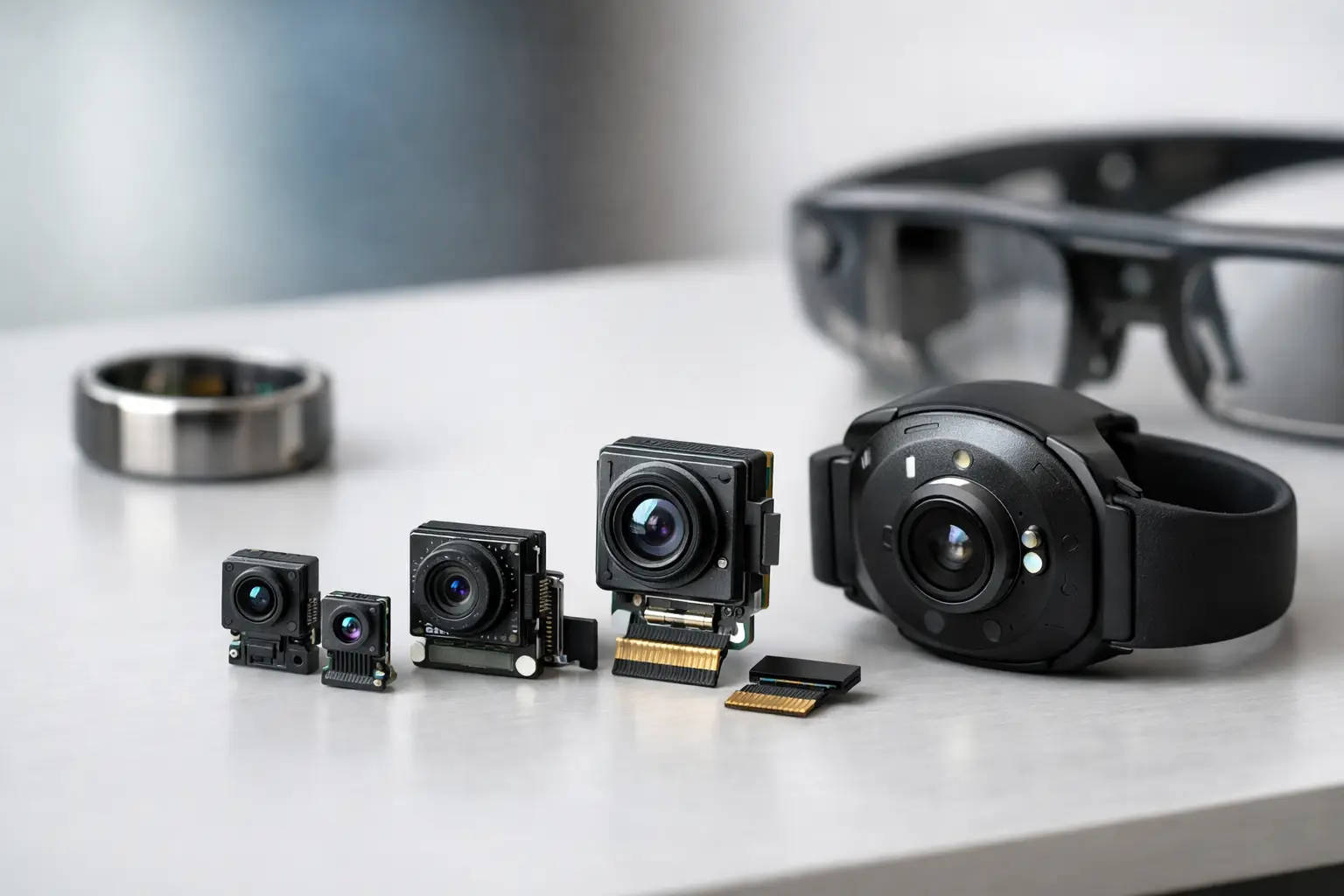
A wearable camera has no room for a component that is merely acceptable. A few extra millimeters can change the industrial design, a poorly matched lens can undermine an otherwise capable sensor, and excess power draw can shorten the product’s useful battery life. The best compact camera modules for wearables are therefore not defined by resolution alone. They are modules engineered around a specific use case, processor architecture, mechanical envelope, and production target.
For OEMs, product managers, and embedded teams, the right decision begins with a practical question: what must the camera see, under what lighting conditions, and what must the wearable do with the image? A clip-on AI camera, smart glasses, a body-worn security device, a medical head-mounted system, and a fitness wearable may all require small modules, but their priorities are materially different.
What Makes a Camera Module Suitable for a Wearable?
Wearable imaging design is a system-level exercise. The module must fit within a constrained enclosure while delivering usable image data to the host platform without creating thermal, power, or assembly problems. Sensor format, lens height, flexible printed circuit routing, connector position, frame rate, and interface selection all affect the final device.
A high-resolution module may be the right answer for evidence capture or remote inspection, where a user needs to zoom into fine details after recording. It may be the wrong answer for an always-on AI wearable that only needs enough pixel data for person detection, barcode recognition, or gesture analysis. In the latter case, a lower-resolution sensor with lower bandwidth and lower power consumption can produce the better commercial result.
The strongest module candidates also need stable supply, consistent optical alignment, and a path from engineering samples to volume production. This matters because a wearable program can fail late in development when a selected module changes mechanically, an image sensor becomes constrained, or production variation affects focus performance.
Best Compact Camera Modules for Wearables by Use Case
There is no single best module for every wearable. The following module types provide a more useful starting point for technical evaluation.
MIPI Camera Modules for Smart Glasses and AI Wearables
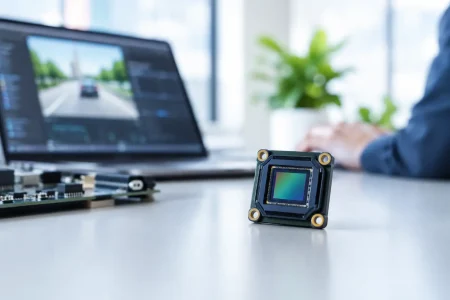
MIPI CSI-2 camera modules are usually the leading choice for compact wearables built around mobile application processors, AI system-on-chips, or embedded Linux platforms. MIPI supports high data rates with a compact physical connection, making it well suited to image capture, local inference, video streaming, and multi-camera designs.
For smart glasses, a compact MIPI module can support first-person recording, scene understanding, OCR, or assisted-reality functions. The key engineering trade-off is integration complexity. MIPI requires compatible host hardware, correct lane configuration, carefully controlled flex routing, and software support for the chosen sensor. It is not as plug-and-play as USB, but it offers a much better size and power profile for many production wearables.
A practical configuration often uses a small CMOS sensor paired with a low-profile fixed-focus lens and an FPC tailored to the product housing. When evaluating modules, verify active array resolution, frame rate at the intended resolution, MIPI lane count, output format, lens field of view, and module thickness. Those details matter more than a headline megapixel rating.
USB and UVC Modules for Fast Prototypes and Body-Worn Devices
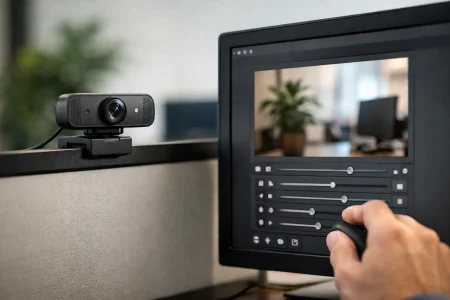
USB camera modules are a strong option when development speed and host compatibility outweigh the need for the smallest possible electronics package. UVC modules can work with many computing platforms without custom camera drivers, which is valuable for proof-of-concept devices, field terminals, wearable recorders, and accessory products connected to tablets or compact computers.
USB 2.0 is adequate for many 720p and selected 1080p applications, depending on compression and frame-rate requirements. USB 3.0 provides substantially more headroom for higher-resolution video and lower-latency image transfer. However, the connector, cable routing, and power budget can be less favorable than a direct MIPI design. For a compact wearable, USB is often best when the architecture already includes a USB host and the mechanical design can accommodate the interface.
Choose UVC carefully if image tuning is critical. Standard compatibility is valuable, but a product may still need control over exposure, white balance, low-light behavior, image orientation, and compression settings. Confirm what can be controlled through the selected host software before locking the design.
FPC Camera Modules for Tight Mechanical Enclosures
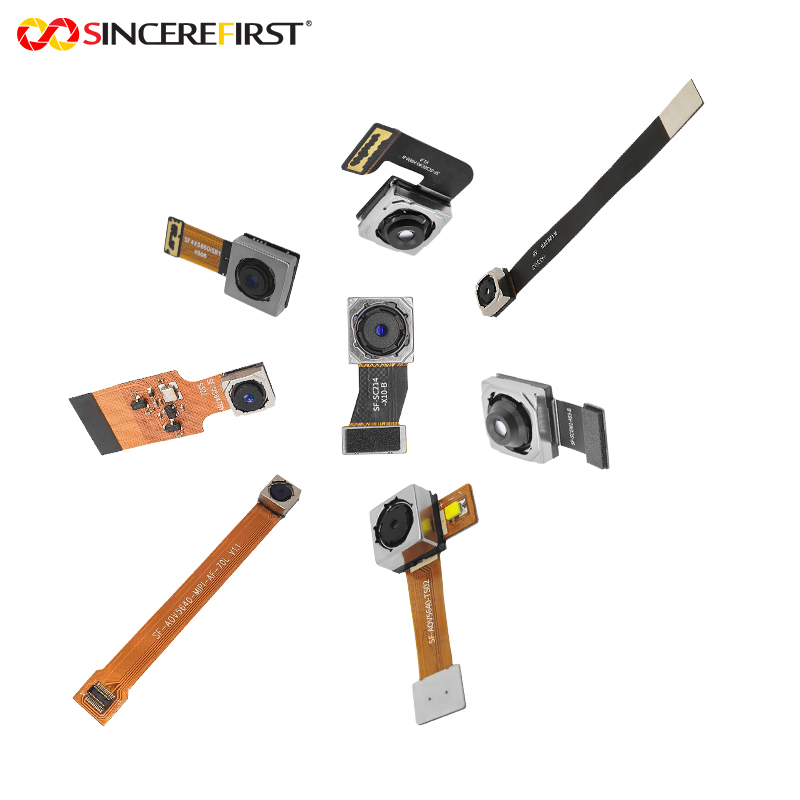
FPC camera modules are particularly valuable where the sensor-lens assembly and the main board cannot occupy the same location. Smart glasses, helmet cameras, hearing-adjacent devices, and discreet body-worn products often need the camera positioned at the edge of a curved or narrow enclosure while the processor and battery sit elsewhere.
A custom FPC can solve routing constraints, reduce connector stress, and support a cleaner mechanical stack-up. It can also create new risks if it is treated as an afterthought. Bend radius, reinforcement, shielding, impedance control, and connector orientation should be reviewed early with the module supplier and mechanical team. A flex that fits on a CAD drawing but cannot be assembled reliably at scale is not a production solution.
For thin-profile wearables, module height deserves as much attention as footprint. Lens barrel height, adhesive clearance, protective cover glass, and the optical path to the exterior window all need to be considered together. Small changes in window thickness or spacing can affect focus, flare, and edge image quality.
Miniature Endoscope Modules for Specialized Viewing Angles
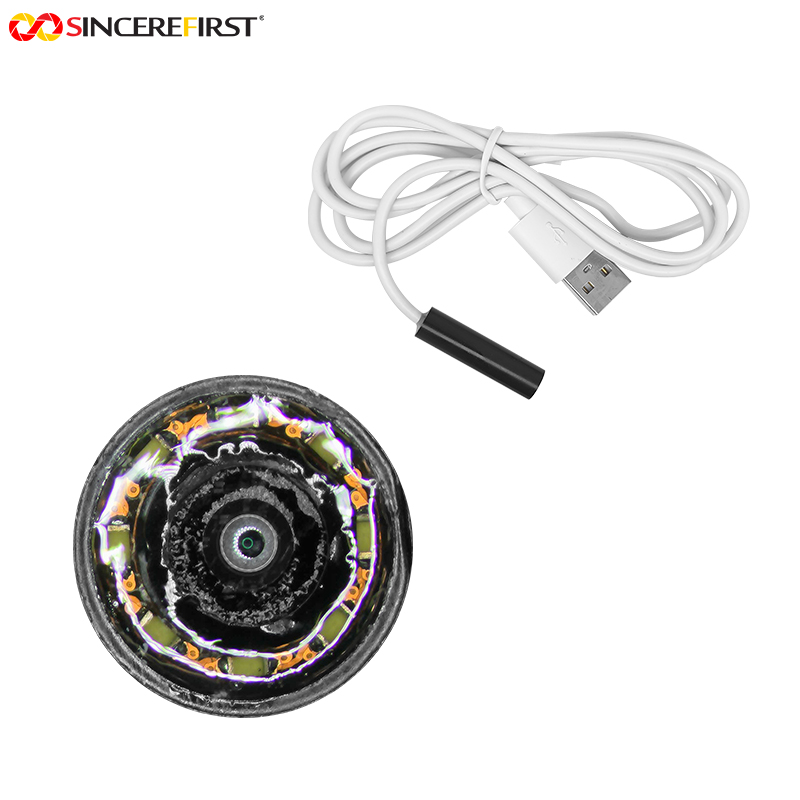
Some wearables need an imaging path that a standard front-facing module cannot provide. Miniature endoscope camera modules can support narrow channels, side-view imaging, close-range inspection, and highly constrained medical or industrial form factors. They are relevant to specialized head-mounted inspection systems, wearable diagnostic tools, and equipment designed to view inside assemblies or confined spaces.
These modules require a more disciplined optical review than general-purpose cameras. Diameter, cable length, illumination placement, waterproofing, viewing direction, and working distance are all application-specific. For products involving medical use, the imaging module is only one element of a broader safety, validation, and regulatory program. The camera supplier should support the required documentation, material controls, and production consistency expected by the device manufacturer.
Select the Sensor and Lens as a Pair
The sensor cannot be selected in isolation. A wearable camera lens determines field of view, distortion, focus range, aperture, and the amount of light reaching the sensor. A wide-angle lens may be appropriate for an action camera or environmental awareness system, but it can create distortion that complicates facial imaging, barcode scanning, or measurement tasks.
Fixed-focus lenses are generally preferred for compact, high-volume wearables because they reduce size, cost, power use, and mechanical complexity. The focus point should be set around the application’s real working range, not a generic test target. A body camera intended to record scenes several feet away needs a different focus strategy than smart glasses designed for reading labels at arm’s length.
Autofocus can add flexibility for variable-distance capture, but it adds cost, power demand, mechanical height, and validation work. It is justified when the user experience depends on sharp images across a wide distance range. It is usually unnecessary when the scene distance is predictable or the camera feeds an AI model tolerant of moderate focus variation.
Low-light performance depends on more than sensor sensitivity. Lens aperture, exposure time, motion in the scene, noise reduction, high dynamic range behavior, and image signal processor tuning all influence usable results. Ask for images or video captured under conditions close to the product’s actual environment, including indoor lighting, backlighting, motion, and the protective cover material planned for the final device.
Interface, Power, and Thermal Limits Must Be Reviewed Early
The camera interface determines bandwidth, software effort, and board architecture. MIPI is efficient and compact for embedded systems. USB simplifies integration in many host environments. DVP can still suit certain legacy processors or low-complexity embedded designs, but it generally requires more parallel signal routing and is less attractive for aggressively miniaturized products.
Power consumption has direct consequences in a wearable. Sensor operating mode, resolution, frame rate, image processing, and data transmission all contribute to the load. A module that performs well in a short bench test may become unsuitable after continuous operation inside a warm, sealed enclosure. Review active, standby, and streaming power states, then test the complete device at the expected ambient temperature.
Thermal behavior can also affect image quality. Sensor noise can rise as temperature increases, while the battery and processor may compete for limited thermal capacity. The best design is often one that captures only the resolution and frame rate the application truly needs, then uses intelligent triggering or low-power standby modes between events.
Build for Manufacturing, Not Only for the Prototype
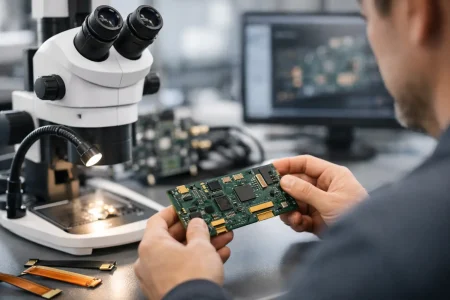
A camera sample proves possibility. A production-ready module proves repeatability. Before supplier nomination, establish the mechanical critical dimensions, optical acceptance criteria, connector requirements, cosmetic standards, and electrical test conditions that matter to your product. Define whether each unit requires focus verification, image inspection, serial traceability, or specific calibration data.
Customization can be commercially sensible when it removes an integration risk. Common requirements include a custom FPC length or shape, connector change, lens field-of-view adjustment, mirror or flip configuration, infrared filter selection, LED integration, housing modification, and tuned image parameters. The right supplier should be able to explain the effect of each change on tooling, validation, lead time, and minimum order quantity.
SincereFirst supports this process with compact MIPI, USB, FPC, and specialized imaging modules, combining standard product options with custom engineering and scaled manufacturing capability. For buyers, the practical value is faster alignment between the optical design, embedded platform, and final production assembly.
The camera module should earn its place in a wearable by solving the real imaging problem within the available space, power, and supply constraints. Start with the user’s viewing distance and image task, validate the module behind the intended cover window, and choose a manufacturing partner that can hold the same standard from first sample through volume delivery.