
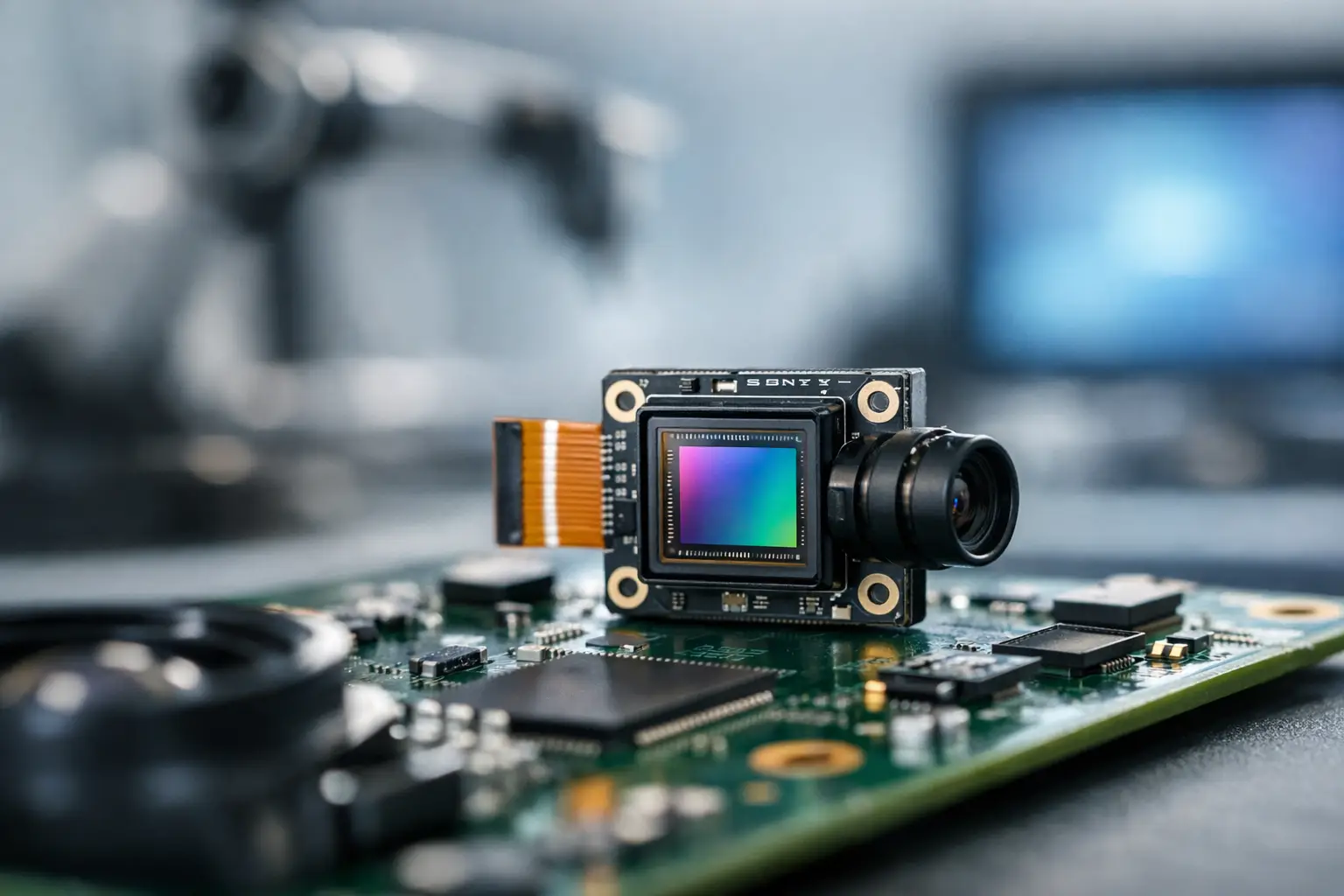
A sensor can look strong on paper and still slow down a product launch once integration starts. That is why the IMX708 camera module gets attention from embedded teams – it brings a modern Sony imaging platform into compact systems, but the real value depends on interface fit, optics, tuning, and production readiness.
For product managers, R&D engineers, and sourcing teams, the question is not simply whether the sensor is good. The question is whether an IMX708-based module can meet your image targets, mechanical envelope, ISP path, and manufacturing schedule without creating downstream risk. That is where module-level evaluation matters.
What makes the IMX708 camera module attractive
The IMX708 is known as a high-resolution image sensor positioned for compact imaging systems that need more detail than legacy 2MP or 5MP modules can provide. In practical terms, an IMX708 camera module is attractive when your device needs sharper inspection images, better digital zoom headroom, or more scene information for AI-based analysis.
Resolution alone is not the whole story. Buyers typically look at how the module performs in mixed lighting, whether autofocus is available, how stable the color output is, and how well the sensor behaves in a constrained thermal design. A well-built module based on this sensor can support use cases where image quality directly affects device value, such as smart terminals, handheld equipment, edge AI devices, robotics, and compact medical or industrial imaging products.
Another advantage is market familiarity. Teams already evaluating modern embedded imaging stacks often recognize Sony sensor behavior, which can shorten early-stage feasibility work. That said, familiarity should not be confused with plug-and-play deployment. Board compatibility, driver support, lens matching, and image tuning still determine whether the final system performs as expected.
Where an IMX708 camera module fits best
An IMX708 camera module is a practical choice when you need a balance of compact size and image detail. It can fit products where board space is limited but image clarity still matters, especially in systems that need to identify small features, document conditions, or support machine vision tasks at short to mid-range working distances.
Industrial and machine vision devices
In industrial environments, higher-resolution modules are often used for verification, visual guidance, status recognition, and defect review. The trade-off is that more pixels can increase processing load and bandwidth demand. If your platform has a limited ISP or edge processor, a high-resolution sensor only pays off if the system architecture can absorb the data efficiently.
Robotics and smart equipment
For robotics, the value is often in scene awareness and object localization. If the robot needs a compact forward-facing camera or a secondary vision channel, the IMX708 may offer enough detail for navigation support, barcode reading, or object identification. Here, lens choice is critical. A strong sensor paired with the wrong field of view can create distortion, weak edge performance, or a working distance mismatch.
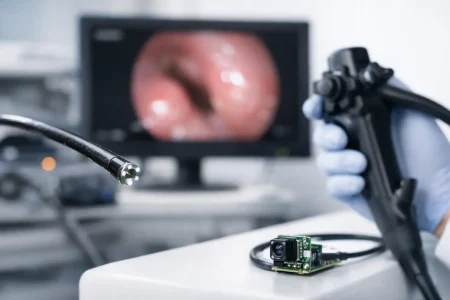
Medical and handheld imaging
In handheld diagnostic tools or specialized imaging devices, compact integration and stable image output matter as much as raw specification. Depending on the product, autofocus may be useful, but some medical and industrial applications still prefer fixed focus because it is easier to control and validate. It depends on whether your device is used at a known distance or across a variable operating range.
Key technical points to evaluate before selection
When teams ask whether the IMX708 camera module is right for a project, the best answer starts with system requirements rather than sensor marketing. Several technical factors tend to decide success early.
Interface and processor compatibility
Most embedded camera designs live or die by interface fit. You need to confirm MIPI CSI lane requirements, throughput, connector design, and driver support for your target platform. Even a strong module becomes expensive if your software team has to rebuild the camera stack around it.
If your host platform already supports similar Sony sensors, integration can move faster. If not, you should account for sensor bring-up, tuning, and validation time in the project schedule. Procurement teams often underestimate this stage because the module appears mechanically simple.
Lens and optical path
Sensor quality does not replace optical design. The module lens must be selected around your required field of view, distortion tolerance, working distance, and target illumination. For close-range industrial imaging, depth of field may matter more than headline sharpness. For smart consumer-style devices, autofocus and visual appeal may drive the decision.
This is also where customization becomes commercially important. Many OEM programs do not need a generic lens stack. They need a module tuned for a specific enclosure, glass cover, IR filter strategy, and mounting geometry.
Low-light and HDR performance
Some applications operate in controlled lighting and do not need aggressive HDR behavior. Others, such as smart city devices, access control units, or mobile equipment, face backlight, shadow, and uneven exposure every day. In those cases, sensor selection should be validated at the module and system level, not just from sensor datasheets.
A module may show strong HDR capability in a reference setup but lose consistency after it is placed behind protective cover glass or inside a thermally constrained housing. That is why application testing is more useful than relying on lab-only figures.
Autofocus versus fixed focus
This is one of the most common decision points. An autofocus IMX708 camera module can improve usability in multi-distance scenes, but it adds control complexity, mechanical variation, and qualification work. Fixed-focus versions are simpler and often better for industrial devices with known operating distances.
Neither option is universally better. If your product captures subjects from 10 cm to infinity, autofocus may be the right decision. If your target is always 25 cm away on a production line, fixed focus is usually the cleaner engineering choice.
Why module quality matters more than the sensor alone
Two suppliers can offer an IMX708 camera module with the same sensor and deliver very different results. The difference usually comes from module engineering rather than from the silicon itself. PCB layout, lens alignment, focus consistency, shielding, FPC reliability, assembly precision, and image tuning all shape final performance.
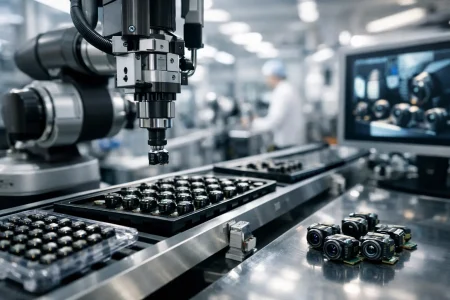
This is where manufacturing discipline becomes part of the technical decision. For B2B buyers, the real concern is not whether a prototype image looks good once. It is whether the supplier can hold optical and electrical consistency across pilot runs and volume production.
A capable manufacturing partner should be able to discuss more than resolution. They should be ready to align module design with your connector type, cable length, housing limits, ISP environment, and regulatory path. They should also be clear about sample lead time, engineering change control, and production scalability.
For OEM and ODM programs, customization often determines whether the camera module fits the product without compromise. SincereFirst works with this kind of requirement regularly – adapting sensor modules around interface, form factor, optics, and application targets so customers can move from prototype to volume with fewer integration surprises.
Common buying mistakes with the IMX708 camera module
The first mistake is choosing by sensor name alone. Teams sometimes assume the sensor guarantees performance, then discover late that the lens, driver, or board stack is not suitable for the actual device.
The second mistake is underestimating ISP and tuning work. If your image quality target includes stable skin tone, barcode readability, edge contrast, or AI-friendly output, tuning matters. A module without application-specific optimization can still produce usable images, but not necessarily production-grade ones.
The third mistake is ignoring mass production requirements during prototype selection. A sample that works in the lab is only the starting point. You also need confidence in supply continuity, process control, and repeatable assembly quality. This is especially important in medical, industrial, and security equipment, where requalification costs are high.
How to qualify an IMX708 camera module for your project
Start with the use case, not the component list. Define the working distance, scene lighting, image detail requirement, frame rate target, and host processor constraints. Then match those needs against module interface, optics, and tuning options.
Ask for validation data that reflects your application. That may include distortion results, color behavior under mixed lighting, focus range, MTF consistency, startup stability, and thermal performance. If your product requires long cable runs, protective window glass, or unusual mounting orientation, test those conditions early.
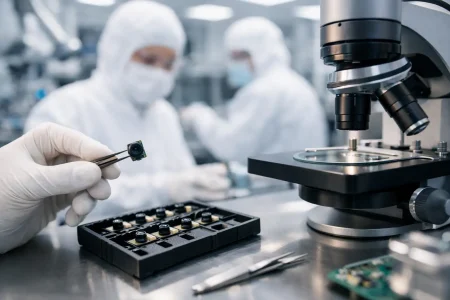
It also helps to qualify the supplier, not only the sample. Review manufacturing capability, cleanroom process control, customization speed, and volume readiness. A good camera module program is rarely just a parts purchase. It is an engineering supply relationship that has to hold up through design changes, pilot builds, and scaled production.
The right IMX708 camera module is not the one with the loudest specification. It is the one that fits your processor, your optics, your enclosure, and your production plan well enough to keep the program moving.