
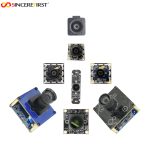

A camera module that performs well in prototype stage can still fail your program once demand moves from hundreds of units to tens of thousands. That is where choosing the right high volume camera module supplier stops being a sourcing task and becomes a product risk decision. For OEMs, device makers, and system integrators, supplier capability affects image quality, certification schedules, yield, field reliability, and time to market.
The hard part is that many suppliers can ship samples. Fewer can hold optical consistency, electrical stability, and mechanical tolerance across large production runs. If your product depends on embedded vision for medical imaging, robotics, security, smart agriculture, or industrial automation, scaling supply without scaling defects is the real benchmark.
What a high volume camera module supplier should actually deliver
High-volume supply is not just about factory size. It means the supplier can support the full path from sensor selection and lens tuning to pilot build, validation, and repeatable mass production. That includes process control in assembly, cleanroom discipline, incoming material management, test coverage, and traceability.
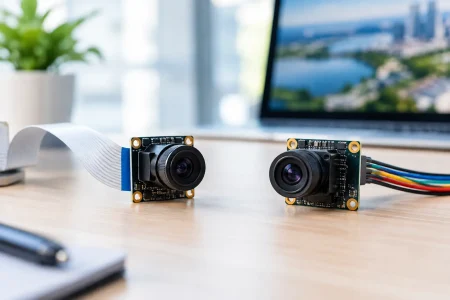
For buyers, this matters because a camera module is a stacked system, not a single component. Sensor, lens, FPC, connector, IR filter, housing, firmware, and interface all affect final performance. A weak supplier may meet the basic spec sheet while missing the details that create production instability, such as focus drift, inconsistent color response, connector wear, or poor low-light calibration.
A qualified manufacturing partner should be able to discuss more than resolution and frame rate. They should be comfortable talking about MTF targets, distortion control, interface compatibility, EMI considerations, thermal behavior, lens bonding stability, and inspection methods. If those conversations are missing early, problems usually show up later.
How to evaluate a high volume camera module supplier
The first question is simple: can the supplier support your product after the sample phase? Fast samples are useful, but they are only one part of supplier qualification. A supplier built for scale should have defined engineering handoff procedures between prototype and production, along with clear change control.
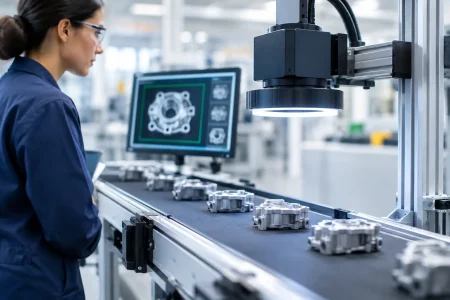
Manufacturing consistency is the next test. Ask how modules are assembled, calibrated, and tested at volume. The answer should include production environment, fixture design, automated or semi-automated inspection, and lot-level quality controls. If every batch depends too heavily on manual adjustment, yield variation becomes more likely as order volumes rise.
Then look at component sourcing depth. Camera modules depend on sensor availability, lens supply, PCB or FPC stability, and connector reliability. A supplier with strong upstream coordination can protect your schedule better than one that simply buys parts on the spot market. This is especially important when your device lifecycle is measured in years, not months.
Responsiveness also matters more than many teams expect. During qualification, you may need lens changes, IR filter adjustments, cable length modifications, firmware tuning, or mechanical refinements to fit your housing. A supplier that can absorb those revisions quickly reduces development drag. One that treats every change as a restart will slow the entire program.
Production scale without customization is not enough
Some buyers assume they must choose between high-volume output and custom engineering. In practice, serious camera module programs often need both. Standard modules can accelerate evaluation, but product commercialization usually requires adaptation around size, interface, optics, or performance targets.
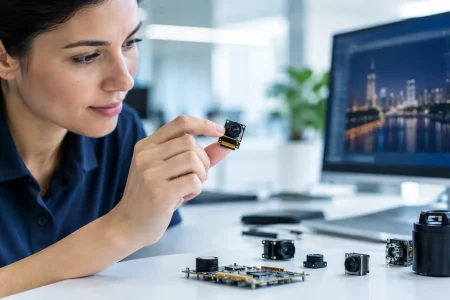
That is why the strongest high volume camera module supplier is usually one with in-house engineering support. Customization can involve sensor replacement, lens field-of-view adjustment, board redesign, different connector orientation, integrated LEDs, shielding changes, or tuning for a specific working distance. These are not cosmetic changes. They determine whether the camera performs correctly inside the final device.
There is a trade-off, though. More customization can extend validation time and increase non-recurring engineering effort. That does not mean customization should be avoided. It means the supplier should help you decide which changes are essential for performance and which ones only add complexity. Good engineering support reduces unnecessary variation while protecting the parts of the design that matter most.
For companies building medical devices, industrial instruments, or robotics systems, this balance is critical. You may need a specialized module, but you also need a path to stable repeat production. A supplier that understands both design flexibility and factory discipline is far more valuable than one that offers only one side of that equation.
Quality control is where supplier claims get tested
Every supplier says quality matters. The meaningful question is how quality is built into the process. With camera modules, defects are not limited to obvious failures. You can have modules that power on and still create unacceptable performance drift in the field.
Strong quality systems cover optics, electronics, mechanics, and final imaging output. That means incoming material inspection, in-process checks, sensor and lens alignment verification, image testing, and outgoing reliability review. Traceability is also important. If a production issue appears months later, the supplier should be able to identify affected lots, materials, and process records without delay.
Buyers should also pay attention to yield discipline. A supplier that hides rework rates or cannot explain typical production yield is difficult to trust at scale. High-volume manufacturing does not mean zero rework, but it should mean controlled processes, measurable defect trends, and continuous correction.
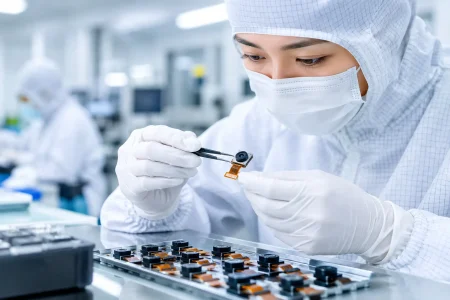
Cleanroom manufacturing can add real value here, especially for compact optical assemblies where contamination directly affects image quality. For embedded and machine vision products, a small particle issue can become a large field problem once units are installed in end equipment.
Lead time, lifecycle support, and communication
Lead time is rarely just a logistics issue. It reflects factory planning, material control, and capacity management. When evaluating a supplier, ask what happens when your forecasts change. Can they scale output quickly if demand rises? Can they buffer critical parts? Can they manage staged deliveries for a phased product launch?
Lifecycle support is just as important. Some modules are easy to source for a short consumer cycle but difficult to maintain for industrial or medical programs. If your product needs long-term availability, your supplier should be able to discuss sensor roadmaps, alternate component planning, and redesign support before obsolescence becomes urgent.
Communication is often the deciding factor in real projects. Procurement may focus on unit cost, while engineering focuses on integration risk and product performance. A reliable supplier can support both conversations with clear technical data and realistic production commitments. That reduces friction inside your own team and speeds up decision-making.
This is one reason many buyers favor manufacturers with direct engineering and production resources rather than pure trading companies. When technical and factory teams are connected, answers tend to be faster and more accurate.
The supplier fit depends on your application
Not every project needs the same supplier profile. A USB camera module for a commercial peripheral has different priorities than an endoscope module, a board-level MIPI camera for embedded AI, or a rugged vision module for industrial automation. Resolution, latency, size, illumination, interface, cable routing, low-light performance, and environmental durability all shift by application.
That is why supplier evaluation should start with the product requirement, not a generic vendor checklist. If your device needs compact dimensions and flexible integration, FPC or MIPI capability may be central. If plug-and-play development speed matters, USB or UVC may be more practical. If your use case includes medical or inspection environments, optical precision and assembly cleanliness become more important than broad catalog range.
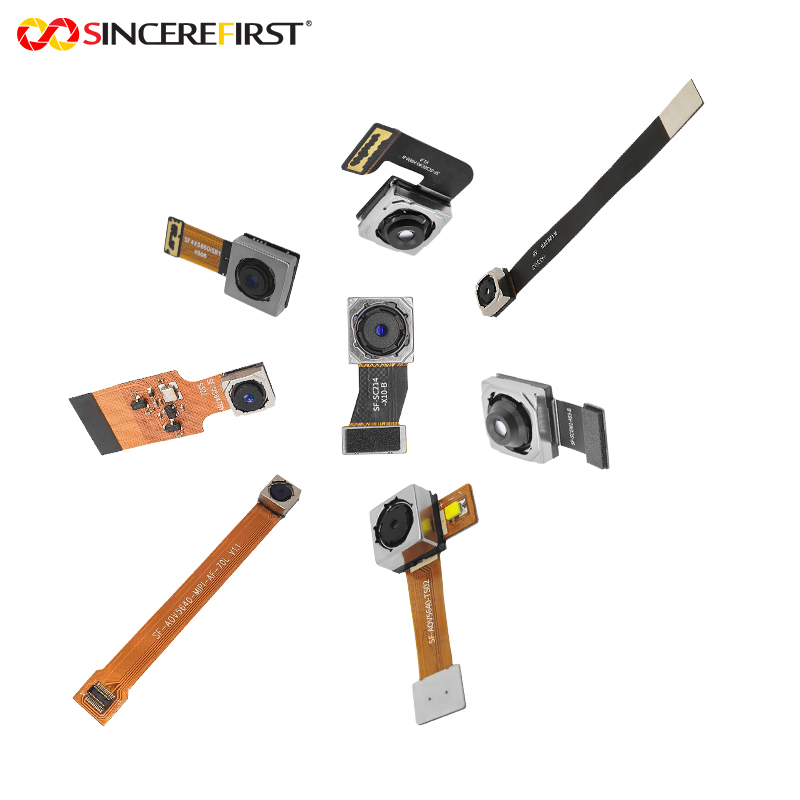
An experienced manufacturer such as SincereFirst is valuable in these situations because the discussion can move from standard part numbers to application-fit design and scalable production planning. That is a better path than trying to force a generic module into a specialized product.
What serious buyers should ask before moving forward
Before approving a supplier, ask for evidence tied to your actual production reality. How fast can they build functional samples? What changes can be made without major tooling delay? How do they control focus, image consistency, and connector reliability in mass production? What testing is done on every unit versus every lot? How do they handle engineering changes after pilot build?
Also ask what happens when something goes wrong. A capable supplier will not pretend defects never happen. They will explain containment, root-cause analysis, corrective action, and communication procedures. That answer says more about long-term partnership value than a polished sales deck.
Price still matters, of course. But in camera module sourcing, the lowest quote can become the most expensive option if it creates delays, unstable yield, or field returns. Total cost includes engineering time, validation cycles, production interruptions, and reputation risk in your market.
The right supplier does more than ship parts. They help protect your schedule, your product performance, and your ability to scale with confidence. If your team is planning a vision-enabled device, the smartest next step is to qualify a partner that can support both the first sample and the hundred-thousandth unit with the same level of precision.