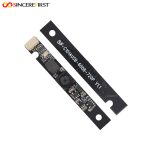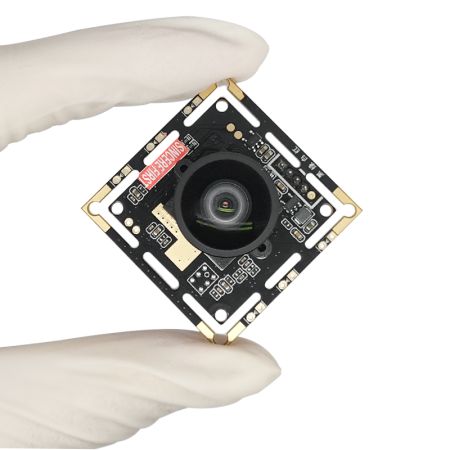






Compact FPC USB Camera Module for Close-Range Imaging

$1.00

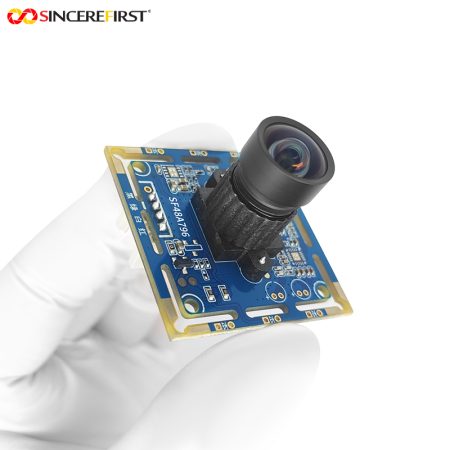
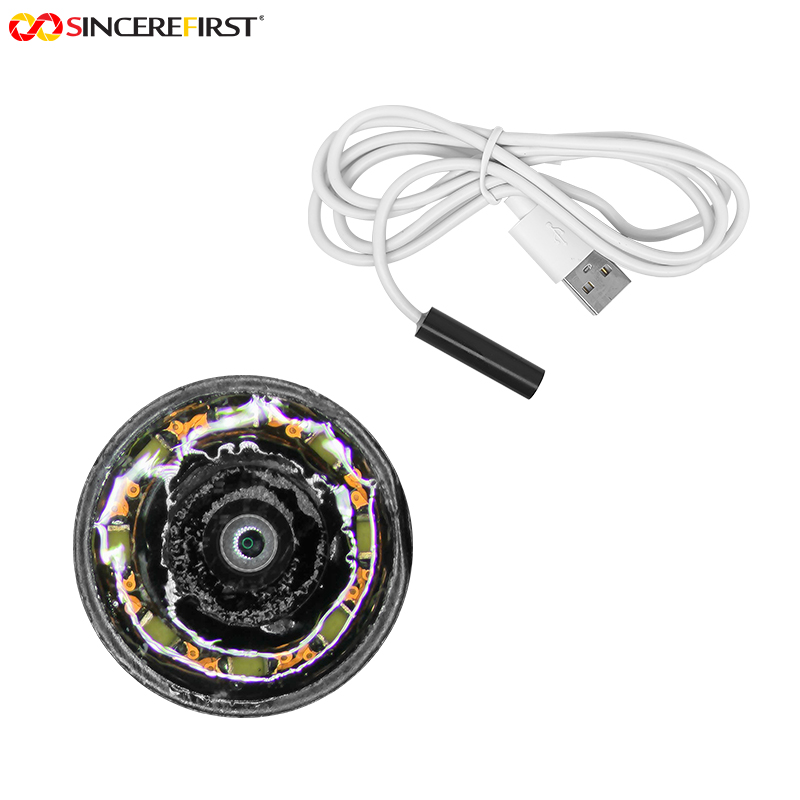
USB 2.0 camera module with separate camera head and FPC design, 15–40cm focusing range, D67° FOV, 3.37mm F2.8 lens, <1% TV distortion, 30 × 18mm main PCB and 5Pin USB connector.

—————————————————————————————–
Price is for reference only. Please contact us for the latest quotation.

+ −
  • Compact FPC USB Camera Module for Close-Range Imaging
    $1.00

    Request a Call Back

    • Compact FPC USB Camera Module for Close-Range Imaging
      $1.00

      Ask a Question

        ... people are viewing this right now

        Share
      Cmos UVC USB Camera Module Industrial Camera Module

      Introduction

      Some embedded devices need the camera lens to fit into a very small front opening while the USB electronics remain deeper inside the enclosure. In these projects, using a conventional one-piece camera PCB can make mechanical integration unnecessarily difficult.

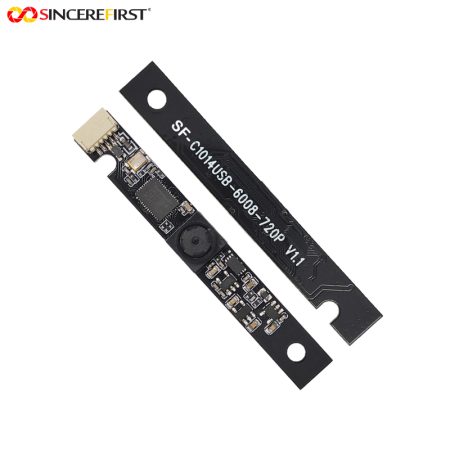
      This camera module separates the 8×8mm camera head from the 30×18mm USB main board through FPC, allowing the optical section and processing board to be positioned independently.

      Its Fixed Focus optics are configured for approximately 15–40cm, with a 3.37mm focal length, F2.8 aperture and D67° viewing angle. This makes the module particularly relevant to compact products that need controlled close-range imaging rather than room-scale viewing.

      The page-1 drawing identifies the product as SF-C1014USB-ZW01SET-D65 V1.0.

      Applications in Real Devices

      Close-Range Inspection Devices

      Some compact inspection products need to observe targets located only a few tens of centimeters from the camera.

      The 15–40cm focus range is better matched to this type of controlled close-range task than camera modules optimized for 60cm to infinity.

      Compact Smart Terminals

      A terminal may have very little space around the camera opening but enough internal room for a separate processing board.

      The small camera head can remain near the front panel while the USB main board is positioned elsewhere in the enclosure.

      Equipment Status Viewing

      Devices that need to observe a nearby display, indicator, label or mechanical position can benefit from a defined close-range optical setup.

      The relatively moderate D67° FOV also keeps the target larger in the image than an ultra-wide lens would.

      Embedded Devices with Remote Camera Placement

      When the optical position and USB-board position cannot overlap, the FPC structure provides greater mechanical freedom than a rigid one-board camera.

      Project Evaluation Guide

      Consider This Model When

      • The camera head must be very small.
      • The main USB board can be positioned separately.
      • FPC routing is possible inside the device.
      • The target is normally 15–40cm from the camera.
      • D67° provides enough scene coverage.
      • Low optical distortion is valuable.
      • A 30×18mm main board fits the enclosure.
      • USB integration is preferred.

      Confirm Before Sampling

      • Actual camera-to-target distance.
      • Smallest target detail that must remain visible.
      • Required scene width at 15–40cm.
      • Whether D67° provides enough coverage.
      • Available camera-head opening.
      • Required FPC length and bending path.
      • Main-board mounting space.
      • USB host compatibility.
      • Whether the standard optical focus range needs adjustment.

      Choosing This Model Within the USB Camera Module Series

      This model represents the small-head, close-range FPC USB direction.

      Choose it when both front-end camera size and nearby working distance are important.

      Compared with SF-C1014USB-SW01, both products separate the camera head from the USB main board, but this model provides a much more clearly defined optical direction:

      • SF-C1014USB-SW01 → mechanical separation is the main advantage.
      • SF-C1014USB-ZW01SET-D65 → 8×8mm camera head + 15–40cm close-range optics.

      Compared with one-piece 20×20mm or 25×25mm camera modules, it is more suitable when the complete USB PCB cannot sit directly behind the lens.

      Related Models

      SF-C1014USB-SW01 V1.0
      Consider this model when a split-board USB architecture is required but the project does not specifically need the 15–40cm close-range optical configuration.

      SF-C1014USB-2020-MIC V1.0
      Consider this one-piece 20×20mm model when camera and USB electronics can share the same front mounting area and integrated audio is required.

      Key Specifications

      SpecificationDetails
      Product NameClose-Range FPC USB Camera
      ModelSF-C1014USB-ZW01SET-D65 V1.0
      StructureCamera Head + FPC + USB Main Board
      Camera Head SizeApprox. 8 × 8mm
      Camera Head Optical AreaApprox. Ø6mm
      Main PCB SizeApprox. 30 × 18mm
      Focus TypeFixed Focus
      Focus Range15–40cm
      EFL3.37mm
      ApertureF2.8
      Diagonal FOVD67°
      TV Distortion< -1%
      Interface DirectionUSB
      DSPUSB 2.0 DSP
      Camera ConnectionFPC
      FPC Connector24Pin / 0.5mm Pitch
      USB Connector5Pin / 1.0mm Pitch
      USB Pin DefinitionUSB 5V / DM / DP / GND / Shield GND
      Main PCB ThicknessApprox. 1mm
      Overall Assembly LengthApprox. 64.25mm
      VersionV1.0


      SincereFirst Customization

      Camera Head and Lens

      Camera-head dimensions, lens FOV and optical configuration can be evaluated according to the front opening, target size and required scene coverage.

      Focus Distance

      The Fixed Focus setup can be adjusted when the standard 15–40cm range does not match the actual target position.

      FPC Length and Routing

      FPC length, connector orientation and bending path can be evaluated according to the distance and mechanical relationship between the camera head and main PCB.

      USB Main Board Integration

      Main-board size, USB connector direction, cable structure and mounting position can be reviewed according to the host system and enclosure.

      Final configuration should be validated with the actual host platform, enclosure, optics, software, and lighting environment before sampling.

      FAQ

      Why choose this model instead of a normal one-piece USB camera?

      The main reason is mechanical separation.

      The small camera head can fit near the target or viewing window while the larger USB processing board is placed elsewhere inside the device.

      What makes this different from the SW01 split-board model?

      This model has a clearly defined 8×8mm camera head and 15–40cm close-range focus direction.

      It should therefore be selected for both optical and mechanical reasons, not only because the boards are separated.

      Is D67° suitable for inspection?

      It can be suitable when the target needs to occupy a meaningful portion of the image rather than maximizing surrounding scene coverage.

      The required scene width and target size at the actual working distance should be checked before selection.

      Why is low distortion useful for close-range imaging?

      Lower distortion helps keep object edges and geometry more natural within the image.

      This can be more useful than an ultra-wide lens when the application needs to observe a defined target rather than simply see as much of the environment as possible.

      Can the FPC be made longer?

      FPC length can be evaluated according to the device structure, but longer routing should be checked together with signal integrity, bending and assembly requirements.

      Does the model name D65 mean the FOV is exactly 65°?

      The current optical specification on the drawing lists Fov(D) 67°.

      For the product page, the documented optical value should therefore be written as D67° rather than inferring D65° from the model name.

      Request Project Evaluation

      If your device needs a very small camera head for targets around 15–40cm away, provide the available front opening, target dimensions, working distance, required viewing area and distance to the USB main board.

      SincereFirst can evaluate the camera-head size, focus setup and FPC structure before sampling.

      Send Inquiry

        Close
        Close My Cart
        Close Recently Viewed
        Close
        Close
        Categories