
When a camera module looks fine on paper but fails after integration, the problem is rarely the sensor alone. It is usually the supplier. An embedded vision supplier comparison helps separate vendors that can ship samples from partners that can support design-in, verification, production control, and long-term supply without slowing your product roadmap.
For OEMs, system integrators, and engineering teams, supplier selection is not a catalog exercise. Embedded vision performance depends on lens matching, ISP tuning, interface stability, connector reliability, thermal behavior, mechanical tolerance, and production consistency. If a supplier cannot manage those variables at the module level, your team ends up absorbing the risk in software workarounds, delayed validation, and field failures.
What matters in an embedded vision supplier comparison
The right comparison starts with the reality of your program. A robotics platform, a medical imaging accessory, and a smart access device may all use compact camera modules, but they do not carry the same integration risk. Some projects need low-light tuning and rapid iteration. Others need strict cable routing, miniature form factors, or a stable USB or MIPI implementation across multiple hardware revisions.
That is why price should not be the first filter. A lower unit cost can disappear quickly if the supplier is slow on customization, inconsistent on optics, or unable to support yield improvement during ramp. In embedded vision, supplier value comes from engineering fit and manufacturing control as much as from the bill of materials.
Compare engineering depth before product range
A broad product portfolio is useful, but it does not guarantee execution. Many suppliers can offer USB camera modules, MIPI camera modules, or medical-grade imaging assemblies. Fewer can explain why a specific sensor-lens combination is the right fit for your working distance, illumination condition, enclosure constraint, and processing pipeline.
A serious supplier should be able to discuss sensor selection, field of view, distortion targets, signal path considerations, power behavior, and image tuning trade-offs. If your team raises questions about autofocus versus fixed focus, rolling shutter artifacts, IR sensitivity, or connector durability, the answers should be technical and specific.
This is where engineering-backed manufacturers stand apart from trading companies. A trading company may move quickly at quotation stage, but once your application needs custom FPC length, board shape adjustment, low-light optimization, or a different optical stack, the response often slows down. That gap becomes costly when deadlines tighten.
Manufacturing capability is part of product performance
In any embedded vision supplier comparison, factory capability should be treated as a technical criterion, not only an operational one. Camera modules are sensitive assemblies. Alignment precision, dust control, bonding quality, cleanroom discipline, and end-of-line testing all affect image output and consistency.
For procurement teams, this means asking how the supplier controls assembly variation across lots. For R&D teams, it means understanding whether the sample you approve can actually be reproduced at volume. The most frustrating supplier failures happen when evaluation samples perform well but mass production drifts because process control was weak from the beginning.
Strong manufacturers can usually show clear production logic: incoming material controls, optical inspection, electrical testing, process traceability, and capacity planning. They also tend to be more realistic about what can be customized without compromising lead time or yield. That honesty matters. Overpromising on custom vision hardware is common, and it usually surfaces late.
Customization speed should be judged with discipline
Customization is one of the biggest differentiators in embedded vision, but it needs to be evaluated carefully. Some suppliers use the word custom when they really mean small cosmetic adjustments. Others can support true module redesign, including PCB layout changes, connector options, housing adaptation, lens changes, cable revisions, and image tuning.
The right question is not simply whether a supplier offers OEM or ODM support. It is how fast they can move from requirement review to sample delivery, and how well they manage revisions. Fast sample turnaround is valuable only if the samples reflect production intent and come with useful technical support.
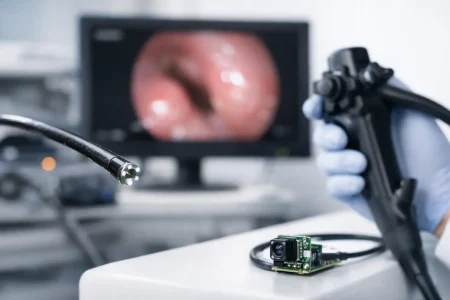
This matters most in applications with tight packaging constraints or unusual imaging conditions. Endoscope modules, compact medical devices, industrial readers, and mobile robotics often need more than an off-the-shelf board camera. They need a supplier that can adjust the module around the system, not force the system around the module.
Quality systems and consistency decide long-term cost
A supplier that wins the first order is not always the one that protects your product over two or three years. Embedded vision programs often outlast the initial design assumptions. Sensor supply changes. Cable tolerances become more visible in higher volumes. Firmware and host platforms evolve. Quality issues that were manageable in pilot production become expensive after launch.
That is why consistency should carry as much weight as initial responsiveness. In an embedded vision supplier comparison, look for evidence of repeatability. Ask how image quality is validated. Ask how nonconforming units are contained. Ask how engineering changes are documented. Ask what happens when a sensor reaches end of life or when a lens source changes.
The strongest suppliers do not treat these as procurement questions. They treat them as program continuity questions. That mindset is a good sign because it shows they understand the cost of disruption on your side.
Interface support and integration risk
Not all interface expertise is equal. USB, USB 2.0, USB 3.0, UVC, MIPI, and DVP each bring different integration demands. A supplier may be strong in image hardware but weak in host-side compatibility or driver expectations. If your product team is already balancing compute, power, thermals, and enclosure design, poor interface support from the camera supplier can stretch the schedule fast.
This is especially relevant when comparing suppliers for machine vision and embedded AI systems. The module must not only capture an image. It must do so reliably within the constraints of the processor, board stack, cable path, and software architecture. A capable supplier should understand those dependencies and help reduce integration risk early.
For many buyers, this is the point where a specialist manufacturer becomes more valuable than a low-cost source. The module itself is only one part of the decision. Technical support during bring-up often determines whether a project stays on track.
How to compare suppliers without getting lost in spreadsheets
A practical embedded vision supplier comparison usually works best when you score vendors across four categories: engineering capability, manufacturing control, customization speed, and lifecycle support. Unit pricing belongs in the process, but it should come after technical fit is established.
If two suppliers look similar, the tie-breaker is often responsiveness under technical pressure. How quickly do they clarify requirements? Do they challenge poor assumptions? Can they recommend alternatives when the original specification is impractical? Serious suppliers do not just say yes. They help you avoid the wrong build.
This is also where sample quality should be judged in context. A clean sample image is useful, but it is not enough. Look at documentation quality, communication speed, revision handling, and whether the supplier can explain test results with confidence. Those signals usually predict future performance better than a polished quote sheet.
Where buyers often misjudge the comparison
The most common mistake is treating all camera module suppliers as interchangeable once the sensor and resolution appear to match. They are not interchangeable. Optical tuning, board design discipline, assembly precision, and support responsiveness can create very different outcomes from similar-looking specifications.
Another mistake is separating engineering review from supplier qualification. In embedded vision, those two functions should stay close together. Procurement may focus on cost, lead time, and commercial terms, while engineers focus on image quality and integration. The best supplier decisions happen when both groups evaluate the same partner through the full product lifecycle.
For companies building commercial devices at scale, the ideal supplier is not just a component source. It is a manufacturing partner with enough imaging knowledge to reduce development friction and enough production discipline to hold quality when orders grow. That is the standard many buyers are now using, especially in industrial automation, medical devices, and intelligent edge systems.
A company like SincereFirst fits this model when the requirement goes beyond standard supply and into custom embedded imaging support. The advantage is not only module breadth. It is the combination of engineering responsiveness, manufacturing scale, and the ability to move from sample to volume without changing partners midstream.
The best comparison is the one that reflects your real risk. If your product depends on compact imaging, stable performance, and timely customization, choose the supplier that can solve problems before they reach your production line.