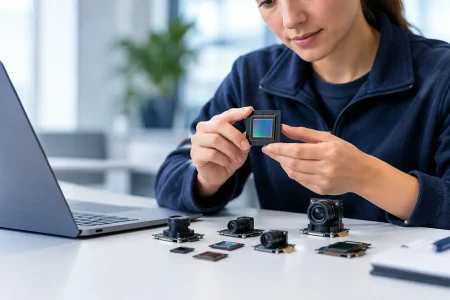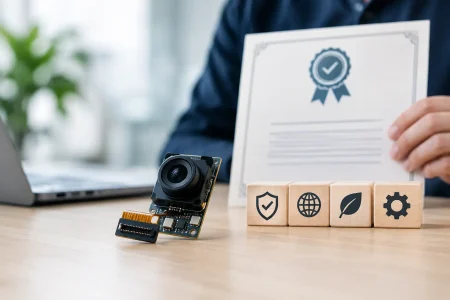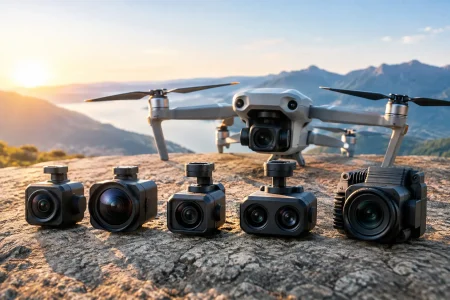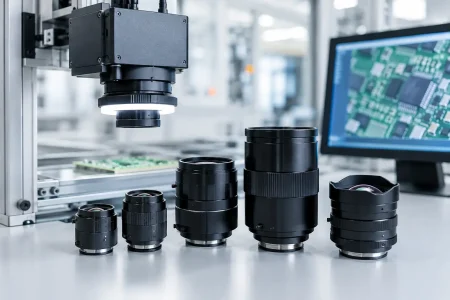

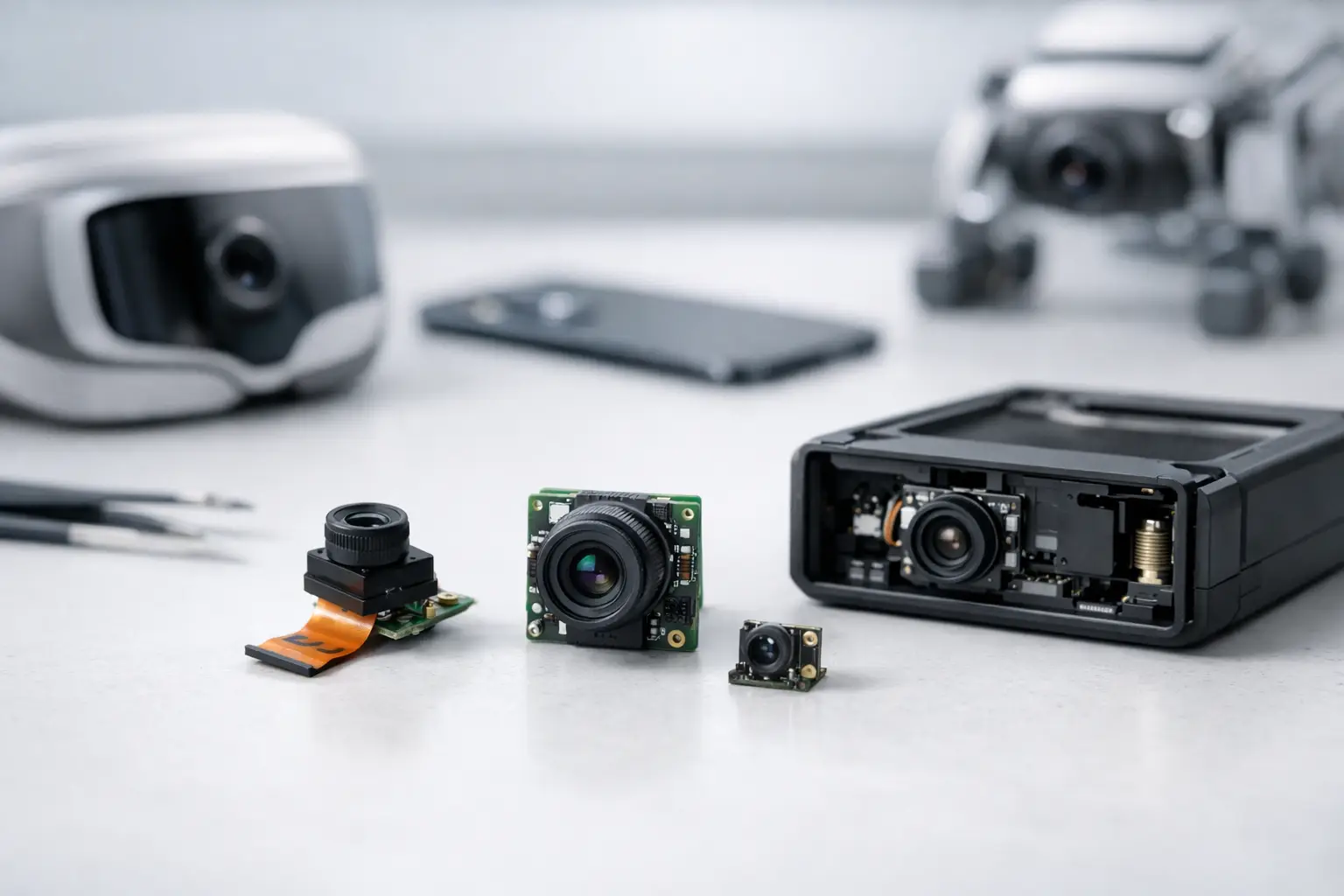
A camera module that looks fine on paper can still fail the product the moment it meets the real enclosure, lighting, thermal limits, or ISP constraints. That is why custom OEM camera modules matter. For product teams building medical devices, robots, handheld terminals, smart security equipment, or industrial systems, the right module is not just a sensor on a board. It is a controlled imaging assembly designed around performance, integration, and manufacturability.
Off-the-shelf modules are useful when requirements are broad and timelines are short. But once a project needs a specific field of view, tighter dimensions, unusual cable routing, low-light tuning, or a stable lifecycle for volume production, standard parts start creating work instead of saving it. The gap between a generic module and a production-ready imaging solution is usually where delays, redesigns, and quality issues begin.
What custom OEM camera modules actually solve
In B2B device development, the camera is tied to the whole system. Mechanical teams care about Z-height, mounting points, lens position, and connector access. Embedded teams care about MIPI CSI-2, USB, DVP, UVC support, power consumption, and driver compatibility. Product teams care about image consistency, lead time, cost targets, and long-term supply. Procurement cares about yield and manufacturing stability.
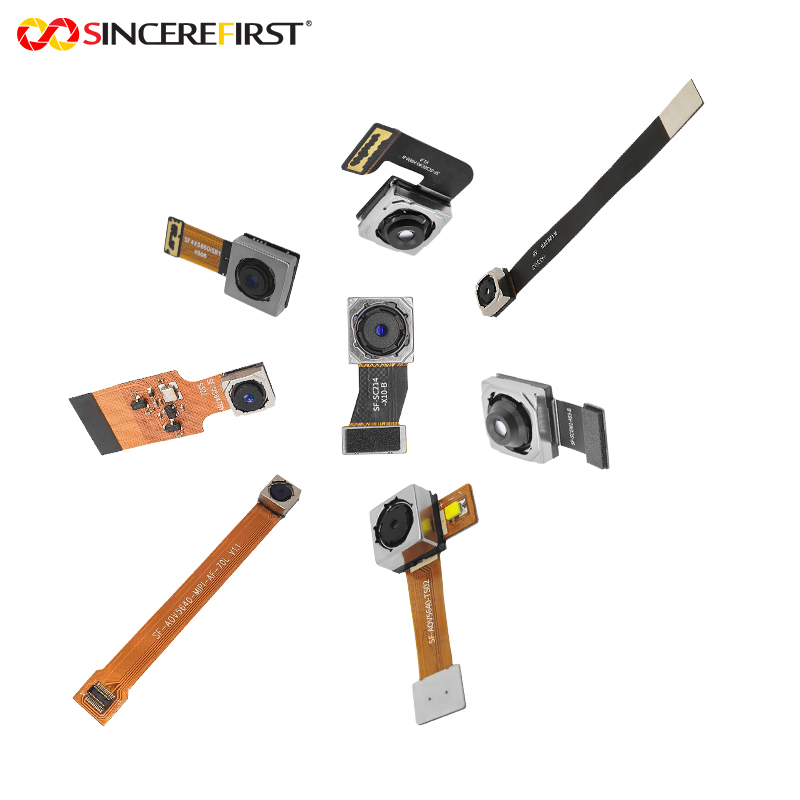
Custom OEM camera modules solve these issues at the source by shaping the module around the product instead of forcing the product around the module. That can include sensor selection, lens matching, IR filter options, PCB layout, FPC length, connector type, housing fit, and firmware tuning. In many projects, these are not nice-to-have changes. They are what makes the design manufacturable.
A warehouse robot, for example, may need global shutter performance to reduce motion blur under fast movement. A medical handheld may need a very small board footprint with controlled color output. A smart agriculture device may need better tolerance for changing light conditions and a sealed integration path. Each case points to a different module architecture, even if the resolution target looks similar.
Where standard modules usually fall short
The usual problem is not that standard modules are poor quality. It is that they are designed for general demand. General demand does not account for your enclosure stack-up, your board-to-board spacing, your thermal profile, or your image tuning target.
One common mismatch is optics. A sensor may support the resolution you need, but the lens may not deliver the right distortion profile, focus range, or viewing angle for your use case. Another issue is interface fit. A module may output through USB when the host platform is built around MIPI, or the FPC orientation may complicate assembly. In compact devices, even a small connector position error can force mechanical changes upstream.
Then there is lifecycle risk. Many product teams have experienced the same pattern: a development module works, the prototype passes, and then supply becomes unstable or a component revision changes imaging behavior. For OEM programs, especially in healthcare, industrial automation, and branded consumer hardware, consistency is part of the specification.
How to evaluate custom OEM camera modules for a real product
The first step is to define the imaging job, not just the headline spec. Resolution alone is rarely enough. Teams should start with object distance, lighting conditions, target frame rate, motion level, field of view, depth of field, color requirements, and host interface. Those factors determine whether the right answer is a compact fixed-focus module, an autofocus design, a low-light optimized module, a global shutter system, or a specialized optical assembly.
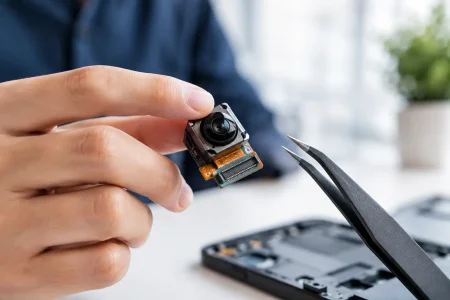
The second step is to evaluate physical integration early. Board size, thickness, lens height, cable length, connector pitch, EMI sensitivity, and heat exposure affect the module choice as much as image quality does. Many delays happen because imaging evaluation starts before mechanical constraints are locked. That works for a lab setup, but not for scaled production.
The third step is to examine software and tuning support. A strong hardware design can still produce weak results if ISP tuning is generic. Auto exposure behavior, white balance, sharpness, noise reduction, and color calibration all influence whether the output matches the application. A barcode reader, an inspection device, and a telehealth camera all need different tuning priorities.
The fourth step is supplier capability. For custom work, engineering depth matters as much as the catalog. Buyers should look at prototype speed, sensor access, cleanroom manufacturing, test process, quality control, and the ability to support both sample-stage iteration and volume build. A supplier that can only provide a one-time module sample is not the same as a manufacturing partner that can sustain quality through production ramps.
Key customization points that change performance
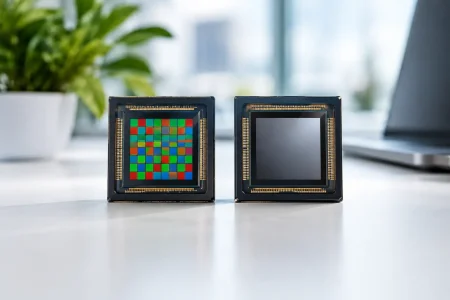
Sensor choice gets the most attention, but it is only one part of module performance. Pixel size, shutter type, sensitivity, dynamic range, and native interface all matter. In some products, a lower-resolution sensor with stronger low-light performance produces better usable images than a higher-resolution option with more noise.
Lens selection is often the difference between acceptable and reliable. Field of view, chief ray angle matching, F number, distortion control, and focus setting should align with the use case. A wide lens can help coverage but may introduce distortion that complicates computer vision. A narrow lens can improve detail at distance but reduce situational context. There is no best lens in isolation.
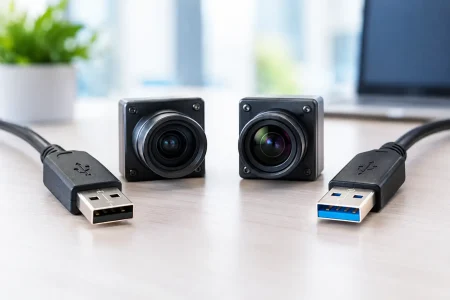
Board design and interconnect also deserve close review. FPC camera modules help when space is tight and cable routing is difficult. USB camera modules simplify integration for many host systems and proof-of-concept builds. MIPI camera modules are often preferred in embedded products where bandwidth, latency, and power efficiency matter. The right choice depends on the host architecture and the production environment.
Optical filters, illumination, and enclosure interfaces can also be customized for specific tasks. IR cut filters, no-IR options, LED support, side-view structures, waterproofing approaches, and anti-fog measures may all be relevant depending on the deployment conditions.
Why manufacturing capability matters as much as design
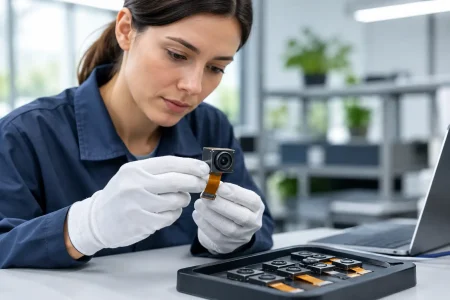
A camera module is easy to discuss at the sample stage and much harder to hold stable at scale. The move from engineering validation to mass production introduces yield management, optical alignment control, dust prevention, test coverage, and revision discipline. If the supplier cannot maintain those variables, the module may pass a bench test and still create field failures.
That is why production capability should be part of technical evaluation from the start. Cleanroom assembly, lens bonding control, sensor handling discipline, incoming material inspection, and end-of-line image testing all affect consistency. So does responsiveness during revision cycles. When a customer needs a change to FPC length, connector orientation, or lens stack, turnaround speed has commercial value.
For OEM buyers, the best partner is usually the one that can support both customization and scale without changing the operating model halfway through the program. SincereFirst fits this requirement by combining embedded imaging engineering, fast sample development, and high-volume manufacturing discipline in one supply path.
Custom OEM camera modules across major applications
In robotics, imaging has to handle movement, changing light, and compact integration. Here, latency, motion clarity, and cable reliability are often more important than chasing headline megapixels.
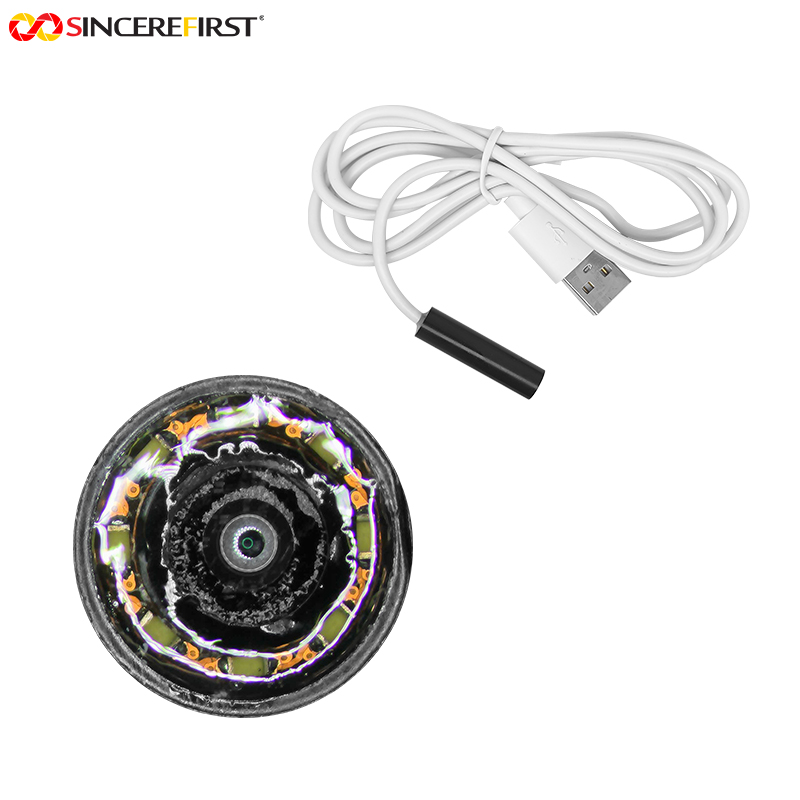
In medical and endoscopic devices, size constraints are tighter and image consistency carries higher stakes. Small-diameter modules, controlled color reproduction, and dependable assembly quality matter more than broad consumer-style feature sets.
In industrial automation and machine vision, repeatability is the priority. Modules must maintain stable output over long operating periods, often in fixed installations where image drift creates inspection errors.
In smart security and city infrastructure, low-light behavior, wide dynamic range, and weather-exposed integration can drive the design. In these systems, it is common to balance sensor sensitivity against storage, bandwidth, and cost.
Choosing a partner, not just a part number
The strongest custom camera projects usually begin with a clear engineering conversation. What is the device trying to see? At what distance? Under what light? In what physical space? With what host processor and interface? Those answers shorten development time far more effectively than comparing module datasheets in isolation.
A capable supplier should be able to translate application requirements into sensor, lens, PCB, interface, and manufacturing decisions with few assumptions. They should also be transparent about trade-offs. A smaller module may limit optics. A lower-cost sensor may increase noise. A very wide field of view may reduce edge detail. Honest guidance is more valuable than overpromising.
When custom OEM camera modules are specified correctly, they remove friction from the entire product cycle. Integration gets cleaner. Validation gets faster. Production gets more stable. And the imaging system performs like a designed component, not an afterthought forced into the enclosure.
If your product depends on vision, the smartest move is usually not to ask which camera module is available now. It is to ask which camera module will still fit, perform, and ship reliably when your program reaches real volume.