
A robot that misses a part edge by 2 mm or loses sight of a pallet marker under mixed lighting does not have a camera problem alone. It has a system design problem. Choosing the best camera modules for robotics starts with the job the robot must do, the processor it will run, and the conditions it will face on the line, in the field, or inside a mobile platform.
For engineering teams, the wrong module usually fails in familiar ways. USB looks fast during prototyping but creates packaging limits in a compact chassis. A rolling shutter sensor looks sharp on the bench but blurs under motion. A high-resolution module sounds safer, then overruns bandwidth, thermals, or ISP resources. The right decision is less about chasing headline specs and more about matching interface, optics, sensor behavior, and manufacturing support to the exact robotics application.
What makes the best camera modules for robotics
In robotics, a camera module is not judged by image quality alone. It is judged by decision quality. Can the robot detect, classify, measure, localize, and react within the timing budget of the application?
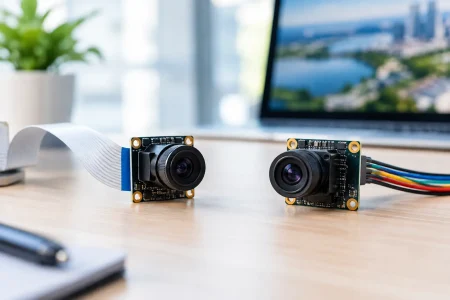
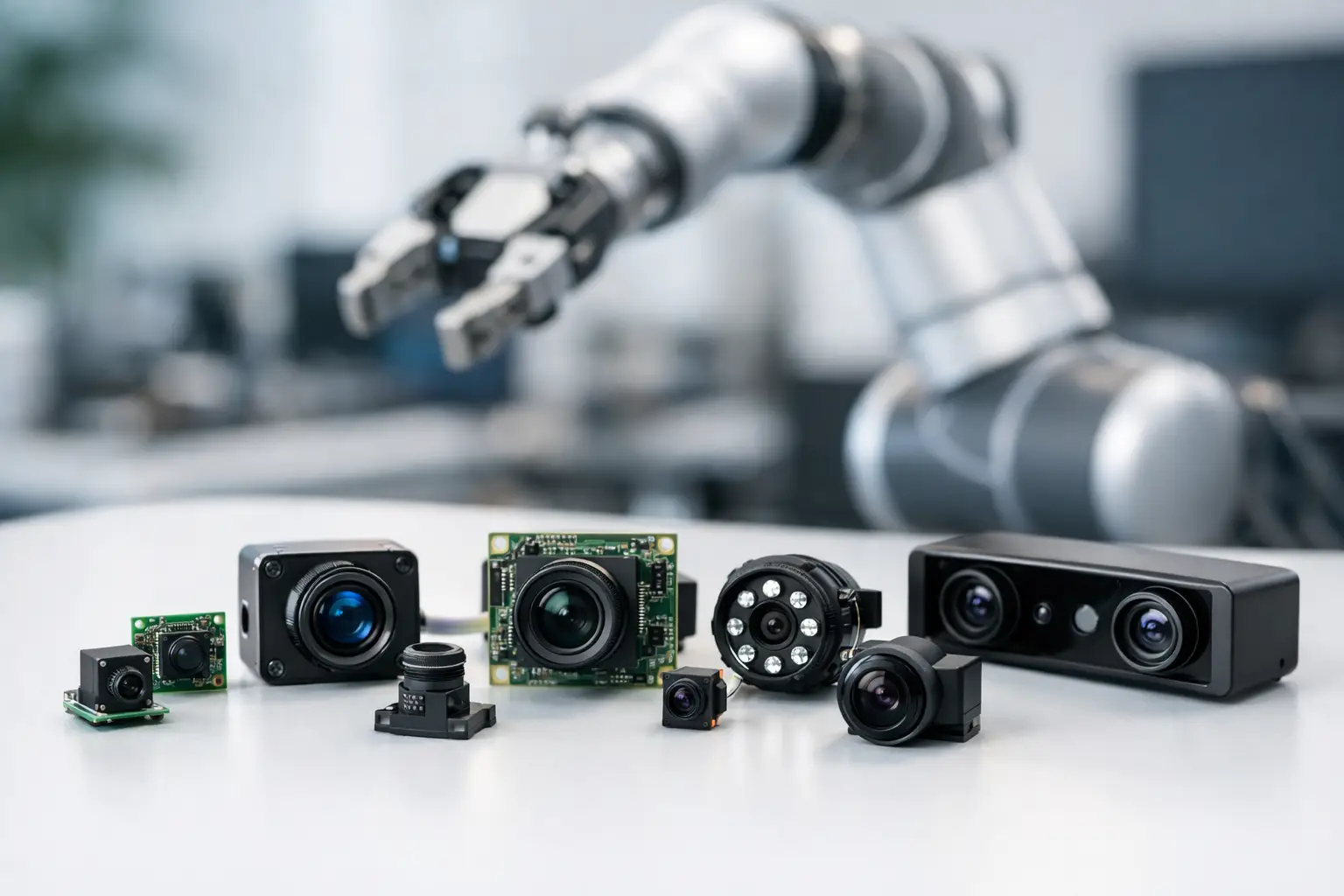
That is why the first screen is usually interface and latency. MIPI camera modules are often preferred for embedded robotics because they offer direct, high-bandwidth connection to application processors and edge AI platforms in a compact footprint. USB camera modules remain useful for industrial PCs, rapid proof-of-concept builds, and service robots where integration space is less constrained. DVP modules still have a place in cost-sensitive systems or legacy embedded designs, but they are usually less attractive for advanced vision pipelines.
Sensor choice is equally decisive. Global shutter matters when the robot or target is moving quickly. Rolling shutter can still work well for slower positioning, stationary inspection, or cost-controlled systems, but it needs careful validation. Resolution is application dependent. A 2MP or 5MP module may be fully sufficient for navigation, line following, or barcode capture, while precision inspection, bin picking, and object measurement may require higher pixel density and better optics rather than simply more megapixels.
Low-light behavior, dynamic range, lens selection, module dimensions, cable routing, and long-term supply all belong in the same discussion. For OEMs and integrators, manufacturability is part of camera performance.
10 best camera modules for robotics by application fit
There is no single winner for every robot. The strongest options are the ones that fit the architecture.
1. MIPI global shutter modules for mobile robots
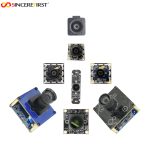
For AMRs, AGVs, and compact edge AI robots, MIPI global shutter modules are often the best starting point. They support low-latency capture, compact integration, and strong motion performance for obstacle detection, visual odometry, and marker reading. If your platform uses an embedded SoC, this category usually gives the cleanest system design.
2. USB3.0 global shutter modules for industrial robot cells
When the robot is connected to an industrial PC or x86 controller, USB3.0 camera modules are practical and fast to deploy. They are well suited for pick-and-place, guidance, and workstation inspection. The trade-off is physical size and cable management. In a large enclosure, that is manageable. In a small articulated design, it often is not.
3. Stereo camera module pairs for depth-aware robots
Depth matters in bin picking, navigation, pallet handling, and human-robot interaction. Stereo module pairs can provide useful depth estimation without moving to a more complex 3D architecture. They require careful baseline design, synchronization, and calibration, so they are best chosen with mechanical and software planning in place from the start.
4. High dynamic range modules for mixed lighting
Robots working near dock doors, warehouse aisles, greenhouses, or factory windows often fail because the scene is not evenly lit. A module with strong HDR performance can preserve detail in shadows and highlights where standard sensors lose usable data. This is often more valuable than increasing resolution.
5. Autofocus modules for variable working distance
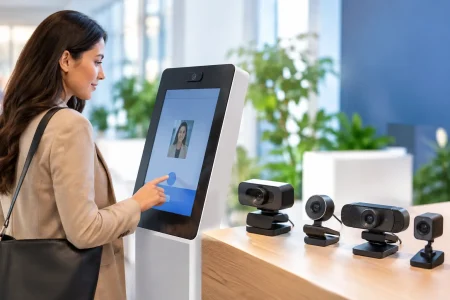
Service robots, smart kiosks, and some warehouse systems need to read labels or identify objects at changing distances. Autofocus can help, but it introduces another moving element and control dependency. In many industrial cases, a fixed-focus lens with the right depth of field is more stable. Autofocus is best used where distance changes are real and frequent.
6. Fixed-focus wide-angle modules for navigation
For SLAM, corridor navigation, and general situational awareness, wide-angle fixed-focus modules are often the practical choice. They simplify integration and reduce maintenance concerns. The trade-off is edge distortion and lower measurement precision, so they are less ideal when robotics vision must also support accurate metrology.
7. Near-infrared sensitive modules for low-light robotics
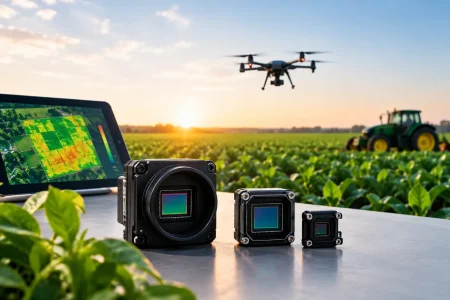
Security patrol robots, agricultural platforms, and night-capable machines often benefit from NIR-sensitive camera modules. Paired with appropriate illumination, they improve operation in dim environments without relying only on visible light. Day-night performance must be evaluated carefully because optics and filters can shift overall image behavior.
8. Compact FPC camera modules for space-limited designs
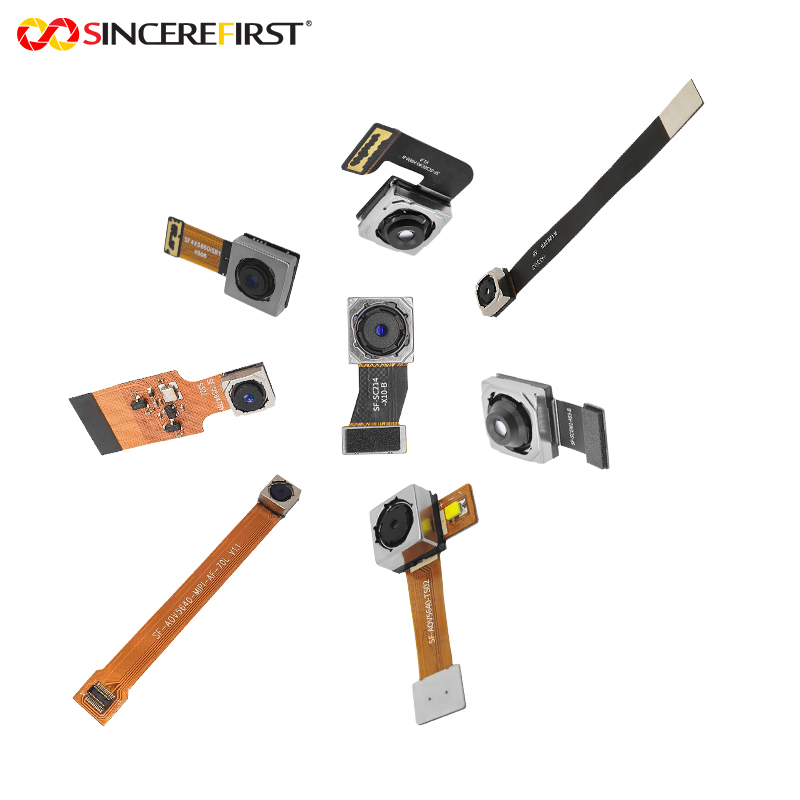
Small robots, drone-adjacent systems, and articulated subsystems often need low-profile camera packaging more than a large board-level form factor. FPC camera modules help solve routing and mechanical constraints. Their advantage is packaging flexibility. Their challenge is that the whole assembly, including reinforcement, connector reliability, and shielding, must be engineered for motion and vibration.
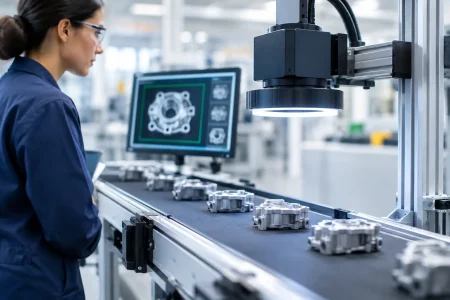
9. High-resolution modules for precision inspection robots
For defect detection, assembly verification, and robot-guided measurement, higher-resolution camera modules can improve feature capture. But only when optics, illumination, and processing are matched to that sensor. A 13MP module with weak lens performance or poor lighting does not create an inspection system. It creates bigger image files.
10. Custom camera modules for specialized robotics
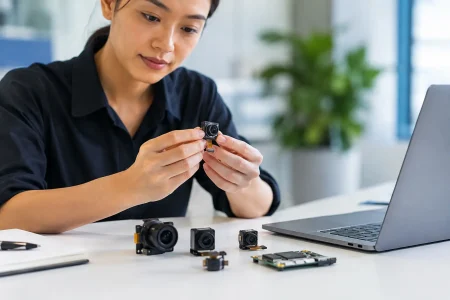
Some robotics programs simply do not fit standard modules. The optical path may be constrained, the board shape may be unusual, or the robot may require a specific ISP, connector, lens stack, or environmental treatment. In those cases, a custom camera module is often the most efficient route because it reduces redesign work later. This is especially true when the product is moving from prototype to volume.
How to choose the right module for your robot
Start with the task, not the camera catalog. If the robot is identifying shelf labels at moderate speed, your priorities differ from a robot guiding a manipulator over moving parts. Define the target size, working distance, field of view, robot speed, lighting variability, and acceptable latency. Those five inputs eliminate many poor-fit options quickly.
Then check compute compatibility. Teams often choose a module before confirming driver support, ISP requirements, synchronization needs, and processor lane availability. MIPI modules can be excellent, but only if the host platform has the right support and enough engineering time for bring-up. USB is easier for fast testing but less elegant for deeply embedded product designs.
Environmental reality matters more than spec sheet optimism. Robotics systems see vibration, cable flex, dust, temperature shifts, and uneven lighting. A module that performs well in a clean lab may become unstable in production if connector retention, lens fixation, or EMI control are weak. For commercial deployment, imaging performance and assembly reliability are inseparable.
Key trade-offs engineers should evaluate early
Global shutter versus rolling shutter is usually the first serious trade-off. If motion blur or geometric distortion can affect localization or picking accuracy, global shutter is usually worth the premium. If motion is limited and cost pressure is high, rolling shutter may still be a valid choice.
Resolution versus frame rate is another common tension. More pixels improve detail, but they also raise bandwidth and compute demand. In robotics, a fast correct decision is better than a delayed perfect image. Many systems perform best with moderate resolution and stable frame timing.
Field of view versus measurement accuracy also needs honest evaluation. A wider lens helps coverage and navigation, but it can reduce usable detail at the target. If the same robot must navigate and inspect, dual-camera architectures often perform better than asking one module to do both jobs poorly.
Standard module versus custom module depends on program stage and production volume. Standard modules shorten proof-of-concept timelines. Customization becomes more attractive when mechanical constraints, cable direction, lens stack, or regulatory targets start affecting the final product.
Why supplier capability matters in robotics programs
The camera module is only one part of the risk profile. Robotics OEMs also need stable supply, revision control, repeatable calibration, and clear engineering support when image tuning or board adaptation is required. A supplier that can only ship samples is not the same as a supplier that can support validation, pilot builds, and scaled production.
That is where manufacturing depth becomes commercially important. Teams should ask about sensor options, interface range, cleanroom production, connector and lens customization, validation methods, and sample turnaround. For programs that expect product revisions or multi-region deployment, support for custom development can remove significant downstream friction. For example, SincereFirst supports both standard embedded camera modules and custom imaging development, which is often the right model for robotics teams balancing speed with long-term manufacturability.
The best camera modules for robotics are not the most expensive or the highest resolution. They are the modules that keep perception stable under real operating conditions, fit the host platform without compromise, and remain buildable as the program scales. If you choose with the robot task, compute path, and production plan in view, the camera becomes more than a component. It becomes a dependable part of the machine’s decision system.
A good robotics camera choice should make the next design review shorter, not longer.