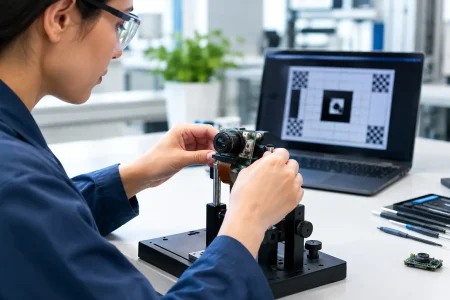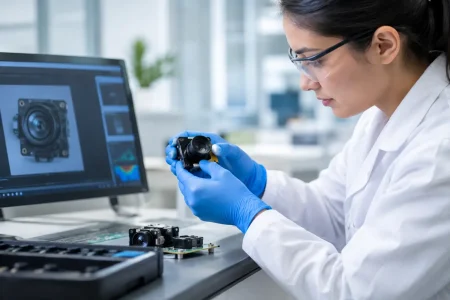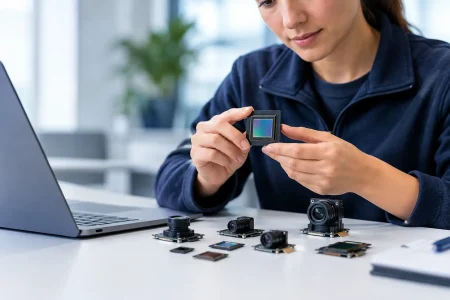

A camera selected for sharp images on an engineering bench can fail inside a vehicle cabin for reasons that have little to do with resolution. Windshield glare, night driving, sunglasses, vibration, an off-axis mounting angle, and limited processor bandwidth can all weaken system performance. Effective cabin sensing integration treats the camera module, optics, illumination, embedded software, mechanical package, and manufacturing process as one engineered system.
For automotive OEMs, Tier suppliers, fleet technology developers, and intelligent cockpit manufacturers, the goal is not simply to add a camera. The goal is to create repeatable in-cabin perception that performs across drivers, lighting conditions, vehicle trims, and production volumes. That requires early decisions about sensing architecture and a camera partner that can support customization through mass production.
Why Cabin Sensing Integration Is a System Engineering Task
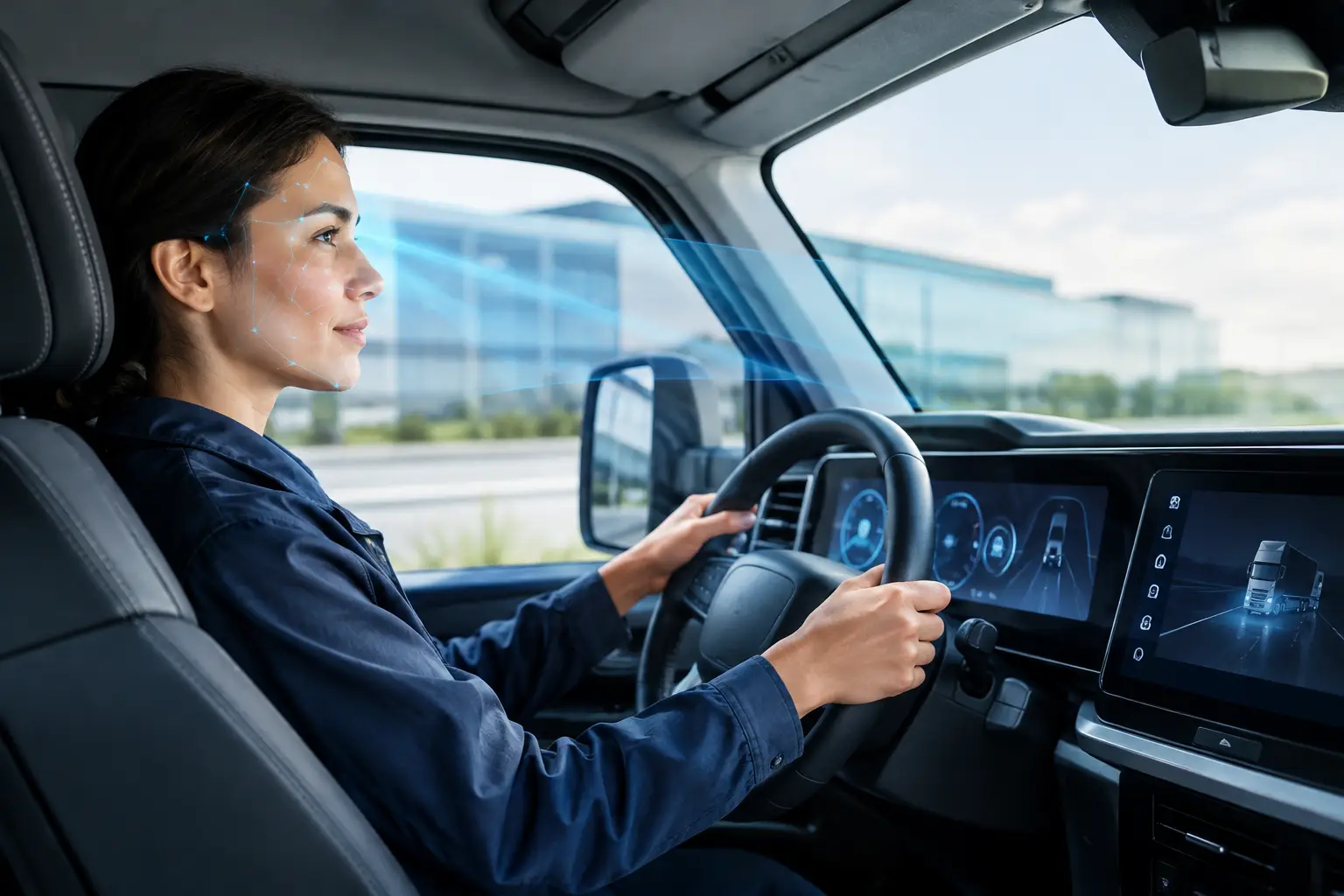
Cabin sensing systems are increasingly used for driver monitoring, occupant monitoring, passenger classification, gesture interaction, seat occupancy analysis, and safety-related alerts. Each application has different requirements, but they share one central challenge: the image source must deliver usable data under highly variable conditions.
A driver monitoring system may need to detect eyelid closure, head pose, gaze direction, and distraction when sunlight is entering from the side window. An occupant monitoring application may need a wider field of view to cover rear seating positions, including small children or partially obscured passengers. A gesture interface may prioritize low latency and color image quality, while a safety-monitoring function may need dependable infrared imaging after dark.
These requirements affect every layer of the design. A sensor with suitable near-infrared sensitivity may be preferable for a driver-facing camera, but it also changes optical filter selection, illuminator design, exposure control, and image signal processing. A wide-angle lens can cover more of the cabin, but distortion must be characterized and corrected to preserve the geometric information used by perception algorithms.
The right architecture depends on the use case. There is no single cabin camera module that is ideal for every vehicle program.
Start With the Sensing Function, Not the Camera Specification
Resolution is often the first item on a sourcing checklist, but it should not be the first engineering decision. The practical starting point is the information the system must reliably extract.
For driver monitoring, the system may require detailed facial features at a known distance and angle. This can favor a focused camera view, an infrared-sensitive sensor, and controlled near-infrared illumination. For broad occupant coverage, the priority may shift toward field of view, depth of field, and scene-level performance. If the system is expected to support both daytime interaction and nighttime monitoring, a dual-mode imaging design or carefully selected IR-cut configuration may be needed.
The camera specification should then follow the sensing task. Engineering teams should define the target scene coverage, minimum facial or object pixel density, operating illuminance range, required frame rate, latency budget, and expected algorithm inputs. Those values create a defensible basis for selecting sensor format, lens focal length, aperture, interface, and image tuning strategy.
A higher-resolution module can be useful, but only if the processor can ingest and process its output within the available power and thermal limits. In many embedded vehicle platforms, a well-tuned 2MP or 5MP module can deliver better real-world results than an oversized sensor that forces frame-rate compromises or excessive data compression.
Sensor Selection for Day, Night, and Mixed Lighting
The cabin is a difficult imaging environment because lighting changes rapidly and unpredictably. A vehicle may move from direct sun into a tunnel, pass under streetlights, or operate in complete darkness. The selected sensor must provide a workable balance of sensitivity, dynamic range, noise performance, and infrared response.
Near-infrared driver monitoring systems commonly use 850 nm or 940 nm illumination. The wavelength choice involves trade-offs. An 850 nm solution can provide stronger sensor response at a given power level, while 940 nm is less visible as a red glow to occupants. Sensor quantum efficiency, illumination geometry, power limits, and cosmetic design all influence the final decision.
High dynamic range can also help when bright windows and darker facial regions appear in the same frame. However, HDR modes may introduce motion artifacts or alter effective frame timing. The system integrator should validate the actual use cases rather than assume an HDR data-sheet feature resolves cabin lighting challenges.
Optics Must Match the Installation Location
A camera placed in the steering column, rearview mirror housing, A-pillar, overhead console, or center display sees a different cabin geometry. Lens selection must account for this mounting location before mechanical packaging is finalized.
Field of view determines coverage, but it also affects facial detail, distortion, edge sharpness, and the amount of windshield or dashboard area captured. A lens that is too wide can waste pixels on irrelevant scene content. One that is too narrow can lose the driver when the seat position changes or when the driver turns toward a side mirror.
Automotive cabin optics should also be evaluated for infrared focus shift. Visible and NIR light do not always focus at the same plane, which can reduce nighttime sharpness even when daytime images appear acceptable. Lens design, IR correction, aperture selection, and final focus procedures should be considered together.
Building the Cabin Sensing Integration Architecture
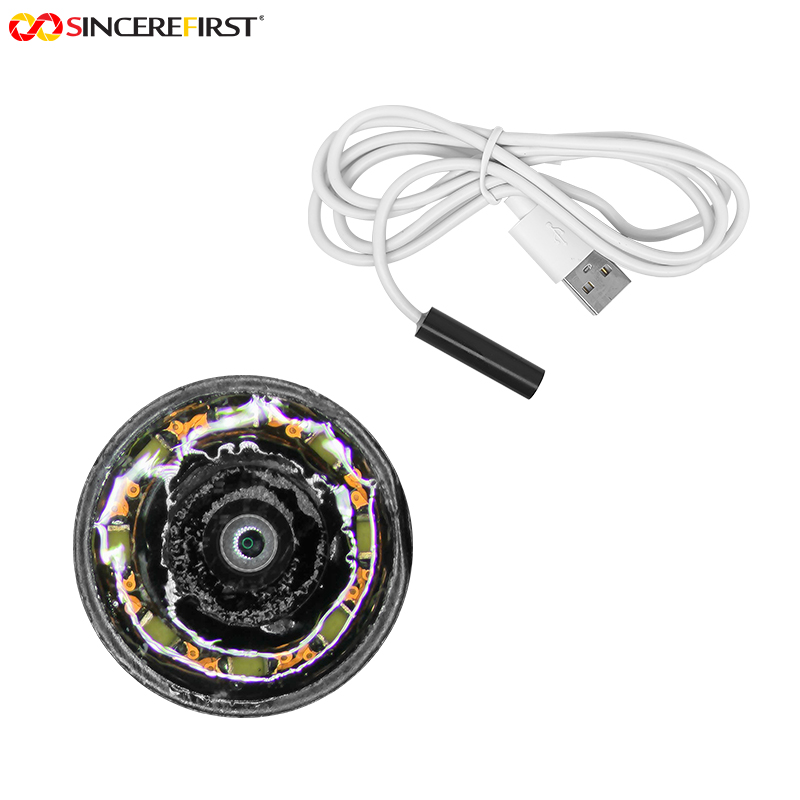
The interface between the camera and the vehicle compute platform is a major design decision. MIPI CSI-2 is common where the camera sits close to an application processor or dedicated vision SoC and low latency is required. Serialized camera links can be more appropriate when cable runs are longer or the installation must tolerate the electrical environment of a vehicle. USB camera modules may fit development systems, aftermarket devices, or applications where UVC compatibility and integration speed are priorities.
The preferred interface depends on cable length, bandwidth, EMC requirements, processor support, power architecture, and serviceability. It is better to select the interface from the complete electronic architecture than to force a camera module into a connector scheme chosen for another subsystem.
Mechanical Design Cannot Be Deferred
Small changes in module placement can have major effects on image quality. The camera needs a stable optical axis, controlled tolerance stack-up, suitable thermal paths, and protection from contamination. Housing reflections are another frequent issue, particularly with NIR illumination. A glossy bezel or poorly positioned cover window can create flare that interferes with face detection and eye-tracking performance.
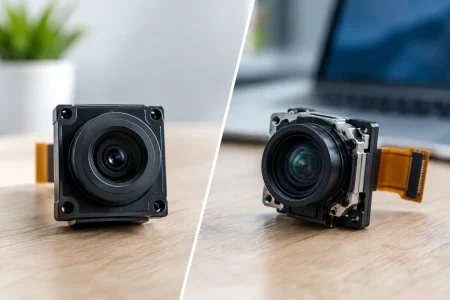
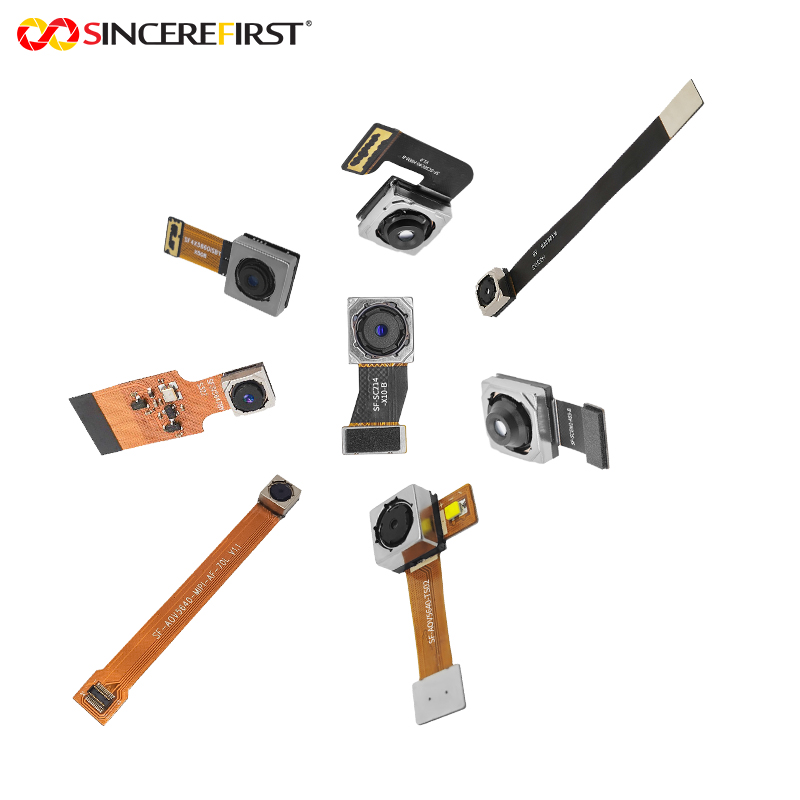
Mechanical teams should review camera location using representative trim materials and production-intent windows, not only prototype housings. Lens barrel clearance, connector orientation, FPC bend radius, assembly access, and module retention all affect manufacturability. For compact cockpit installations, an FPC camera module can reduce package height and give designers more routing flexibility, but it must be supported correctly to avoid stress at the connector and cable interface.
Thermal behavior also matters. Long-duration video processing, infrared LEDs, display heat, and solar loading can raise local temperatures. Sensor noise, focus stability, and component life should be assessed at the real installation point, not only at ambient lab conditions.
Image Tuning and Algorithm Validation Must Move Together
Cabin perception algorithms depend on the image characteristics delivered by the module. Auto exposure, gain control, white balance, temporal noise reduction, sharpening, and gamma can improve visual appearance while unintentionally reducing algorithm consistency. For example, aggressive temporal filtering may blur eye movements, and excessive sharpening may create artifacts around eyeglass frames.
For this reason, image tuning should be validated against the intended algorithm, not only against subjective image quality. Development teams need representative data from diverse drivers, seating positions, glasses, skin tones, cabin materials, weather conditions, and day-to-night transitions. Testing should include vibration, electromagnetic interference, temperature cycling, and vehicle power events where applicable.
A staged validation program is usually more efficient than waiting for a final vehicle build. Early optical prototypes establish coverage and image feasibility. Engineering samples confirm interfaces and mechanical fit. Production-intent samples support software tuning, reliability testing, and line-process verification. This approach identifies integration risk while design changes are still manageable.
Designing for Manufacturing Scale
A cabin sensing design is only commercially viable when the optical and electronic performance can be repeated across production lots. That means defining control points for sensor sourcing, lens quality, active alignment or focus settings, infrared filter configuration, module calibration, and end-of-line testing.
Custom development is often necessary when a vehicle program has unusual packaging, connector, illumination, or field-of-view requirements. Yet customization should not create an unstable supply chain. A capable camera manufacturer will evaluate which elements can use proven module platforms and which require tailored engineering. This reduces development time while preserving the flexibility needed for a production vehicle program.
SincereFirst supports this process with embedded camera module engineering, optical component selection, rapid sample development, and scalable manufacturing for OEM and system-integration projects. The productive conversation starts with the vehicle use case, installation envelope, compute platform, target performance, and expected annual volume.
The Questions That Prevent Late-Stage Redesign
Before locking a cabin camera design, engineering and procurement teams should be able to answer several practical questions. What exact behavior must the system detect? What pixel density is required at the driver or occupant location? How will the camera perform in direct sun, low light, and darkness? Which interface can the compute platform support at the required frame rate? What are the thermal, vibration, and EMC conditions at the mounting point? And how will module quality be verified at volume?
Clear answers turn cabin sensing from a component purchase into a controlled imaging program. When camera, optics, illumination, compute, and production validation are aligned early, the final system has a stronger path from prototype vehicle to dependable fleet deployment.