

A camera module can meet the required resolution, frame rate, interface, and mechanical envelope yet still delay a product launch because its compliance path was not defined early. For OEMs and system integrators, essential camera module certifications are not a paperwork exercise. They determine whether a module can enter a target market, support a regulated end product, and remain a dependable component through production scale-up.
The key is to separate what applies to the camera module itself from what must be verified at the finished-device level. A MIPI, USB, DVP, or FPC camera module is often an embedded component, not a standalone consumer product. Its certifications, material declarations, test reports, and manufacturing controls must support the final device’s approval strategy.
Why Camera Module Compliance Is a System Decision
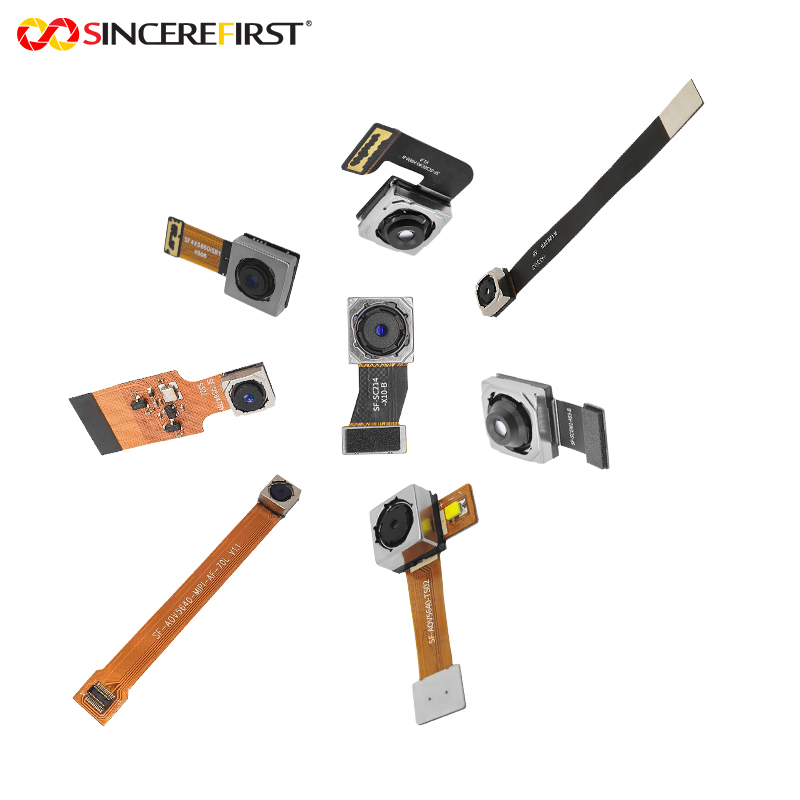
A camera module contains an image sensor, lens, PCB or FPC, connector, passive components, and sometimes LEDs, autofocus actuators, shielding, or onboard processing. Each element can affect environmental, electromagnetic, electrical safety, optical safety, or reliability requirements.
However, the final enclosure, cable length, power design, processor board, software, wireless function, and intended use often determine the formal approval obligation. For example, a USB camera module may be designed with low electromagnetic emissions, but FCC testing is normally performed on the completed host product or its representative configuration. The same principle applies to CE marking in Europe: the finished product manufacturer carries responsibility for conformity.
This distinction matters during supplier qualification. Do not ask only, “Is this camera module certified?” Ask which standards were assessed, what configuration was tested, whether the evidence applies to your use case, and what support the supplier can provide when the final product enters validation.
Essential Camera Module Certifications and Evidence
The required package depends on industry, country, and product architecture. Still, several compliance areas appear repeatedly in commercial imaging projects.
RoHS and REACH Material Compliance
RoHS restricts specific hazardous substances in electrical and electronic equipment sold in many markets, including the European Union. A compliant camera module requires attention to solder, PCB materials, cable assemblies, connectors, components, and packaging where applicable.
REACH addresses substances of very high concern and places information duties across the supply chain. For procurement teams, a current declaration is useful, but it should be supported by controlled material data from key subcomponent suppliers. A generic statement with no part number, revision, or issue date has limited value when an engineering change occurs.
For North American projects, RoHS is still frequently specified by customers even when it is not the direct legal requirement for the finished product. It simplifies global sourcing and helps keep one bill of materials suitable for multiple markets.
CE Marking and EU Conformity
CE is not a third-party certificate that can simply be transferred from a module supplier to an OEM. It is the manufacturer’s declaration that the final product meets applicable European requirements. Depending on the device, this may include electromagnetic compatibility, electrical safety, radio equipment rules, medical device regulations, or other directives.
A camera module supplier can materially reduce risk by providing technical information such as input voltage range, current consumption, shielding design, operating temperature, interface specifications, and available pre-compliance test results. Those documents help the device manufacturer build its technical file and select the right final-product test plan.
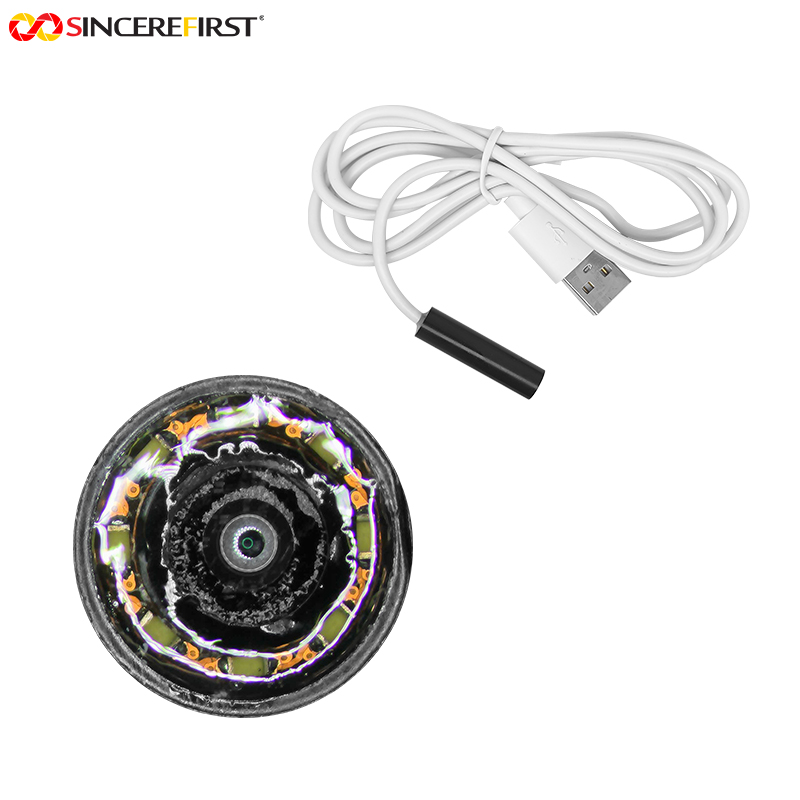
If the module includes illumination, especially high-intensity visible, infrared, or ultraviolet LEDs, the assessment may also need to consider photobiological safety. The risk is highly application-specific: an enclosed industrial camera and a medical or inspection device used close to people do not face the same exposure conditions.
FCC and Canadian EMC Requirements
For products marketed in the United States, FCC requirements commonly apply to unintentional radiators and, where wireless functions are present, intentional radiators. Canada has parallel ISED requirements. A camera module can influence emissions and immunity through clock frequencies, flex-cable routing, grounding, DC-DC noise, and shielding, but testing the module alone rarely proves that the integrated device will pass.
This is why interface selection is a compliance consideration as well as a performance decision. High-speed MIPI CSI-2 and USB 3.0 designs require disciplined layout, impedance control, grounding, and cable strategy. A module that performs well on an evaluation board may behave differently inside a compact metal or plastic enclosure alongside a processor, radio, display, and battery.
ISO 9001 for Manufacturing Control
ISO 9001 does not certify the camera module’s electrical or optical performance. It demonstrates that the manufacturer operates a quality management system with documented controls for purchasing, production, inspection, corrective action, and continual improvement.
For a high-volume OEM program, this can be more commercially significant than a broad but vague product certificate. It gives buyers a framework for traceability, nonconformance handling, change control, and consistent production execution. Still, ISO 9001 alone is not enough. Review incoming inspection criteria, in-process controls, optical test coverage, aging procedures where required, and how serial or lot traceability is maintained.
Medical Device Requirements
A camera module intended for a medical device must be evaluated within the device’s specific regulatory and risk-management framework. ISO 13485 is a relevant quality management standard for medical device manufacturing, while IEC 60601-1 and IEC 60601-1-2 are often relevant to electrical safety and EMC for medical electrical equipment. These usually apply to the finished medical system, not automatically to an embedded camera module.
For medical endoscope modules, the compliance discussion goes further. Biocompatibility, sterilization compatibility, ingress protection, patient proximity, thermal performance, image reliability, and documentation traceability may all matter. A ready-made module can shorten development time, but only if its materials, dimensions, illumination design, and manufacturing records match the intended clinical or diagnostic application.
Automotive Requirements
Automotive camera projects require a different qualification mindset. IATF 16949 is a quality management standard used across the automotive supply chain, while AEC-Q standards are commonly associated with component-level stress qualification. Neither should be treated as a shortcut to vehicle-level approval.
For ADAS, surround-view, driver monitoring, and in-cabin monitoring systems, buyers should also define operating temperature, vibration, humidity, mechanical shock, EMC, image latency, low-light performance, and failure behavior. A module designed for an industrial robot may be technically excellent yet unsuitable for an automotive installation because its materials, connector retention, or validation profile does not match the vehicle environment.
What to Request During Supplier Qualification
The most effective qualification process connects documentation to the exact module revision and intended product. Before approving a supplier, request a controlled document package that covers the module part number, sensor and lens configuration, PCB or FPC revision, interface, and any illumination option.
Useful evidence includes material declarations, quality system certificates, mechanical drawings, electrical specifications, optical performance data, reliability test summaries, change-notification procedures, and traceability methods. For projects requiring market approvals, ask whether the supplier can provide samples from production-intent tooling and support troubleshooting during EMC, safety, and environmental testing.
Avoid treating every report as equally relevant. A test report from a different sensor, cable length, lens barrel, or board revision may show engineering capability, but it does not validate your production configuration. This is especially critical when a custom module uses a new FPC shape, altered shielding, different LED current, or a tailored lens stack.
Build Compliance Into Module Design Early
The fastest route to certification is rarely a late-stage test cycle. It is an early design review that aligns the camera module, host electronics, enclosure, cable, and end-use environment. Define the destination markets, industry rules, expected operating conditions, and certification ownership before the prototype is frozen.
For a security camera, that may mean prioritizing EMC behavior, environmental durability, and regional material compliance. For a medical endoscope, documentation discipline and optical safety may carry greater weight. For an industrial vision system, vibration, long cable runs, and power noise can become the decisive issues. There is no universal certificate set because the risk profile changes with the application.
SincereFirst supports this process by combining module engineering, optical configuration, and scalable manufacturing controls. The practical value is not simply supplying a camera module with documents attached. It is building the right evidence package around the exact imaging solution that will move from sample evaluation to stable production.
A well-qualified camera module protects more than a compliance schedule. It protects the product architecture, the supply chain, and the confidence to scale once customer demand arrives.