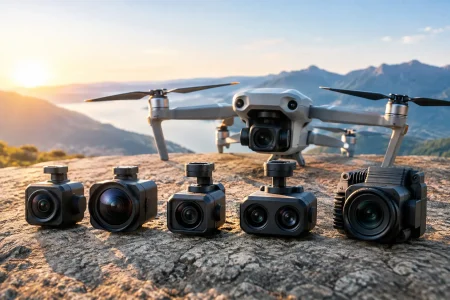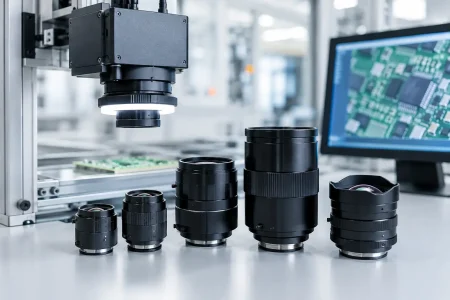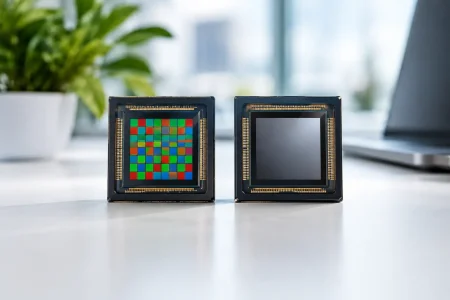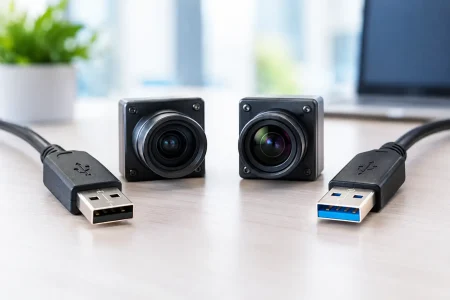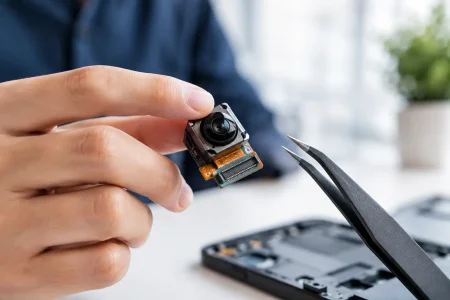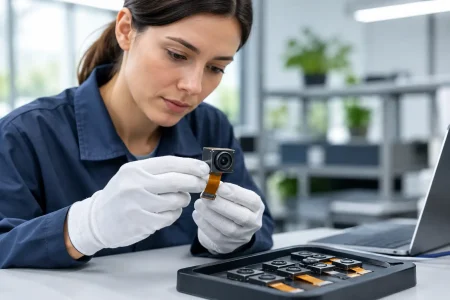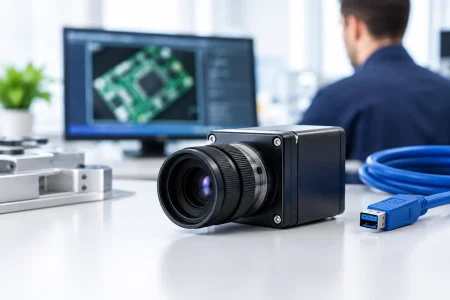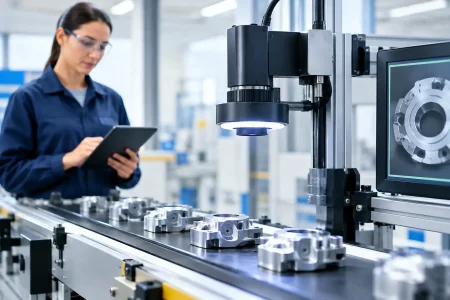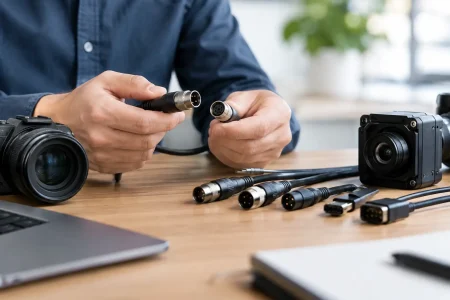

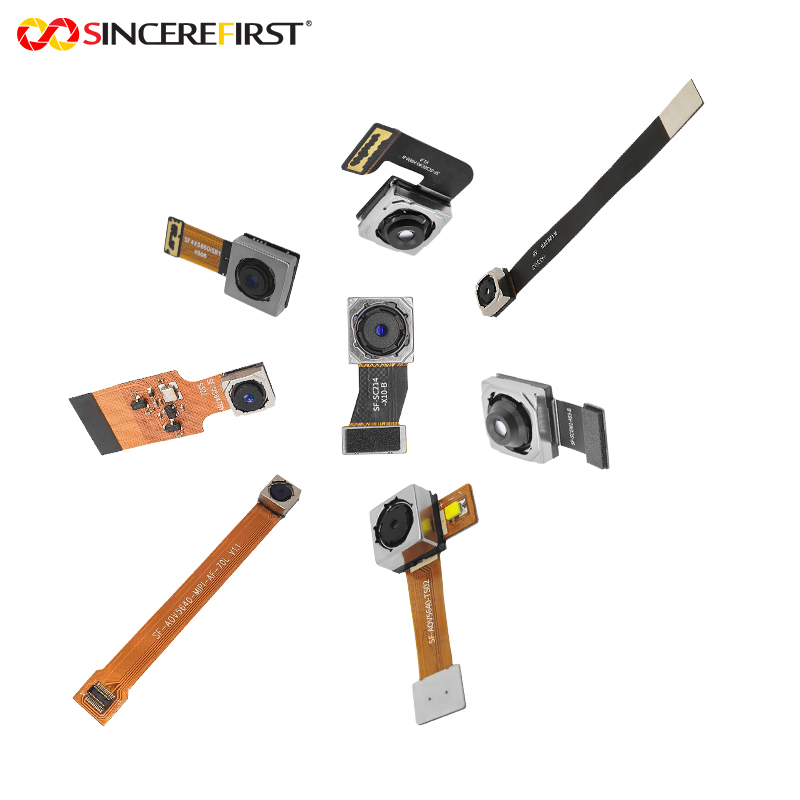
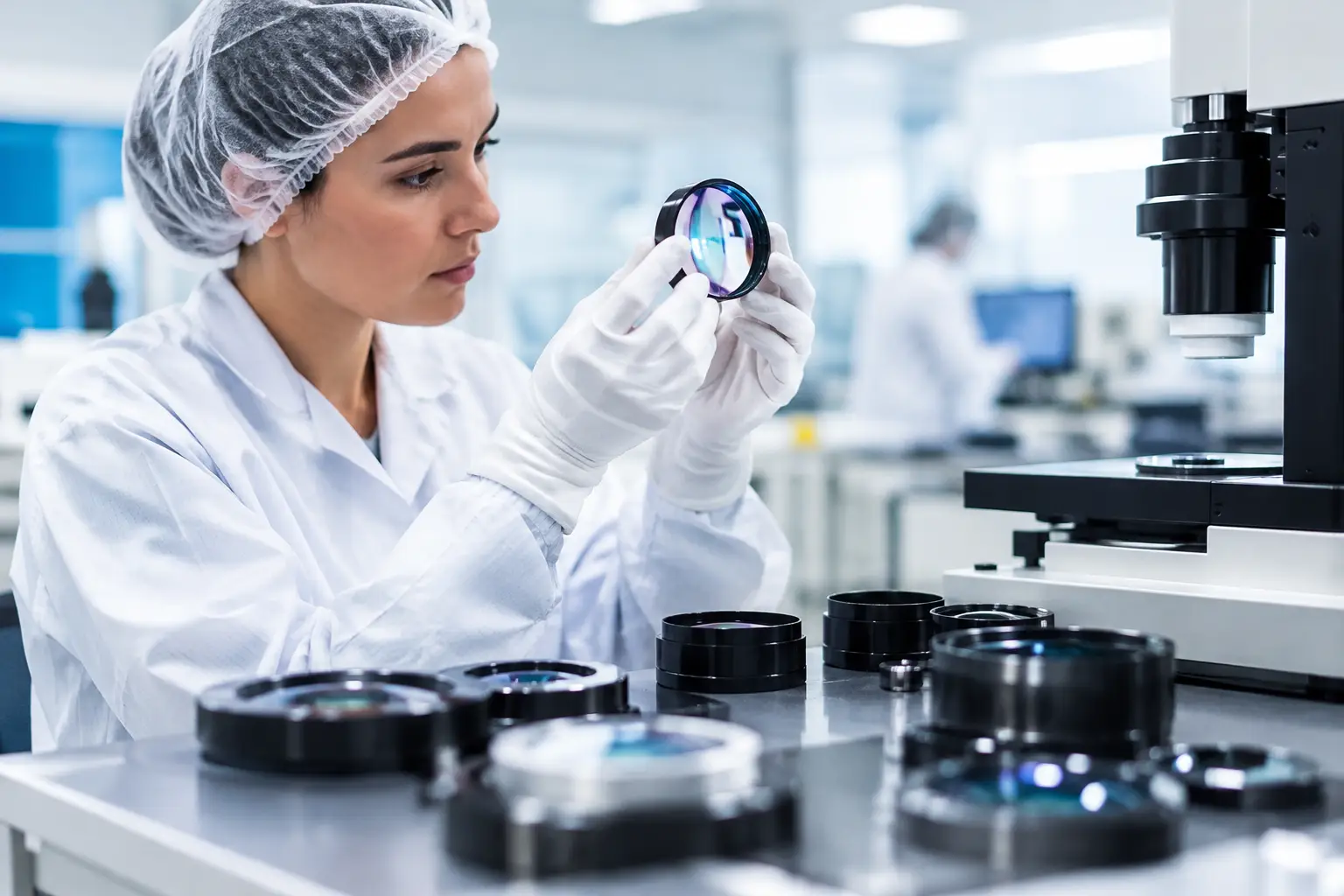
A camera module can pass a lab evaluation and still fail as a product if its optics cannot be produced consistently at volume. That is the real business value of optical manufacturing: converting an imaging specification into stable image quality, predictable yield, and a supply chain that supports the full product lifecycle. For OEMs building robotics, medical devices, industrial equipment, security products, or smart hardware, the lens is not a passive component. It directly shapes what the sensor can capture and whether the final system performs as designed.
Optical Manufacturing Starts With System Requirements
A useful optical design begins with the task, not a preferred sensor or lens catalog. A barcode reader, an autonomous mobile robot, a medical endoscope, and an outdoor security camera may all use compact camera modules, but they require very different trade-offs in field of view, working distance, illumination tolerance, distortion, depth of field, and color reproduction.
For example, a wide-angle lens gives a robot or vehicle a broader view of its surroundings, but it can introduce distortion that must be calibrated or corrected in software. A narrow field of view can preserve more detail at distance, yet may miss context around the target. A large aperture improves low-light performance but makes focus control and production alignment more demanding. There is no universally best optical stack. The right choice depends on the scene, target size, motion, lighting, and processing capability of the host device.
This requirement-first approach prevents a common development problem: selecting a high-resolution sensor before confirming whether the lens can deliver enough contrast to that sensor across the required field. Resolution on a data sheet is not the same as usable detail in a real image.
What Determines Optical Performance at Scale
Lens design is only one part of optical manufacturing. Material selection, molding precision, coating control, active alignment, assembly cleanliness, and test coverage all influence the final image. A module must be evaluated as a complete optical and electronic system.
Lens materials and molding accuracy
Glass and plastic optics both have valid roles. Glass lenses can offer strong thermal stability, low dispersion, and high optical performance for demanding applications. They are often selected where image quality must remain stable through wide temperature changes or extended operating life. Plastic aspheric lenses can enable compact, lightweight, cost-effective designs and are widely used in consumer and embedded products.
The choice depends on the required performance and production economics. Plastic components require careful control of mold condition, shrinkage behavior, surface quality, and material consistency. Glass introduces different considerations, including processing cost, weight, and assembly handling. In either case, small variation in lens geometry can affect focus, distortion, and modulation transfer function, or MTF.
Coatings, flare, and environmental durability
Optical coatings are not cosmetic. Anti-reflection coatings improve light transmission and help reduce unwanted reflections between lens elements. Infrared-cut filters control the spectral response of visible-light camera systems. Depending on the application, manufacturers may also consider hydrophobic treatments, scratch resistance, UV exposure, humidity resistance, and chemical compatibility.
A camera mounted in a warehouse, agricultural machine, or outdoor enclosure faces conditions that differ sharply from an indoor medical device. Dust, vibration, condensation, thermal cycling, and strong point light sources can expose weaknesses that are not visible during a short bench test. Optical requirements should therefore include environmental conditions from the beginning, not after a field failure.
Active alignment and focus control
The position of the lens relative to the image sensor is critical. Even a high-quality lens can produce weak corner sharpness or inconsistent focus when tilt, spacing, or centering is outside tolerance. Active alignment uses live image feedback during assembly to optimize lens-to-sensor positioning before fixation. It adds manufacturing complexity, but it can be the appropriate method for high-resolution, wide-angle, close-focus, or tightly specified modules.
Fixed-focus modules remain a practical choice for many embedded products because they offer compact construction and stable operation. However, fixed focus is only effective when the intended working-distance range is clearly defined. A module optimized for objects 20 centimeters away will not necessarily inspect a part at 5 centimeters or capture a vehicle plate across a roadway.
Optical Manufacturing Must Be Designed for Yield
A prototype can be adjusted by an experienced engineer. Production requires a process that repeatedly achieves specification with acceptable yield. That difference matters when a program moves from a few engineering samples to thousands of units per month.
Design for manufacturability begins with tolerances that are technically meaningful and commercially achievable. Overly tight tolerances increase cost, reduce yield, and extend lead times without always improving the end-use image. Loose tolerances may lower unit cost at first but create inconsistent performance, more incoming inspection, and costly field returns. Strong engineering teams identify the parameters that truly control image quality, then build the process and test plan around them.
Cleanroom discipline is equally important for compact camera modules. Dust on a sensor, filter, or internal lens surface can appear as image spots and may be difficult to remove after sealing. Controlled assembly, particle management, and inspection procedures protect both visual quality and long-term reliability. For modules used in medical imaging, endoscopy, industrial inspection, or security, cosmetic defects may also become functional defects when software interprets them as objects or anomalies.
Verification Should Reflect the Real Application
Incoming inspection and final quality control should go beyond checking whether a module powers on. A capable verification plan can include focus position, MTF, field of view, distortion, relative illumination, color response, white balance behavior, dead pixels, contamination, and interface stability. The exact test set should match the application.
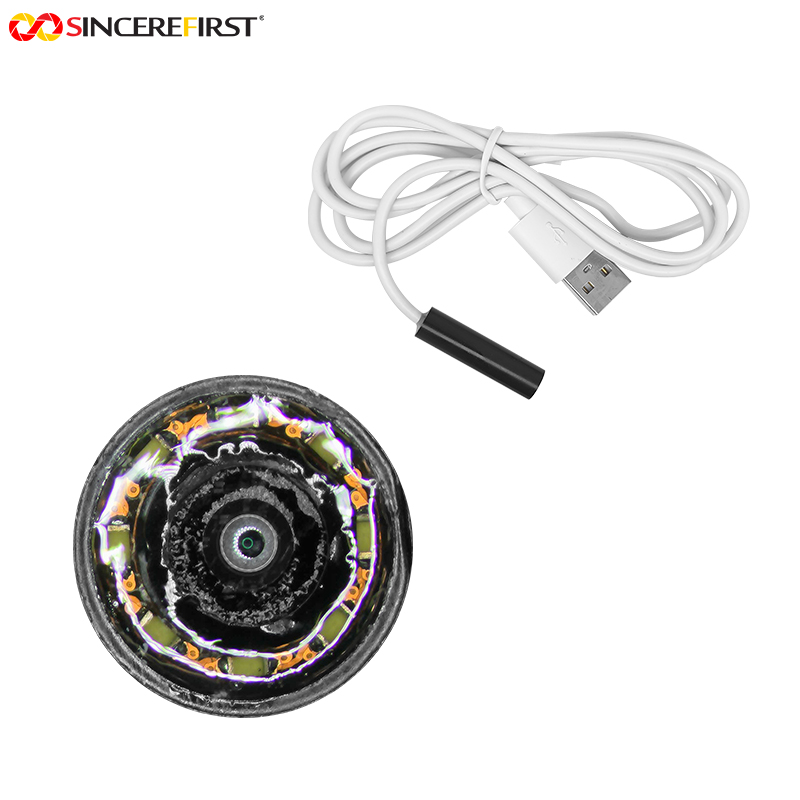
For a USB camera module used in industrial inspection, sharpness across the inspection zone and frame stability may matter more than visually pleasing color. For a MIPI camera module in a handheld diagnostic device, low-light noise, color consistency, physical dimensions, and power behavior may be central. For an endoscope camera module, miniature optical construction, illumination integration, waterproofing approach, and viewing direction can be decisive.
Testing also needs appropriate sampling logic. Full inspection may be justified for critical optical parameters or regulated applications. Statistical process control may be more suitable for mature, high-volume platforms with validated processes. The goal is not to add tests for their own sake. It is to detect the failure modes that would damage the customer’s device performance or production schedule.
The Camera Module Is the Integration Point
For most OEMs, the question is not simply where to buy lenses. It is how to obtain an imaging subsystem that fits the mechanical envelope, electrical interface, image-processing pipeline, and manufacturing plan. Optical components must work with the sensor, ISP strategy, flex cable or board layout, connector, housing, and illumination design.
This is where early supplier engagement saves time. A supplier can assess whether a target field of view is feasible within the available module height, whether a chosen sensor supports the intended frame rate, or whether the lens and filter stack will create unwanted infrared sensitivity. Changes made at the architecture stage are faster and less expensive than corrections after tooling, firmware, and enclosure design are frozen.
SincereFirst applies this system-level approach to standard and customized camera modules, combining optical component selection with sensor, interface, mechanical, and production considerations. For buyers, this reduces the risk of treating camera integration as a late-stage sourcing task.
Questions to Ask Before Selecting an Optical Manufacturing Partner
Supplier qualification should focus on evidence, not broad claims of image quality. Ask how the manufacturer controls lens sourcing or production, optical alignment, cleanroom assembly, and lot-to-lot consistency. Review whether they can provide key optical specifications, sample images under relevant conditions, and a defined inspection approach.
It is also reasonable to ask what changes can be supported after sampling. Many programs need adjustments to focal length, field of view, cable length, connector orientation, housing dimensions, or image tuning. A partner with both engineering responsiveness and scalable production capability can handle those revisions without forcing a complete supplier change.
Finally, evaluate communication quality. Optical issues are often cross-functional problems involving mechanical design, firmware, lighting, manufacturing, and sourcing. Clear technical feedback, documented revision control, and realistic lead-time discussions are as valuable as an attractive prototype price.
The best optical manufacturing decision is the one that gives your product usable images under real operating conditions, repeatable quality at volume, and a practical path when requirements change. Build that discipline into the first camera-module conversation, and your imaging system will be far easier to scale.