
A camera that takes 300 milliseconds too long to lock focus can miss a moving carton label, interrupt a robot pick cycle, or produce an unusable medical image. That is why fixed focus versus autofocus is not a feature checklist decision for embedded devices. It is an optical, mechanical, software, and manufacturing decision that should begin with the actual scene your product must capture.
For OEMs and system integrators, the best choice is usually not the camera module with the longest specification sheet. It is the module that delivers repeatable image quality at the required working distance, under real lighting, across the full production volume. Fixed-focus modules often win when the scene is controlled. Autofocus earns its added complexity when object distance is genuinely variable and users cannot be expected to position the device precisely.
Fixed Focus Versus Autofocus: The Core Difference
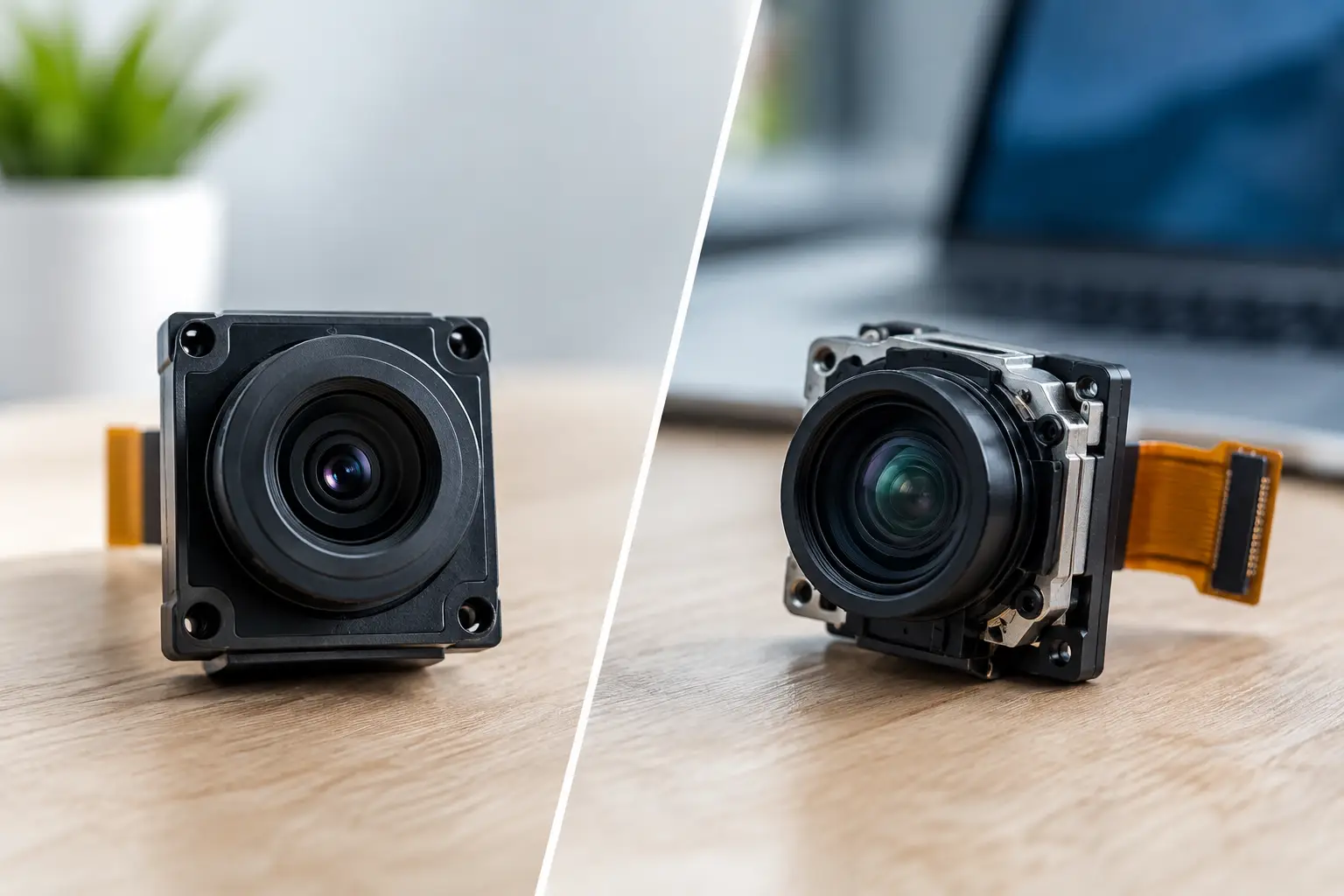
A fixed-focus camera module has a lens set to one optical position during assembly. The lens does not move while the product is in use. The module is designed so that its depth of field covers a defined range of object distances with acceptable sharpness. Lens focal length, aperture, sensor pixel size, resolution target, and the required field of view all influence that usable range.
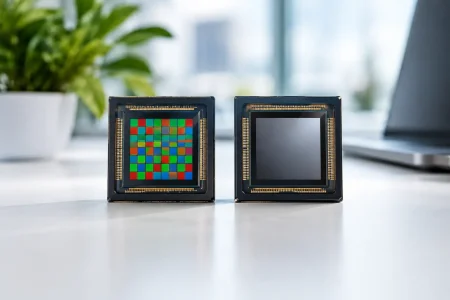
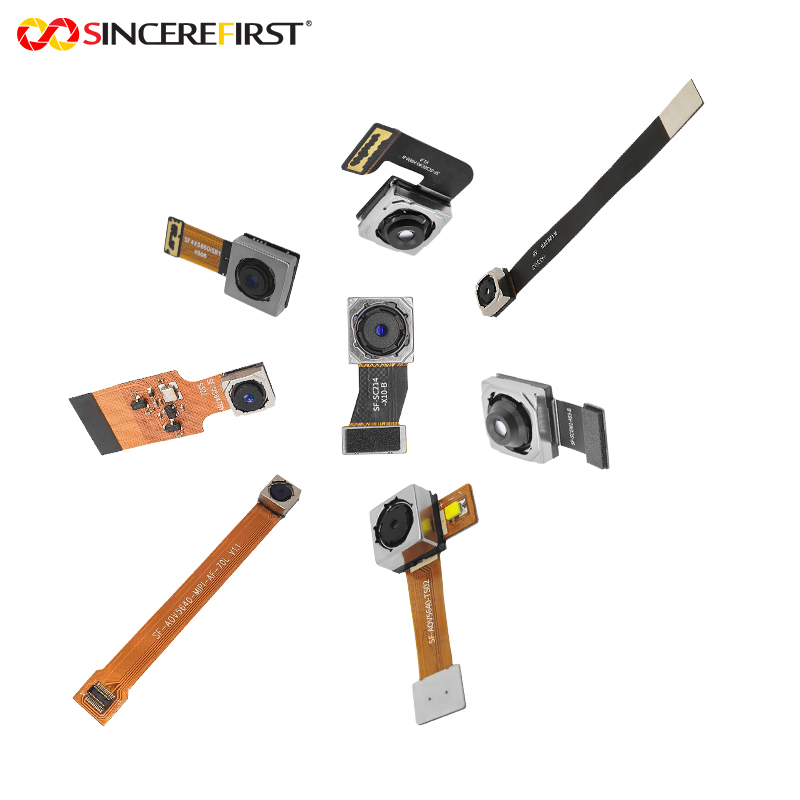
An autofocus camera module changes the lens position to find the sharpest image at a selected distance. Most compact modules use a voice coil motor, or VCM, to move the lens. The system also needs a focus-control method, such as contrast detection, phase detection support from the sensor, or host-assisted algorithms. The camera may focus once on demand, continuously track a subject, or lock focus after startup.
The distinction sounds simple, but product behavior is not. A fixed-focus module can produce a more consistently sharp image than autofocus when the working distance is known. Conversely, an autofocus module can capture subjects from near to far, but focus hunting, motor variation, latency, power consumption, and software tuning must be managed before it becomes a production-ready solution.
Where Fixed-Focus Modules Create the Stronger System
Fixed focus is a disciplined choice for applications with repeatable geometry. Consider a barcode reader installed 250 mm from a conveyor, a security camera observing a defined entry zone, or a document scanner with a controlled platen distance. In each case, the optical system can be optimized for the required target plane rather than asked to serve every possible distance.
This approach brings practical advantages. With no movable focus actuator, the module has fewer mechanical parts and can be thinner, more durable, and easier to qualify for vibration or repeated-use environments. Startup is immediate because no focusing operation is required. Power demand is lower, and host software can be simpler. These factors matter in battery-powered equipment, high-channel-count vision systems, and cost-sensitive devices manufactured at scale.
A fixed-focus design also supports predictable image pipelines. Once the lens position, illumination, exposure, and object distance are controlled, engineers can tune image signal processing around a stable optical condition. That stability is valuable for machine vision tasks where image consistency matters more than consumer-style photographic flexibility. Inspection systems, agricultural sensors, access-control terminals, and many robotics cameras benefit from this repeatability.
Fixed focus is not synonymous with poor close-up performance. A module can be designed for a near working distance, a midrange inspection distance, or a longer scene distance. The key is to define the acceptance criteria correctly: what feature must be resolved, at what distance range, with what contrast, illumination, motion, and field of view? A sharp image at the center of a test chart is not enough if the application must decode labels at the edge of the frame or inspect fine defects across the entire target.
The trade-off: depth of field is finite
Every fixed-focus lens has limits. Opening the aperture can improve low-light performance but narrows depth of field. Higher-resolution sensors can reveal focus errors that were acceptable at lower pixel counts. A camera that works well from 200 to 600 mm in bright light may not maintain the same tolerance in low light, where longer exposure or different aperture requirements affect image quality.
For this reason, fixed-focus selection should be verified using the actual target and illumination, not only nominal lens parameters. It may be appropriate to tune focus toward the most critical distance rather than the mathematical midpoint of the range.
When Autofocus Is Worth the Added Complexity
Autofocus is the practical choice when object distance varies widely, particularly when the device is handled by different users. Handheld diagnostic equipment, portable scanners, smart terminals, consumer-connected devices, and certain inspection tools often need to image both nearby details and distant scenes. A fixed-focus compromise may leave one of those tasks unreliable.
Autofocus is also valuable when the product cannot control how users position it. A field technician may place an inspection device a few centimeters from a component, then capture a wider equipment view seconds later. A medical imaging accessory may need a clear image despite small changes in placement. In these cases, focus adjustment protects usability and can reduce operator error.
However, autofocus should be evaluated as a system function, not a lens function. The motor must move reliably through the required travel. The sensor and image signal processor must provide useful focus feedback in the intended lighting. The host must decide when to trigger focus, when to lock it, and how long the product can wait before capturing. If the scene lacks contrast, contains repeated patterns, or changes quickly, a basic contrast-detection approach can hesitate or choose the wrong plane.
For industrial products, continuous autofocus is not automatically the best setting. It can introduce unwanted refocusing during a critical capture. One-shot autofocus followed by focus lock is often more predictable for a defined inspection sequence. The right behavior depends on whether the subject is moving, whether the camera is moving, and whether the capture is operator-driven or fully automated.
Mechanical and environmental considerations
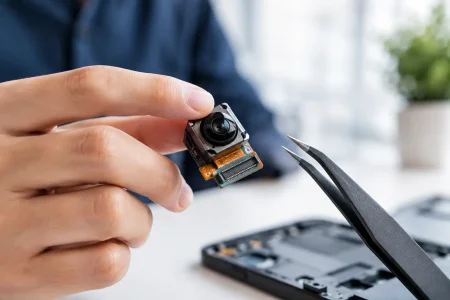
A VCM-based autofocus module adds a moving element to the camera assembly. That does not make it unsuitable for industrial use, but it does create qualification work. Engineers should consider shock, vibration, temperature range, cycle life, acoustic noise, module thickness, and power behavior. The final device enclosure can also affect focus performance through lens-window spacing, stray light, thermal conditions, and mechanical stress.
Autofocus modules require careful calibration at manufacturing scale. Lens travel, focus endpoints, module alignment, and image quality must remain within controlled tolerances from sample builds through volume production. Supplier capability matters because the apparent convenience of autofocus can disappear if focus performance varies between lots.
How to Choose the Right Focus Strategy
Start with the distance envelope, not the camera interface. Define the nearest and farthest target positions, then identify the distance that carries the most important visual information. A warehouse scanner reading codes at 150 to 400 mm has different needs from a robot camera locating parts at a fixed 500 mm position.
Next, define what “in focus” means for the task. For a video call, acceptable focus may be based on subjective appearance. For an automated optical inspection system, it may mean resolving a specific line width, detecting a defect size, or achieving a minimum barcode decode rate. These criteria should be measurable before the module is selected.
Then assess the environment. Low light, infrared illumination, reflective surfaces, high motion, and low-contrast targets can all affect focus performance. If a product uses IR LEDs for night imaging, the optical design must address focus shift between visible and infrared wavelengths. If the camera views glossy parts, focus algorithms may respond to reflections rather than the intended surface.
Finally, compare total system cost rather than module price alone. Fixed focus can reduce actuator, software, test, and long-term reliability costs. Autofocus can eliminate mechanical guides, user positioning requirements, or multiple fixed cameras. The lower-cost module is not always the lower-cost product.
Camera Module Integration Details That Change the Result
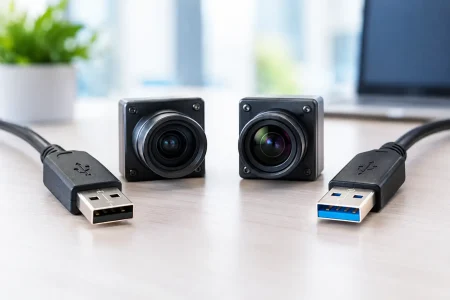
Whether the module uses MIPI CSI-2, USB, DVP, or another interface, the focus decision must align with the platform architecture. An autofocus module may require control through I2C and support in the operating system, ISP, or application software. Verify that the host platform exposes the required motor controls and that focus tuning remains stable after firmware updates.
Optics should be specified alongside the sensor, not afterward. Sensor format, pixel pitch, lens field of view, distortion limits, aperture, and optical path length interact directly with focus performance. A module that looks correct in a sample enclosure can behave differently when a cover glass, waterproof window, or protective lens is added to the finished device.
For custom programs, prototype testing should include production-representative targets and enclosures as early as possible. Test focus accuracy at temperature extremes, after vibration exposure, under the lowest expected illumination, and across the entire required field of view. This work prevents late-stage changes that delay tooling, certification, and volume ramp.
SincereFirst supports this kind of decision with camera module, optical, and custom integration expertise built for embedded products and scaled manufacturing. The productive next step is to turn the application into a measurable imaging requirement: target distance, resolution, field of view, lighting, focus time, interface, and environmental limits. Once those conditions are clear, the correct focus strategy usually becomes clear as well.