
A camera module can meet the target resolution, interface, and mechanical envelope yet still fail in the field because its shutter architecture does not match the scene. The global versus rolling shutters decision determines how a sensor captures motion, reacts to pulsed illumination, and preserves measurement accuracy. For OEMs and system integrators, it is not a minor sensor-line-item choice. It affects optics, lighting, processing, test criteria, and production risk.
Global Versus Rolling Shutters: The Core Difference
A global shutter exposes every pixel in the image sensor at the same instant. The sensor then reads out the captured image data. Because the scene is sampled simultaneously, a fast-moving object retains its true shape and position within the frame, assuming exposure time and lighting are properly controlled.
A rolling shutter exposes and reads the image line by line, usually from top to bottom. There is a small time offset between the first and last rows. For a static scene, this is typically invisible. For a moving object, vibrating camera, or rapidly changing light source, each row records a slightly different moment. The resulting image can show skew, wobble, partial illumination, or geometric distortion.
Neither architecture is universally better. Global shutter is the correct engineering answer when temporal alignment is critical. Rolling shutter is often the commercially stronger option when the scene is controlled and the product needs higher resolution, lower power, smaller pixels, or a more favorable cost structure.
When a Global Shutter Is Worth the Premium
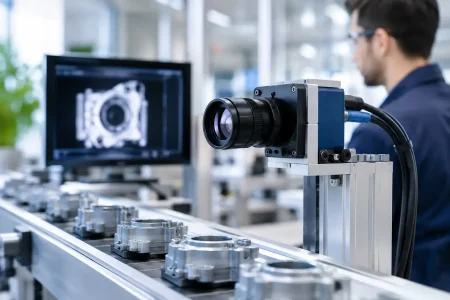
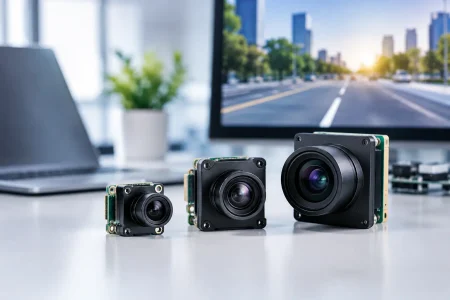
Global shutter sensors are commonly specified for machine vision tasks where a single distorted frame can create a wrong decision. Conveyor inspection, high-speed pick-and-place robotics, automatic optical inspection, traffic capture, barcode reading on moving packages, and industrial metrology are typical examples.
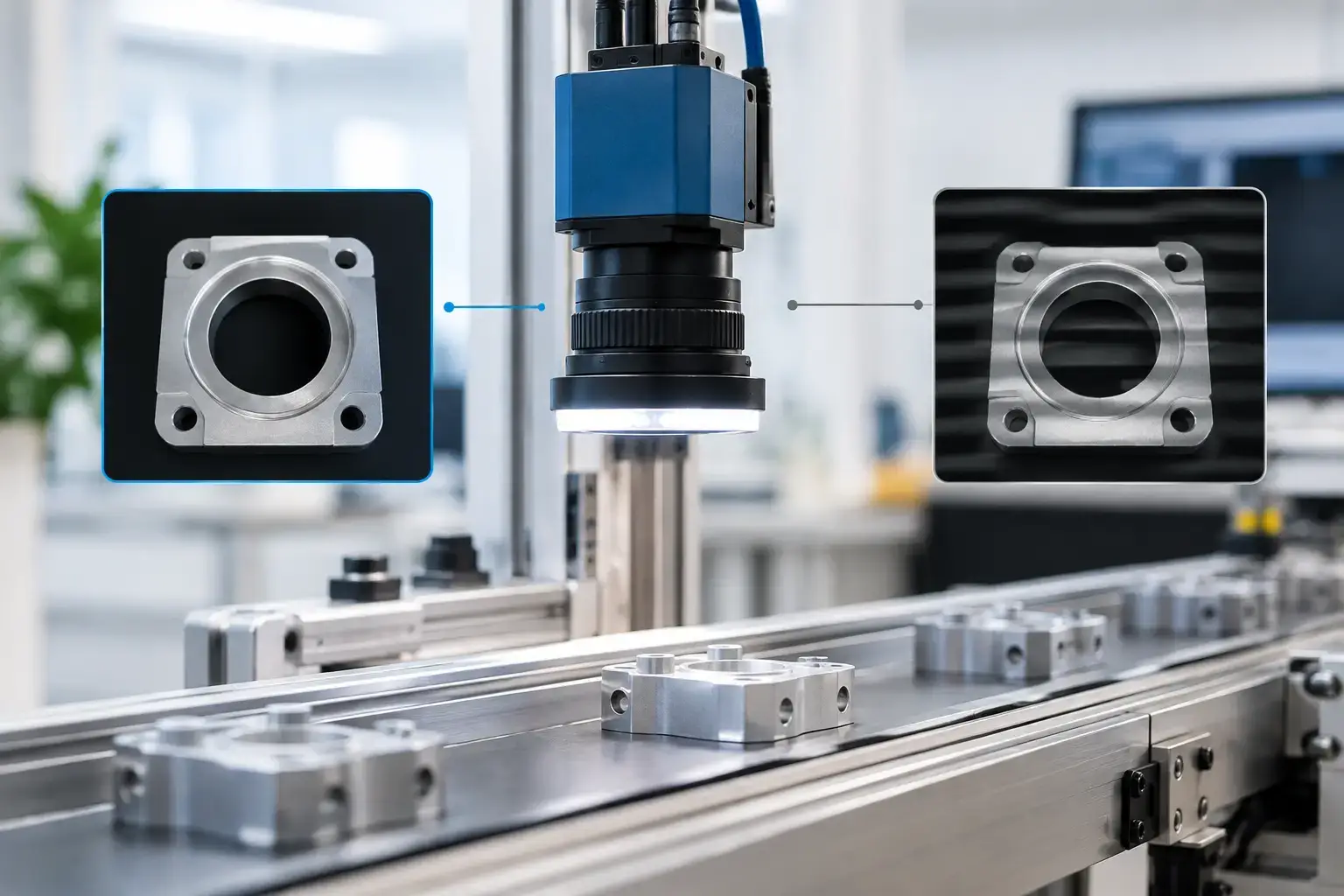
Consider a part traveling laterally across a production line. With rolling shutter capture, the top of the part may be recorded before the bottom. At higher speeds, a circular feature can appear slanted or oval, edge positions can shift, and dimensions calculated from the image can be inaccurate. A global shutter captures the full part position at one shared exposure event, giving vision algorithms a more reliable source image.
Global shutter also works especially well with short, high-intensity LED strobes. A precisely timed strobe can freeze motion while limiting heat and average power. Since all pixels expose together, the illumination pulse can be synchronized to the camera trigger with predictable results. This is valuable for applications that require microsecond-level exposure control or repeatable inspection across multiple stations.
The trade-off is sensor selection. For a comparable generation, resolution, and pixel size, global shutter sensors may cost more and may offer fewer choices than rolling shutter sensors. Some global shutter designs can also have trade-offs in sensitivity, dynamic range, resolution availability, or power consumption. These limitations are narrowing as sensor technology advances, but buyers should evaluate actual image data rather than assuming all global shutter devices perform alike.
Timing matters more than the label
A global shutter alone does not guarantee a motion-ready camera. Trigger latency, exposure jitter, strobe synchronization, frame rate, interface bandwidth, and image signal processor behavior all influence final performance. A USB camera module that is adequate for monitoring may not provide the deterministic triggering required by a multi-camera inspection cell.
For embedded designs, engineers should verify whether the selected MIPI CSI-2, USB 3.0, or other interface configuration can transport the required resolution and frame rate without dropped frames or unacceptable latency. The module must also maintain timing consistency across temperature, cable length, and long production runs.
Where Rolling Shutter Delivers Better Value
Rolling shutter sensors dominate many high-volume imaging markets for practical reasons. They are widely available in a broad range of resolutions and optical formats, and they often provide strong image quality at competitive cost. In stationary or slow-moving scenes, the line-by-line readout causes little or no visible penalty.
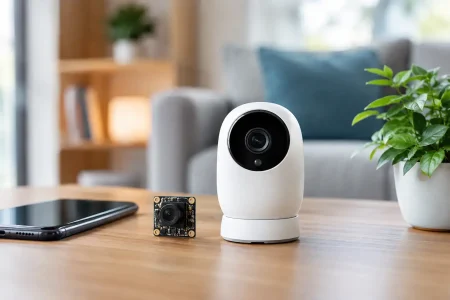
Security cameras monitoring entrances, smart home devices, document scanners, teleconferencing equipment, retail analytics cameras, and many consumer smart devices can use rolling shutter successfully. A fixed indoor camera observing people who move at ordinary speed has different requirements from a camera measuring a metal component traveling at several meters per second.
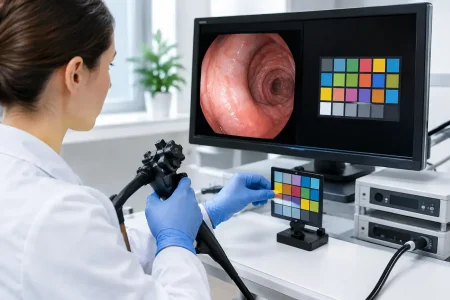
Rolling shutter can also be a sound choice for medical or endoscope camera modules when the observed scene is relatively stable and compact module size is a priority. In these systems, color reproduction, low-light sensitivity, heat management, lens integration, and cable flexibility may matter more than freezing rapid motion. The right answer depends on the procedure, the illumination design, and expected camera movement.
The limitation becomes more visible when either the camera or subject moves quickly. A handheld device can produce the familiar leaning-vertical-lines effect during fast panning. A vibrating robot arm may create warped edges. LED lighting driven by pulse-width modulation can cause horizontal bands because different rows capture different phases of the lighting cycle.
These issues can sometimes be reduced through shorter exposure times, carefully selected constant-current lighting, high frame rates, or image-processing correction. However, mitigation adds design effort and may not restore the positional integrity required for measurement. If the application cannot tolerate distortion, selecting global shutter at the start is usually less expensive than correcting a fundamental capture problem later.
Specify the Scene Before Specifying the Sensor
Procurement teams often begin with resolution, price, and interface. Those are necessary filters, but shutter type should be evaluated from the physical scene outward. The most useful specification questions are about movement, light, and tolerance for geometric error.
Start with relative motion. This includes object speed, camera motion, vibration, and rotation. A stationary camera can still need global shutter if its target moves quickly. Likewise, a rolling shutter may perform well on a moving platform when the scene is distant, motion is low, and exposure is short enough to make row-to-row displacement insignificant.
Next, define the smallest feature that must be detected or measured. If a vision system only confirms product presence, a few pixels of distortion may be acceptable. If it measures pin locations, printed-code placement, or edge geometry, allowable displacement must be converted into a timing requirement. This creates a defensible sensor decision instead of a preference-based one.
Lighting deserves equal attention. Ask whether the system uses sunlight, mains-powered fixtures, PWM LEDs, continuous industrial illumination, or synchronized strobes. Test the exact lighting electronics, not just the LED type. A rolling shutter module that appears stable under one laboratory light may show banding under the final production fixture.
Finally, evaluate interface and compute budget together. Higher frame rates and high-resolution global shutter output can increase MIPI lane requirements, USB bandwidth, memory usage, and processor load. The camera module is one part of an imaging chain. A balanced design protects both image quality and product cost.
Integration Factors That Change the Decision
The sensor is central, but module-level execution determines whether its theoretical advantages reach the device. Lens choice must match the sensor format and required field of view. Focus stability, distortion control, infrared filtering, and lens-holder tolerances influence inspection reliability as much as shutter architecture in many applications.
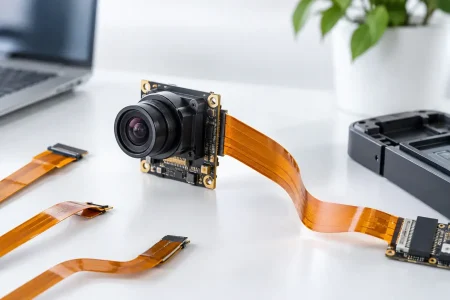
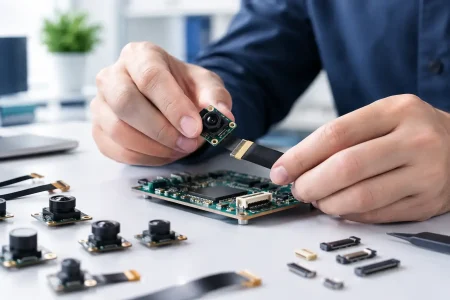
Mechanical integration also matters. A robot-mounted camera may experience shock, vibration, and cable stress that are absent during bench testing. A compact FPC camera module for a handheld terminal faces different constraints: bend radius, connector retention, electromagnetic interference, thermal transfer, and assembly repeatability. These requirements should be defined before the camera design is frozen.
For custom development, it is practical to validate several controlled scenes during the sample stage: maximum object speed, worst-case illumination, temperature extremes, and the actual mounting arrangement. Capture raw frames when possible. Image signal processing can conceal artifacts in preview video while introducing variability that is unacceptable for machine vision analysis.
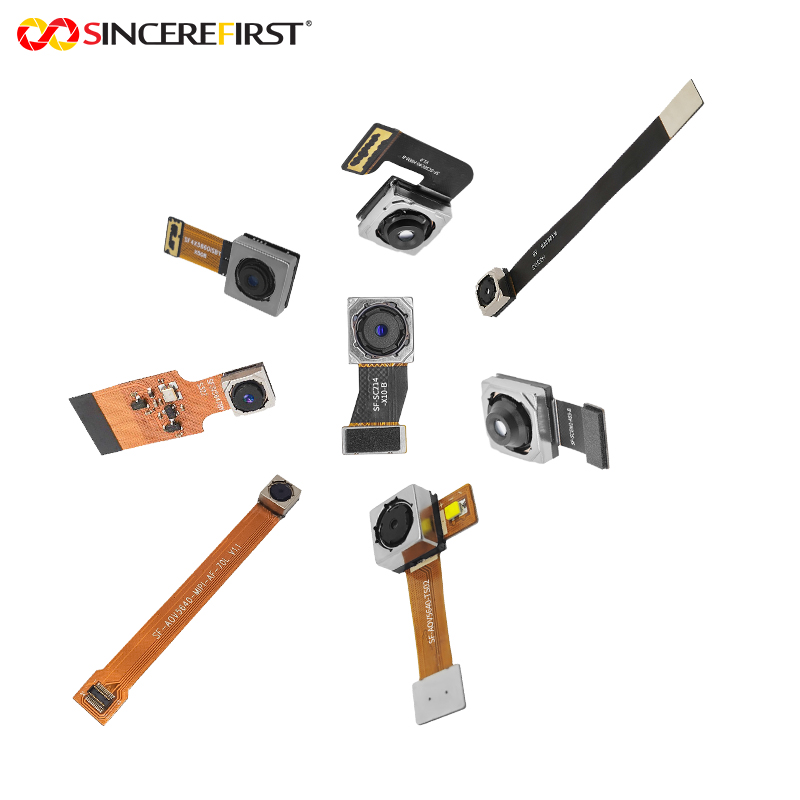
SincereFirst supports this evaluation with camera module customization across sensor selection, optical configuration, FPC and board design, interfaces, and production-oriented validation. The objective is not simply to supply a global or rolling shutter module, but to build an imaging assembly that can be manufactured consistently at the required volume.
A Practical Selection Rule
Choose global shutter when the product must freeze fast relative motion, synchronize tightly with a strobe or trigger, or make geometry-sensitive decisions from every frame. Choose rolling shutter when the scene is stable enough to avoid row-to-row artifacts and the project benefits from its resolution, cost, power, or availability advantages.
The most productive next step is to turn that rule into a test plan using the real target, real lighting, and worst expected motion. When shutter choice is verified before tooling and volume release, the camera module becomes a dependable source of machine intelligence rather than a late-stage source of image defects.