
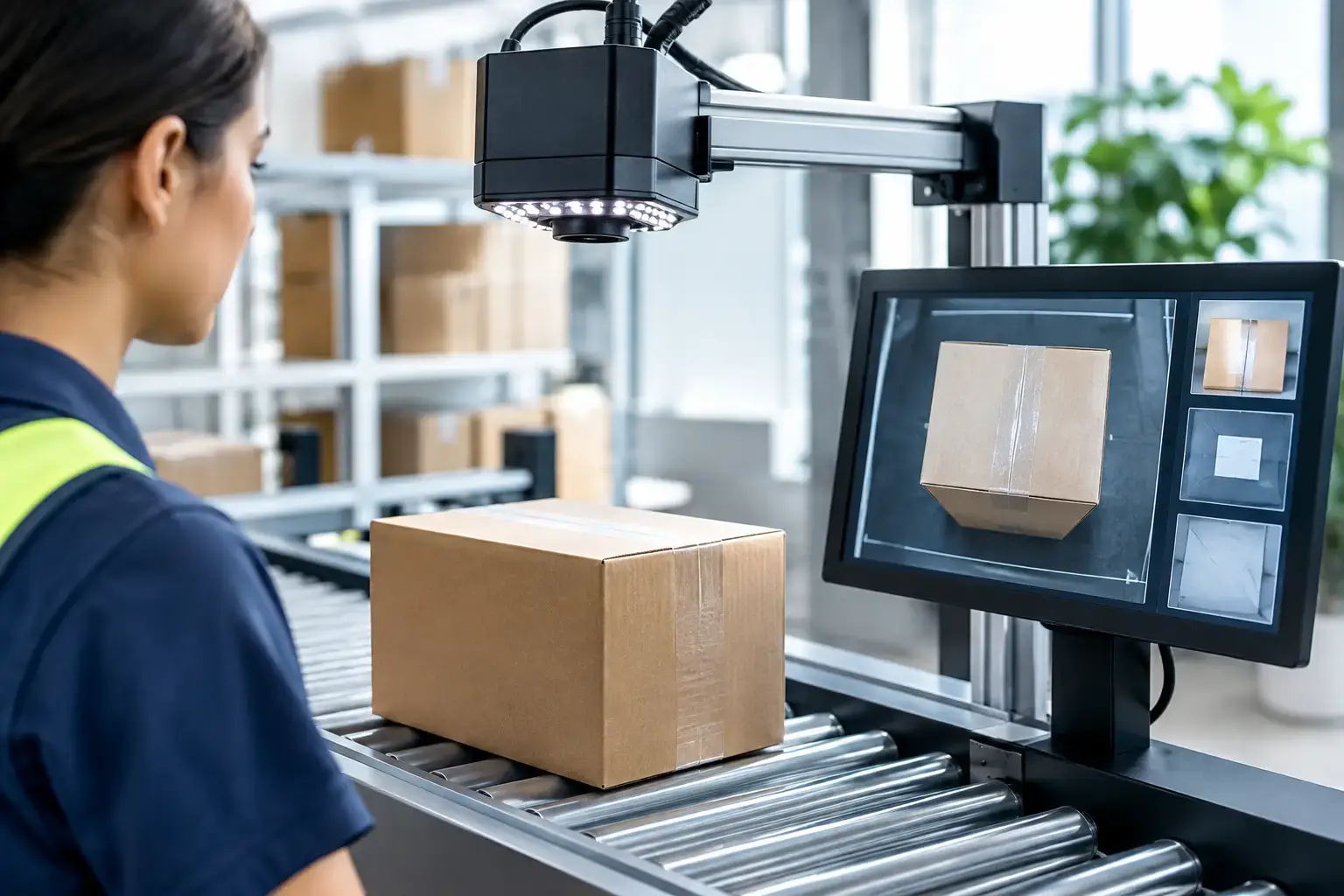
A misread shipping label, an undocumented dent, or a carton that enters the wrong lane can turn a high-throughput operation into an exception-management problem. Parcel inspection cameras give sorting, fulfillment, and carrier systems the visual evidence needed to identify each package, verify its condition, and route it with confidence. For OEMs and integrators, the challenge is not simply adding a camera. It is specifying an imaging subsystem that continues to perform under motion, variable packaging, difficult surfaces, and demanding uptime targets.
What Parcel Inspection Cameras Need to See
Parcel inspection systems commonly perform several tasks at once. They may read 1D and 2D barcodes, capture human-readable labels, detect damaged packaging, confirm carton presence, measure dimensions, or record images for traceability. Each task has a different image-quality requirement, so a camera that is ideal for barcode reading may not be sufficient for damage documentation.
Barcode applications prioritize sharp edges, adequate pixel density, short exposure times, and controlled illumination. Damage inspection often needs higher dynamic range and more carefully positioned lighting because crushed corners, tears, punctures, and tape failures can be subtle. Dimensioning systems introduce another requirement: camera synchronization with structured light, laser profiling, or stereo vision hardware.
That is why a parcel inspection camera should be selected as part of a complete optical system. Sensor, lens, illumination, mechanical position, interface bandwidth, and image-processing requirements must work together. Choosing resolution first and addressing the rest later is a common cause of expensive redesigns.
Start With the Inspection Zone, Not the Camera
A useful specification begins with the physical inspection zone. Define the maximum and minimum parcel size, belt width, working distance, camera mounting height, and expected parcel orientation. Then establish the required field of view and the smallest feature the system must recognize.
For example, an operation that needs to decode a small barcode from the top surface of a moving poly mailer has very different constraints from one that records six-sided images of cartons for claims review. The first may require a high-frame-rate global shutter module and intense strobed lighting. The second may benefit from multiple synchronized cameras with wider fields of view and more even illumination.
Conveyor speed is equally decisive. At higher speeds, exposure time must be shortened to prevent motion blur. Reducing exposure reduces the amount of light reaching the sensor, which means the system may need brighter LED illumination, a larger aperture, a more sensitive sensor, or a combination of all three. Raising gain can preserve brightness, but it also increases noise and may reduce barcode contrast or weaken defect-detection accuracy.
This is an engineering trade-off, not a settings issue. A well-designed system solves motion at the optics and lighting level before asking image processing to compensate.
Sensor Selection: Global Shutter or Rolling Shutter?
For most conveyor-based parcel inspection cameras, global shutter sensors are the safer choice. A global shutter exposes every pixel at the same instant, preserving the shape of fast-moving labels, barcodes, carton edges, and printed characters. It is particularly valuable when parcels move continuously and trigger timing varies slightly from one item to the next.
Rolling shutter sensors can be appropriate for slower inspection stations, fixed parcels, or applications where cost and high resolution are more important than motion performance. They read the image line by line, however, so rapid movement can produce skew or distortion. A barcode that appears readable to the human eye may become difficult for a decoder when the printed bars are geometrically stretched.
Resolution should be calculated from the required pixels on target. If a code must occupy enough pixels for reliable decoding across the full field of view, increasing the lens coverage without increasing sensor resolution may undermine performance. More megapixels are not automatically better. They increase data volume, processing load, storage demand, and sometimes latency. The right sensor provides enough usable pixels with the frame rate, sensitivity, and shutter architecture the inspection task requires.
Optics and Lighting Determine What the Sensor Can Deliver
A high-quality sensor cannot recover detail that a lens failed to resolve or lighting failed to reveal. Lens selection should account for working distance, field of view, distortion, depth of field, aperture, and the mechanical envelope of the camera assembly. In compact parcel equipment, the available mounting space may force a short lens-to-sensor distance or require custom lens holder design.
Depth of field deserves careful attention when parcels vary substantially in height. A top-down camera focused on a flat envelope may lose clarity when a tall carton passes below it. Stopping down the lens can increase depth of field, but it also reduces light. This is another reason lighting and optics must be designed together.
Lighting should match the inspection target. Diffuse bright-field lighting is often effective for broad label capture and general package documentation. Low-angle lighting can make raised tape edges, dents, wrinkles, and tears easier to detect. Polarizers may reduce glare from glossy tape, stretch wrap, coated cartons, and plastic mailers. Near-infrared illumination can sometimes improve contrast where visible graphics create visual clutter, although the result depends on ink and substrate response.
For high-speed lines, strobed LEDs synchronized to a trigger can freeze motion while minimizing heat and power consumption. The camera module must support the required trigger behavior, exposure control, and synchronization accuracy. A lighting decision made independently from camera timing is a frequent source of unstable inspection results.
Interface and Integration Requirements for Parcel Inspection Cameras
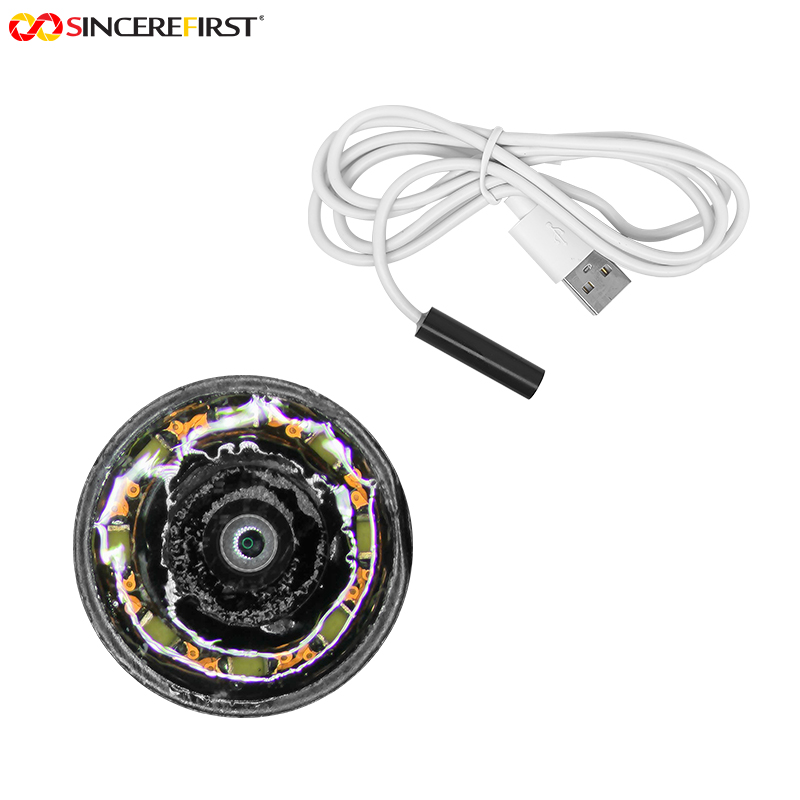
The camera interface affects more than cable choice. It determines available bandwidth, cable length, host architecture, latency, and software effort. USB camera modules are practical for compact stations and PC-based equipment where short cable runs and UVC compatibility simplify deployment. USB 3.0 provides considerably more bandwidth than USB 2.0 for high-resolution or high-frame-rate imaging.
MIPI CSI-2 camera modules are well suited to embedded computing platforms where low latency, compact board-level integration, and direct processor connection are priorities. They are common in purpose-built smart sorting equipment, autonomous mobile systems, and edge-AI devices. DVP interfaces may remain appropriate for selected legacy or lower-complexity embedded platforms, depending on processor support and bandwidth requirements.
The decision depends on system architecture. A single-camera label-reading station may operate effectively with a standard USB module. A multi-camera inspection tunnel with high-speed acquisition, triggering, and local AI inference may require a more tailored embedded design. In either case, evaluate connector retention, cable routing, electromagnetic compatibility, thermal behavior, and long-term availability before freezing the design.
Mechanical Reliability Is Part of Image Quality
Parcel facilities are not laboratory environments. Vibration, dust, changing ambient light, electrical noise, and temperature variation all influence camera performance over time. Camera housings and mounting features need to resist conveyor vibration without allowing the optical axis to drift. Focus and lens retention should remain stable through repeated operating cycles.
For board-level camera modules integrated inside an OEM enclosure, the host product must protect the module from dust and accidental contact while maintaining a clear optical path. Heat also matters. Sensor noise, frame stability, and component life can be affected when a compact imaging module is placed near processors, illuminators, or enclosed power electronics.
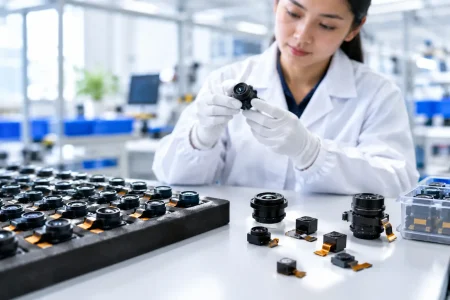
Production consistency matters just as much as prototype performance. A camera that works well in one engineering sample but varies across volume builds can create calibration burdens and field failures. Qualified suppliers should be able to control sensor sourcing, lens assembly, image tuning, cleanroom manufacturing, inspection, and traceability at the production scale required by the equipment program.
When Custom Camera Development Is the Better Path
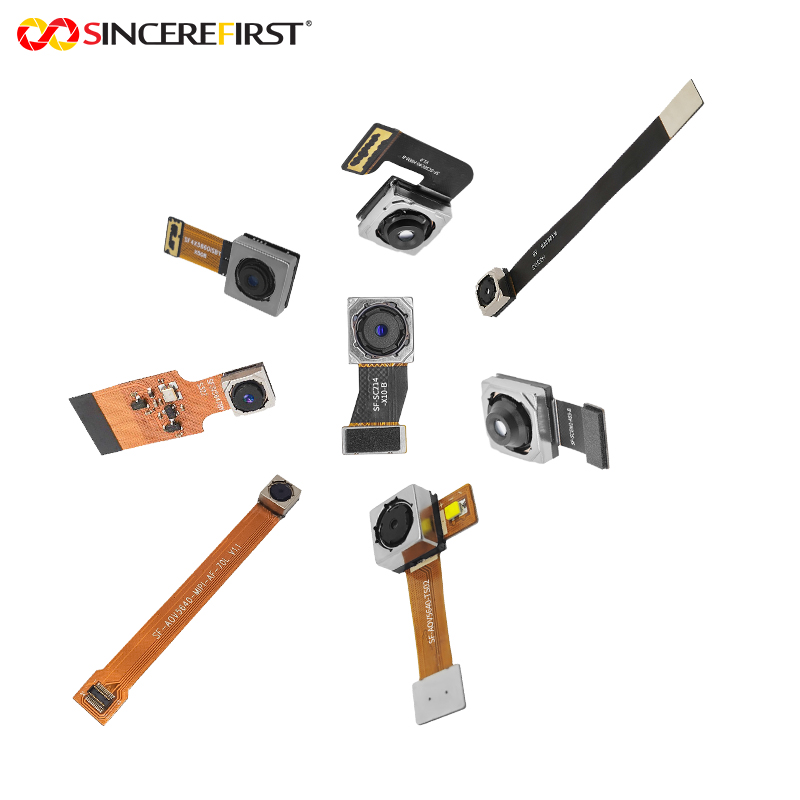
Standard modules are often the fastest route for proof of concept and lower-volume equipment. Custom development becomes valuable when the application has strict dimensions, a unique connector requirement, specialized illumination geometry, nonstandard cable length, enhanced low-light needs, or specific image tuning requirements.
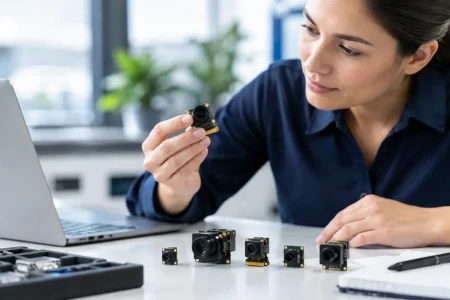
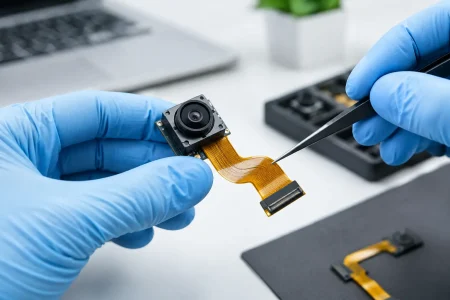
A custom parcel imaging module can combine a selected sensor, lens, filter, flexible printed circuit design, connector layout, and mechanical mounting arrangement around the actual inspection head. That can reduce assembly complexity and improve repeatability compared with adapting a general-purpose camera after the enclosure is already designed.
SincereFirst supports this type of OEM and ODM work with camera module engineering, optical component integration, rapid sampling, and scaled manufacturing. The most productive engagements begin with real operating parameters: target distance, field of view, belt speed, package materials, lighting constraints, host processor, and expected production volume. These inputs allow the imaging design to be validated against the job it must perform rather than against a generic specification sheet.
Specify for Measurable Performance
A strong camera requirement does not stop at resolution, interface, and price. It defines acceptance criteria such as decoding success rate, allowable motion blur, minimum label contrast, defect visibility, illumination uniformity, trigger-to-image timing, startup time, and operating temperature range. It should also state whether images will be stored, analyzed at the edge, transmitted to a server, or used only for real-time routing.
Before committing to volume production, test representative packages rather than ideal samples. Include wrinkled labels, faded printing, reflective tape, black poly mailers, oversized cartons, damaged edges, and labels placed near folds. The inspection system should be judged on the conditions that create exceptions, because those are the parcels that determine operational value.
The right imaging design turns parcel handling from a series of assumptions into a source of verifiable data. When camera hardware, optics, illumination, and integration are specified around the real conveyor environment, the result is not merely clearer images. It is faster decisions, more dependable traceability, and equipment that remains useful as throughput demands increase.