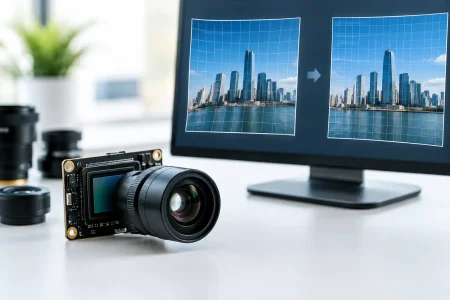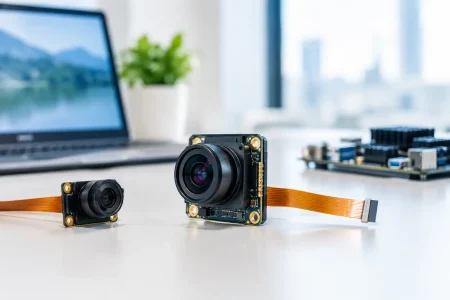

A camera can be perfectly focused and still fail its job when a loading-bay door opens behind a subject, sunlight hits a vehicle windshield, or a surgical light reflects from a wet surface. WDR camera modules are designed for these scenes, where the brightest and darkest areas exceed what a conventional image sensor can capture in one exposure. For OEMs and system integrators, the goal is not simply a brighter image. It is usable image data in the areas where detection, inspection, identification, and control decisions are made.
Why WDR Matters in Real Embedded Systems
Wide Dynamic Range, or WDR, describes a camera system’s ability to preserve detail across large differences in scene illumination. A typical example is an access-control terminal facing a glass entrance. If exposure is set for the indoor face, the exterior may become a white field. If exposure is set for the outdoor background, the face may be too dark for reliable recognition.
This problem appears across commercial embedded vision applications. Industrial cameras may inspect components near reflective metal surfaces. Smart-city devices must capture traffic moving between shadow and direct sun. Agricultural equipment works under changing sky conditions and dark crop canopies. Robotics platforms move through warehouses with bright dock doors, overhead LEDs, and low-light storage zones.
The relevant question is therefore not whether a camera has a WDR label. It is whether the complete imaging chain can retain sufficient signal, contrast, and color information for the specific algorithm or human operator. Sensor performance, lens selection, image signal processor tuning, exposure strategy, and interface bandwidth all affect the result.
How WDR Camera Modules Create More Usable Detail
Most WDR performance comes from high dynamic range imaging methods. The method matters because it affects motion artifacts, low-light behavior, power consumption, and final image quality.
Multi-exposure HDR
A common approach captures two or more exposures of the same scene: a short exposure for highlights and a longer exposure for shadows. The image signal processor combines them into one output frame with more visible detail across the tonal range.
Multi-exposure HDR can deliver strong results in relatively static scenes, including fixed security cameras, kiosks, and industrial stations. The trade-off is motion. When a person, vehicle, or robot moves between exposures, the merged image may show ghosting, edge artifacts, or local blur. The severity depends on sensor timing, the HDR algorithm, and scene movement.
Single-exposure HDR
Some modern CMOS sensors provide high dynamic range from a single capture sequence, using pixel-level or sensor-level techniques that preserve information from bright and dark regions. Because the image is acquired in one exposure event, this method is often better suited to moving subjects and vibration-prone equipment.
Single-exposure HDR is valuable for mobile robotics, vehicle systems, fast production lines, and handheld medical devices. However, actual performance still varies by sensor architecture and operating mode. A specification sheet may state a dynamic range value, but it cannot replace testing under the lighting and motion conditions of the finished device.
Tone Mapping Is Not the Same as WDR
Some cameras improve the appearance of contrast through automatic exposure, gamma adjustment, local tone mapping, or backlight compensation. These functions can make an image look more balanced, but they do not necessarily recover clipped highlight or shadow data.
For machine vision, this distinction is critical. If detail has already been lost in a saturated reflective label or a dark vehicle cabin, post-processing cannot reliably recreate it. Buyers should ask whether the module provides true sensor-level HDR or WDR capture, what modes are available, and whether output is processed RAW, YUV, or compressed video.
Selecting WDR Camera Modules by the Application
The best module is determined by the scene and system architecture, not by the highest published dynamic range figure. Start with the operational failure you need to prevent.
For face authentication or access control, evaluate skin-tone retention under strong backlight, LED flicker behavior, frame rate, and compatibility with the recognition pipeline. A high-resolution sensor may help with subject detail, but poor HDR tuning can still reduce recognition reliability.
For industrial inspection, prioritize repeatability. Determine whether shiny surfaces, dark cavities, barcode labels, or mixed-material assemblies create exposure failures. In controlled inspection cells, better lighting design can sometimes reduce the required WDR level and produce more consistent results than relying on aggressive image processing.
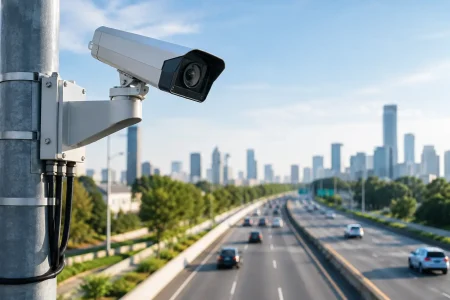
For traffic, surveillance, and smart infrastructure, WDR must work with moving subjects. License plates, headlights, shadowed vehicle interiors, and weather changes create competing demands. Motion performance, anti-flicker control, low-light sensitivity, and compression behavior should be evaluated together.
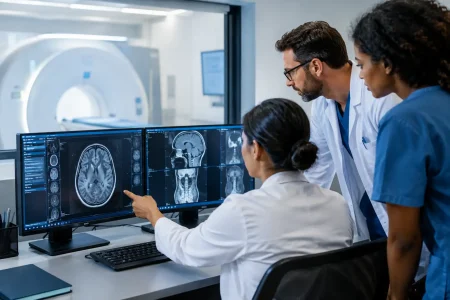
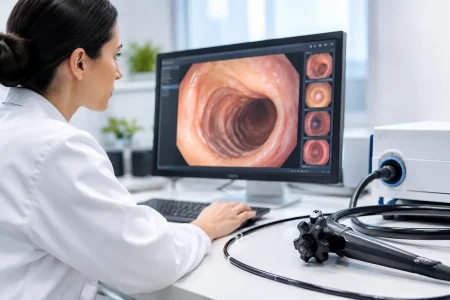
For medical and endoscopic imaging, highlight handling is especially sensitive. Tissue, fluid, metallic instruments, and concentrated illumination can create specular reflections. The desired output may not be the flattest-looking image. It may be an image that preserves clinically relevant texture without excessive noise in darker regions. Sensor size, lens geometry, illumination spectrum, and color calibration all deserve attention.
Specifications That Need Context
Dynamic range is often expressed in decibels. A higher number generally suggests that the sensor can handle a broader range between low and high signal levels. Still, comparing values across suppliers requires care. Measurement methods, HDR modes, noise thresholds, and processing settings may differ.
Frame rate is another frequent compromise. Certain HDR modes reduce maximum frames per second, change readout behavior, or increase processing demand. If the host processor must run real-time analytics, calculate total throughput before selecting a higher-resolution HDR sensor.
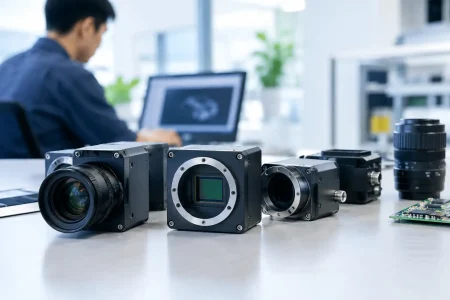
Interface choice also affects integration. MIPI CSI-2 is common for compact embedded platforms and can support high-speed sensor data with low latency. USB camera modules can simplify connection to industrial PCs and UVC-compatible hosts. DVP remains practical for some legacy or lower-complexity designs. The right choice depends on processor support, cable length, electromagnetic environment, power budget, and the required output format.
Lens selection should be reviewed alongside the camera module. Strong backlight can expose flare, ghosting, veiling glare, and reduced contrast caused by the optical path. A high-performing WDR sensor paired with an unsuitable lens may still produce weak results near point light sources or bright windows. Consider field of view, F-number, distortion, infrared-cut requirements, coatings, and mechanical alignment as part of the imaging specification.
Build a Better Evaluation Plan
Supplier qualification should include more than a sample image captured in a controlled lab. Create a test scene that reproduces the actual extremes your product will encounter. Include the real enclosure window, intended lens, illumination, working distance, moving targets, and representative host hardware whenever possible.
Measure whether the required feature remains visible in shadow and highlight areas. For algorithm-driven products, evaluate detection or classification accuracy rather than relying only on visual preference. A pleasing image may be less useful than one with stable edges, low motion artifacts, and predictable pixel values.
Also test transitions. Many field failures occur when illumination changes quickly, such as a robot leaving a dark aisle or a vehicle traveling through a tunnel entrance. Exposure convergence time, white-balance stability, flicker response, and recovery from saturation can matter as much as the peak HDR result.
From Sample Module to Stable Production
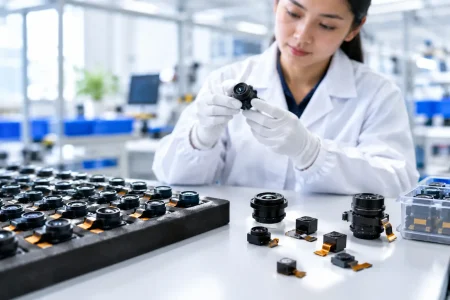
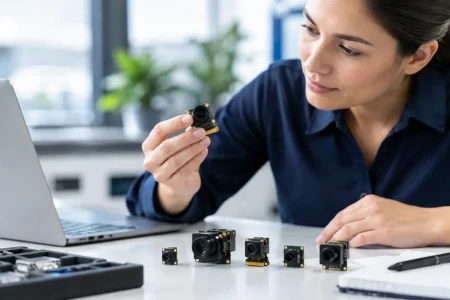
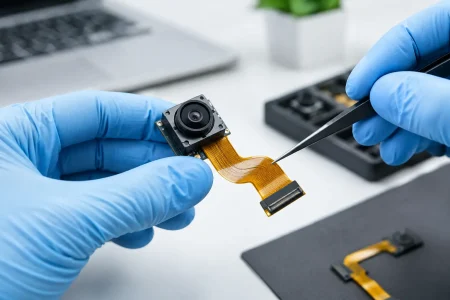
A WDR design becomes commercially viable only when image quality can be repeated at production scale. That requires control of sensor sourcing, lens matching, FPC design, assembly tolerances, firmware versions, calibration parameters, and quality inspection standards.
For customized programs, define the image output requirements early: sensor model, resolution, HDR mode, frame rate, interface, lens, module dimensions, connector orientation, operating temperature, and any required tuning. Clear requirements reduce redesign cycles and prevent a common late-stage issue: a module that performs well in a development prototype but cannot meet the mechanical, thermal, or supply requirements of the final product.
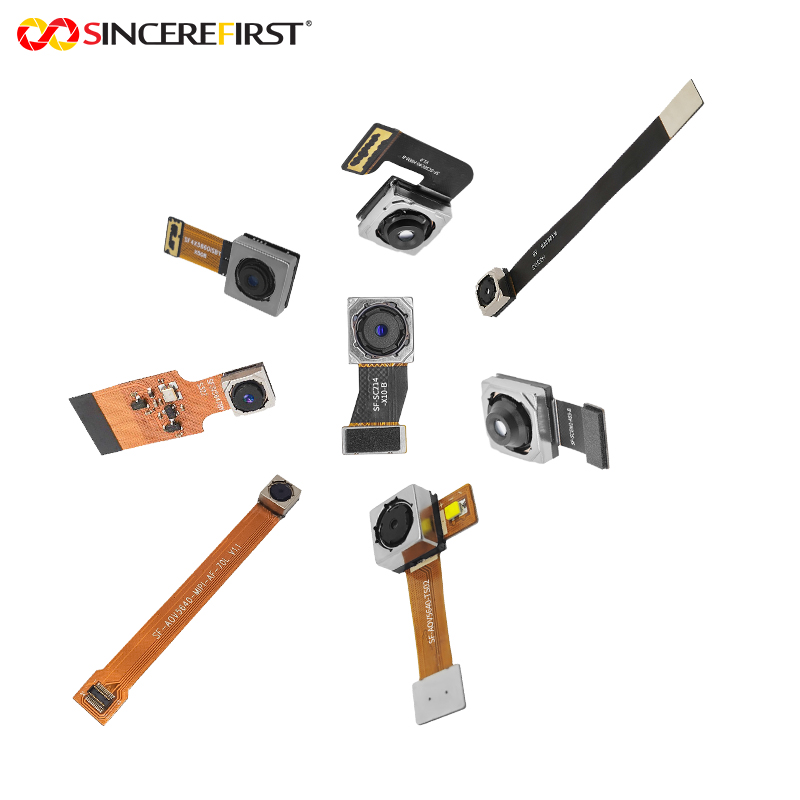
SincereFirst supports this process with standard and custom camera module development, combining sensor, optical, interface, and manufacturing considerations for embedded imaging programs. For buyers, the practical advantage of an engineering-led manufacturer is faster iteration when a scene test exposes a real limitation, whether that limitation is flare, bandwidth, heat, motion artifact, or mechanical fit.
WDR should be specified as a system requirement, not treated as a checkbox. Define the difficult scene, decide what detail must survive it, and validate the complete camera assembly under realistic operating conditions. That approach gives your team a clearer path to an image that performs when the lighting stops being cooperative.