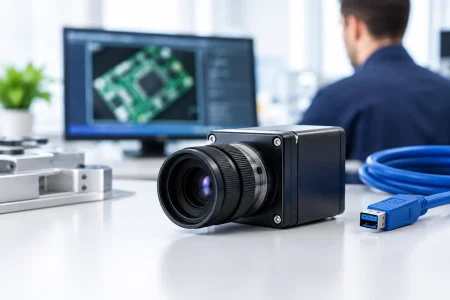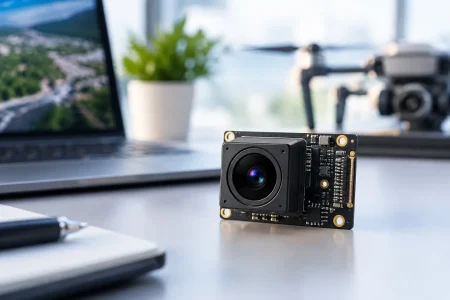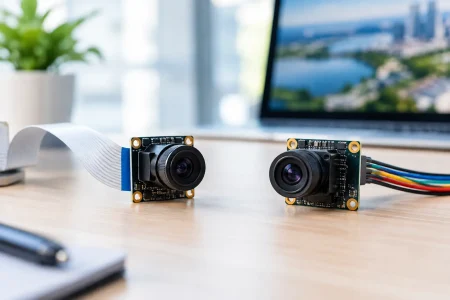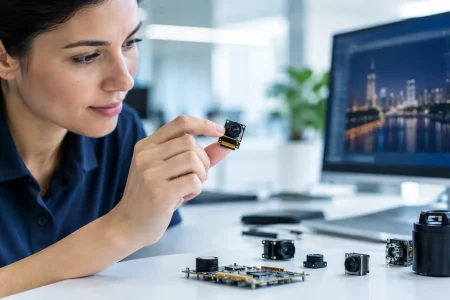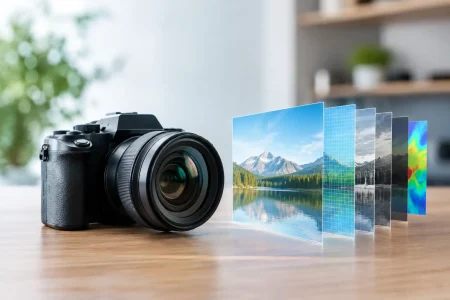

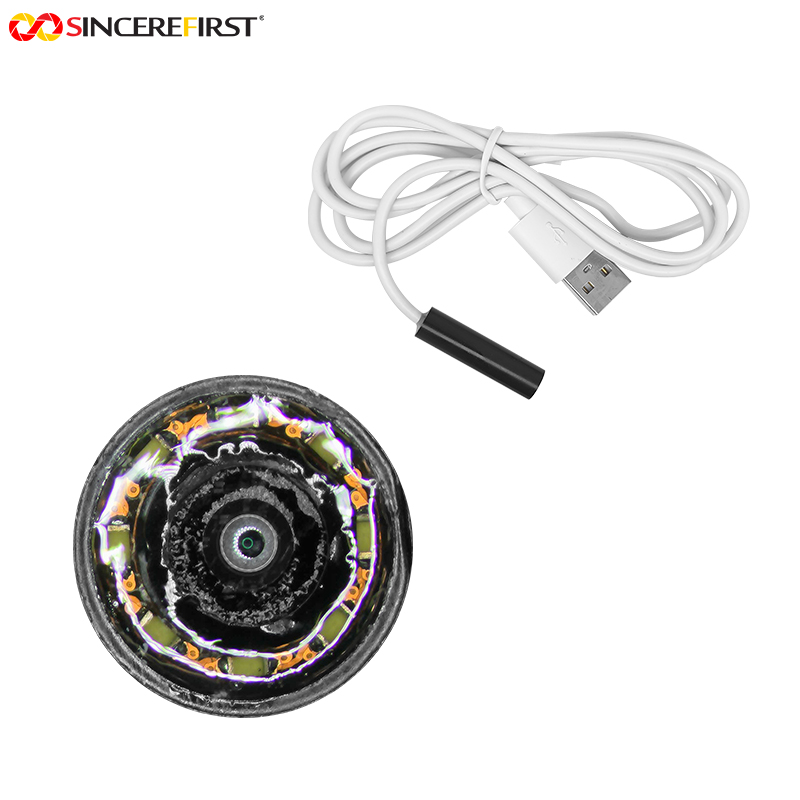

An FPC camera review should begin where many sourcing discussions end: with the installed device, not the camera module datasheet. A module can produce clean images on an evaluation board yet fail the real product because its flex routing is too tight, its connector orientation is wrong, its lens focus is mismatched, or its output cannot maintain stable performance under production conditions. For OEM teams, the right review is a system-level qualification process.
FPC camera modules combine an image sensor, lens, flexible printed circuit, and connector into a compact imaging assembly. That architecture makes them highly valuable where space, weight, and board layout flexibility matter, including handheld medical devices, smart locks, robots, wearables, agricultural equipment, and industrial inspection tools. It also means the camera must be evaluated as an electrical, mechanical, optical, and manufacturing component at the same time.
What an FPC Camera Module Actually Solves
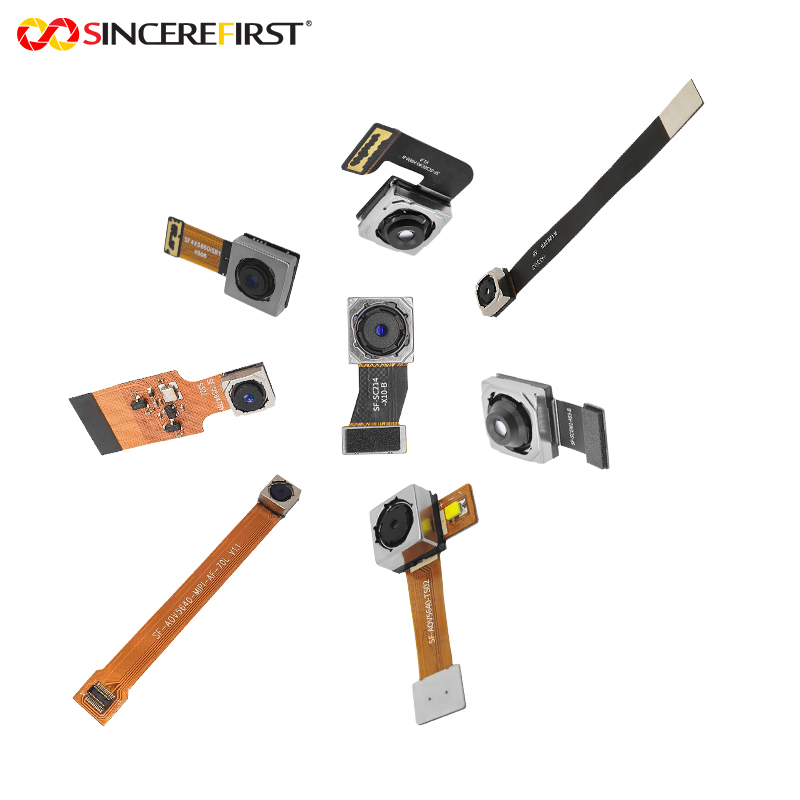
The defining feature of an FPC camera is the flexible printed circuit cable that carries power, control, and image data between the camera head and host board. Unlike a rigid-board module, it can be folded, routed around batteries or structural parts, and positioned where a direct board-to-board camera connection is impractical.
This flexibility is not automatically an advantage. Every bend, fold, adhesive point, and connector interface introduces a design variable. A flex that works well in a low-volume prototype may be vulnerable to repeated movement, assembly stress, or electromagnetic interference in the finished device. For fixed installations, a short and carefully routed FPC is often straightforward. For moving robotic joints, articulated inspection equipment, or devices exposed to vibration, the cable construction and strain-relief design require much closer attention.
The module’s compactness can also create thermal and optical compromises. Small camera heads limit the available lens barrel size and sensor format. That may be perfectly acceptable for barcode reading or user-facing video, but it can constrain low-light performance, dynamic range, and edge-to-edge sharpness in demanding machine vision applications.
FPC Camera Review: The Criteria That Matter
A useful FPC camera review separates headline specifications from performance requirements. Resolution, for example, is only one part of image quality. A 5 MP module may outperform an 8 MP alternative when its sensor sensitivity, lens quality, field of view, and image signal processing are better aligned with the target scene.
Start With the Imaging Task
Define what the camera must detect, measure, or record before selecting a sensor. A security device may prioritize low-light color reproduction and wide dynamic range. A compact document scanner may need low distortion and consistent focus across a flat field. A robot may require low latency, stable frame timing, and a field of view that preserves obstacle detail at close range.
Ask for actual sample images and video captured in conditions that resemble the product environment. Evaluate difficult areas: shadows, reflective surfaces, fine patterns, fast motion, color under the intended illumination, and high-contrast transitions. If software will perform recognition or measurement, assess the output through that software pipeline rather than relying only on visual inspection.
Sensor identification matters. The supplier should clearly specify the sensor model, optical format, pixel size, supported resolutions, frame rates, shutter type, and expected lifecycle status. A rolling-shutter sensor can be a cost-effective fit for static scenes, video conferencing, and many consumer devices. It may be a poor fit for high-speed inspection or fast-moving machinery, where motion distortion affects analysis results. In those cases, a global-shutter solution may justify its higher cost.
Confirm the Interface Before Mechanical Release
FPC modules are commonly designed for MIPI CSI-2 or DVP output, although the final system may use a bridge board or processor-specific interface. The host processor, operating system, lane configuration, clocking, voltage levels, and driver support must all be confirmed early.
A MIPI camera module is not interchangeable simply because it uses the same connector pitch. Lane count, pin assignment, data rate, orientation, and FPC contact direction can differ. The receiving platform must also support the sensor register configuration and output format, such as RAW Bayer, YUV, or compressed video. A strong supplier review includes the electrical drawing, pinout, timing information, initialization requirements, and reference tuning guidance before the enclosure design is frozen.
Frame rate should be evaluated as delivered, not only as advertised. Resolution, bit depth, lane count, processor load, and image processing can reduce the practical rate available to the application. For a vision-guided machine, consistent exposure-to-exposure timing can be more valuable than a theoretical peak frame rate.
Treat Lens Selection as a Core Engineering Decision
The lens determines whether the sensor’s capability reaches the application. Review focal length, field of view, aperture, distortion, depth of field, focus distance, and chief ray angle compatibility. A very wide lens can cover more scene area but may introduce distortion that complicates dimensional measurement. A narrow field of view may deliver better target detail but demands more accurate camera placement.
Fixed-focus modules are usually the best choice for controlled working distances because they simplify mechanics, reduce power consumption, and avoid autofocus variation. Autofocus is useful when users capture objects at substantially different distances, but it adds control requirements and can introduce capture delay. For endoscope, medical, or industrial close-up use, lens-to-sensor alignment and target-distance testing are especially important.
Review the FPC as a Reliability Component
A camera specification should state FPC length, width, thickness, layer count, connector type, contact orientation, stiffener location, and bend restrictions. These details affect installation feasibility as much as the camera head dimensions.
A longer FPC gives industrial designers more layout freedom, but it may increase signal-integrity risk and assembly complexity. High-speed MIPI signals require controlled impedance and disciplined routing. A poor flex design can produce intermittent image errors that are difficult to reproduce during early testing. Where the cable crosses noisy power electronics, motors, displays, or wireless antennas, grounding strategy and shielding should be considered during module development.
Mechanical review should include the minimum bend radius, whether the flex will be bent once during assembly or repeatedly in service, and how the camera head is retained. Do not use the FPC as a structural support. Define strain relief, avoid sharp enclosure edges, and make sure adhesives or clamps do not crush sensitive trace areas.
For high-volume programs, request dimensional tolerances for the camera head, lens height, connector placement, and FPC tail. Small deviations can affect automated assembly, gasket compression, alignment with an exterior window, and cosmetic fit. The camera should also be tested after final installation because cover glass, protective windows, light leakage, and internal reflections can materially change the image.
Supplier Questions That Prevent Late Rework
The most productive supplier discussion is application-specific. Provide the target processor, enclosure constraints, required working distance, lighting conditions, annual volume, and approval timeline. In return, expect a clear recommendation that identifies both the fit and the trade-offs.
Ask whether the module is a stable standard design or requires custom work. Confirm sample lead time, production lead time, minimum order quantity, change-control process, traceability approach, and incoming and outgoing quality controls. For regulated medical equipment or long-life industrial platforms, component availability and revision control are as critical as initial image quality.
Customization can include sensor selection, lens tuning, FPC length and pinout, connector position, module dimensions, infrared filter configuration, LED integration, housing design, and image parameter adjustments. Customization is valuable when it removes a device-level compromise, not when it merely creates a unique part number. A practical supplier should explain the tooling, engineering validation, and volume implications before development begins.
SincereFirst supports this process with standard and customized FPC camera modules backed by engineering development, cleanroom manufacturing, and scalable production capability. For buyers, the value is not simply access to a broad camera catalog. It is the ability to move from optical requirement to manufacturable module without separating the sensor, lens, flex, and production discussions across multiple suppliers.
When a Standard Module Is Enough and When It Is Not
A standard module is often the fastest route when the device has room for common dimensions, the processor already supports the sensor, and the application accepts an available lens configuration. It reduces engineering risk and accelerates sample evaluation.
A custom FPC camera becomes the better decision when physical space is constrained, the flex must follow a nonstandard route, the application needs a specific field of view or focus distance, or the system requires connector and pinout changes. Custom work is also justified when supply continuity, optical repeatability, or image tuning directly affects product performance.
The best camera module is not necessarily the smallest, highest-resolution, or lowest-cost option. It is the one that delivers repeatable images, fits the product without mechanical compromise, integrates cleanly with the host platform, and can be manufactured consistently at the volume your program requires. Qualify it under the conditions where your customers will use it, then let that evidence guide the release decision.