
A USB3 camera review for an OEM program should go far beyond checking whether a module produces a sharp image on a lab monitor. The real question is whether that camera can sustain the required frame rate, fit the mechanical envelope, tolerate the operating environment, and remain available through production. For robotics, medical equipment, inspection systems, and smart devices, a camera module is not a peripheral. It is a decision that affects software workload, system reliability, certification planning, and supply continuity.
USB 3.0 cameras remain a practical choice when a product needs high-resolution imaging with low latency but cannot justify the cost or integration complexity of a proprietary interface. Their value is strongest when sensor selection, optics, cable design, host processing, and manufacturing requirements are evaluated together.
What a USB3 Camera Review Should Measure
The USB 3.0 interface offers a theoretical signaling rate of 5 Gbps, but system designers should not assume that all of this capacity is available to image data. Protocol overhead, USB controller performance, cable quality, host architecture, and competing devices reduce usable throughput. A camera that performs well in a controlled prototype can lose frames when connected through an unsuitable hub, an extended cable, or an underpowered embedded host.
Start with the uncompressed data requirement. A 1920 x 1080 sensor at 60 fps with 8-bit Bayer output requires roughly 1 Gbps before overhead. Moving to 12-bit output, higher frame rates, or a 4K sensor increases bandwidth demand quickly. Compression can reduce transmission load, but it also changes latency, processor demand, image quality, and software validation requirements.
A credible review therefore checks the camera under the same image format, exposure settings, cable length, operating temperature, and host platform expected in the finished device. A supplier demonstration at 30 fps is not proof that a production system will maintain 60 fps without dropped frames.
Sensor performance comes before resolution
Resolution is visible on a specification sheet, but it is only one part of image quality. The sensor must produce usable detail under the lighting, motion, and working-distance conditions of the application. A 4K module may be the wrong choice if the host cannot process it in real time or if the lens cannot resolve detail at the required field of view.
Review pixel size, sensitivity, dynamic range, shutter type, noise behavior, and supported bit depth. Global shutter sensors are often preferred for moving conveyor items, robot arms, handheld medical tools, and vehicle-mounted equipment because they minimize motion distortion. Rolling shutter sensors can be cost-effective for static scenes, document capture, access control, and applications with controlled movement.
Low-light performance should be assessed with real illumination, not only a lux figure. Exposure time, gain, illumination spectrum, lens aperture, and noise-reduction settings all influence the final image. For machine vision, excessive gain can create false edges and unstable detection results even when the image appears bright to the human eye.
USB3 Camera Review: Interface and System Integration
A USB3 camera module can shorten development time because UVC-compatible designs can work with standard operating-system drivers. This is valuable for prototypes and products that need broad PC compatibility. However, UVC compliance does not eliminate integration work. OEM teams still need to verify format support, control access, latency, startup behavior, device enumeration, and compatibility with the target operating system.
The distinction between USB Video Class support and a camera’s full capability is especially important. A standard UVC path may provide basic preview and control, while advanced functions such as external triggering, hardware synchronization, region of interest, raw Bayer output, or fine exposure control may require a vendor SDK or custom firmware. That is acceptable when the feature set is necessary, but it should be established before software architecture is committed.
Host-side processing deserves the same attention as the camera. An embedded Linux board, industrial PC, or Windows host may handle the video stream differently depending on its USB controller, memory bandwidth, graphics pipeline, and application workload. Test for long-duration capture, not just a short live preview. Memory leaks, thermal throttling, and intermittent reconnect behavior usually appear after hours of continuous operation.
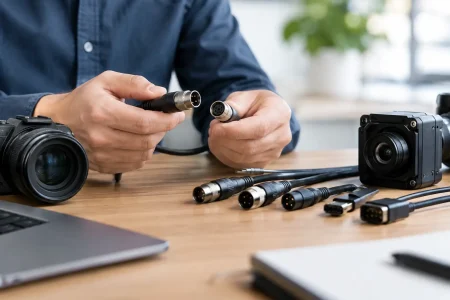
Cable selection is another common failure point. USB 3.0 signal integrity declines with length and poor shielding. A short cable may work reliably in the lab but fail in an electrically noisy machine enclosure. If the application requires a longer distance between camera and host, review active cable options, strain relief, connector retention, EMI conditions, and repeated flexing requirements. The lowest-cost cable is rarely the lowest-risk choice in an industrial deployment.
Optics, Mechanics, and Illumination Are Part of the Result
A camera module cannot be evaluated in isolation from its optical path. Sensor size must match the lens image circle, while lens focal length and aperture must match the required field of view, working distance, and depth of field. A high-resolution sensor paired with a low-quality lens can create soft corners, chromatic aberration, and inconsistent inspection results.
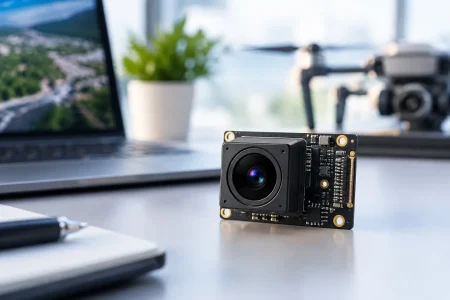
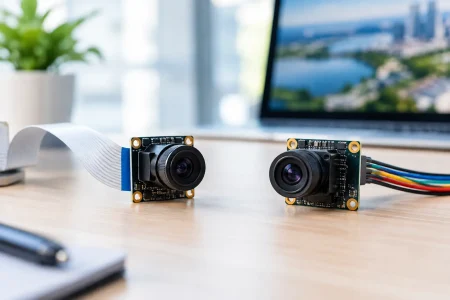
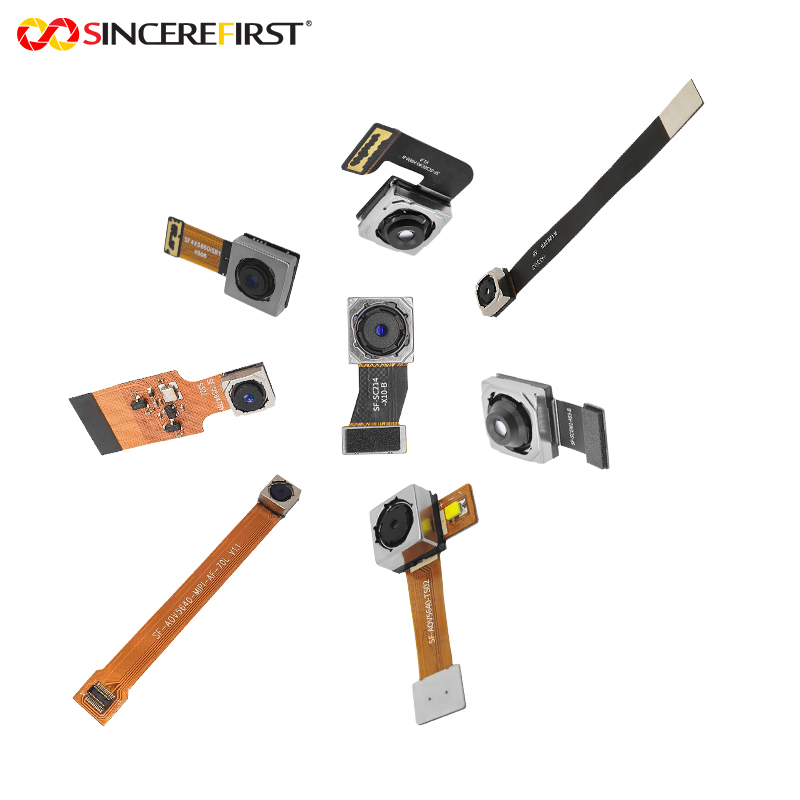
For compact products, module thickness, board shape, connector orientation, and mounting tolerance can be as decisive as image quality. FPC-based designs may help fit a camera into constrained housings, while a board-level USB camera can simplify assembly and serviceability. The preferred architecture depends on the enclosure, cable routing, vibration exposure, and manufacturing process.
Illumination should be reviewed as a system requirement. A sensor may need visible light, near-infrared sensitivity, infrared-cut filtering, polarized lighting, or dedicated LED placement. In barcode reading, agricultural analysis, microscopy, and medical imaging, the wrong spectral response can limit performance even when resolution and frame rate appear adequate.
Questions That Expose Production Risk
Before approving a USB3 camera module, procurement and engineering teams should obtain clear answers on items that affect repeatable supply and field performance:
- Is the selected sensor available for the expected product lifecycle, and is there an approved alternate plan?
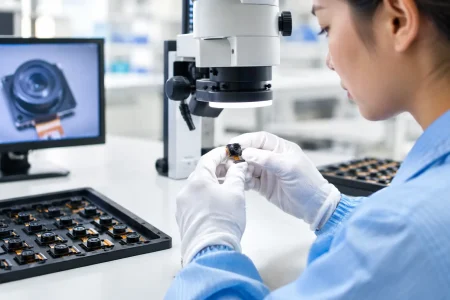
- Can the supplier control lens focus, module alignment, image orientation, and cosmetic inspection consistently at volume?
- What image tests, electrical tests, and aging procedures are used before shipment?
- Can firmware, connector type, cable length, board dimensions, LED configuration, and lens selection be customized?
- What sample lead time, engineering validation support, and production ramp capacity are available?
- How are component changes communicated, documented, and approved?
These questions separate a camera that is suitable for evaluation from one that is ready for commercial deployment. For regulated medical devices or safety-sensitive industrial systems, documentation, traceability, and change control may carry as much weight as optical performance.
When a Standard Module Is Enough and When Customization Pays
A standard USB3 camera is often the right starting point for proof-of-concept work, workstation-based inspection, laboratory imaging, and products with conventional mechanical requirements. It reduces initial engineering cost and allows software teams to begin development quickly.
Customization becomes valuable when the camera must fit a tight housing, work at a nonstandard angle, operate under specialized illumination, support a particular lens mount, or meet a defined cable and connector requirement. It is also justified when image tuning must be optimized for a specific scene rather than general-purpose viewing. White balance, exposure behavior, color correction, sharpness, and noise reduction can materially affect downstream algorithms.
SincereFirst supports this path by combining standard USB camera module supply with customized sensor, optical, mechanical, and firmware development for OEM vision programs. The practical advantage is not customization for its own sake. It is reducing the number of compromises that must be absorbed later by enclosure design, software correction, or manual calibration.
A productive USB3 camera review ends with a representative system test: the intended host, final or equivalent optics, realistic lighting, production cable length, and continuous operation over time. Select the module that produces stable, usable image data under those conditions, then qualify the supplier that can reproduce that result at the volume and change-control level your product requires.