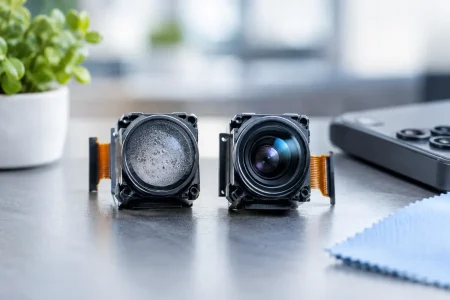

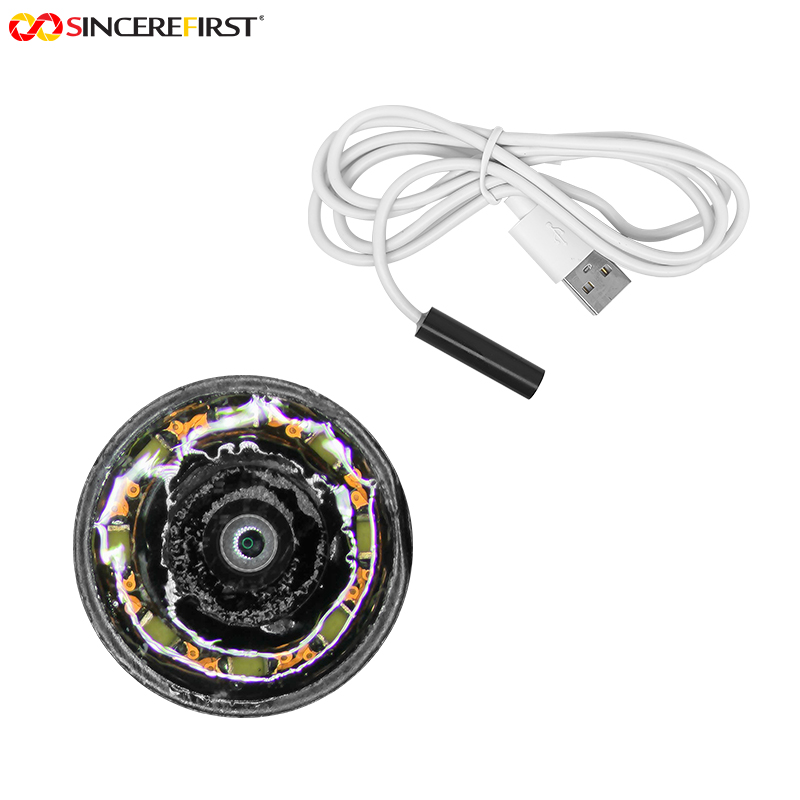
A camera module can pass electrical testing and still fail in the field because of a nearly invisible particle inside the optical path. Dust, fiber debris, adhesive vapor, skin oil, and poorly controlled lubrication can settle on the lens barrel or migrate toward the sensor after assembly. To prevent lens barrel contamination, manufacturers must control the complete process – from component storage and barrel machining to active alignment, final inspection, and packaging.
For embedded cameras used in medical devices, robots, security equipment, and industrial systems, this is not a cosmetic concern. Contamination can create fixed dark spots, flare, reduced contrast, focus instability, or image artifacts that are difficult to correct through image processing. It can also lead to rework, yield loss, and inconsistent field performance across a production lot.
Why lens barrel contamination is a production risk
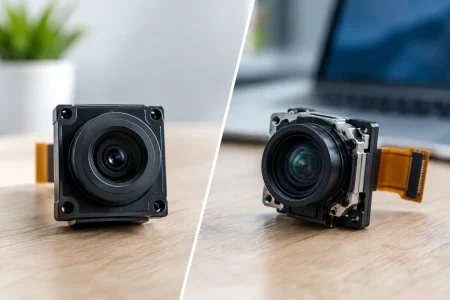
The lens barrel is more than a mechanical holder. It establishes the position of lens elements relative to the image sensor, blocks stray light, and protects the internal optical assembly. Any foreign material inside or around the barrel can affect optical performance directly or become a source of later contamination.
A visible particle near the sensor plane may appear as a dark spot in captured images. Residue on an internal lens surface can reduce transmittance or raise haze. Volatile compounds released by adhesives, coatings, foam, labels, or unsuitable plastics may condense onto optical surfaces over time, particularly when a device operates at elevated temperature. The result can be a module that looks clean at outgoing inspection but degrades after thermal cycling or field use.
The risk level depends on the application. A wide-angle security camera may tolerate a small amount of peripheral contamination better than a medical endoscope or an industrial inspection module. Small-format modules are also less forgiving because the optical path is compact and even a micron-scale particle can occupy a meaningful portion of the image.
Prevent lens barrel contamination at the source
The most effective strategy is to prevent contaminants from entering the process rather than relying on cleaning at final assembly. Final cleaning is necessary, but it cannot reliably remove every particle, film, or volatile source once components are enclosed.
Start with incoming material control. Lens barrels, lens sets, retainers, sensor packages, FPCs, and protective films should arrive in packaging appropriate to their cleanliness requirement. Parts stored in open bins can collect airborne dust and fibers before they reach the assembly station. Materials that shed particles, such as low-grade foam, cardboard, paper labels, or unsuitable trays, should remain outside the controlled production area whenever possible.
Component design matters as well. Deep threads, sharp internal corners, unsealed gaps, and difficult-to-access cavities can trap debris. A barrel design should support repeatable cleaning and inspection before lens installation. For threaded lens assemblies, engineers should consider whether thread geometry produces wear particles during focusing or locking. In fixed-focus modules, a stable mechanical design can reduce the number of handling and adjustment steps that introduce contamination.
Material compatibility should be verified early in development. Adhesives and potting compounds must meet both mechanical and optical requirements. A fast-curing adhesive may improve cycle time but produce outgassing or bloom under heat. Likewise, lubricants used on moving barrels require careful selection and controlled application. The right material is not simply the one that holds components in place. It must remain stable through the device’s expected temperature, humidity, and lifetime conditions.
Build a controlled optical assembly process
Cleanroom classification should match the module design, customer specification, and application risk. Not every camera requires the same environment, but optical assembly should never be treated like general electronics assembly. Airflow, filtration, work-surface cleaning, garment control, and operator discipline all influence yield.
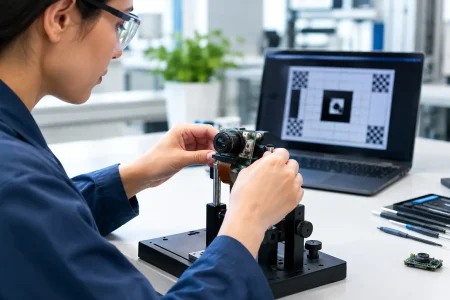
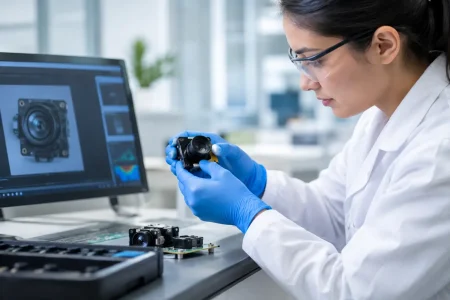
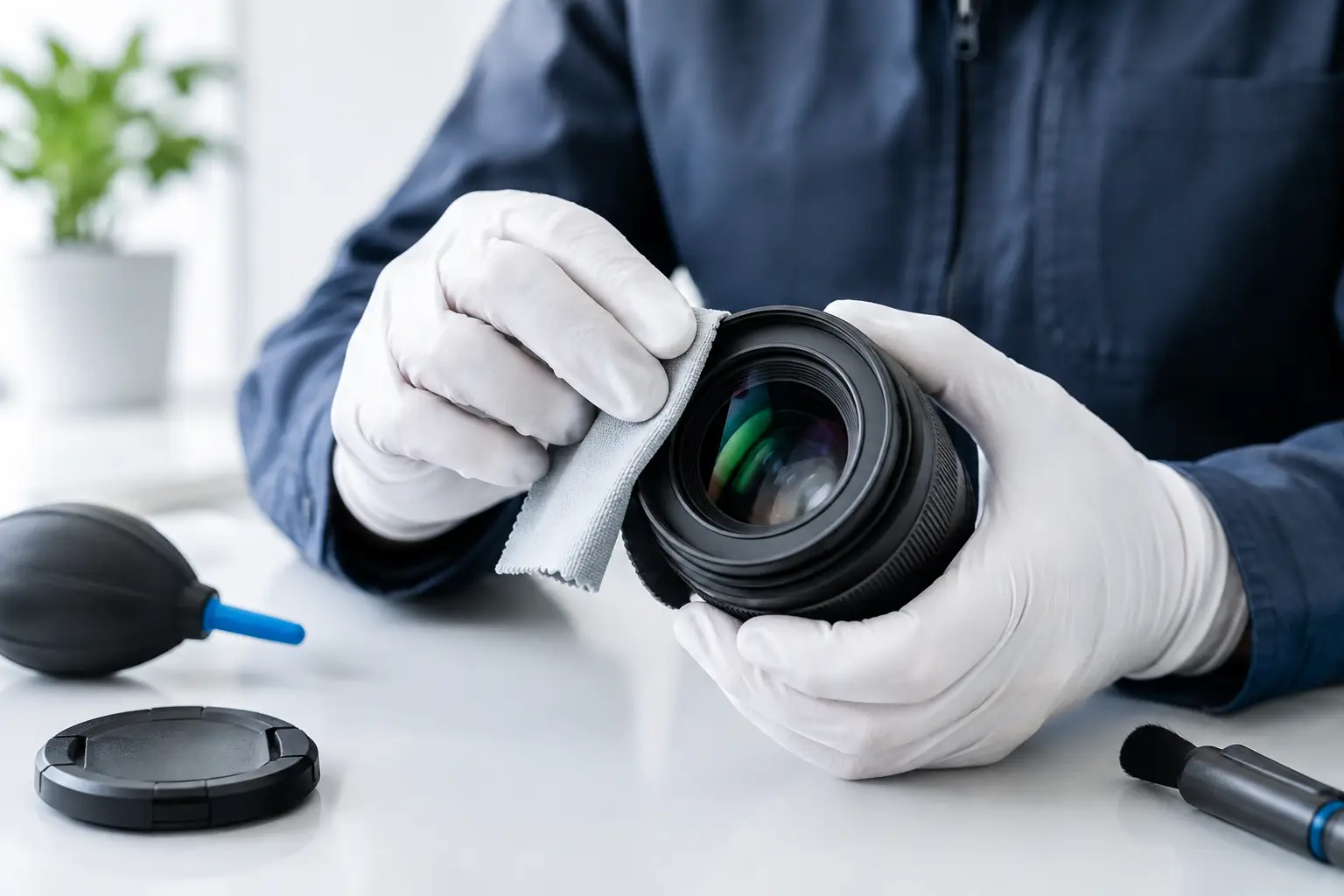
Operators should handle optical components with approved gloves or finger cots and use dedicated, low-shedding tools. Gloves are not a complete solution if they are dirty, damaged, or repeatedly touch non-clean surfaces. Tooling, tweezers, vacuum nozzles, and alignment fixtures need scheduled cleaning because each contact point can transfer particles to the barrel or lens edge.
Before assembly, parts can be cleaned using methods validated for the material and optical coating. Filtered ionized air removes loose particles effectively when used correctly. Vacuum extraction may be preferable where blowing air could move debris deeper into a barrel cavity. Solvent cleaning can remove oils or residues, but it introduces its own risk: an incompatible solvent may damage coatings, leave a film, or drive contaminants into interfaces. Cleaning parameters should therefore be documented, repeatable, and verified rather than left to operator preference.
Assembly sequence is equally important. Install and inspect the cleanest optical components before nearby processes that generate debris, such as soldering, cutting, dispensing, or mechanical fastening. Keep protective caps or films in place until the final practical moment. Once a lens barrel is opened, minimize its exposure time and avoid unnecessary transfers between stations.
Control adhesives, curing, and optical sealing
Adhesive dispensing is a common contamination point in camera module production. Excess adhesive can wick into the barrel, release vapor during cure, or create particles when cured material is trimmed. Dispensing volume, needle height, placement accuracy, cure profile, and material lot traceability all deserve process control.
For lens locking, use the minimum adhesive quantity that achieves required mechanical strength and environmental durability. More adhesive does not necessarily mean a more reliable module. It can increase outgassing risk and make rework impossible. Where UV curing is used, confirm that the cure reaches the complete adhesive bead and that partially cured material does not remain near the optical cavity.
Sealing also involves trade-offs. A highly sealed barrel can reduce ingress during product life, but it may trap existing moisture, vapor, or particles if assembled under poor conditions. The correct approach is a clean assembly process followed by a sealing method validated through thermal, humidity, vibration, and aging tests.
Inspect the barrel and verify image quality
Visual inspection of the external lens surface is not enough. A production plan should include inspection points before lens installation, after barrel assembly, after sensor integration, and before final packaging. Inspection methods vary by module size and throughput, but magnified visual checks, controlled illumination, automated vision systems, and image-based defect screening can work together.
Image testing is especially valuable because it evaluates the optical system as the customer will use it. Uniform-field images can reveal fixed particles, shading issues, and contamination near the sensor. Dark-field or angled illumination can expose haze, scratches, and internal reflections that may not be apparent under normal front lighting. Establish acceptance criteria for particle size, location, contrast impact, and allowable cosmetic defects based on actual application requirements.
When a defect appears, do not treat it as an isolated cleaning failure. Trace the module through material lots, workstations, operator steps, dispensing records, and environmental data. A recurring particle pattern may indicate a degrading fixture, a packaging source, an air-handling issue, or a barrel machining residue that was never fully removed.
Packaging and handling after final inspection
A clean camera module can be recontaminated in minutes if final handling is uncontrolled. Use clean trays, protective lens caps, and low-shedding packaging materials designed for optical components. Avoid packing optical modules beside foam, loose paperwork, or components that generate debris during transit.
For moisture-sensitive or long-distance shipments, packaging should also protect against humidity and temperature exposure. The exact requirement depends on materials and destination conditions, but packaging validation should be part of supplier qualification, not an afterthought. Lot labels and traceability records allow teams to isolate issues quickly if a customer identifies a field defect.
Design for clean, scalable manufacturing
The best contamination-control process is one that can be repeated at volume. A prototype may be assembled carefully by a senior technician, yet still be difficult to scale if it depends on manual judgment, excessive open handling, or complicated rework. Product teams should involve manufacturing engineers early enough to simplify barrel geometry, define cleaning access, select low-outgassing materials, and set measurable inspection requirements.
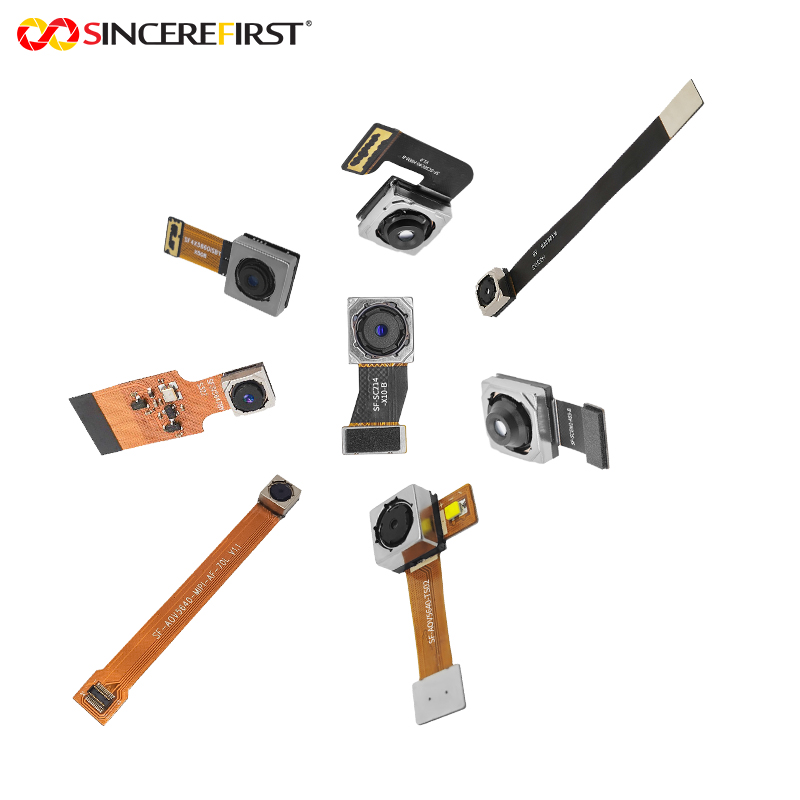
For customized camera modules, SincereFirst applies this manufacturing perspective across optical selection, mechanical integration, cleanroom assembly, and image verification. That approach helps OEM and system integrator teams move from samples to production without treating cleanliness as a late-stage corrective action.
A stable optical image begins well before final test. When barrel design, material selection, controlled assembly, and image-based verification reinforce one another, contamination becomes a managed manufacturing variable rather than an expensive surprise after deployment.