
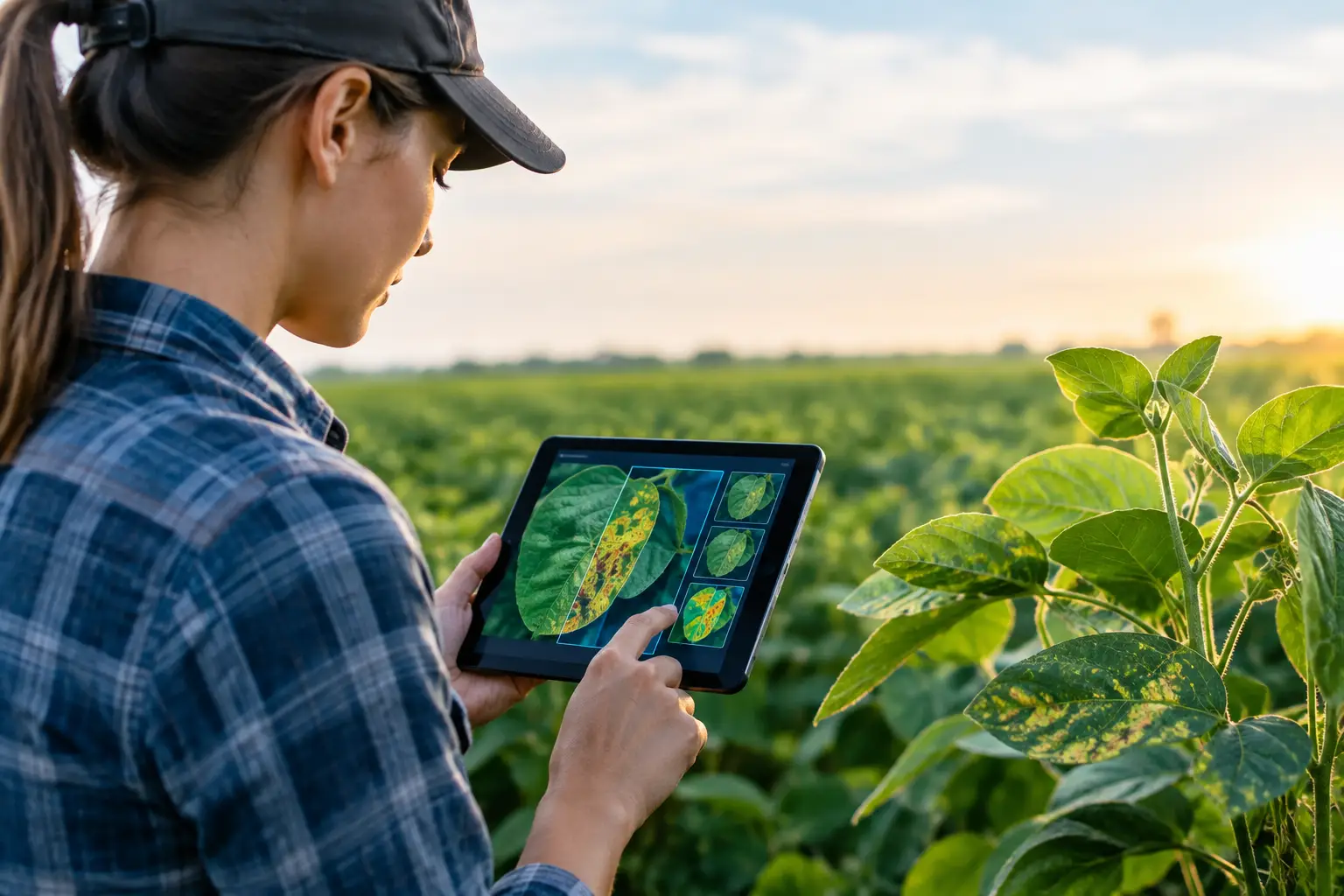
A faint yellow patch on a leaf may look insignificant from a tractor cab or a drone at cruising altitude. In a commercial field, however, that small visual change can be the first usable signal of fungal infection, bacterial disease, nutrient stress, herbicide damage, or insect pressure. Crop disease imaging gives agricultural equipment manufacturers and system integrators a way to capture, classify, and act on those signals before visible damage becomes widespread.
For teams building smart sprayers, field robots, greenhouse monitoring systems, scouting tools, or drone payloads, the challenge is not simply adding a camera. The imaging system must produce repeatable data despite changing sunlight, canopy motion, dust, plant geometry, and long operating hours. Camera selection, lens design, illumination, interface bandwidth, and embedded processing all affect whether a promising algorithm becomes a dependable field product.
What Crop Disease Imaging Must Detect
Crop disease imaging uses visible, near-infrared, multispectral, or other spectral data to identify plant symptoms and, in some applications, physiological changes that precede obvious symptoms. The output may be a disease map, a plant-level alert, a severity score, or a command to apply treatment only where it is needed.
The target determines the imaging architecture. A greenhouse system inspecting individual leaves can work at close range with controlled lighting and high spatial resolution. A boom-mounted camera system must cover a wider area while handling vibration and fast ground speed. Drone imaging can cover many acres efficiently, but it trades leaf-level detail for scale and adds motion, altitude, and radiometric calibration requirements.
This distinction matters because disease symptoms are not always visually unique. Leaf spots can resemble mechanical damage. Chlorosis can be caused by disease, nutrient deficiency, water stress, or poor root conditions. A camera can collect excellent images yet still support poor decisions if the dataset does not represent these look-alike conditions. The camera module is therefore one part of a larger measurement system, not a standalone answer.
Camera Architecture for Crop Disease Imaging
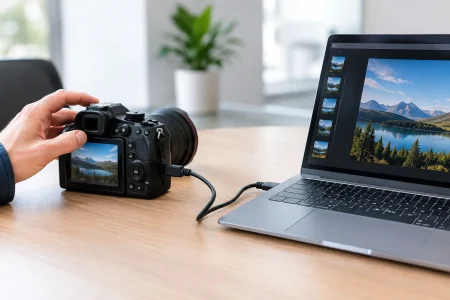
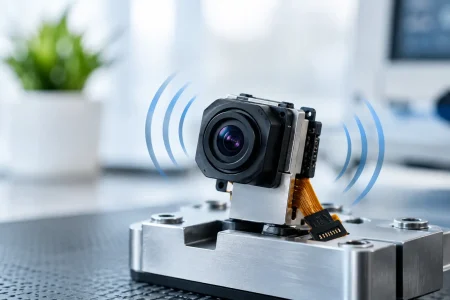
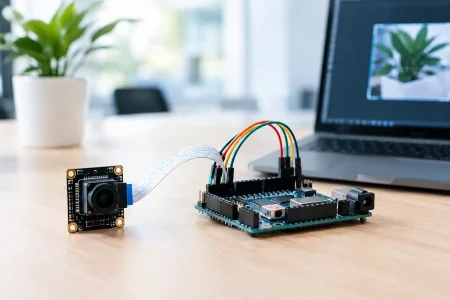
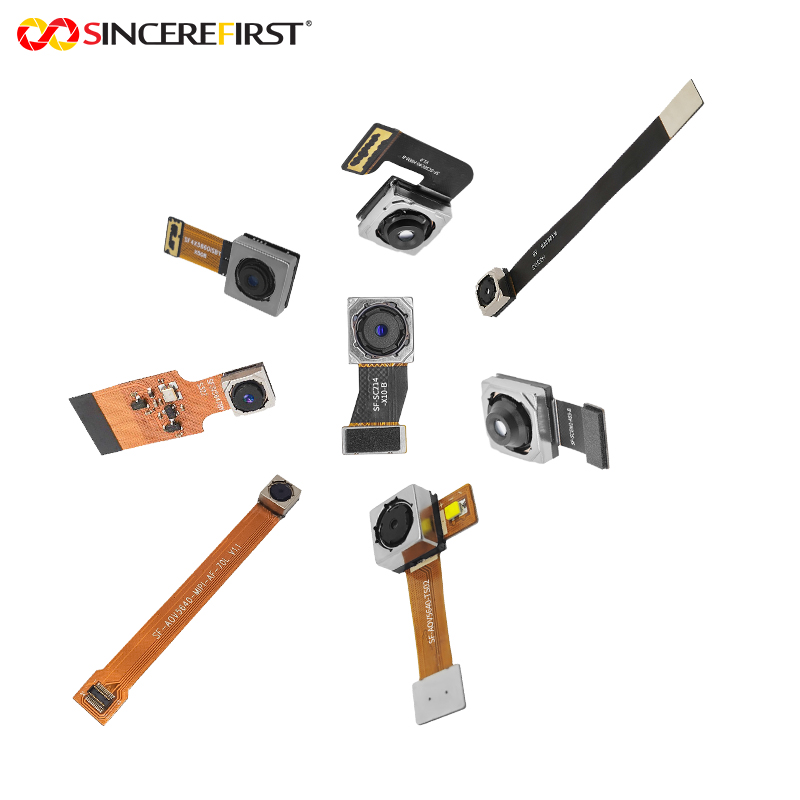
Most commercial systems begin with RGB imaging because it is accessible, cost-effective, and well supported by machine vision software. High-resolution RGB sensors can identify discoloration, lesion shape, canopy gaps, and visible pest damage. For close-range inspection, a compact MIPI camera module can be a practical choice when the host processor has a native MIPI CSI-2 interface and board space is limited.
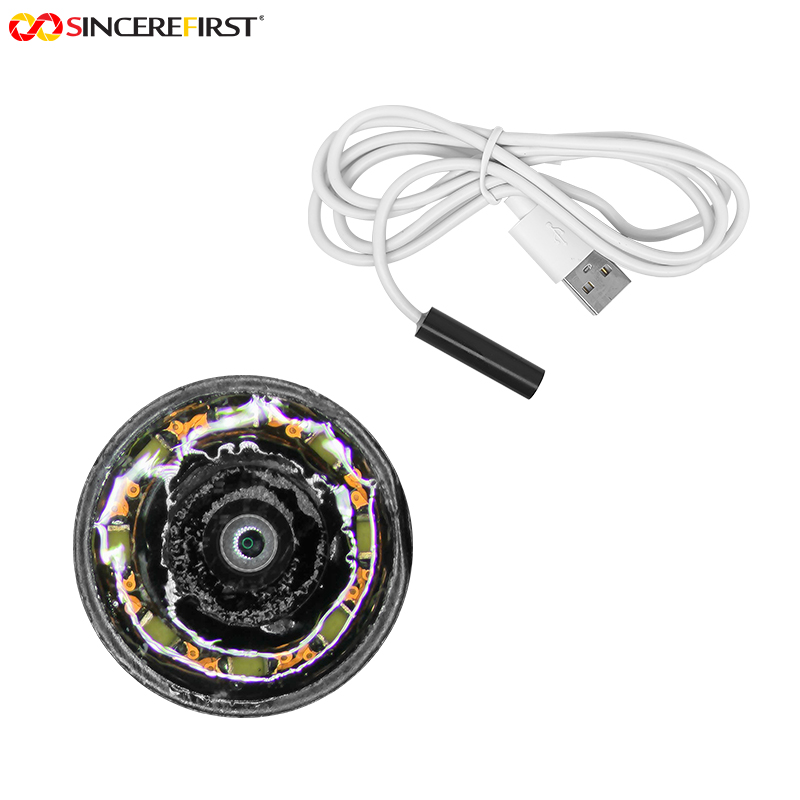
USB camera modules are often suitable for early prototypes, fixed greenhouse stations, and PC-based inspection platforms. USB3.0 provides substantially more bandwidth than USB2.0 for higher-resolution or higher-frame-rate streams. UVC compatibility can simplify host integration, although product teams should verify exposure control, synchronization, and operating-system behavior before finalizing the architecture.
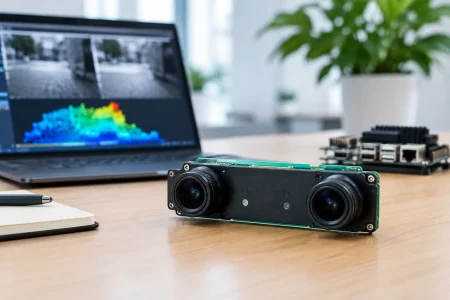
When the application requires more than visible color, sensor selection becomes more specialized. Near-infrared imaging can help assess canopy vigor and water-related stress, while narrowband or multispectral systems can distinguish spectral responses that an RGB sensor cannot resolve. These systems may reveal useful plant changes earlier, but they increase optical, illumination, calibration, and data-processing complexity. More spectral bands do not automatically create a better product if the use case cannot support the additional cost and operational controls.
Resolution should be calculated from the smallest symptom that must be recognized, the working distance, and the field of view. A high-megapixel sensor is not always the right choice. Higher resolution increases storage, processing load, interface bandwidth, and sensitivity to motion blur. If the system needs to identify millimeter-scale lesions from a moving platform, shutter type, optics, lighting, and exposure time may matter more than adding pixels.
Global Shutter or Rolling Shutter
For stationary greenhouse cameras and slow-moving inspection systems, a rolling-shutter sensor may provide good image quality at an attractive cost. For tractor-mounted, robotic, or drone imaging, rolling shutter can distort leaves, crop rows, and moving machinery when exposure occurs during motion.
A global-shutter camera captures the full frame at the same instant, reducing geometric distortion and making image analysis more consistent in dynamic scenes. It is usually the safer choice when the platform vibrates, plants move in wind, or the camera must operate at higher travel speeds. The trade-off may be sensor cost, pixel size, or low-light performance, depending on the available sensor options.
Optics Are Part of the Measurement System
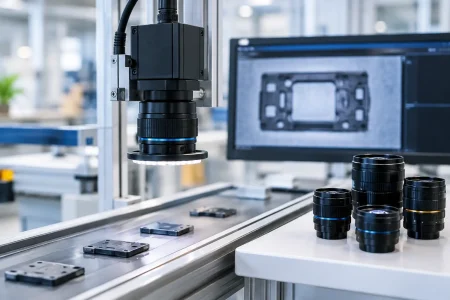
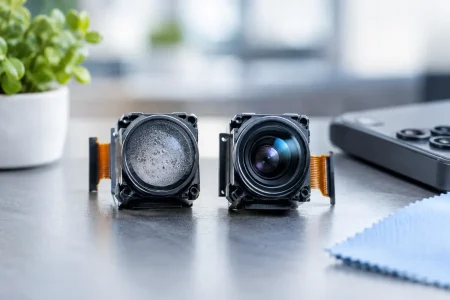
A camera module cannot compensate for a poorly matched lens. Lens focal length establishes coverage and pixel density. Aperture affects light capture and depth of field. Distortion influences geometric measurements and can complicate stitching or mapping. In close-up crop inspection, depth of field is especially important because leaves rarely sit in a flat, fixed plane.
Agricultural deployments also require attention to flare, chromatic aberration, and lens coating. Bright sky, wet leaf surfaces, and specular reflections can confuse segmentation and disease classifiers. A lens with appropriate coatings and controlled field illumination can reduce these false signals before software has to address them.
Lighting and Calibration Determine Data Quality
Field sunlight changes by the minute. Clouds, sun angle, leaf shadows, soil reflectance, and plant moisture all change the apparent color of the crop. A disease-detection model trained under one condition can fail under another if imaging data has not been normalized or diversified.
Controlled illumination is most achievable in greenhouses, enclosed inspection stations, and close-range robotic tools. Diffuse LED lighting can improve color consistency and reduce hard shadows. For fluorescence or multispectral applications, the light source must be selected for spectral output and stability, not only brightness.
Outdoor systems typically need a different strategy. They may use ambient light with exposure control, reference panels, periodic calibration targets, and image-quality checks to identify unusable captures. Automatic white balance can make images look appealing to people while undermining quantitative color analysis. Where disease classification depends on subtle color differences, locking or carefully controlling white balance, gain, and exposure is often preferable.
Calibration must also survive production. A prototype tuned by one engineering team is not enough. The final system needs defined tolerances for camera position, lens focus, illumination output, color response, and sensor-to-sensor variation. This is where an imaging supplier with module customization and scaled manufacturing capability can reduce risk. SincereFirst supports camera module selection and custom integration for OEM teams that need consistent optical and electrical performance from prototype builds through volume production.
Processing Location Changes the Hardware Decision
Some crop disease imaging systems send images to a cloud platform for analysis. This approach can support model updates, large datasets, and centralized farm reporting. It also depends on connectivity, creates upload costs, and can introduce delays that are unacceptable for real-time treatment decisions.
Edge processing places inference on the vehicle, robot, camera host, or gateway. It reduces latency and avoids transferring every frame, but the design team must manage power, thermal limits, memory, and accelerator compatibility. A smart sprayer that makes nozzle-level decisions may require low-latency edge inference. A weekly aerial scouting service may accept delayed processing if it gains broader analytics capability.
The imaging pipeline should be designed around the decision timeline. Ask whether the system needs to flag a plant immediately, create a same-day prescription map, or document disease progression across a season. That answer guides frame rate, compression, interface choice, compute platform, and storage requirements.
Designing for Real Agricultural Conditions
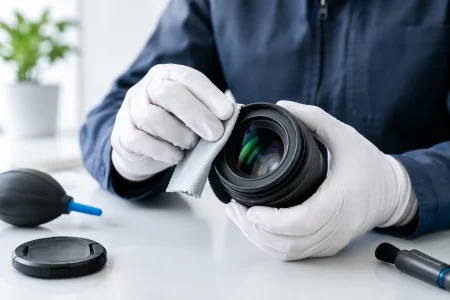
Laboratory images rarely represent the field. Camera systems must tolerate dust, moisture, chemical exposure, vibration, temperature variation, cable stress, and repeated cleaning. Enclosure design, connector retention, ingress protection, and thermal paths deserve the same engineering attention as sensor resolution.
Data collection should also reflect operating reality. Train and validate models across varieties, growth stages, soil backgrounds, disease severity levels, regions, and weather conditions. Include healthy plants and common non-disease stresses. A model that only sees textbook symptoms will deliver confident but unreliable results when deployed at scale.
For OEM development, a staged program is usually the most efficient path. Start by defining the disease classes, smallest detectable symptom, working distance, platform speed, and response time. Build a prototype with representative optics and lighting, then collect real field data before committing to sensor volume or mechanical tooling. Once the image quality and model performance are proven, tighten calibration specifications and qualification testing for production.
The Commercial Value Is Selective Action
The strongest business case for agricultural imaging is not the camera itself. It is the ability to make field action more specific. Earlier detection can help agronomists prioritize scouting. Plant-level identification can support targeted spraying. Season-long image records can improve traceability and reveal recurring disease patterns across blocks, rows, or growing environments.
That value depends on trust. Farm operators and equipment buyers need to know when a system is certain, when it is uncertain, and what action should follow. Designing crop disease imaging around measurable image quality, representative data, and field-ready hardware gives the final product a better chance of earning that trust where it matters: in the crop, under real operating conditions.