
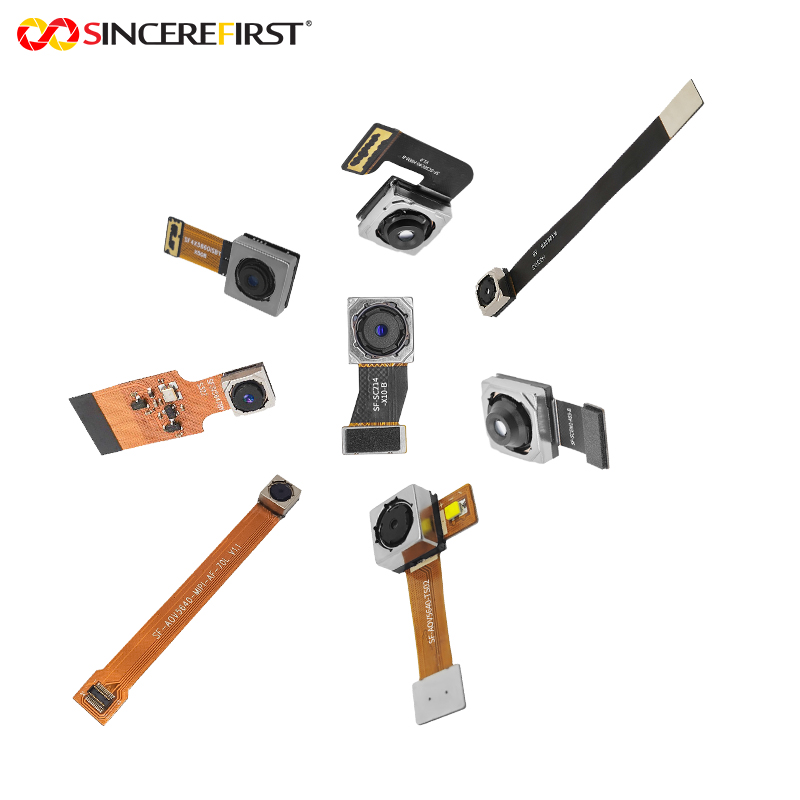
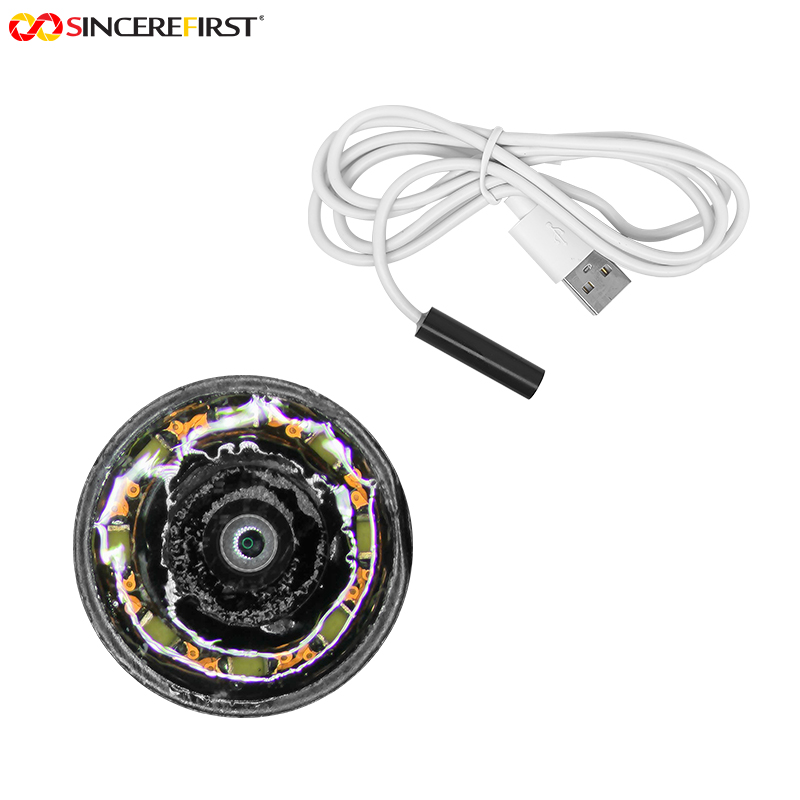
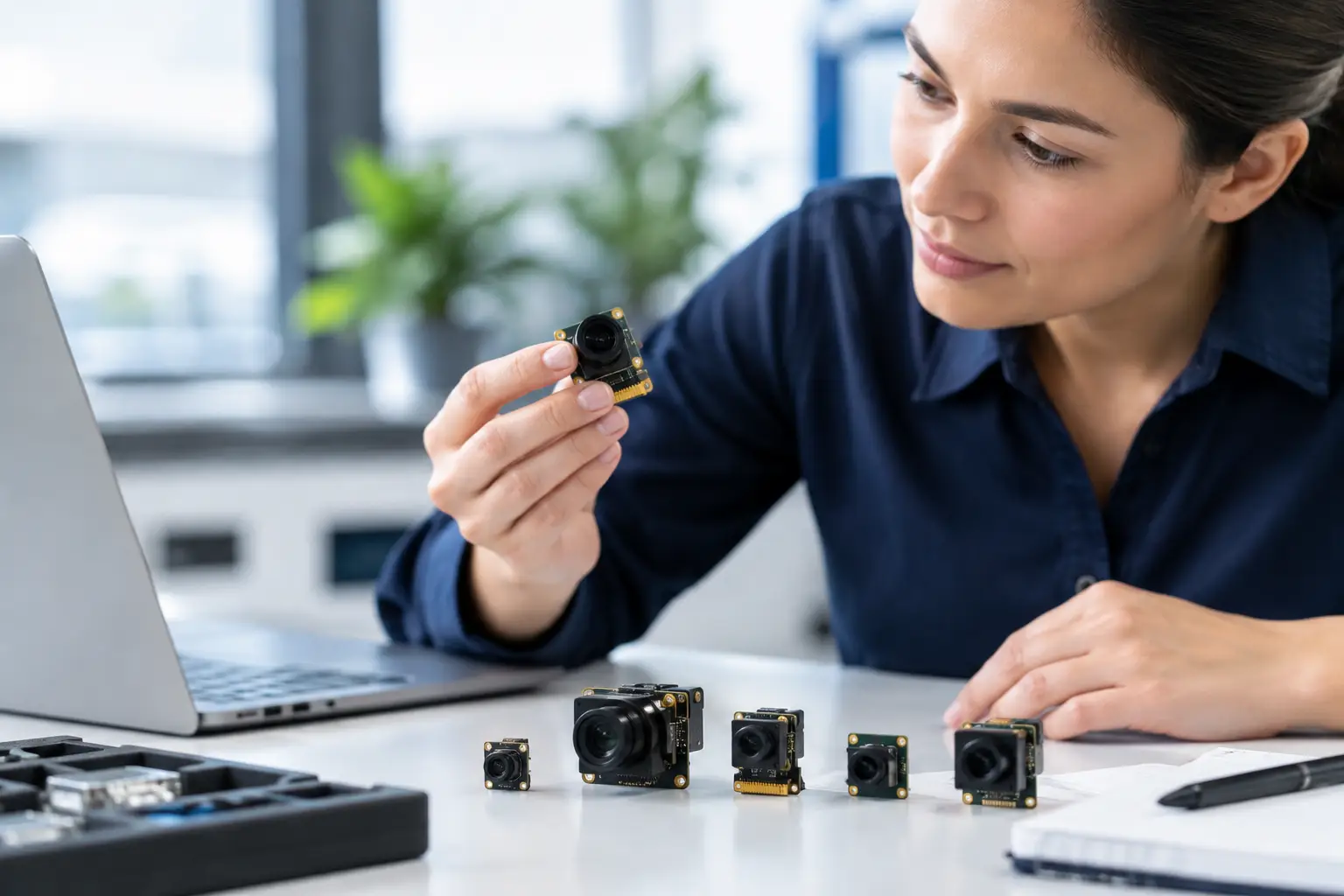
A DVP camera module can look simple on a specification sheet: a sensor, lens, FPC, and parallel output. In an embedded product, however, a mismatch in clocking, pinout, lens geometry, or image tuning can delay an entire program. Knowing how to select DVP camera modules starts with the processor board and application requirements, not with resolution alone.
DVP, or Digital Video Port, is a parallel camera interface commonly used in cost-sensitive embedded designs, legacy processor platforms, industrial controllers, and dedicated vision products. It can be an effective choice when the host already supports parallel capture and the required resolution, frame rate, and cable length fit within DVP limits. The right module is the one that delivers repeatable image quality while fitting the electrical, mechanical, and production constraints of the finished device.
Start With the Host DVP Interface
Before comparing sensors, confirm exactly what the host processor, FPGA, or image signal processor can receive. DVP is not one universal electrical definition. A typical interface may use 8-bit, 10-bit, or 12-bit parallel data, along with PCLK, HSYNC, VSYNC, and I2C control lines. Some systems use separate synchronization signals, while others use embedded synchronization codes.
Review the host documentation for supported input formats such as RAW Bayer, YUV422, RGB565, or JPEG. A sensor may support several outputs, but the host must decode the selected format at the required pixel clock. If the processor accepts only 8-bit YUV output, selecting a high-resolution RAW sensor may add unnecessary ISP work, memory bandwidth, and integration risk.
Clock capability is equally critical. Calculate the required pixel rate from resolution, frame rate, blanking intervals, and output format. A module that works at 30 frames per second in a laboratory may become unstable if the processor capture port has limited timing margin or if routing adds signal integrity problems. Ask for timing diagrams and verified operating modes rather than relying only on a sensor’s maximum theoretical specification.
Define Image Requirements Before Choosing Resolution
Resolution is visible in every camera module quote, but it is rarely the first decision that should be made. A barcode reader, inspection station, smart lock, handheld medical accessory, and agricultural device each need a different balance of detail, motion performance, field of view, color reproduction, and low-light sensitivity.
Start with the smallest feature the system must detect and the working distance at which it must be detected. This determines the pixels required across the target area. Higher resolution can improve inspection accuracy, but it also increases DVP bandwidth, storage demand, processing load, and cost. In many embedded applications, a well-tuned 2MP or 5MP module produces more useful results than an oversized sensor operating beyond the host’s practical bandwidth.
Sensor format and pixel size also affect image quality. Larger pixels generally collect more light, which can reduce noise in low illumination. A smaller sensor can support a more compact module and lower-cost optics, but it may sacrifice sensitivity or dynamic range. For indoor access control, security, and industrial environments with changing lighting, evaluate low-light performance and highlight handling with actual scenes rather than relying on lux figures alone.
Rolling Shutter or Global Shutter?
This choice depends on motion. Rolling shutter sensors are widely available, cost-effective, and suitable for static scenes, document capture, consumer devices, and many access-control products. Their limitation is geometric distortion when either the subject or camera moves quickly.
Global shutter sensors expose all pixels at the same time. They are usually the better choice for robotics, machine vision, moving conveyors, and fast object capture. The trade-off can be higher module cost, lower available resolution at a given budget, or reduced low-light performance compared with certain rolling shutter alternatives. If motion blur or skew can cause a failed inspection decision, global shutter should be evaluated early.
Match the Lens to the Actual Scene
A camera module is an optical system, not just a sensor. The lens determines what area is visible, how much detail reaches the sensor, and whether the product can maintain focus across its expected working range.
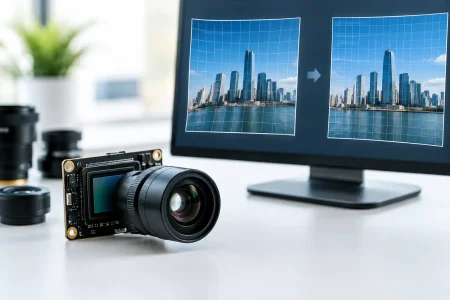
Select focal length from the needed field of view and the available camera position. A wide-angle lens may capture an entire room or machine bay, but edge distortion can reduce measurement accuracy. A narrower field of view provides more pixels on the target, but it requires greater installation distance and tighter alignment. For dimensional inspection, lens distortion and consistency between units may matter more than a high megapixel rating.
Fixed-focus lenses work well when object distance is controlled. They simplify mechanics and are suitable for scanners, kiosks, and enclosed equipment. Autofocus adds flexibility for products used at varying distances, but it introduces control requirements, power consumption, response-time considerations, and another component to qualify. For close-up imaging, verify the minimum focus distance and depth of field under the intended aperture and lighting conditions.
If the application uses infrared illumination, select the correct optical configuration. A visible-light camera typically includes an IR-cut filter for natural color. A day-and-night security or machine vision design may need an IR-sensitive module, a removable filter arrangement, or a lens with suitable infrared focus performance. Using the wrong filter or lens can produce weak nighttime output or focus shift when IR LEDs are active.
Evaluate Electrical Design and Mechanical Fit Together
The DVP interface must be electrically compatible with the host. Confirm I/O voltage levels, commonly 1.8 V, 2.8 V, or 3.3 V, and determine whether level shifting is needed. Also verify power rails, peak current during streaming, reset behavior, standby current, and the required I2C control voltage. A module that needs extra voltage regulation or translation may affect both board space and noise performance.
FPC design deserves the same attention. Pin assignments, connector orientation, cable length, bend area, and shielding must match the product enclosure. DVP sends multiple parallel high-speed signals, so longer flex cables can create skew and electromagnetic interference concerns. Keep data routing controlled and validate timing at the final cable length, not only with a short engineering sample cable.
Mechanical selection includes module dimensions, lens height, active optical axis, screw locations, and tolerance stack-up. A module can fit the CAD envelope yet still produce poor images if the lens is blocked by housing features or if the camera axis is not aligned with the inspection zone. In sealed outdoor or industrial equipment, consider thermal transfer, vibration, moisture protection, and lens contamination from the beginning.
Request Image Tuning for the Application
Sensor output is only part of the result. Image quality depends on exposure behavior, white balance, color correction, denoising, sharpening, gamma, and defect-pixel handling. Where the host uses an external ISP or accepts YUV output directly, confirm who owns the image tuning work and what adjustments can be made.
For a medical display, accurate color and controlled sharpening may take priority. For a QR code reader, stable exposure and high edge contrast can matter more. For industrial classification, a consistent RAW output may be preferred so the algorithm controls the imaging pipeline. Provide representative scenes, illumination conditions, target materials, and pass-fail criteria to the module supplier. This shortens tuning cycles and creates an objective acceptance standard.
Qualify the Supplier for Production, Not Just Samples
A sample that works on an evaluation board is not proof of production readiness. When selecting a DVP camera module supplier, ask about sensor sourcing, lens availability, module revision control, incoming inspection, cleanroom assembly, optical testing, and end-of-line image verification. These controls are especially relevant when camera placement or image consistency affects product performance.
Also discuss lifecycle management. Image sensors, lenses, connectors, and FPC materials can change or reach end of life. A capable manufacturer should be able to communicate component changes, manage approved alternatives, and support a stable bill of materials for repeat orders. For custom products, clarify the process for optical changes, FPC modifications, firmware registers, prototype quantities, and production ramp timing.
SincereFirst supports this evaluation with standard and customized camera modules, engineering review, and scalable manufacturing for embedded imaging programs. The most productive supplier relationship begins when interface documents, mechanical constraints, image targets, and forecast volumes are shared early.
Validate With a Prototype Plan
The final selection should be validated in the target product, under the target lighting and operating conditions. Test more than center-frame image quality. Check startup reliability, dropped frames, temperature behavior, repeated cable flexing, vibration, exposure transitions, and unit-to-unit consistency. If the camera supports a safety, medical, security, or automated inspection function, define measurable acceptance limits before pilot production.
The best DVP camera module is not necessarily the highest-resolution or lowest-priced option. It is the module whose sensor, optics, electrical timing, mechanical design, image output, and supply plan all support the product you need to build at volume. Treat those choices as one engineering decision, and camera integration becomes a controllable part of your manufacturing schedule rather than a late-stage risk.