
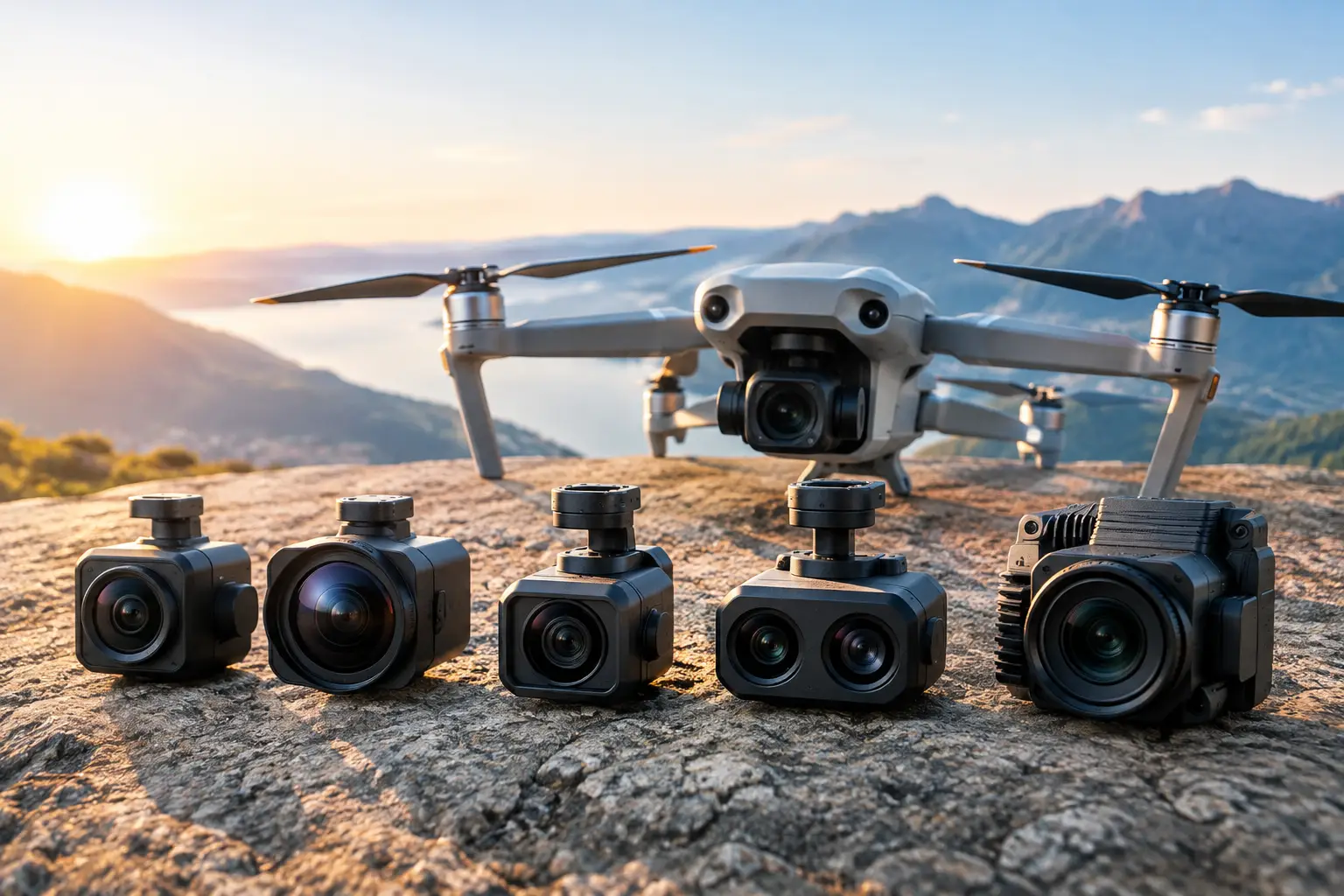
A drone camera is rarely chosen on resolution alone. A 4K module can still fail a flight mission if rolling shutter distortion compromises mapping data, its interface overloads the flight computer, or its lens adds too much weight to a compact airframe. The best camera modules for drones are the modules that meet the imaging task, payload budget, processing architecture, and production plan at the same time.
For OEMs, system integrators, and robotics developers, the decision starts with the job the aircraft must perform. Consumer-style aerial video, visual inspection, precision agriculture, mapping, thermal monitoring, and autonomous navigation each impose different requirements on sensor type, lens design, shutter behavior, frame rate, and interface. Selecting the right module early prevents expensive mechanical and firmware changes later.
What Defines a Drone-Ready Camera Module?
A drone-ready module must deliver useful image data under vibration, motion, changing light, and strict power constraints. Compact dimensions matter, but so do focus stability, lens retention, electromagnetic compatibility, heat dissipation, and connector durability. The camera also needs to work predictably with the processor, image signal processor, and software stack selected for the aircraft.
Resolution should be specified according to the output requirement. A 2MP or 5MP module may be sufficient for obstacle detection or line-following, while inspection imaging and photogrammetry often require higher resolution, larger sensors, and carefully controlled optics. More pixels create more data, so the processing platform, memory bandwidth, storage, and transmission link must be sized accordingly.
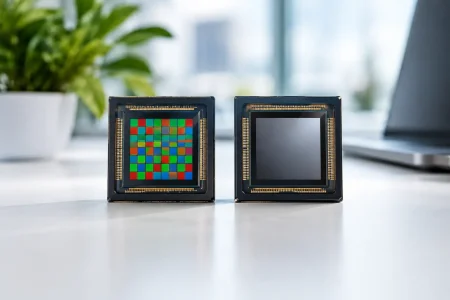
The practical evaluation criteria are sensor format, pixel size, shutter type, frame rate, dynamic range, low-light sensitivity, lens field of view, interface, module weight, operating temperature, and supply continuity. A camera that performs well in a bench test but cannot be sourced consistently at volume is not a strong production choice.
7 Best Camera Modules for Drones by Use Case
1. MIPI CSI-2 modules for compact autonomous drones
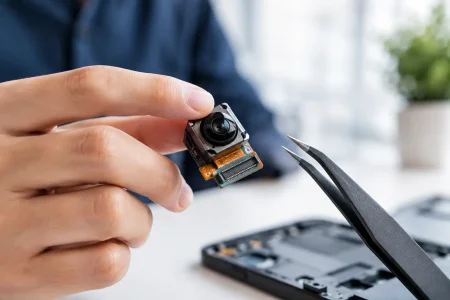
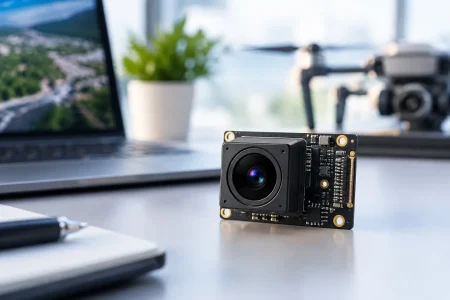
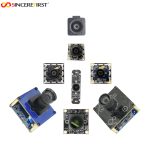
MIPI camera modules are often the best fit for small UAVs built around embedded processors from Qualcomm, NVIDIA, Rockchip, NXP, or similar platforms. The interface supports high data rates with low power consumption and avoids the bulk of a USB connection. It is especially suitable for compact navigation cameras, forward-facing vision, and gimbal payloads where every gram matters.
The trade-off is integration complexity. MIPI CSI-2 requires matching the module to the processor’s lane configuration, clocking, driver support, and image signal processing pipeline. OEM teams should validate cable length, FPC routing, connector orientation, and electromagnetic performance before freezing the mechanical design.
2. Global shutter modules for mapping and fast motion
For mapping, surveying, industrial inspection, and machine vision, global shutter is often more valuable than headline resolution. A global shutter captures all pixels at the same moment, minimizing skew and geometric distortion when the drone moves quickly or vibrates during exposure.
This makes global shutter modules a strong choice for photogrammetry, visual odometry, object measurement, and inspection of power lines, rail assets, or moving equipment. Their limitations can include higher cost, lower pixel density at a given budget, or reduced low-light performance compared with some rolling shutter sensors. The correct choice depends on required ground sampling distance, flight speed, and lighting conditions.
3. High-resolution autofocus modules for aerial imaging
High-resolution camera modules with autofocus are appropriate for drones that capture detailed stills or video for construction documentation, roof surveys, agricultural records, and public safety observation. An autofocus lens can maintain sharpness across varying subject distances, which is useful when an aircraft alternates between wide-area scenes and closer inspection passes.
Autofocus must be assessed under real flight conditions. Lens movement can introduce focus hunting, and focus algorithms may react poorly to low-contrast surfaces such as water, reflective metal, or uniform crop fields. For fixed-altitude missions with known working distance, a fixed-focus module calibrated to the target range can deliver more consistent results and reduce system complexity.
4. Wide dynamic range modules for inspection in difficult light
Drone operations frequently move between deep shadow and direct sunlight in a single frame. Wide dynamic range, or WDR, modules help retain detail in dark structures and bright sky areas, making them valuable for infrastructure inspection, security patrols, and urban flight routes.
WDR performance is not identical across sensors. Some sensors use multiple exposures, while others use pixel-level techniques. Multiple-exposure approaches can create artifacts around motion, so teams should test the module against propeller shadows, moving vehicles, tree lines, and changing sun angles. Effective WDR also depends on lens flare control and image signal processor tuning, not just the sensor specification.
5. Low-light modules for security and night operations
Security, search-and-rescue, and perimeter monitoring drones need imaging that remains usable as illumination falls. Larger pixel sizes, high sensitivity sensors, low-noise electronics, and wide-aperture lenses can improve low-light performance. A module with near-infrared sensitivity may also support active IR illumination where the mission and regulations allow it.
Low-light performance introduces a familiar trade-off: longer exposure improves brightness but increases motion blur. Higher gain preserves exposure time but adds noise. For a fast-moving drone, a sensor capable of clean output at shorter exposures is generally more useful than one that creates a brighter but blurred image. Evaluate the full camera pipeline at the required frame rate rather than relying on a single lux rating.
6. USB 3.0 modules for rapid prototype and industrial platforms
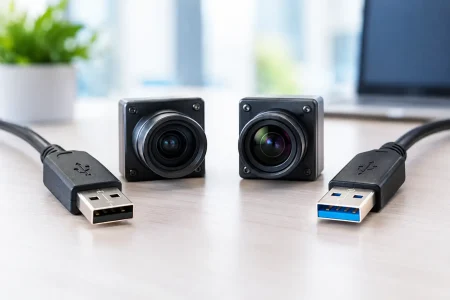
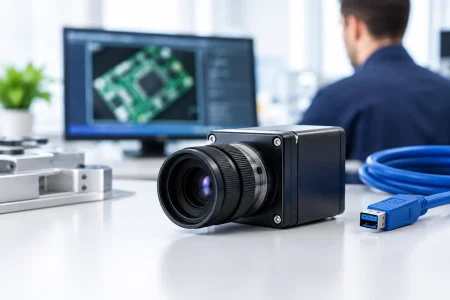
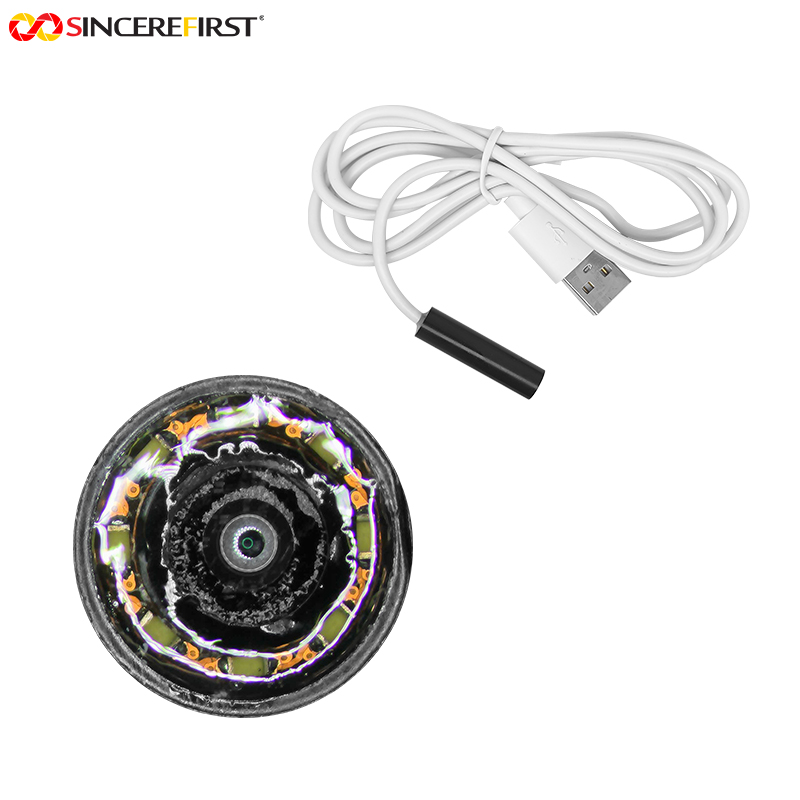
USB 3.0 camera modules are practical for larger drones, development platforms, and industrial UAVs using single-board computers or embedded PCs. UVC-compatible options can reduce driver development and accelerate proof-of-concept work. The interface offers strong bandwidth for high-resolution video and can simplify integration with Linux-based systems.
The penalties are cable weight, connector size, power draw, and mechanical retention. USB may not be suitable for the smallest flight platforms, but it is highly effective when a payload already includes an onboard computer for AI inference, storage, or real-time streaming. For early-stage engineering, it can shorten the path from sensor evaluation to flight testing.
7. Multispectral and specialized modules for agriculture and science
Standard RGB imaging cannot answer every aerial sensing question. Precision agriculture may require near-infrared or multispectral channels to evaluate plant vigor and stress. Environmental monitoring can require narrow-band filters, while industrial applications may call for UV, SWIR, or thermal imaging systems.
These modules should be selected as part of a complete sensing solution, not as isolated cameras. Spectral response, optical filters, illumination, calibration targets, georeferencing, and analysis software all affect the quality of the final data. A custom optical stack may be necessary when a standard RGB module cannot capture the wavelengths that the application depends on.
Key Integration Decisions Before Production
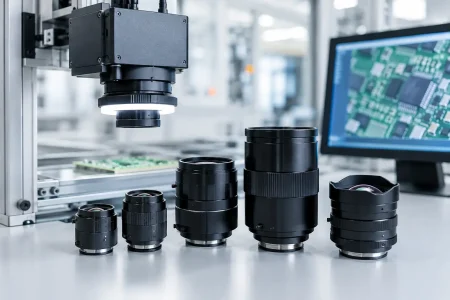
The lens and sensor must be treated as a matched system. Field of view determines coverage and detail, while distortion affects mapping accuracy and computer vision performance. A wide-angle lens is useful for obstacle avoidance, but excessive distortion can complicate measurement and algorithm training. Fixed-focus lens selection should account for the intended altitude and subject distance, not just a generic focus range.
Interface selection should be settled with the compute architecture. MIPI is compact and power-efficient for embedded designs; USB is convenient for computer-based payloads; and DVP may remain appropriate for legacy processors or cost-sensitive systems. The cable assembly, connector, and locking method deserve the same scrutiny as the sensor because vibration failures often appear at interconnects first.
Production readiness is equally important. Request image samples from representative lighting conditions, confirm sensor lifecycle status, and review incoming inspection and end-of-line testing plans. For a custom drone program, evaluate whether the supplier can modify FPC length, connector type, lens, focus position, infrared filter, housing, and firmware configuration without disrupting the scale-up schedule.
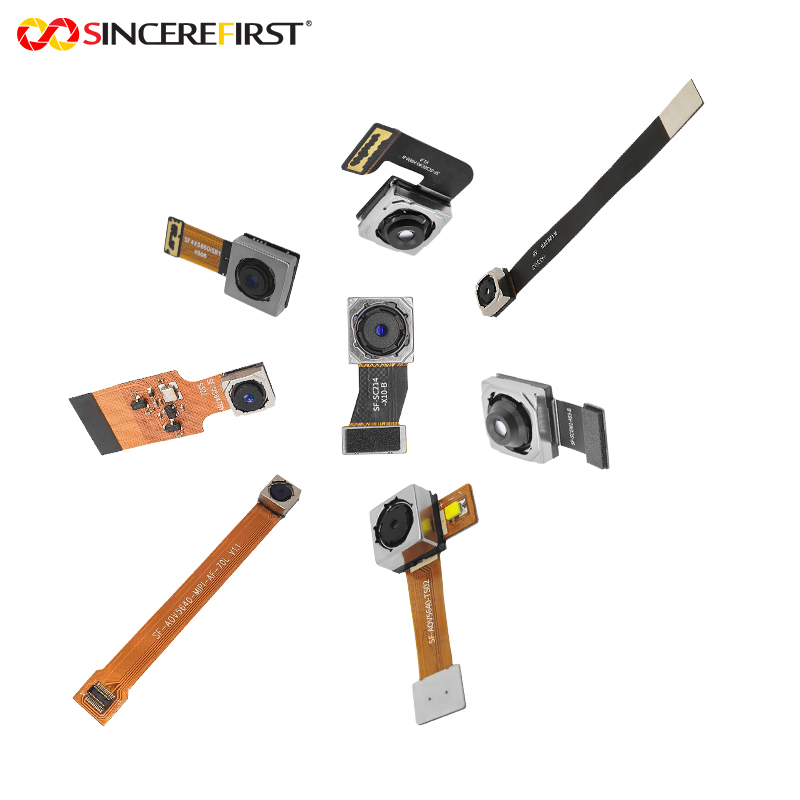
SincereFirst supports this process with standard embedded camera modules and custom imaging development backed by more than 30 years of R&D and scaled manufacturing capability. For drone programs, the strongest supplier relationship is one that moves efficiently from feasibility samples to stable, repeatable production.
A useful next step is to define the mission in measurable terms: target distance, aircraft speed, required detail, lighting range, acceptable payload weight, processor interface, and annual volume. Those inputs turn a broad search for a camera into an engineering specification that can be tested, refined, and manufactured with confidence.