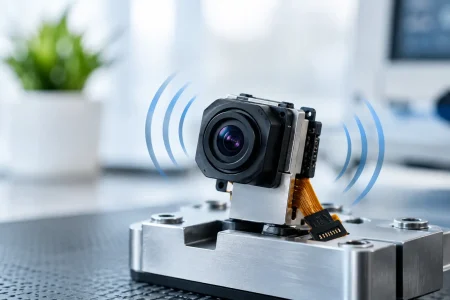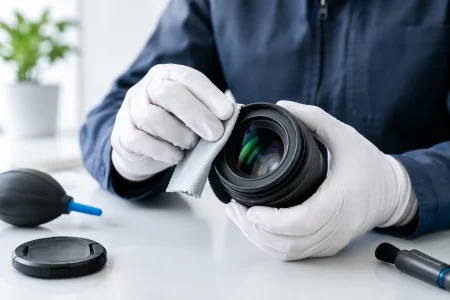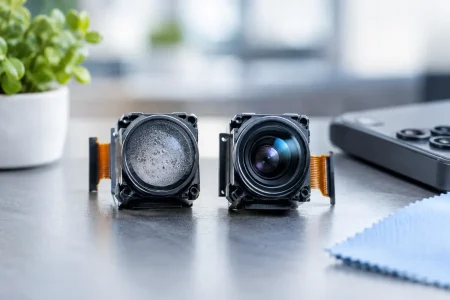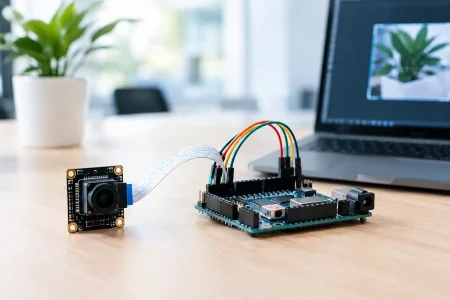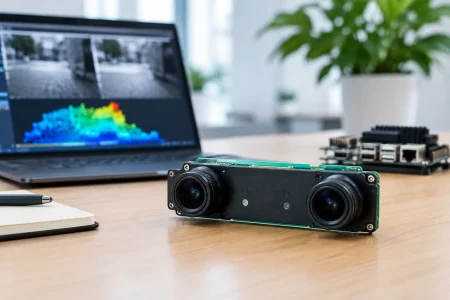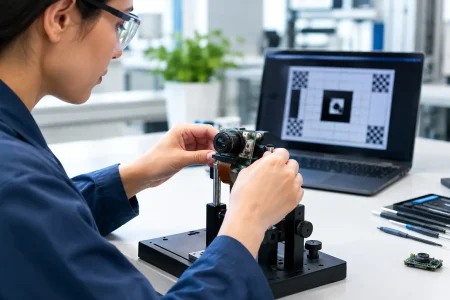

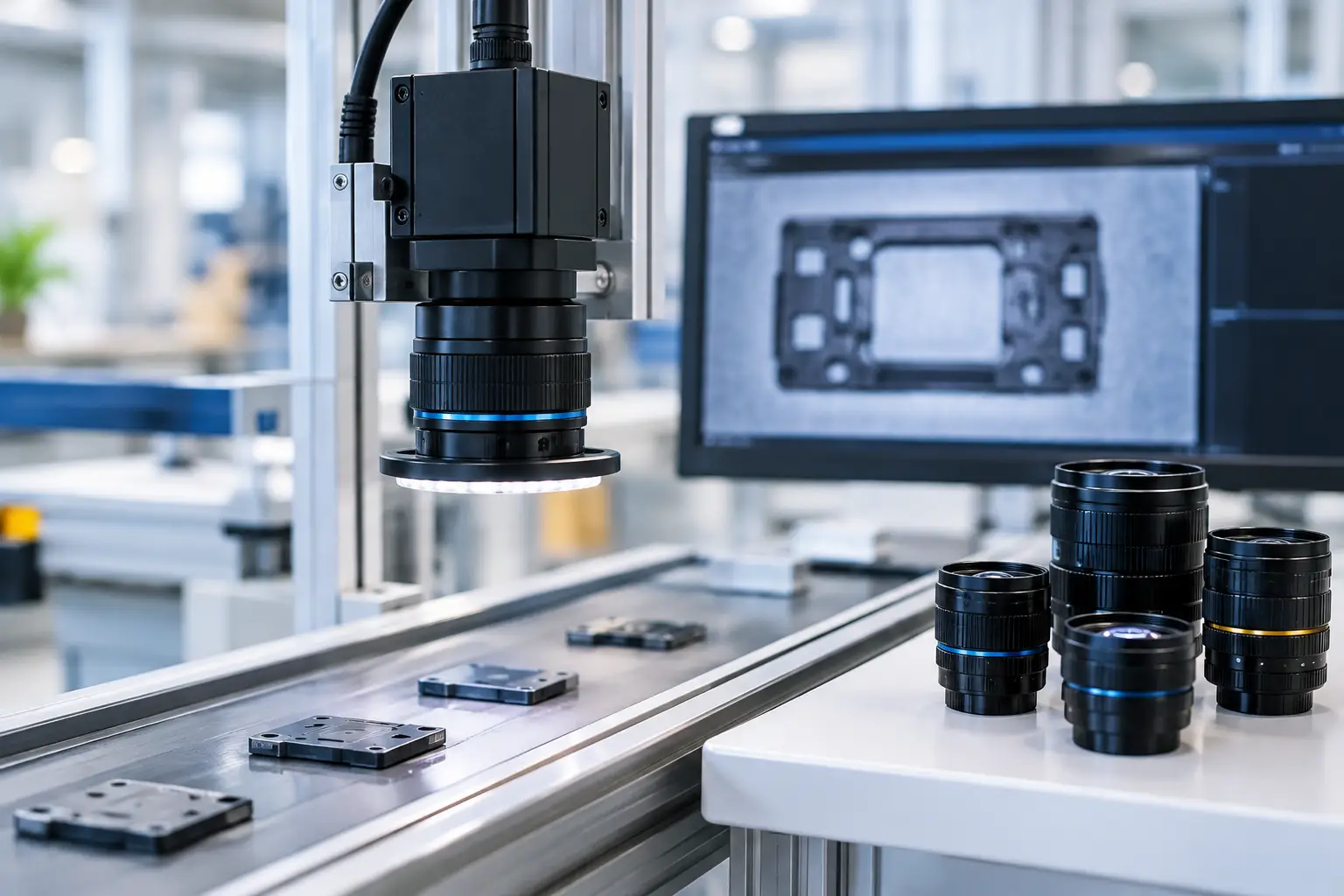
An OCR system can have a high-resolution sensor, strong illumination, and capable recognition software, yet still misread characters because the lens delivers soft edges, uneven focus, or geometric distortion. Selecting the best lenses for OCR is therefore an imaging-engineering decision, not a catalog checkbox. The correct lens must reproduce every critical character consistently across the target field of view, production shift, and expected operating environment.
For OEMs and system integrators, the objective is not simply to capture readable text in a demonstration. It is to maintain repeatable character contrast and pixel-level detail at line speed, with controlled variation from unit to unit. That requires matching optics to the camera sensor, working distance, lighting geometry, character size, and mounting constraints from the beginning.
What an OCR Lens Must Deliver
OCR depends on clean character boundaries. A lens that is acceptable for general monitoring can still fail an OCR application when it blurs the smallest print, bends text near the image edge, or loses sharpness as the package height changes. The lens must support the required spatial resolution where the code or text actually appears, not only at the center of a test chart.
Start with the smallest character feature that must be recognized. This may be the stroke width of dot-matrix printing, the narrow segment of an engraved serial number, or the fine lines within a pharmaceutical label. That feature should cover enough camera pixels to retain contrast after focus tolerance, motion, and image processing. A common engineering target is at least 2 to 3 pixels across the narrowest critical stroke, although demanding verification tasks may need more margin.
Lens resolution and sensor resolution must be treated as a pair. A 12-megapixel camera does not automatically improve OCR if the lens cannot preserve sufficient contrast at the sensor’s pixel pitch. Review the lens modulation transfer function, or MTF, at relevant field positions and spatial frequencies. For small-pixel sensors, inspect specifications at the image center and corners rather than relying on a broad statement such as “megapixel lens.”
Best Lenses for OCR: Match the Lens Type to the Task
There is no single best optical design for every OCR line. The right choice depends on whether the application prioritizes a wide field, maximum measurement accuracy, compact installation, or tolerance to object-height variation.
Fixed-Focal-Length Lenses for Stable Production Lines
Fixed-focal-length lenses are often the most practical choice for conveyor OCR, label inspection, and document capture in controlled installations. Compared with varifocal lenses, they generally provide more predictable focus, lower distortion, and stronger consistency once the camera position is locked.
Choose focal length based on the required field of view and available working distance. A longer focal length narrows the field and can help obtain more pixels on small text, but it also increases the mounting distance needed for the same inspection area. A shorter focal length covers a larger area at close range, though excessive wide-angle selection can introduce distortion and weaker edge performance.
For many industrial systems, C-mount fixed lenses are a practical standard because they offer broad availability, mechanical stability, and compatibility with machine vision camera modules and board cameras using appropriate mounts. Confirm that the lens image circle covers the sensor format. Using a lens designed for a smaller sensor can produce corner shading, reduced edge sharpness, or an unusable image area.
Low-Distortion Lenses for Text Across a Wide Field
When text appears near the edges of a package, label, tray, or document, low distortion is essential. Barrel and pincushion distortion can alter character geometry, change spacing, and complicate downstream OCR preprocessing. Software calibration can correct part of the error, but it does not restore image detail lost through poor edge imaging.
A low-distortion lens is especially valuable for wide-format label inspection, postal sorting, flat-panel document readers, and multi-item inspection stations. Review distortion as a percentage and verify the stated field coverage. The requirement depends on the OCR engine and acceptance criteria: simple alphanumeric reading may tolerate correction, while applications that also validate layout, print position, or character spacing benefit from tighter native distortion control.
Telecentric Lenses for Dimensional Accuracy and Height Variation
Telecentric lenses are specialized optics, but they can be the correct answer for precision OCR on objects with varying height. In a conventional lens, magnification changes as the object moves toward or away from the camera. This perspective effect can make characters on raised parts appear larger than characters on a lower surface.
An object-side telecentric lens minimizes that change within its specified depth range. It is useful for embossed codes, parts with stepped surfaces, electronics components, machined assemblies, and inspections that combine OCR with dimensional measurement. The trade-off is clear: telecentric lenses are larger, more expensive, and often require a more deliberate lighting and mechanical design. They are not necessary for a flat label moving at a fixed height, but they can prevent costly instability in a precision station.
Macro Lenses for Small Text and Close-Range Inspection
Macro-capable optics are appropriate when the field of view is small and character details are extremely fine. Examples include PCB markings, micro-printed medical components, semiconductor packaging, and engraved identification marks. These systems are often built around a narrow working-distance range, so mechanical repeatability becomes critical.
At high magnification, depth of field decreases quickly. A slight change in part height can shift characters out of focus. Stopping down the aperture increases depth of field, but closing it too far introduces diffraction, which reduces fine detail. The usable aperture is therefore a balance between focus tolerance and optical resolution, not simply the smallest f-number available.
Focal Length, Working Distance, and Field of View
A lens should be selected from system geometry, not by copying a focal length from a previous project. Define the inspection area first, then set the camera sensor format, available working distance, and required pixel density. From there, calculate the focal-length range that provides the needed field of view.
For example, if a station must read a 100 mm-wide label and the smallest critical text requires a defined pixel count, the camera resolution determines whether the full label can be captured in one image. If it cannot, the design may need a higher-resolution sensor, a narrower field of view, multiple cameras, or a different inspection sequence. Changing the lens alone cannot create pixels that the sensor does not have.
Working distance also affects lighting placement and mechanical safety. A lens that meets the field-of-view calculation may leave no space for a ring light, protective window, or product-handling hardware. In industrial deployments, evaluate the complete optical path, including lens barrel length, focus lock, connector clearance, and enclosure depth.
Aperture and Depth of Field Are Production Variables
Lens aperture controls more than brightness. It affects depth of field, contrast, exposure time, and the sensitivity of the system to alignment variation. A wide aperture admits more light and can support shorter exposure times for moving products, but it reduces depth of field. A narrow aperture increases focus tolerance, but it may require brighter lighting or longer exposure.
For fast conveyor OCR, strong controlled illumination often provides a better solution than opening the lens to its maximum aperture. Stable lighting allows the system to operate near the lens aperture that gives the best compromise of sharpness and depth of field. It also reduces gain, which helps preserve character contrast and limits image noise.
If the inspection area is tilted or product height varies, calculate depth of field using the actual geometry. A lens focused on the center of a label may not retain sufficient sharpness at the nearest and farthest text zones. Test the production tolerance, not only a nominal sample placed perfectly at the target distance.
Do Not Treat Lighting as Separate From Lens Selection
OCR quality is created by the camera, lens, illumination, and object surface together. A high-quality lens cannot compensate for glare on glossy packaging, shadows inside engraved text, or low contrast on laser marks. Likewise, a strong lighting design can expose lens weaknesses at the edge of the field.
Diffuse illumination is often effective for printed labels and reflective packaging because it reduces glare. Low-angle or dark-field lighting may improve the visibility of raised, recessed, or engraved characters. Backlighting can help when OCR is based on a silhouette or cutout pattern. The lens should be evaluated under the intended illumination wavelength as well. If near-infrared lighting is required, confirm the lens focus behavior and transmission in that spectral range, since not every visible-light lens is corrected for NIR use.
A Practical Lens Qualification Process
Before releasing an OCR design to production, qualify the lens with real parts, representative motion, and expected mechanical tolerances. A quick center-field focus test is not enough. Validate text at the corners, across product-height limits, at the fastest required line speed, and under the lowest acceptable contrast condition.
The most useful acceptance checks are resolution on the smallest character, distortion across the active field, focus repeatability after adjustment and vibration, illumination uniformity, and OCR read rate over a statistically meaningful sample set. Also inspect lens-to-lens variation when the project will scale beyond prototypes. A design that works with one carefully tuned sample may not be suitable for volume manufacturing.
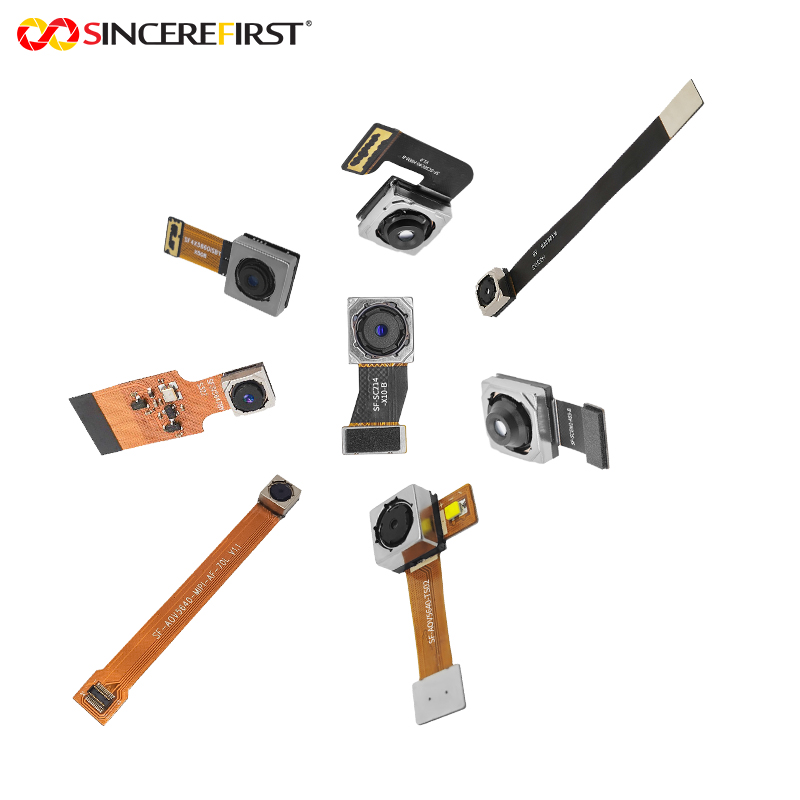
For customized camera assemblies, SincereFirst can align sensor selection, lens format, interface requirements, and mechanical packaging early in the design cycle. This approach helps avoid a familiar problem: a camera module that fits the enclosure but cannot deliver stable OCR performance at the required working distance.
The best result comes from specifying the OCR requirement in measurable terms: smallest character size, inspection area, working distance, object-height range, line speed, surface finish, and target read rate. With those values defined, lens selection becomes a controlled engineering decision rather than a trial-and-error purchase.