
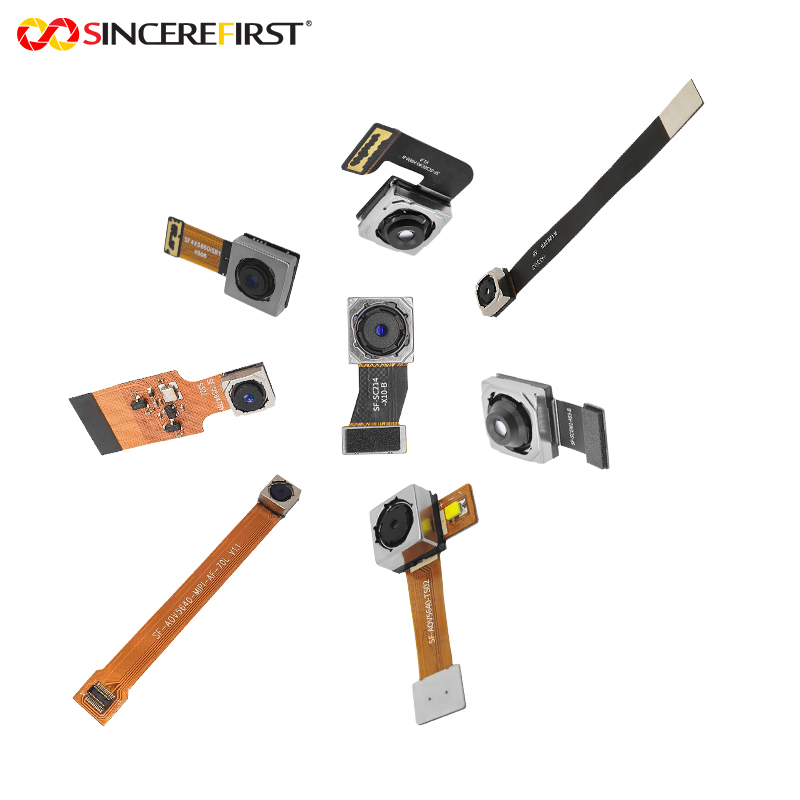
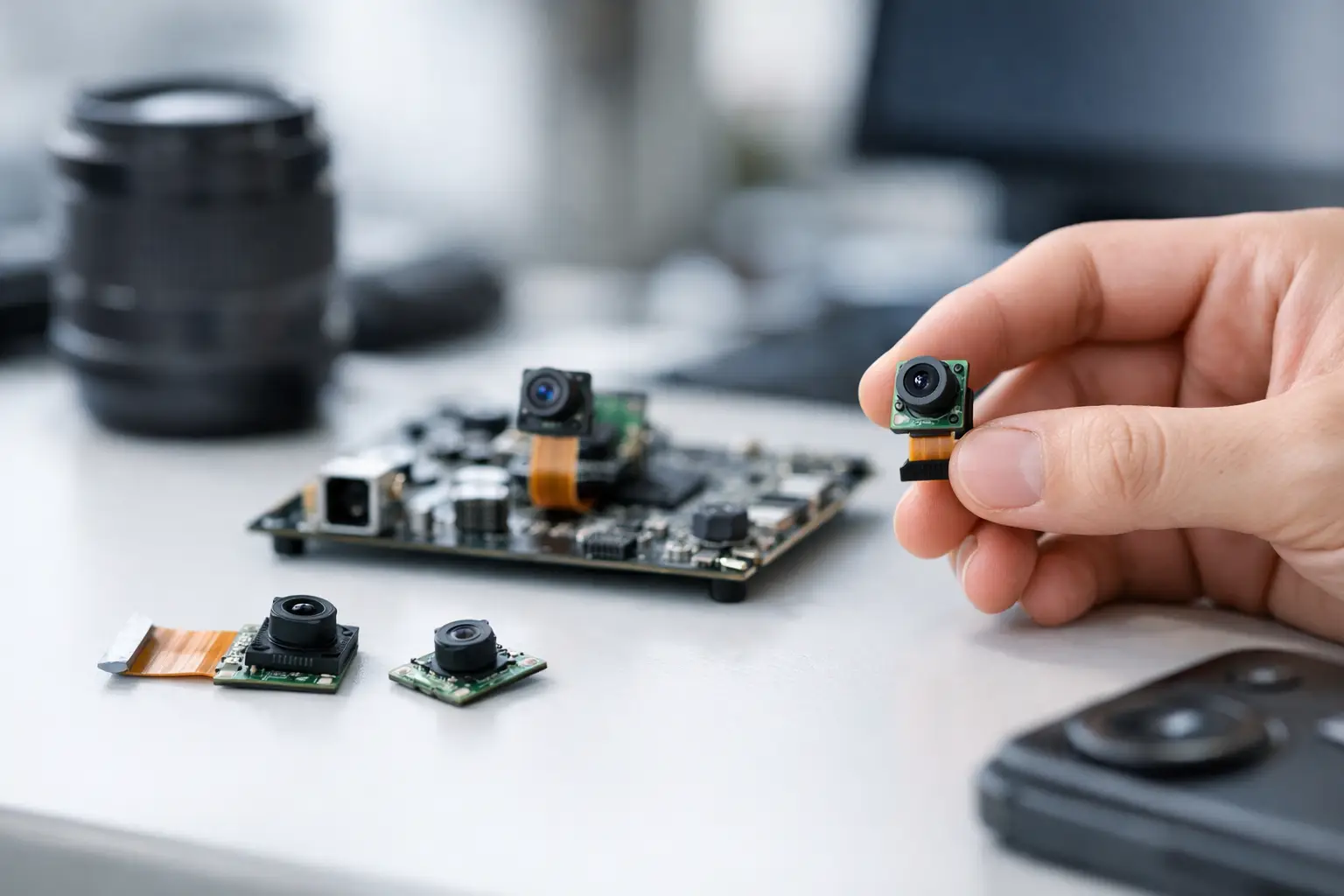
A MIPI camera module that looks perfect on a datasheet can still fail your project at EVT. The usual reason is not image quality alone. It is mismatch – between sensor and ISP, between lens and working distance, between bandwidth and host, or between sample success and mass production reality. If you are working out how to choose MIPI camera module options for a commercial device, the right process starts with system requirements, not megapixels.
How to choose MIPI camera module from the system backward
For embedded products, the camera is not a standalone part. It is one link in a tightly constrained chain that includes the image sensor, lens stack, MIPI CSI-2 interface, processor or SoC, ISP pipeline, enclosure, illumination, cable routing, thermal conditions, and manufacturing tolerances. Choosing the module from the camera side alone usually creates rework later.
Start with the end use case. A barcode scanner, a driver monitoring system, a smart agriculture node, and an industrial inspection camera may all use MIPI, but their priorities are different. One may need low-light sensitivity, another low latency, another global shutter, and another a very small footprint. The same 8MP module is not equally suitable for all four.
The practical question is not simply how to choose mipi camera module hardware. It is how to choose one that your host platform can actually support at the target frame rate, with the needed optics, within the power and mechanical limits of your product, and at a supply model that fits production.
Define the imaging target before the sensor
Resolution is usually the first spec buyers compare, but it should not be the first spec you lock. What matters more is what the camera must detect, measure, or identify at a defined distance and field of view. If your device needs to recognize a face at 1 meter, read a code at 20 centimeters, or inspect a defect smaller than 0.2 millimeters, that requirement should set the pixel target.
Higher resolution can help, but it also raises bandwidth, storage, processing load, and often cost. In many embedded systems, a well-matched 2MP or 5MP sensor delivers better real-world results than an under-optimized 13MP design. The trade-off is simple: more pixels can improve detail, but only if your optics, ISP, and host processor can preserve and use that detail.
Sensor size and pixel size matter just as much. Larger pixels generally improve low-light performance, dynamic range, and signal quality. Smaller pixels can support compact modules and higher nominal resolution, but they may struggle in dim environments or scenes with strong contrast. For outdoor security or smart city devices, wide dynamic range may matter more than raw megapixel count. For medical or industrial close-up imaging, color fidelity and sharpness at a fixed working distance may be more important.
Match the sensor type to motion and lighting
One of the biggest decision points is rolling shutter versus global shutter. Rolling shutter sensors are common, cost-effective, and suitable for many static or slow-moving scenes. But if your application involves motion, vibration, rotating parts, robotic pick-and-place, or machine vision measurement, rolling shutter distortion can become a real problem.
Global shutter sensors capture the entire frame at once, which makes them better for high-speed scenes and precise analysis. The trade-off is usually higher cost and, in some cases, lower resolution options compared with mainstream rolling shutter families. If the camera is part of an automation system where measurement accuracy matters, global shutter is often worth the premium.
Lighting conditions also shape the sensor choice. If illumination is controlled, such as inside a kiosk or factory fixture, you can optimize around that environment. If lighting is unpredictable, you need more headroom in sensitivity and dynamic range. Near-infrared performance may also matter for face recognition, occupancy detection, or low-light monitoring.
Understand the MIPI interface beyond the label
MIPI CSI-2 is the standard, but support is never just about saying a processor has MIPI input. You need to confirm lane count, supported data rates, clocking, virtual channel needs, sensor driver availability, and whether the host can sustain your required resolution and frame rate without bottlenecks.
A common integration mistake is choosing a sensor-module combination that exceeds the SoC’s practical ISP or memory bandwidth. On paper, the interface may connect. In operation, frame drops, overheating, unstable preview, or tuning limitations appear. This is especially common when teams jump to higher resolution without checking the full image pipeline.
Cable length and routing also matter. MIPI is efficient and compact, but signal integrity can become sensitive in dense layouts or long flexible cable designs. If your product has a separated camera head, a hinge, or a narrow enclosure, the module and interconnect design need to be reviewed together. This is one reason many OEMs prefer a supplier that can customize both the module and the connection structure instead of supplying a standard camera alone.
Optics decide whether the sensor can do its job
A strong sensor paired with the wrong lens is a weak camera. Lens selection should be based on field of view, distortion tolerance, working distance, depth of field, aperture, and mechanical height. In compact embedded products, the lens stack often becomes the limiting factor long before the sensor does.
Wide-angle lenses are useful for surveillance, robotics navigation, and cabin monitoring, but they introduce more distortion and may reduce edge sharpness. Narrower fields of view can improve target detail at distance, but they require more precise alignment. Fixed-focus lenses are efficient for stable working distances, while applications with variable subject distance may need autofocus or careful depth-of-field tuning.
IR filter strategy matters too. A standard IR-cut filter is right for most visible-light color imaging. If your device uses NIR illumination, night vision, or specialized sensing, filter choice must be aligned with the sensor response and use case. These are small details that have large impact once the product is in the field.
Mechanical and thermal fit are not secondary issues
Many module decisions fail after the electrical review, when the team tries to place the camera inside the product. Board size, Z-height, lens barrel clearance, connector orientation, shielding, adhesive method, and tolerance stack-up all affect manufacturability.
If your enclosure has a decorative cover lens or protective window, that optical path must be considered early. Reflections, haze, contamination, and alignment errors can reduce image performance even when the module itself is qualified. For rugged or medical devices, shock resistance, sterilization exposure, or long-life reliability may add more constraints.
Thermal behavior is another practical checkpoint. Some sensors and processors generate enough heat to change noise performance or stability during sustained capture. If the product records continuously, works outdoors, or runs analytics at the edge, thermal testing should be part of module selection, not an afterthought.
Software support and tuning often determine project speed
For many teams, the shortest path to launch is not the lowest module price. It is the module with the fastest integration path. Driver support, reference bring-up, ISP tuning, and debugging responsiveness often decide whether a project moves in weeks or stalls for a quarter.
This is especially true when image quality needs to be tuned for a specific scene. Auto exposure, white balance, color correction, lens shading correction, and noise reduction all affect the final image your end users see. A module may be electrically compatible, yet still require significant tuning work to perform well in your actual environment.
If you are evaluating suppliers, ask how they support sensor bring-up on your target platform, how quickly they can provide sample revisions, and whether they can tune for your lighting and application. For B2B hardware programs, that engineering support is often as valuable as the hardware itself.
Evaluate the supplier like a production partner
When buyers ask how to choose MIPI camera module vendors, the right answer goes beyond catalog breadth. You need to know whether the supplier can support the full path from sample to ramp. That includes stable sensor sourcing, revision control, optical consistency, clean manufacturing, test coverage, and responsiveness when your design changes.
A module that works in ten prototypes but varies in batch production is not a low-cost option. It is a schedule risk. This is where manufacturing depth matters. Suppliers with strong R&D, controlled assembly processes, and scalable output are better positioned to support OEM and ODM programs, especially when custom FPC layout, lens changes, or connector changes are required.
SincereFirst is positioned around that model – combining standard camera modules with custom development, fast sample turnaround, and scaled manufacturing for embedded vision programs that cannot afford supply instability.
A practical shortlist for final selection
Before approving a module, confirm six points in one review: image target, host compatibility, optical fit, mechanical fit, software support, and production readiness. If one of these is uncertain, the module is not ready to lock.
It also helps to compare two or three realistic candidates instead of searching for a perfect one. In camera integration, there is almost always a trade-off among image quality, size, power, cost, and lead time. The best choice is usually the one that best fits your product priorities with the fewest downstream risks.
The smartest camera decision is rarely the one with the biggest sensor or the cheapest quote. It is the module that arrives with the right engineering support, fits your platform cleanly, and keeps performing when your product moves from lab bench to volume production.