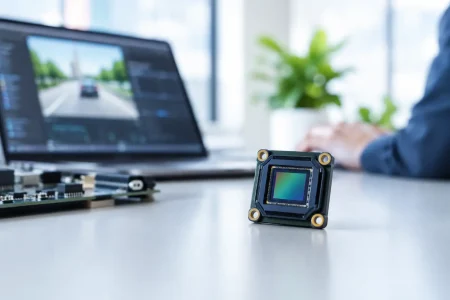

A 12-megapixel sensor specification can look interchangeable on a sourcing sheet. It is not. Sony IMX708 camera modules are often evaluated for compact products that need strong detail, responsive autofocus options, and a practical path to high-volume integration. The sensor is only one part of that result. Lens selection, board layout, interface compatibility, image tuning, and manufacturing controls determine whether a module performs consistently in the finished device.
For OEM teams developing smart cameras, handheld equipment, robotic platforms, connected consumer devices, or inspection tools, the IMX708 is a compelling starting point. The right decision is not simply whether to use this sensor. It is how to configure the complete module around the device’s optics, processor, lighting environment, mechanical envelope, and production target.
What Sony IMX708 Camera Modules Bring to a Product
The Sony IMX708 is a high-resolution CMOS image sensor commonly used in compact camera designs where image quality and module size must be balanced carefully. It is associated with approximately 12-megapixel output, a native 16:9 imaging format, and pixel architecture designed for modern mobile and embedded imaging applications. Exact operating modes, output rates, and feature availability must always be verified against the selected sensor version, module design, and host platform.
For product developers, the practical value is not resolution alone. A higher-resolution sensor can support detailed still capture, digital cropping, and analytics pipelines that benefit from more image information. In a robotics or security design, that may help preserve useful detail when software identifies objects in a region of interest. In a medical-adjacent device or consumer diagnostic accessory, it may support clearer operator viewing when the optical design and illumination are suitable.
The trade-off is system bandwidth. Sending high-resolution frames through a MIPI CSI-2 interface requires the right number of lanes, stable signal integrity, sufficient ISP throughput, and memory bandwidth on the processor side. A module that looks compatible electrically may still fall short if the host cannot sustain the required frame rate or if the software stack lacks a validated driver and tuning profile.
Sensor capability is not module capability
It is common to see terms such as HDR, autofocus, and low-light performance attached to a camera module listing. These functions need to be separated clearly during technical evaluation. The sensor establishes the imaging foundation, but the finished module’s performance depends on the lens, voice coil motor or fixed-focus construction, infrared-cut filter, exposure control, image signal processor, and firmware.
For example, an autofocus IMX708 module may be a strong fit for a device that alternates between close-range document capture and mid-distance video. A fixed-focus design can be more reliable, thinner, and less expensive for a barcode reader, access-control terminal, or purpose-built industrial camera with a known working distance. Neither option is universally better. The product’s depth-of-field requirement and expected use conditions should make the decision.
Selecting the Right IMX708 Module Architecture
A successful camera selection starts with the integration architecture, not an image sensor name. The first question is how the camera will connect to the product.
MIPI CSI-2 for embedded platforms
MIPI camera modules are usually the preferred approach for compact embedded systems built around mobile processors, single-board computers, or custom ARM platforms. MIPI CSI-2 can provide a small physical footprint and direct access to high-bandwidth image data, but it also requires disciplined hardware and software work. Engineers should confirm lane count, connector pinout, clocking, power sequence, CSI receiver capability, and driver support before locking the module design.
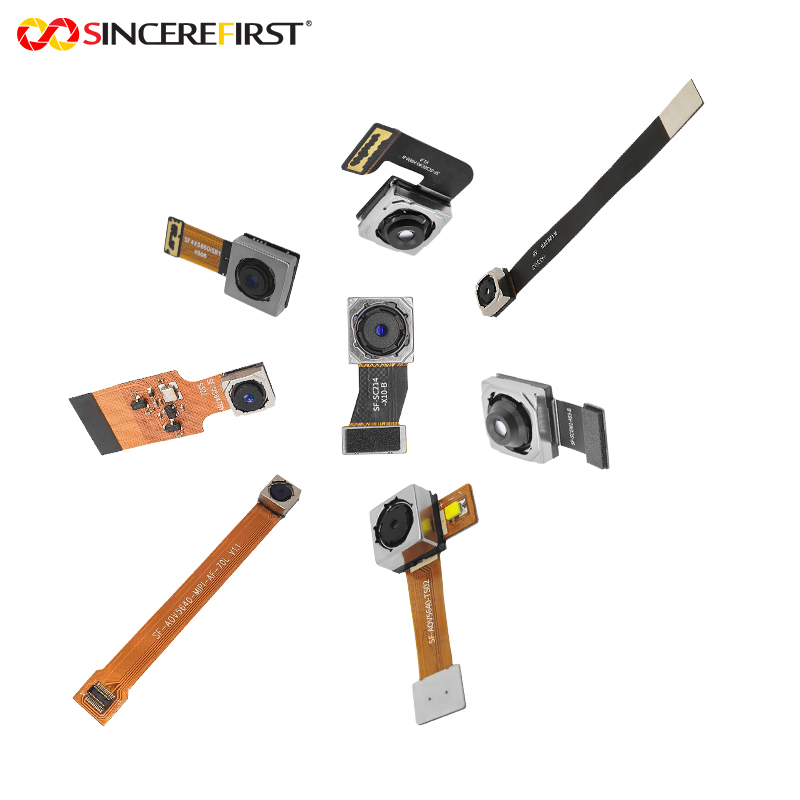
FPC-based MIPI modules are particularly useful where the camera must be positioned away from the main board or installed in a thin enclosure. However, flex length, bend radius, shielding, and connector retention matter. A camera that passes a bench test can become unstable in production if the cable routing and mechanical stack-up are not controlled.
USB for faster system deployment
USB camera modules can reduce integration effort for systems that need plug-and-play connectivity with industrial PCs, kiosks, laboratory equipment, or edge computing platforms. A UVC-compatible implementation may simplify host-side adoption, although the onboard processing architecture can limit raw sensor access and fine-grained ISP control compared with a direct MIPI design.
USB is often the practical choice when development speed and broad operating system support outweigh the need for the smallest module size. For a tightly integrated smart device, MIPI may offer more design control. For an industrial workstation, USB can shorten the path from prototype to deployment.
Mechanical and optical decisions
An IMX708 module should be selected with the final enclosure in mind. The optical axis height, lens barrel diameter, module thickness, connector direction, screw-hole pattern, and FPC exit orientation can all affect manufacturability. These details become especially important when a product has a narrow bezel, moving mechanism, waterproof housing, or thermal constraints.
Lens choice requires the same discipline. Field of view, focal length, distortion, aperture, and focus range must match the actual scene. A wide-angle lens can capture more context for robotics navigation or conferencing, but it may introduce distortion and reduce pixel density on distant targets. A narrower field of view can improve subject detail but is less forgiving when device placement varies.
Image Quality Depends on the Whole Optical Chain
A high-performing module is built around measured image quality, not only component specifications. The lens must resolve enough detail for the sensor, the filter stack must suit the lighting conditions, and the ISP tuning must produce natural color, stable exposure, and controlled noise across the product’s intended environment.
Low-light requirements deserve special attention. Small camera modules have physical limits. Better tuning can improve perceived brightness and noise handling, but it cannot fully compensate for insufficient light, a slow lens, motion blur, or a difficult dynamic range. If the device will operate in warehouses, outdoor shadows, vehicle cabins, or low-illumination inspection stations, test representative scenes early. Requesting sample images under only office lighting rarely reveals the real integration risk.
HDR behavior should also be validated against the use case. A doorway camera may need to handle bright exterior light and a dim interior in the same frame. A machine-vision task may prioritize motion fidelity and repeatable exposure over a visually dramatic HDR image. Tuning targets should reflect what the end user or algorithm needs to see.
Questions Procurement and Engineering Should Ask
A qualified supplier should be able to provide more than a sensor designation. The evaluation package should define the module part number, sensor grade and revision, optical configuration, interface, output format, frame-rate conditions, power requirements, and mechanical drawing. It should also identify the expected host platform and any available driver, register setting, or tuning support.
For commercial readiness, teams should ask about sample lead time, minimum order quantities, component lifecycle management, incoming inspection, image quality testing, and change-control procedures. A lens substitution, flex-cable revision, or connector change can affect image output and system fit. Formal notification and traceability protect both the OEM and the end customer.
Manufacturing capability matters when a program moves beyond engineering samples. Cleanroom assembly, active alignment where required, optical inspection, functional testing, and controlled packaging help reduce unit-to-unit variation. The supplier should also be prepared to discuss yield management and how it will maintain consistency as production ramps.
Customization That Reduces Integration Risk
Standard Sony IMX708 camera modules can accelerate early development, but custom configuration is often the better commercial decision once the product requirements are stable. A tailored design can use the correct lens field of view, focus strategy, FPC length, connector location, module outline, and filter selection from the outset. That reduces late mechanical changes and avoids paying for features the product does not use.
At SincereFirst, camera module development is approached as an engineering and manufacturing program rather than a catalog transaction. For OEM and system integrator projects, the objective is to align sensor selection with optics, interface requirements, host compatibility, and scalable assembly controls. Fast sample work is valuable, but only when the prototype is designed to lead efficiently toward dependable production.
Build Around the Image Your Device Must Deliver
The best IMX708 module is the one that produces usable images in the real operating environment while fitting the device, processor, schedule, and cost model. Start with the scene, working distance, illumination, output requirement, and host platform. Then validate the camera as a complete optical and electronic system. That approach gives engineering teams a clearer path from first sample to a product that performs consistently in the field.