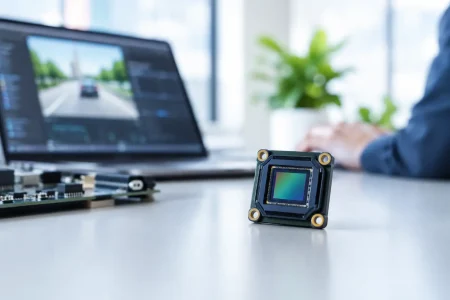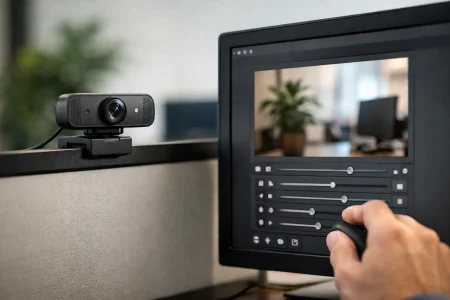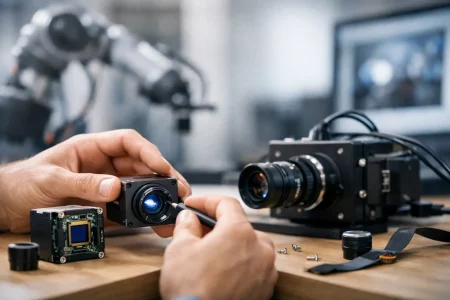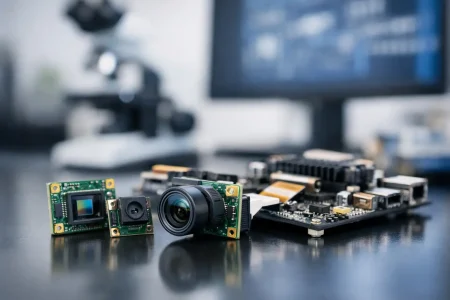

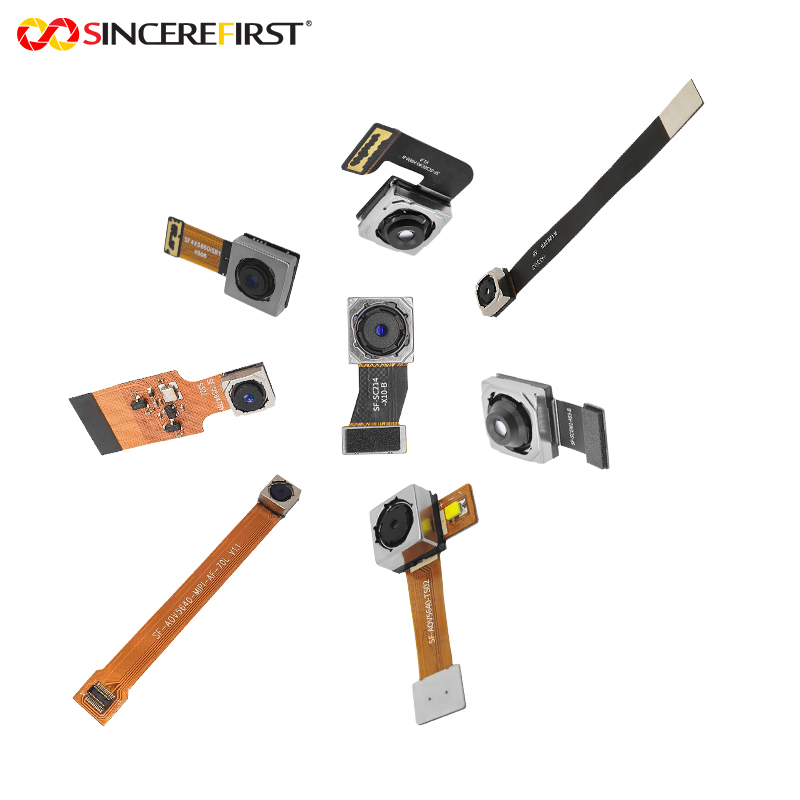
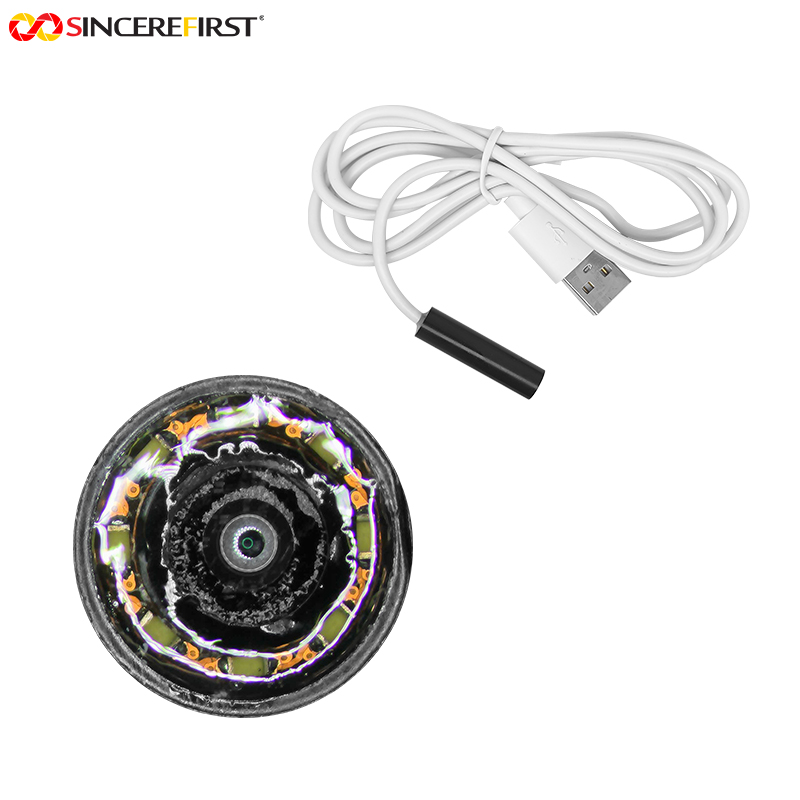
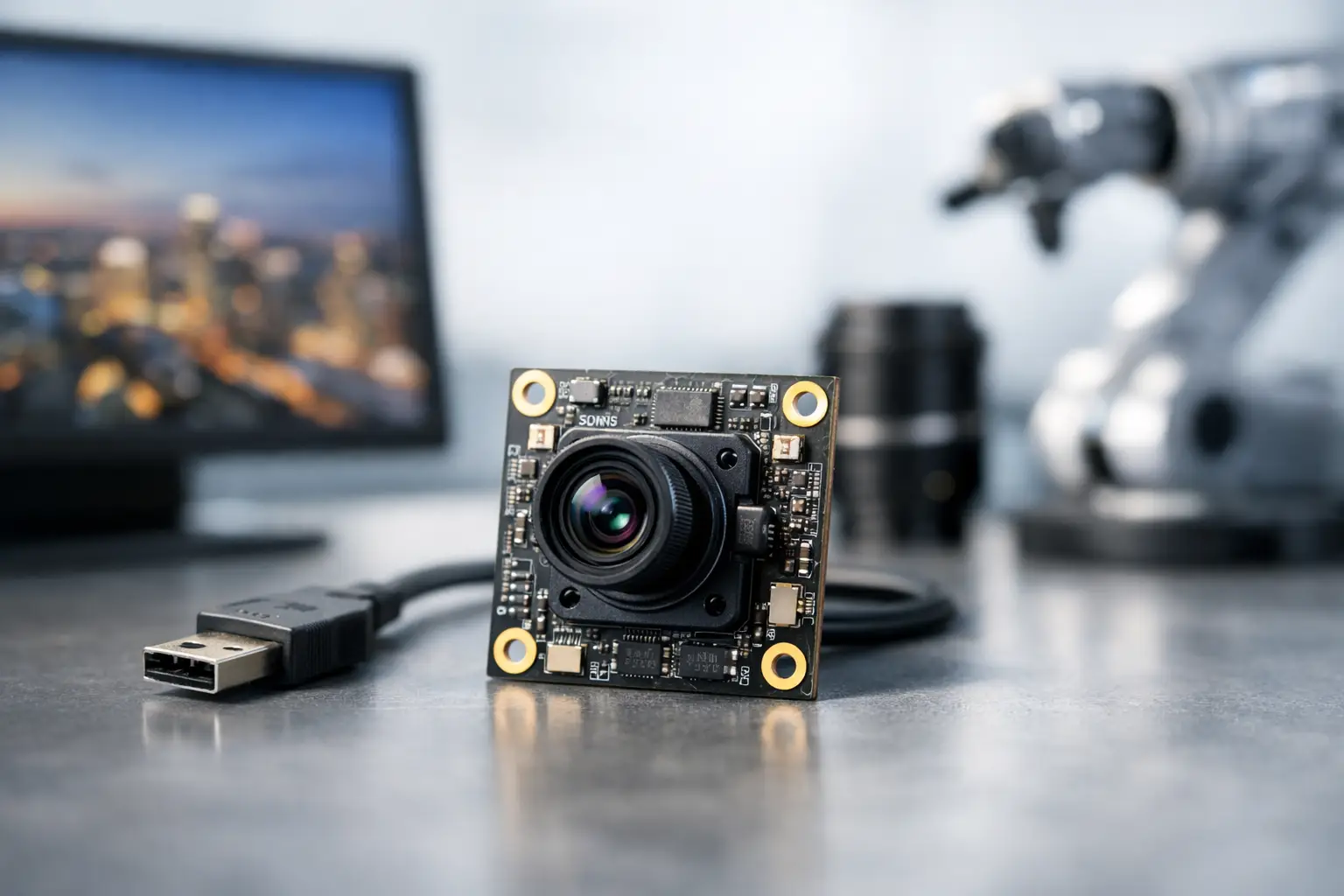
A Sony IMX415 USB camera module is often selected when a product needs true 4K image capture without the integration burden of a raw sensor design. For OEMs building industrial equipment, smart security devices, robotics platforms, medical peripherals, or intelligent retail systems, the value is not simply an 8-megapixel image. It is a compact imaging subsystem that can connect quickly to a host platform while preserving a practical path to optical, mechanical, and firmware customization.
The IMX415 is a widely adopted CMOS image sensor in the 4K camera market. However, sensor selection alone does not determine final camera performance. USB interface bandwidth, onboard image signal processing, lens matching, thermal design, enclosure geometry, and production consistency all affect whether a module succeeds in a commercial device. That is why procurement and R&D teams should evaluate the complete camera module rather than comparing sensor names alone.
What a Sony IMX415 USB Camera Module Delivers
The Sony IMX415 sensor is commonly associated with approximately 8.29 megapixels and a native 3840 × 2160 output. Its 1/2.8-inch optical format supports detailed UHD imaging in a relatively compact module footprint, making it suitable where device space is limited but image clarity cannot be compromised.
A USB camera module integrates the sensor with a printed circuit board, lens system, power design, USB interface, and usually an onboard ISP. In a UVC-compatible design, the camera can be recognized by many Windows, Linux, Android, and embedded host systems without developing a proprietary driver. This can shorten proof-of-concept work considerably, particularly for teams that need to validate image quality before committing to a custom carrier board or full product enclosure.
The practical benefit is faster engineering progress. Instead of starting with MIPI CSI-2 signal routing, ISP tuning, and operating-system driver work, a team can connect a USB module to its target host, evaluate video output, and focus on the application itself. For many B2B products, that time saving is more valuable than a small reduction in bill-of-material cost.
USB 2.0 or USB 3.0: The Decision That Shapes Performance
The phrase Sony IMX415 USB camera module does not describe one fixed performance level. USB generation has a direct effect on available resolution, frame rate, compression method, and host-side processing requirements.
A USB 2.0 module can be appropriate for applications that prioritize compatibility, lower bandwidth use, and modest frame rates. To carry 4K video through USB 2.0, the module generally relies on compressed video formats such as MJPEG or H.264, depending on the design. This can work well for monitoring, document capture, access-control terminals, and periodic image collection. The trade-off is that compression may add latency, consume host resources, or create artifacts in scenes with fast motion and fine detail.
USB 3.0 provides substantially more bandwidth and is generally the better foundation for higher-frame-rate 4K output or less-compressed image data. It is a stronger choice for machine vision inspection, robotics, laboratory equipment, and systems that must analyze live video with low delay. But USB 3.0 also requires the host platform, cable assembly, connector placement, and electromagnetic compatibility design to support the higher-speed link correctly.
The right interface depends on the full system requirement. A security camera recording compressed 4K video has different needs from a robotic arm locating small parts on a moving conveyor. A capable supplier should help define output format, frame rate, latency target, cable length, and host processor before recommending the interface.
Image Quality Depends on More Than 4K Resolution
4K resolution is useful, but it does not automatically mean useful images. In industrial and embedded products, image quality should be evaluated against the scene conditions and the decision the camera must support.
For example, a warehouse device may need to read labels across a wide field of view. A medical peripheral may require accurate skin-tone rendering and controlled illumination. An automated inspection station may need to identify small surface defects under repeatable lighting. Each application places different demands on sharpness, dynamic range, color processing, motion handling, and lens distortion.
The IMX415’s pixel size and sensor architecture can support good detail in compact 4K designs, but low-light results depend heavily on exposure settings, lens aperture, illumination, and ISP tuning. Increasing exposure can brighten an image but may introduce motion blur. Increasing gain can improve visibility but may increase noise. A wider-aperture lens can collect more light but may reduce depth of field. These are engineering choices, not sensor specifications that can be solved with a single checkbox.
For that reason, sample evaluation should use real application scenes. Test dark corners, reflective surfaces, mixed lighting, moving objects, and the actual working distance. A camera that looks impressive in a controlled demonstration may not be the right solution for a factory floor or an outdoor enclosure.
Key Customization Areas for OEM Camera Projects
Standard modules are valuable for early validation, but commercial devices frequently need modifications. The most useful customization work usually starts with the optical and mechanical requirements rather than the PCB alone.
Lens Selection and Field of View
Lens choice determines how the sensor sees the application. A wide-angle lens can capture a larger scene but may introduce visible distortion. A narrow field of view can preserve detail at distance but demands careful alignment. Fixed-focus lenses are compact and cost-effective for controlled working distances, while manual-focus or autofocus designs may be better where object distance changes.
Lens holder dimensions, infrared filter selection, focus position, and lens shading correction should be specified as part of the module design. For infrared-assisted imaging, the choice between a standard IR-cut filter, no filter, or a switchable filter assembly changes the usable operating condition significantly.
Board Shape, Cable, and Connector Design
Many embedded products cannot accept a rectangular, off-the-shelf camera board. A custom Sony IMX415 USB camera module may require a narrow PCB, an angled USB connector, a board-mounted cable, a separate lens board, or mounting holes positioned around the product housing.
Cable length also deserves early attention. USB performance is affected by cable quality and routing, particularly for USB 3.0. In compact products, connector strain relief, shielding, bend radius, and assembly access can matter as much as the camera electronics. Solving these issues during prototype development avoids costly enclosure changes later.
ISP Tuning and Video Output
The ISP controls important characteristics including exposure behavior, white balance, color rendering, noise reduction, sharpening, flicker control, and video compression. Default tuning is useful for general-purpose evaluation, but production applications often need settings optimized for their own illumination and scene content.
A retail terminal under LED lighting may need 50/60 Hz anti-flicker control. An inspection device may need restrained noise reduction so that small defects are not blurred away. A video communications product may prioritize natural facial color and stable automatic exposure. Clarifying these priorities gives engineering teams a measurable basis for tuning and acceptance testing.
Where IMX415 USB Modules Fit Best
The IMX415 is a practical fit for 4K systems that need a compact camera with straightforward host integration. Common applications include smart security terminals, intelligent traffic and city devices, retail analytics equipment, digital microscopy, telemedicine peripherals, robotics, industrial monitoring, and automated visual inspection.
It is not the ideal answer for every vision project. If the application requires extremely high frame rates, global shutter capture, specialized near-infrared sensitivity, or very low-light imaging with large pixels, another sensor family may be more appropriate. Likewise, an application with a tightly integrated embedded processor and high-volume cost target may benefit from a MIPI camera design instead of USB.
This is where supplier engineering capability matters. The best camera selection is not the most familiar sensor. It is the module that meets image requirements, interface constraints, unit-cost targets, reliability expectations, and manufacturing plans at the same time.
How to Qualify a Camera Module Supplier
For OEM programs, evaluating a sample is only the first step. The supplier also needs the capability to reproduce the approved result across pilot and mass production. Ask how the module is tested, how lens focus is controlled, how image consistency is inspected, and how component changes are managed over the product life cycle.
A qualified manufacturing partner should be able to support clear specifications for resolution, frame rate, output format, field of view, focus range, operating environment, interface pinout, and cosmetic or functional test criteria. It should also provide responsive engineering feedback when a requested feature conflicts with optical limits, USB bandwidth, or production feasibility.
SincereFirst supports this process with standard USB camera modules and custom development for customers who need a specific form factor, lens configuration, or imaging performance. Fast samples are useful, but the real objective is a camera design that remains manufacturable, testable, and consistent as demand scales.
Before selecting a module, define what the image must help the device do. Once the application decision is clear, the right sensor, USB interface, lens, tuning strategy, and production plan become far easier to specify.