
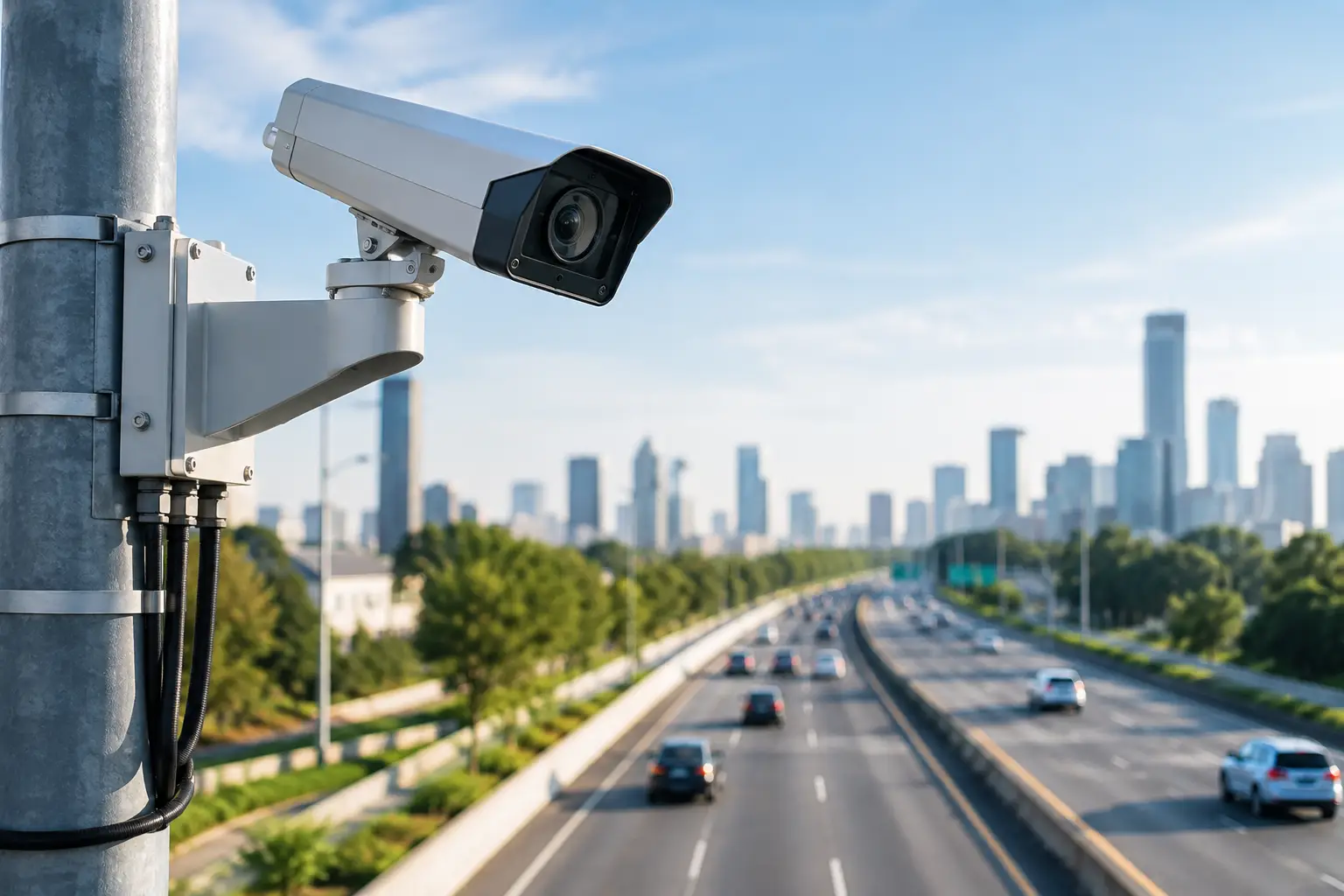
A traffic camera can produce sharp images in a laboratory and still fail its purpose at a busy intersection. Headlight glare, vibration from passing trucks, rain on the cover window, poor network conditions, and summer heat all expose weaknesses that a bench test may miss. Successful traffic camera deployment therefore begins well before installation. It starts with engineering the imaging chain, mechanical package, data path, and manufacturing plan around the actual roadway decision the system must support.
For OEMs, intelligent transportation system integrators, and smart-city device developers, the challenge is not simply selecting a high-resolution sensor. The objective is to produce usable, consistent visual data across thousands of operating hours and, often, across hundreds or thousands of deployed nodes. That requires clear performance priorities and a camera module partner that can translate them into a repeatable production design.
Define the Decision Before the Camera Specification
Traffic monitoring applications are often grouped together, but their imaging requirements differ substantially. A camera used to measure vehicle volume can prioritize broad coverage and dependable day-night scene interpretation. A system intended for lane enforcement or license plate recognition needs much tighter control of exposure, motion blur, focal length, and infrared response. An incident-detection camera may need wide dynamic range, low-light sensitivity, and video output that works efficiently with edge analytics.
The first engineering question is not, “What resolution should we buy?” It is, “What must the camera reliably identify, where in the scene, and under what conditions?” A vehicle count may tolerate lower pixel density on distant objects. Reading a plate at speed does not. A wide-angle view can cover several lanes but may leave too few pixels on a target at the far edge of the frame.
Define the target distance, field of view, vehicle speed, lighting range, mounting height, and required recognition task early. Those parameters determine sensor format, lens focal length, aperture, shutter behavior, and illumination strategy. They also prevent a common deployment error: selecting a large sensor and wide lens for impressive coverage, then discovering that the critical vehicle detail is too small for analytics or evidentiary review.
Sensor and Shutter Selection Control Image Usability
Sensor choice should reflect scene dynamics rather than a headline specification. High resolution helps only when the lens can deliver sufficient detail across the image circle and when the processing pipeline can retain it. For a compact roadside device, a balanced sensor-lens combination frequently produces better real-world output than an oversized sensor constrained by low-cost optics or limited bandwidth.
Rolling shutter versus global shutter
Rolling shutter sensors are widely used because they offer strong resolution and cost efficiency. They can be a practical choice for general traffic flow monitoring, parked-vehicle observation, and installations where exposure times remain controlled. However, fast-moving vehicles, flashing lights, and vibration can introduce geometric distortion or inconsistent capture timing.
Global shutter sensors capture the frame at the same instant. They are usually preferred when the application depends on accurate capture of fast-moving objects, precise timing, or machine-vision analysis at controlled exposure intervals. The trade-off may include sensor cost, resolution availability, and low-light performance. The correct selection depends on the required measurement and not on a blanket preference for one shutter type.
Dynamic range and low-light behavior
An intersection can contain deep shadows, reflective road markings, direct sun, dark vehicle interiors, and high-intensity headlights in one scene. Wide dynamic range performance is therefore central to traffic imaging. A sensor with suitable HDR capability can preserve detail in highlights and shadows, but implementation matters. Exposure control, image signal processor tuning, lens flare performance, and cover-glass reflections all influence the final result.
Night operation creates another design decision. Visible-light imaging can provide natural color information where street lighting is sufficient. Infrared-assisted imaging can improve consistency after dark, particularly for plate capture. Yet infrared illumination must be designed with the sensor’s spectral response, lens focus shift, working distance, thermal load, and local rules in mind. Adding LEDs after the optical design is fixed often creates hotspots, uneven illumination, or reduced image clarity.
Optics Are a Core Part of Traffic Camera Deployment
In traffic camera deployment, the lens is not an accessory. It establishes field of view, target pixel density, distortion, contrast, and the amount of light reaching the sensor. Lens selection should be validated against the complete operating scene, including day glare, nighttime point lights, rain, and off-axis targets.
A fixed-focus lens may be appropriate for a tightly defined installation height and target zone. It reduces moving parts and can simplify production consistency. Varifocal or motorized optics can help when installers need flexibility across multiple sites, but they add mechanical complexity and require reliable focus and calibration procedures. If a camera will be mounted on poles with varying setbacks from the roadway, that flexibility may justify the added engineering effort.
Lens aperture creates a meaningful trade-off. A wider aperture improves low-light capture but reduces depth of field and can make focus tolerance more demanding. A smaller aperture can improve scene depth but may require more illumination or longer exposure, increasing noise or motion blur. For traffic systems, the best aperture is the one that maintains useful focus across the required lane area while supporting the desired shutter speed.
The cover window deserves equal attention. Its coating, angle, cleanliness, and distance from the lens can affect ghosting and flare, especially at night. A high-quality module can lose critical contrast if headlights reflect between the lens and a poorly integrated enclosure window.
Match the Interface to the Processing Architecture
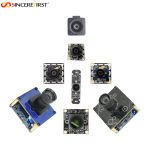
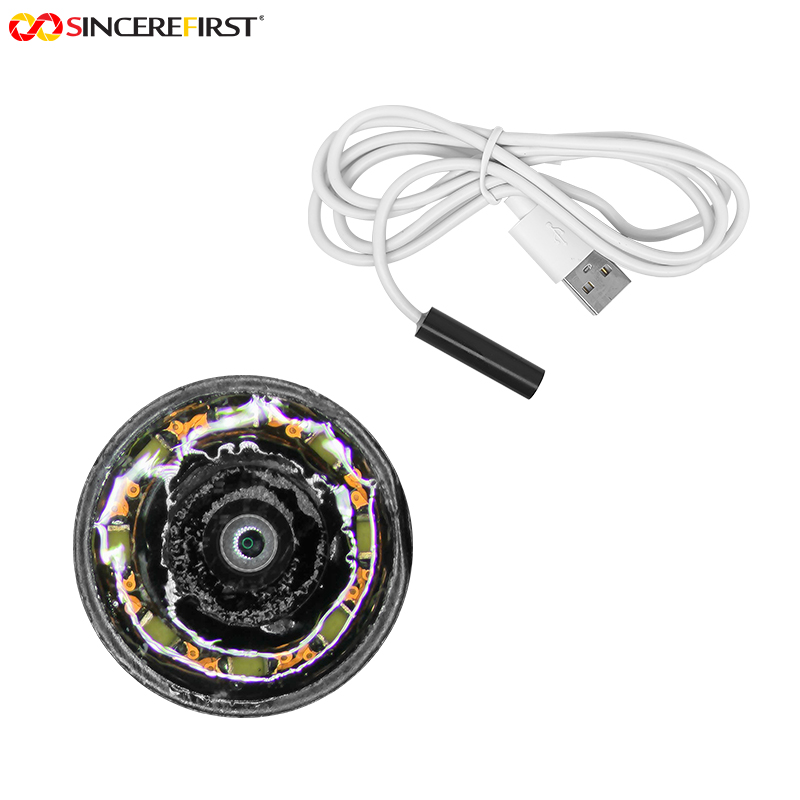
The output interface should be selected as part of the total compute design. MIPI CSI-2 camera modules are well suited to compact embedded systems where the processor board is close to the camera and high-throughput video must move with low latency. USB camera modules, including USB 3.0 and UVC designs, can simplify integration with industrial computers, edge gateways, and development platforms. Ethernet-based systems may be preferable when cable runs are longer or when cameras connect across distributed roadside infrastructure.
Bandwidth calculations should include resolution, frame rate, pixel format, compression, and the number of simultaneous streams. A design that works with one camera in a prototype can become unstable when a roadside cabinet processes multiple streams under peak traffic conditions. Consider processing location as well. Edge AI can reduce network transmission and improve response time, but it increases local thermal and compute requirements. Centralized analysis can simplify camera hardware but depends on reliable backhaul and introduces transmission cost and latency.
Synchronization is another frequently overlooked requirement. Multi-camera coverage, speed estimation, stereo analysis, and coordinated event reconstruction may require accurate timestamps or hardware triggering. If synchronized capture is a future roadmap item, reserve the needed interface capability at the first design stage rather than redesigning the camera later.
Build for the Roadside, Not the Demo Table
Traffic cameras operate in a mechanically and thermally demanding environment. Module-level image performance must survive the enclosure, cable routing, power design, mounting method, and installation practice. Roadside vibration can shift optical alignment over time. Heat from processors, solar loading, and infrared illumination can raise sensor noise or alter image quality. Cold, moisture, and repeated thermal cycling can expose weaknesses in connectors, sealing, adhesives, and cable assemblies.
An effective qualification plan should test the assembled camera, not only individual components. Verify image quality after vibration and thermal cycling. Check for focus movement, connector retention, condensation, window contamination, and infrared leakage. Confirm that automatic exposure and white balance respond predictably to representative road scenes. Testing should also include degraded conditions such as wet pavement, low sun angles, snow, heavy rain, and strong headlight glare when those conditions are relevant to the deployment region.
Power quality matters as much as enclosure protection. Roadside systems can experience voltage drops, transients, and unstable startup sequences. Camera modules and processors need protection and recovery behavior that prevents lockups after a power event. Design teams should also plan for serviceability: a camera that requires complete disassembly for a basic replacement can raise lifecycle cost across a large installation.
Plan Manufacturing and Calibration Early
A prototype proves technical possibility. Production deployment proves whether the design can be repeated. This gap is where many camera programs lose schedule and margin. Sensor availability, lens consistency, module alignment, image tuning, firmware control, and traceability all affect scale-up.
For a customized module, establish measurable acceptance criteria before the pilot build. These can include resolution performance, field of view tolerance, focus position, color behavior, low-light noise, defect-pixel policy, interface stability, and mechanical dimensions. Golden samples are useful, but numeric limits make supplier and system-level validation far more reliable.
Factory calibration is especially valuable when the application has narrow optical tolerances. Lens shading correction, focus verification, distortion characterization, and image signal processor tuning can reduce variation between units. The right level of calibration depends on deployment volume and accuracy requirements. A broad-coverage traffic counter may not need the same process as a lane-specific recognition system, but both need controlled consistency.
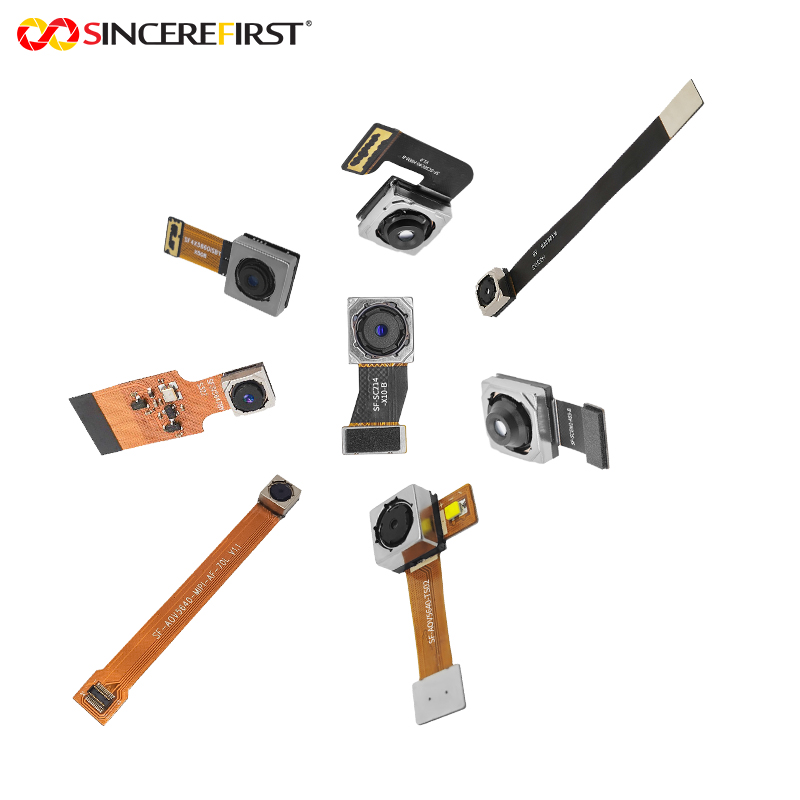
SincereFirst supports this transition with camera module engineering that combines sensor, lens, interface, and mechanical customization with production-oriented validation. For buyers, the practical advantage is shorter iteration between a field-tested sample and a manufacturable imaging assembly.
Treat Compliance and Data Governance as Design Inputs
Traffic imagery can create privacy, retention, cybersecurity, and procurement obligations. Requirements vary by jurisdiction and application, but they should influence architecture from the start. Edge processing may allow a system to transmit vehicle counts or event metadata instead of continuous identifiable video. Encryption, authenticated firmware updates, access control, and audit capability should be defined alongside sensor and interface requirements.
If plate recognition or enforcement use is planned, establish image retention, review procedures, timestamp accuracy, and data handling responsibilities with the system owner early. Technical performance alone cannot make a deployment successful if the collected data cannot be used lawfully, secured properly, or trusted operationally.
The most dependable traffic camera systems are engineered backward from the roadway decision, then proven through environmental testing and controlled manufacturing. When the camera module is specified as part of that complete system, teams gain more than clearer images: they gain a platform that can be installed, maintained, and expanded with confidence.