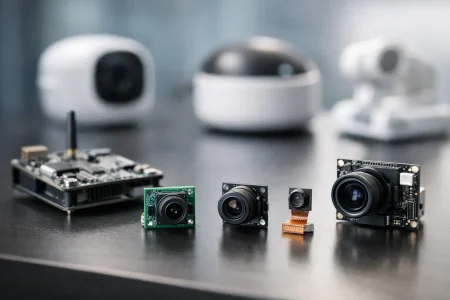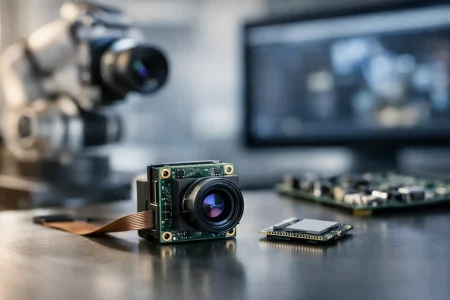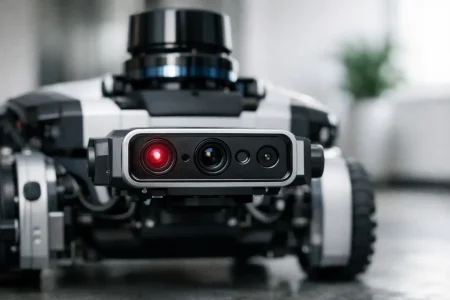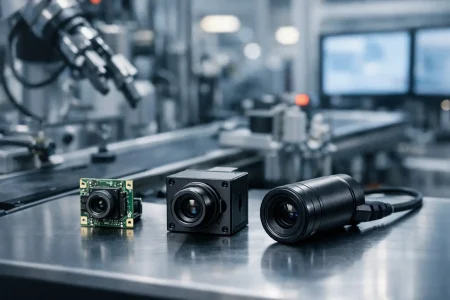

A vision system that misses a defect once every few hundred cycles can still become an expensive production problem. In factory automation, that is why industrial machine vision cameras are not selected on resolution alone. The right choice depends on how the camera, lens, lighting, interface, and processing pipeline perform together under real operating conditions.
For OEMs, system integrators, and equipment builders, camera selection is usually tied to a larger question: how fast can the system move from evaluation to stable deployment without creating integration risk later. A camera that looks strong on paper can still introduce delays if the interface is difficult to support, the module size does not fit the enclosure, or image quality shifts under plant lighting and vibration. The better approach is to define the inspection task first, then select the imaging architecture around it.
What industrial machine vision cameras need to do
Industrial machine vision cameras are built for repeatability. That sounds obvious, but it is the dividing line between a camera used for casual imaging and one used for automated decision-making. In manufacturing, logistics, robotics, medical devices, and smart equipment, the image is part of a control process. It may trigger a reject gate, guide a robot arm, verify assembly, read a code, or confirm dimensional accuracy.
That means the camera has to deliver stable image data across changing temperatures, continuous operation, and high-speed acquisition. It also needs an interface and form factor that fit the host system. In many embedded applications, compact module size matters as much as image quality because the camera is being designed into a finished commercial device, not mounted as a standalone lab component.
The practical requirement is not just to capture a good image. It is to capture the right image, at the right time, in a way the downstream software and hardware can use consistently.
How to evaluate industrial machine vision cameras
The first decision is the inspection target. A system checking large labels on cartons has very different imaging needs than one measuring small connector pins or detecting a surface scratch on machined metal. Field of view, working distance, target speed, and defect size should be defined before comparing camera models.
Resolution matters, but only in relation to the smallest feature you need to detect. More pixels are not always better. Higher resolution increases data load, processing demand, and sometimes cost, while not improving results if optics and lighting are poorly matched. In many industrial systems, the best performing camera is the one that provides enough pixel density for the inspection task without overcomplicating transmission or computation.
Sensor size and pixel size are just as important. Larger pixels can improve low-light performance and signal quality, which is useful in enclosed devices or fast exposure conditions. Smaller pixels can help in compact systems that need fine detail, but they may require more careful lighting control. Global shutter is often preferred for moving targets because it reduces motion distortion. Rolling shutter can still work in slower or cost-sensitive applications, but it needs to be evaluated honestly.
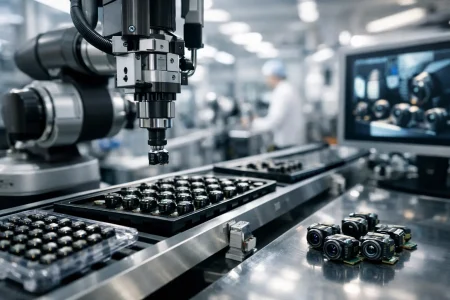
Frame rate should be tied to line speed and decision timing. If the system must inspect parts on a conveyor at high throughput, frame rate is a functional requirement, not a marketing feature. Buffering, trigger response, and latency also matter here. Many system issues appear not because the sensor is inadequate, but because the full acquisition path was not validated early.
Interface choice affects the whole system
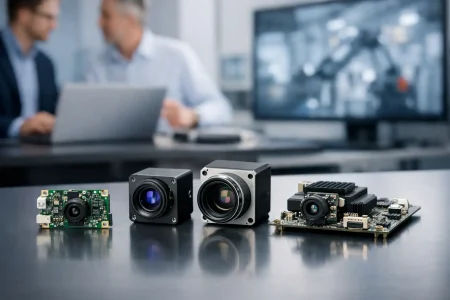
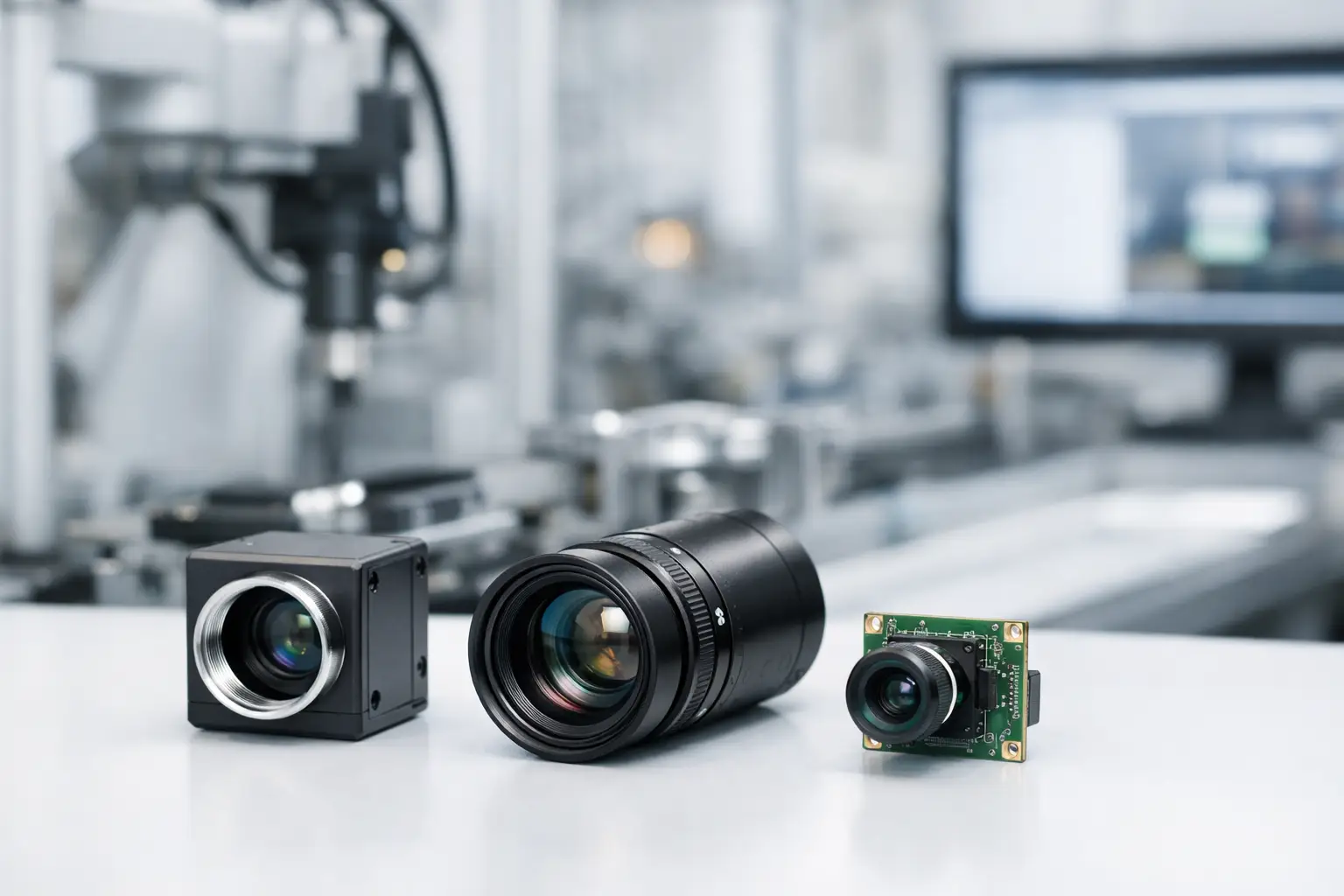
One of the most common mistakes in machine vision development is choosing the interface too late. USB, MIPI, DVP, and other connection types are not interchangeable from a system design perspective. They shape cable length, power strategy, host processor compatibility, bandwidth, driver support, and enclosure design.
USB camera modules are often attractive for fast development and broad compatibility. They can reduce prototyping time and simplify testing. For many embedded products and industrial devices, USB 2.0 or USB 3.0 is a practical route when plug-and-play behavior and host-side flexibility are priorities.
MIPI camera modules are often the better fit when low-latency embedded integration, compact board design, and direct processor connection are required. They are common in smart devices, robotics, and custom OEM equipment where space is limited and the camera is part of a deeply integrated hardware platform. DVP can still be useful in specific embedded architectures, especially when legacy compatibility or processor constraints shape the design.
The right answer depends on the product roadmap. A camera that speeds up prototype validation but creates limitations in mass production may not be the lowest-risk choice. For that reason, engineering teams usually benefit from evaluating interface selection together with manufacturing intent, not as a standalone component decision.
Optics and lighting usually decide the result
When machine vision projects underperform, the camera often gets blamed first. In practice, the problem is frequently optical. Lens selection determines magnification, distortion, depth of field, and edge sharpness. Lighting determines contrast, repeatability, and whether the target feature is visible at all.
A high-resolution camera paired with the wrong lens will not deliver reliable inspection. The same is true if reflections, shadows, or low contrast are left unresolved. Backlighting can be effective for silhouette and dimensional checks. Structured or angled lighting can help with surface inspection. Diffuse illumination may reduce glare on reflective materials. These are not minor adjustments. They are core design inputs.
This is especially relevant in custom equipment, where the mechanical stackup is tight and the camera module, lens, and lighting must fit inside a constrained space. In those cases, the imaging solution needs to be designed as a subsystem. Buyers who work with a supplier capable of both standard modules and custom optical integration usually reduce redesign cycles because the trade-offs are handled earlier.
Environmental and production realities
Industrial deployments are rarely clean bench-top environments. Heat, vibration, dust, washdown exposure, and continuous duty cycles all affect imaging stability. If the camera module is going into a sealed industrial device, thermal behavior and connector reliability become central concerns. If the vision system is part of a mobile robot or agricultural platform, shock and variable lighting may matter more than laboratory image benchmarks.
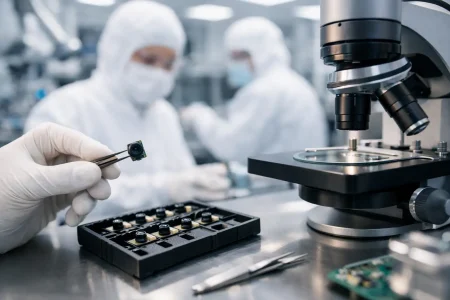
This is where manufacturing quality and consistency begin to matter as much as the original engineering sample. A prototype that performs well is only the first step. Commercial buyers need confidence that image quality, calibration, and mechanical tolerances can be held through repeat production. That is especially critical for OEMs scaling from pilot runs to volume deployment.
For that reason, supplier evaluation should include more than datasheets. Sample turnaround speed, customization capability, cleanroom manufacturing, sensor sourcing stability, and support through validation all affect project timing. In many programs, the cost of schedule delay is greater than the difference between two camera module prices.
Customization is often the real requirement
Many buyers begin by searching for an off-the-shelf machine vision camera and discover that their actual requirement is a modified camera module. The standard product may need a different lens stack, a specific connector orientation, board-level size changes, IR sensitivity, medical-grade packaging considerations, or firmware tuning for the host platform.
That is common in robotics, healthcare devices, industrial inspection tools, and smart infrastructure. The final product is not buying a camera for its own sake. It is buying an imaging function that must fit a commercial device, pass qualification, and scale into production.
This is where an engineering-led manufacturing partner adds value. A supplier with experience in embedded modules, optical components, and OEM customization can shorten the path from concept to approved sample. SincereFirst operates in that space, supporting both catalog supply and tailored development for customers who need imaging performance aligned with production reality.
Where buyers should be careful
There is no perfect camera for every industrial application. A compact module may save space but limit thermal margin. A higher frame rate may increase bandwidth and processor load. A larger sensor may improve image quality but complicate lens size and enclosure layout. Even lead time can become a design factor if the preferred sensor has supply volatility.
That is why the strongest buying decisions are usually cross-functional. Engineering, procurement, and product teams should align on three things early: the inspection requirement, the integration constraints, and the production plan. If one of those is missing, the project tends to pay for it later through redesign, unstable performance, or qualification delays.
The most effective industrial machine vision cameras are not simply the highest-spec units in the category. They are the cameras that fit the target task, the embedded architecture, and the production strategy with the fewest compromises. When those factors are matched early, the vision system becomes easier to validate, easier to manufacture, and easier to trust once it is in the field.
A good camera selection should do more than pass a lab test. It should give your product team a clearer path to launch, scale, and long-term stability.