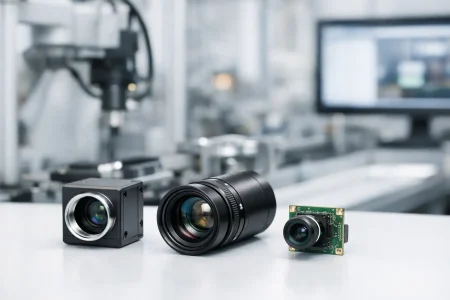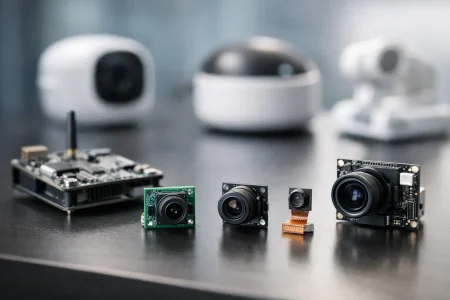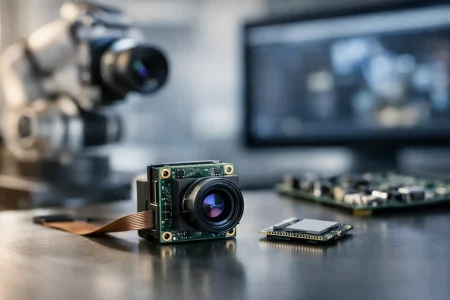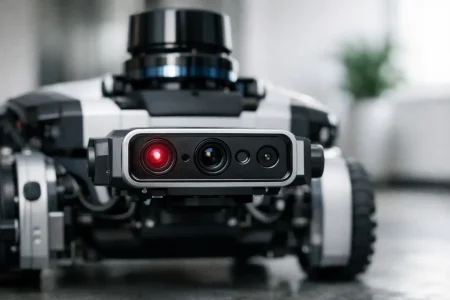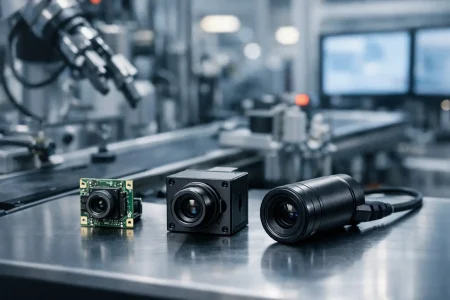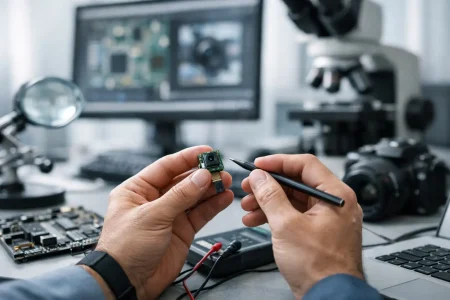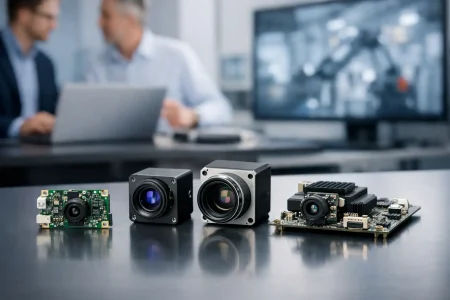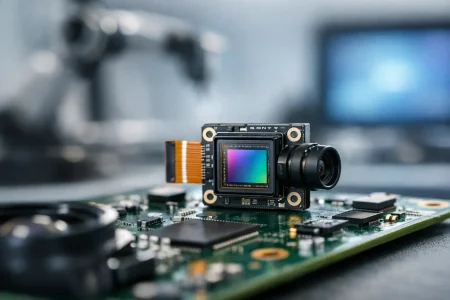

A vision project usually goes off track long before software tuning starts. The real bottleneck is often simpler: the camera module was never matched to the device, the lighting, the interface, or the production target. If you are evaluating how to customize embedded vision system architecture for a commercial product, the right approach starts with requirements discipline, not part swapping.
For OEMs, system integrators, and engineering teams, customization is rarely about making a camera “different.” It is about making the imaging chain fit the job with fewer compromises. That means balancing sensor size, lens selection, board shape, signal output, power budget, thermal behavior, cable routing, and manufacturing repeatability. A well-customized system improves image quality, reduces integration risk, and shortens the path from prototype to stable volume production.
How to customize embedded vision system requirements first
Before choosing a sensor or interface, define what the system must actually see and under what conditions. A barcode scanner in a warehouse, a robot picking reflective parts, and a handheld medical device may all use embedded vision, but their technical priorities are completely different.
Start with the image objective. Do you need detection, measurement, recognition, guidance, inspection, or recording? The answer affects resolution, frame rate, dynamic range, field of view, and latency tolerance. Teams often over-spec resolution and under-spec exposure conditions. A higher megapixel sensor does not fix motion blur, poor lighting, or a bad lens stack.
Then define the environment. Working distance, ambient light variation, target speed, temperature, vibration, moisture exposure, and available installation space all matter. In compact products, module thickness and connector orientation can be as important as image quality. In industrial designs, cable length, EMI resistance, and long-term component availability may drive the architecture.
A useful requirement set usually includes object size, inspection distance, minimum defect size, target contrast, frame rate, response time, interface preference, and expected annual volume. Once those are clear, customization becomes engineering work instead of guesswork.
Sensor and optics are the core of customization
Most embedded vision performance decisions come from the combination of image sensor and optics. If that pairing is wrong, downstream tuning has limited value.
Sensor selection should be tied to the task. Global shutter is often the right choice for motion capture, robotics, and machine vision inspection because it avoids rolling distortion. Rolling shutter can still be suitable for static scenes, cost-sensitive products, and applications where movement is controlled. Pixel size also matters. Larger pixels generally help in low light, but they increase module size and can limit resolution density in small formats.
Resolution should be chosen from the measurement requirement backward. If the system must identify a 0.2 mm defect at a known working distance, calculate the pixel density needed on target. That is more reliable than choosing 8 MP because it sounds safe. In many embedded products, 2 MP or 5 MP is enough when optics and lighting are correct.
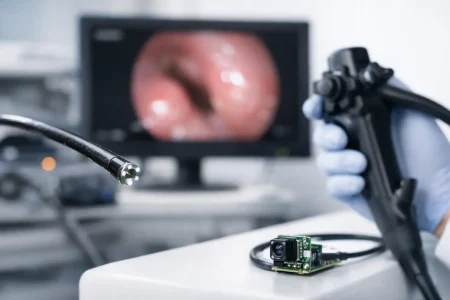
Lens customization deserves the same attention as the sensor. Focal length, distortion profile, relative illumination, chief ray angle compatibility, and depth of field all affect real-world results. A standard lens may work in a lab sample but fail after enclosure changes or lighting shifts. For close-range inspection or endoscopic imaging, optical alignment tolerance becomes even more critical.
IR sensitivity, color fidelity, and filter choice also depend on the use case. Some systems need an IR cut filter for natural color imaging. Others require NIR performance for low-light or structured illumination designs. There is no universal best stack – only the stack that matches the application.
Interface, processor, and data path decisions
When teams ask how to customize embedded vision system design, they often focus on the camera head and forget the data path. Yet interface mismatch is one of the most common causes of redesign.
MIPI CSI-2 is common in compact embedded products where direct processor integration, low power, and small form factor are priorities. USB camera modules are attractive for faster development, evaluation, and plug-and-play connectivity, especially in industrial peripherals or smart devices that benefit from UVC compatibility. DVP can still fit legacy platforms or simpler architectures, though it offers less flexibility for higher data demands.
The processor choice has to align with image throughput and algorithm load. Basic image capture and compression place different demands on the SoC than edge AI inference, multi-camera stitching, or low-latency industrial control. If the host platform has limited ISP capability, camera-side tuning becomes more important. If the host has strong image processing resources, you may accept a simpler module but invest more in software calibration.
Bandwidth, memory, synchronization, and cable design should be reviewed early. A system that works on a short bench cable may fail in a full enclosure with longer routing and electrical noise. For multi-camera systems, trigger alignment and timing consistency can matter more than raw resolution.
Mechanical and electrical customization often decide project success
A camera module that produces excellent images can still be the wrong product if it does not fit the device mechanically or survive production conditions. This is where custom embedded vision projects frequently become real manufacturing programs.
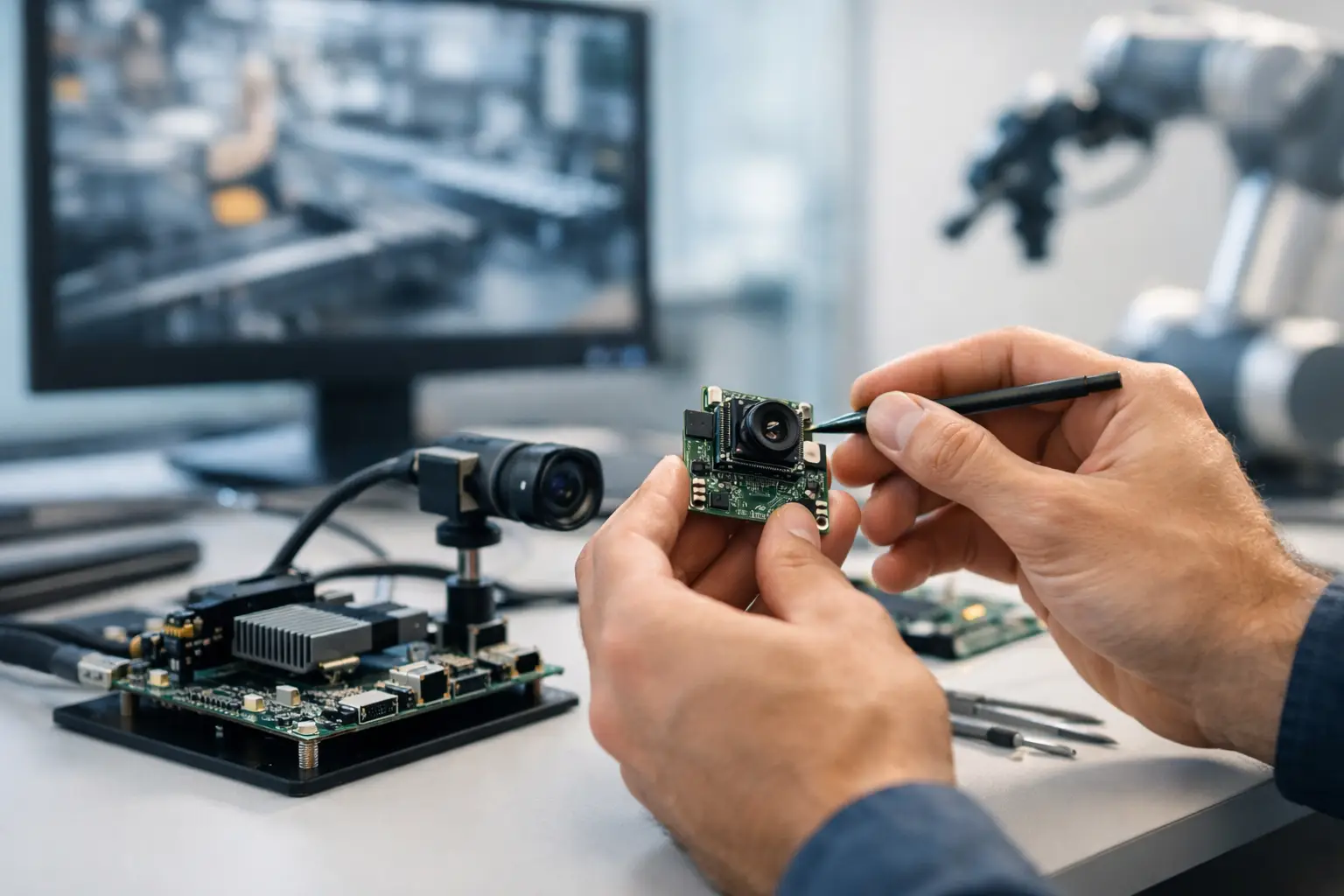
Board dimensions, mounting holes, connector location, FPC length, shielding, and housing geometry all affect integration speed. If the product enclosure is fixed, even a minor connector height issue can force a costly board revision. In wearables, handheld tools, medical devices, and compact robots, module shape and cable bend radius are not secondary details. They are design constraints.
Electrical customization also goes beyond basic pin definition. Power rail stability, signal integrity, ESD protection, grounding strategy, and thermal dissipation all influence image consistency. Noise problems can look like software defects until the root cause is traced back to layout or power design.
For regulated or mission-critical devices, validation needs to reflect the final configuration. That includes burn-in, temperature cycling, vibration testing, lens focus retention, and connector durability. A supplier that can support both engineering changes and stable mass production offers a practical advantage here. Rapid prototypes are useful, but repeatable builds are what protect launch schedules.
ISP tuning, lighting, and image optimization
Customization does not end with hardware selection. Image tuning is where many projects either become application-ready or stay stuck in demo mode.
ISP settings should be tuned for the actual scene, not a generic chart alone. Exposure strategy, white balance, gamma, sharpness, noise reduction, lens shading correction, and color matrix tuning all affect downstream algorithm performance. In machine vision, the visually pleasing image is not always the most useful one. It depends on whether the system is serving a human operator, a CV model, or a metrology process.
Lighting deserves equal weight. Good optics cannot compensate for uncontrolled illumination. The right solution may be visible LED, IR, coaxial light, side light, diffuse dome light, or a fully enclosed lighting chamber. Trade-offs are common. Stronger lighting can improve exposure time and motion performance, but it may add heat, power draw, and reflections.
If the system supports AI inference, dataset quality should be considered part of customization. Sensor noise, color shift, and lens distortion can affect model behavior. It is often better to stabilize the imaging pipeline first and train later than to use model complexity to compensate for weak optical design.
How to customize embedded vision system for scale
A prototype that works in ten units is not automatically ready for ten thousand. Customization has to account for manufacturability, supply continuity, and quality control from the beginning.
Component lifecycle is one major factor. Sensor selection should consider long-term availability, not just current price or sample access. The same applies to connectors, lenses, and control ICs. A design built around hard-to-source parts may create a second engineering cycle when volumes increase.
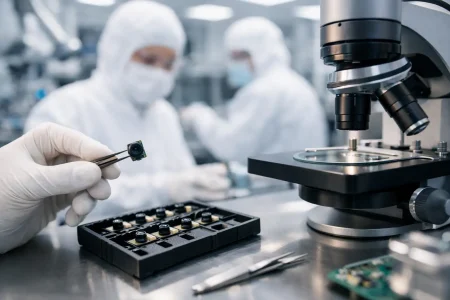
Tolerance control matters as production ramps. Focus consistency, adhesive process control, optical alignment, contamination management, and module calibration all affect yield. Cleanroom assembly, optical inspection, and standard test procedures are especially important in compact, high-resolution, or medical-oriented modules.
This is where an engineering-led manufacturing partner adds measurable value. SincereFirst, for example, works across standard and custom camera modules with fast sample turnaround and scaled production support, which helps teams move from concept validation to stable supply without switching vendors mid-project.
What buyers should prepare before requesting customization
The fastest custom projects usually begin with better input data. A supplier can recommend more accurately when the application conditions are specific.
Prepare the use case, target object details, working distance, field of view, light conditions, host processor, preferred interface, enclosure limits, and expected quantity. If you already have sample images from a current system, include both good and failed results. Failure cases are often more useful than ideal images because they expose the actual constraints.
It also helps to state which variables are fixed and which are flexible. Sometimes the best improvement comes from changing lens angle or lighting instead of redesigning the full module. In other cases, a fully custom board, housing, and cable assembly is justified because the product geometry leaves no room for adaptation.
The strongest embedded vision designs are not the most complicated. They are the ones customized with clear intent, tested under real conditions, and built for repeatable production. If you approach the project that way, the camera becomes more than a component – it becomes a stable part of product performance.