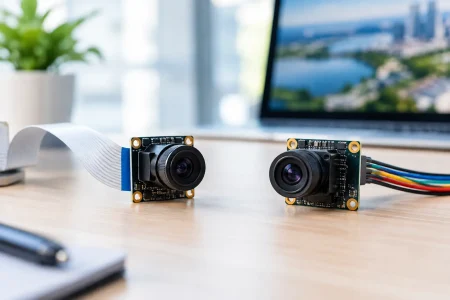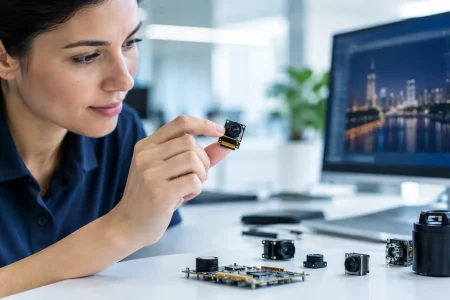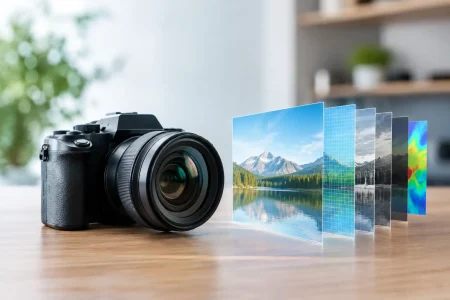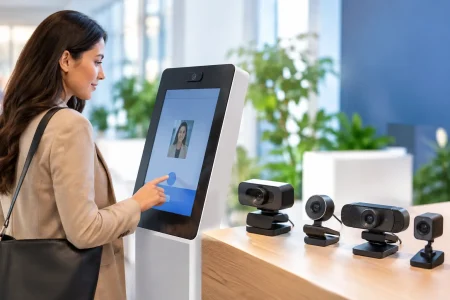

A security camera that looks sharp at noon and fails at 2 a.m. is not a security solution. For OEMs, integrators, and device teams, the real test starts when illumination drops, motion increases, and the scene still needs usable detail. Choosing the right low light camera module for security means balancing sensor sensitivity, lens design, interface bandwidth, ISP tuning, and system constraints instead of chasing a single spec.
What makes a low light camera module for security effective
Low-light performance is not defined by resolution alone. A 4MP or 8MP module can look worse than a lower-resolution design if the pixel size is too small, the lens is too slow, or the image processing is over-aggressive. In security applications, the target is not simply a bright image. The target is recognizable faces, readable motion, reliable scene contrast, and stable output in difficult lighting.
That matters because most real deployments are mixed-light environments. Entryways have backlight from street lamps. Warehouses have dark aisles and bright loading doors. Smart door systems deal with porch lights, headlights, and almost no ambient light in the same hour. A camera module has to maintain useful information across those transitions.
The practical starting point is quantum efficiency, pixel size, sensor architecture, and noise control. Larger pixels typically collect more light, which helps signal-to-noise ratio in dim scenes. Backside illumination sensors usually perform better than older frontside structures. A capable ISP can reduce noise and preserve edges, but only within the limits of the raw sensor data. If the sensor does not capture enough signal, software cannot fully recover it.
Sensor choice sets the baseline
For a low light camera module for security, the sensor is the foundation. This is where many product teams make an expensive mistake. They compare only resolution, frame rate, and cost, then discover too late that nighttime image quality does not support detection or identification.
A better evaluation starts with application distance and recognition requirements. If the camera must identify a face at a doorway within a few feet, one sensor class may work well. If it must monitor a parking area or industrial perimeter, the pixel density requirement changes, and so does the sensor and lens combination. Higher resolution can help with distant targets, but it also increases data load and may reduce low-light efficiency if the optical format and pixel architecture are not matched carefully.
Shutter type also matters. Rolling shutter is common and cost-effective for many security products, especially fixed-view indoor systems. But for scenes with fast motion, moving vehicles, or vibration, motion artifacts can reduce image usability at night. In some cases, a global shutter module is worth considering, although it may involve trade-offs in sensitivity, cost, and resolution.
Near-infrared response is another key factor. Many security systems rely on 850nm or 940nm illumination after dark. A sensor with strong NIR sensitivity can dramatically improve nighttime output, but the rest of the optical stack must support it. This includes lens transmission, IR filter configuration, and image tuning. A strong sensor paired with the wrong lens or filter setup will leave performance on the table.
The lens can help or limit low-light performance
Teams often focus on the sensor and underestimate the lens. In low-light security imaging, lens selection directly affects how much light reaches the sensor. A lower F-number lens passes more light, improving exposure and reducing the need for excessive gain. That can mean cleaner images and better detail retention.
There is a trade-off, though. Faster lenses can add cost, size, and optical complexity. Depending on the field of view, they may also introduce edge softness or distortion if not selected carefully. For compact embedded devices such as access control terminals, battery-powered cameras, or slim smart intercoms, available module depth can restrict lens options.
Field of view needs discipline as well. A very wide lens captures more context, but it spreads pixel density over a larger area. That can make face identification harder at distance, especially in low light. A narrower lens can improve target detail but reduce scene coverage. The right answer depends on whether the system prioritizes overview monitoring, person detection, license plate capture, or event verification.
IR illumination, color, and day-night switching
When ambient light falls below a workable threshold, many security products transition to infrared-assisted imaging. This is effective, but not automatic. The module must be designed for the intended illumination approach.
If the system needs true color at night, the design challenge increases. Color imaging requires more light and often produces more noise in dim scenes. Some systems use large-format sensors and tuned ISPs to preserve color longer into dusk and low indoor light, but once illumination drops far enough, monochrome or IR-supported imaging usually delivers better detail.
For day-night operation, IR-cut filter behavior becomes critical. A fixed filter may improve daytime color accuracy but limit nighttime sensitivity. A mechanical IR-cut switch enables better day-night performance, but it adds complexity, moving parts, and space requirements. For compact products, teams may choose a fixed-focus, no-switch design and optimize for either visible-light bias or NIR bias depending on the application.
940nm IR LEDs are less visible and often preferred for discreet systems, while 850nm typically provides stronger illumination efficiency. The trade-off is simple: 940nm is stealthier, 850nm is brighter. The better choice depends on product positioning, installation environment, and user expectations.
Image processing matters, but raw performance matters more
A modern ISP can improve low-light output through temporal noise reduction, spatial filtering, wide dynamic range processing, and exposure control. These tools are valuable, especially in embedded security devices where size and cost constraints limit sensor options. But aggressive processing can create its own problems.
Over-smoothed images may look cleaner in a demo and perform worse in actual security use. Fine textures disappear. Facial detail softens. Moving objects leave trails or ghosting. For evidence capture and machine vision analytics, those artifacts reduce practical value.
This is why tuning should be based on the actual use case. A module optimized for human viewing on a doorbell screen may not be tuned correctly for edge AI person detection. A warehouse monitoring device may need different exposure behavior than a retail occupancy sensor. Low-light success comes from matching sensor, optics, and ISP settings to deployment reality, not from applying generic default tuning.
Interface and integration decisions affect the final result
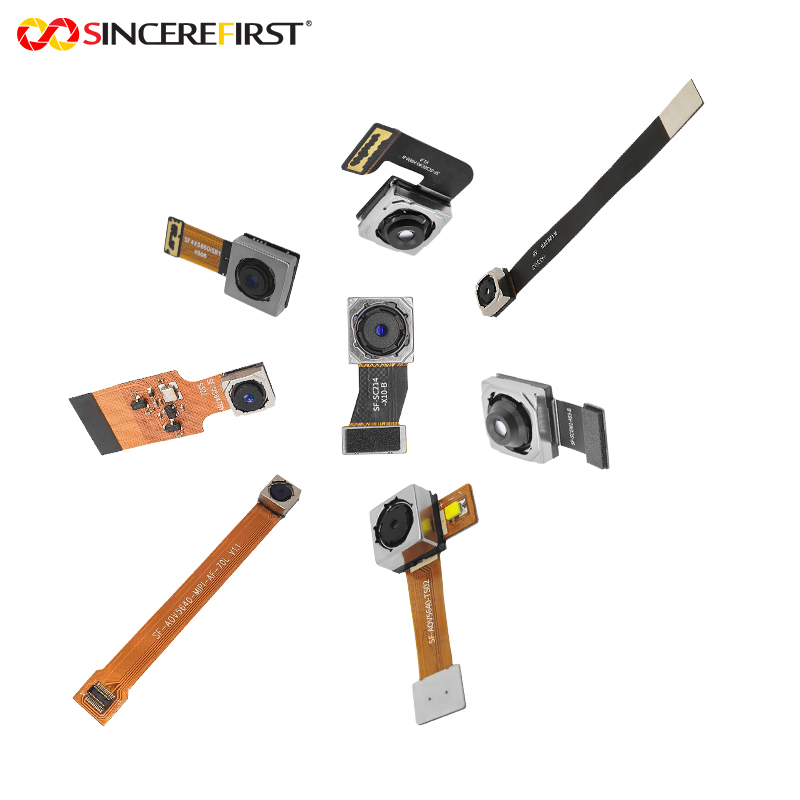
Camera performance does not stop at the module level. Interface selection affects bandwidth, latency, power, and integration flexibility. MIPI camera modules are common in embedded designs where direct processor connection and compact integration matter. USB camera modules simplify evaluation and can accelerate development for prototyping, industrial PCs, and edge gateways. DVP still fits some legacy and cost-sensitive systems.
The right interface depends on the host platform and product architecture. A powerful ISP on the application processor may reduce the need for onboard processing. In other designs, a more self-contained module can shorten development time. This is often a commercial decision as much as a technical one. Teams under schedule pressure may prefer a module path that gets working samples on the bench quickly and leaves room for later optimization.
Mechanical integration is equally important. Board size, connector orientation, cable length, EMI behavior, operating temperature, and enclosure thermal limits all affect image stability. Low-light imaging is more sensitive to system-level weaknesses because gain increases can magnify noise from electrical or thermal sources.
How buyers should evaluate a security camera module
Specification sheets are necessary, but they are not enough. If you are qualifying a low light camera module for security, request test samples and evaluate in the lighting conditions your product will actually face. A hallway lit by emergency lights, a parking lot with uneven poles, or a loading dock at 4 a.m. reveals more than studio measurements.
Ask for image sets or live testing across several scenes: low lux without IR, low lux with IR, mixed backlight, motion at night, and transitions from bright to dark. Review not only brightness but detail retention, motion blur, color behavior, fixed-pattern noise, and consistency between samples.
It is also worth discussing customization early. Off-the-shelf modules can work for standard deployments, but security products often need tuned lens FOV, board dimensions, connector changes, IR matching, or ISP adjustments. A supplier with engineering depth and scalable manufacturing can shorten the path from proof of concept to mass production. For many OEM programs, that is the difference between a workable demo and a reliable shipped product.
SincereFirst supports this model well because many customers need both standard camera modules and fast customization for embedded security devices, smart access systems, and industrial monitoring platforms. That combination matters when procurement, R&D, and manufacturing teams all need answers on performance, lead time, and repeatability.
The best module is the one that fits the system
There is no universal best low-light module. A compact battery-powered device, a fixed industrial camera, and an AI-enabled access terminal all define success differently. Some need the cleanest possible monochrome night image. Others need balanced day-night color, modest power draw, and stable supply at scale. In many projects, the right answer is not the highest spec. It is the module that meets the image target, integrates cleanly, and can be manufactured consistently.
If your security product has to work when lighting is poor and expectations are high, treat low-light imaging as a system design decision from the start. That discipline saves rework, shortens validation, and gives your end users something that matters more than a nice datasheet – dependable visibility when it counts.