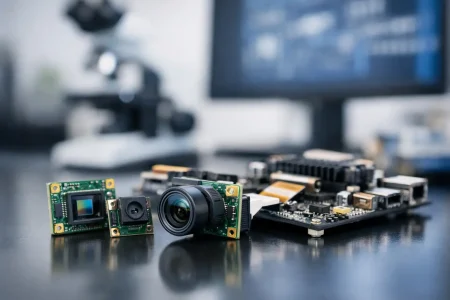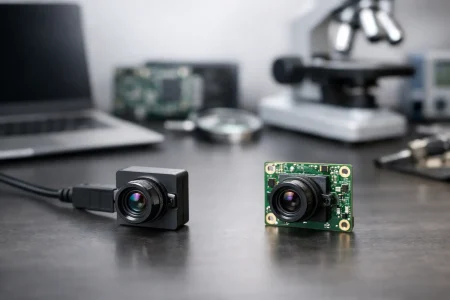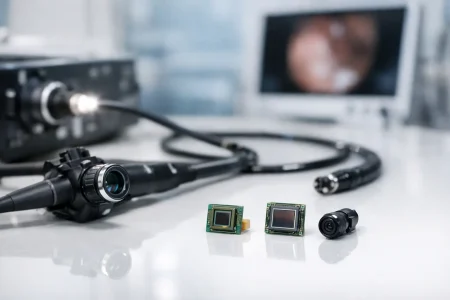

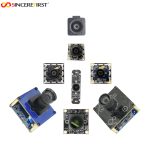
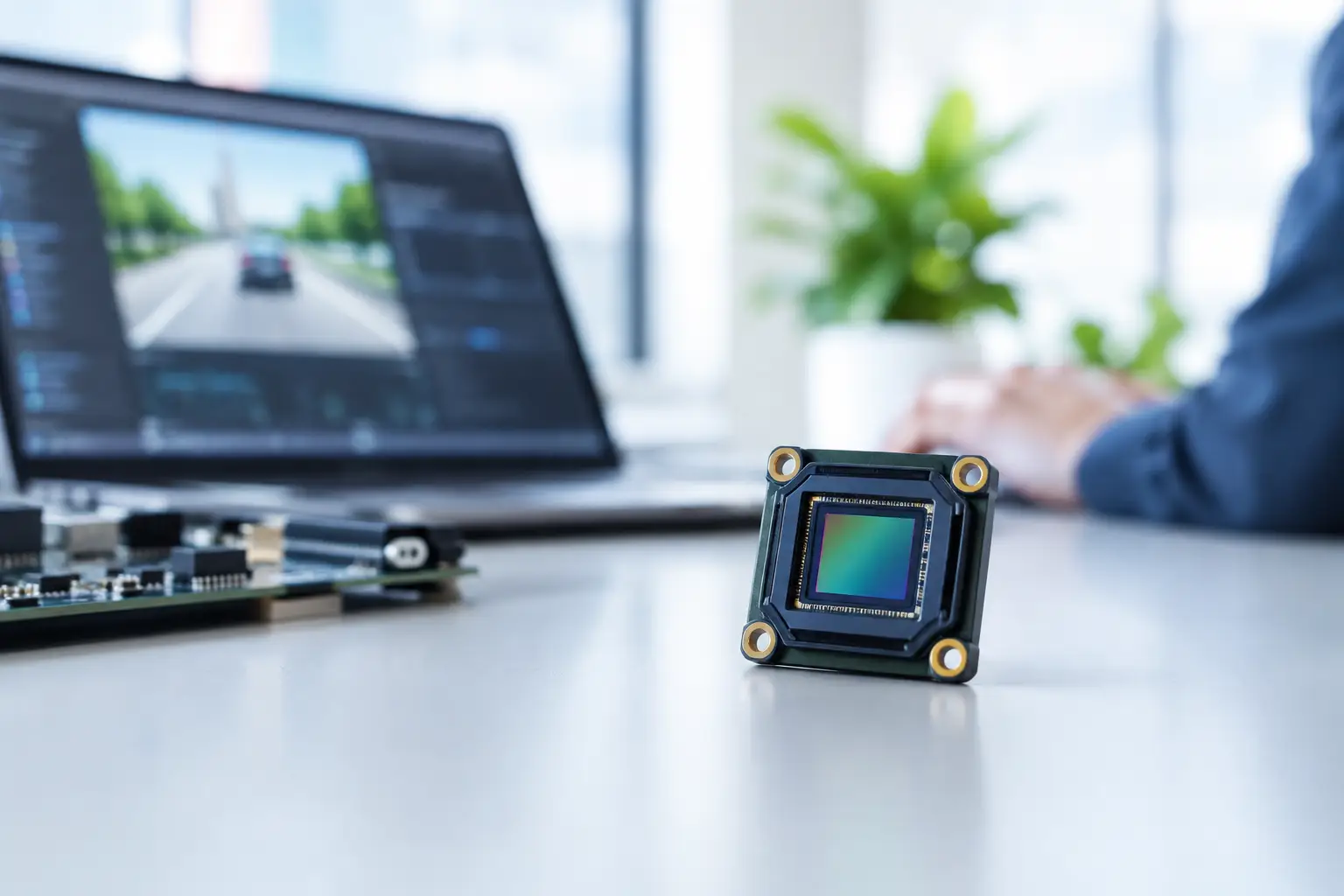
A camera specification can look strong on paper yet create integration problems once it meets real vehicle lighting, factory vibration, thermal limits, and an embedded processor’s bandwidth ceiling. This AR0234 sensor review evaluates the device from that practical perspective: not as an isolated component, but as the imaging core of a production-ready camera module.
The ON Semiconductor AR0234 is a 2.3-megapixel CMOS image sensor widely considered for automotive surround-view, industrial vision, robotics, security, and other embedded imaging systems that need high dynamic range in a compact optical format. Its 1920 x 1200 active resolution is not intended to compete with high-resolution inspection sensors. Its value is speed, usable image quality in difficult light, and a format that can support compact, cost-controlled module designs.
What the AR0234 Sensor Is Built to Do
The AR0234 uses approximately 3.0 µm pixels on a 1/2.6-inch optical format. That combination gives product teams a practical middle ground. The sensor is compact enough for space-limited housings, while its pixel size supports more light collection than many higher-resolution sensors built on similarly small optical formats.
For an embedded system, 1920 x 1200 resolution is often sufficient. It provides enough detail for obstacle detection, machine monitoring, documentation video, barcode pre-processing, and operator-view cameras without imposing the processing load associated with 4K imaging. The 16:10 aspect ratio also gives slightly more vertical field coverage than a standard 16:9 full-HD sensor, which can be useful for viewing work surfaces, vehicle surroundings, or warehouse aisles.
The key design premise is straightforward: the AR0234 prioritizes dynamic range and operational image quality over pixel count. That makes it a sensible candidate when a system must recognize objects across shadowed and brightly illuminated areas, rather than simply capture the maximum possible detail.
AR0234 Sensor Review: HDR Is the Main Advantage
High dynamic range is the reason many engineering teams put the AR0234 on an evaluation list. Depending on operating mode and system configuration, the sensor is associated with HDR performance up to approximately 120 dB. In practical terms, HDR helps retain useful scene information when bright and dark regions appear in the same frame.
Consider a mobile robot moving from a dim warehouse aisle toward an open loading door. A conventional sensor may either preserve the doorway while losing detail inside the warehouse, or expose the interior correctly while clipping the outdoor scene. An HDR-capable AR0234 module can provide a more balanced source image for human monitoring and vision algorithms.
This benefit is equally relevant in vehicle cameras. Sun glare, headlights, reflective road markings, tunnels, and nighttime street lighting are not edge cases. They are normal operating conditions. In industrial equipment, polished metal, welding-area lighting, windows, and variable illumination can create similar exposure challenges.
HDR does have trade-offs. The final result depends on tuning, lens flare control, exposure strategy, image signal processor behavior, and the motion in the scene. HDR cannot correct a poor optical design or recover information blocked by a dirty protective window. Teams should assess HDR with their intended lens, illuminants, cover glass, and processing pipeline rather than approving a sensor from a standard demo scene.
Low-light performance and noise expectations
The AR0234’s pixel size is an advantage for low-light use within its resolution class, but it should not be treated as a dedicated ultra-low-light sensor. Image noise, color behavior, and motion blur will depend on gain settings, exposure time, frame rate, lens aperture, and the downstream ISP.
For stationary industrial monitoring, longer exposure may be acceptable and can produce a clean image in modest illumination. For a fast-moving robot or vehicle, exposure time must be controlled to avoid blur, which raises the need for better optics, purposeful illumination, or a lower-noise processing strategy. A sensor review should therefore separate low-light sensitivity from usable low-light system performance.
Resolution, Frame Rate, and Motion
At 2.3 megapixels, the AR0234 is well positioned for systems that need responsive video with manageable data rates. Its full-HD-plus output supports many embedded processors and transport architectures without requiring the memory bandwidth, storage capacity, and thermal budget of a much larger sensor.
That does not mean it is automatically right for every machine vision task. Fine-pitch electronics inspection, distant license-plate capture, and defect detection across a wide field may demand more pixels or a different sensor format. Resolution should be selected from the required object size, field of view, working distance, and minimum pixels needed by the algorithm, not from a general preference for a higher megapixel number.
Motion behavior must also be evaluated at the desired frame rate. A camera mounted on a forklift, autonomous mobile robot, or outdoor machine sees vibration, rapid contrast changes, and moving subjects. The combination of exposure control, sensor readout, lens quality, and image processing determines whether edges remain useful for detection. Request test captures that reproduce the actual motion profile instead of relying only on static lab charts.
Interface and Processing Integration
The sensor is only one part of the integration decision. A camera module based on the AR0234 must be matched to the host interface, ISP architecture, cable length, connector selection, mechanical envelope, and power budget. MIPI CSI-2 is a common choice for short-reach embedded connections, particularly when connecting directly to an application processor or system-on-chip.
For longer cable runs or distributed camera architectures, a serializer-deserializer design may be more suitable. Automotive and industrial systems often require a link architecture that supports electromagnetic compatibility, stable signaling, and serviceable cable routing. In these projects, the camera module, serializer, connector, shielding, and host board should be engineered as one signal path.
Color processing also requires attention. A raw sensor module may place substantial responsibility on the host ISP for demosaicing, HDR merge handling, noise reduction, white balance, and tone mapping. This gives advanced teams control, but it can extend software validation. A UVC USB camera module with onboard processing can shorten integration for some applications, although it may provide less access to low-level image tuning.
Optical and Mechanical Factors That Decide Image Quality
A good AR0234 module is not defined only by its sensor designation. Lens selection has a direct effect on corner sharpness, distortion, flare, relative illumination, depth of field, and visible performance under HDR conditions. A low-cost lens may erase much of the sensor’s potential, especially in wide-angle applications where bright sources sit near the edge of the frame.
Product teams should specify field of view and working distance before locking the lens. They should also establish whether the camera needs manual focus, fixed focus, infrared sensitivity, an IR-cut filter, or a particular distortion target. For outdoor products, cover-glass reflections, hydrophobic coatings, condensation, and operating temperature deserve early review.
Mechanical reliability matters just as much. The module must maintain optical alignment through vibration and temperature cycling. Connector retention, FPC bend radius, board mounting, heat dissipation, and housing tolerances all affect field reliability. These details are particularly important when moving from a sample module to volume manufacturing.
When the AR0234 Is a Strong Fit
The sensor is a strong fit when the project values HDR, compact size, and efficient 2.3-megapixel imaging more than maximum resolution. Typical applications include surround-view cameras, driver-assistance support cameras, AMR and AGV vision, industrial monitoring, access-control terminals, outdoor security devices, and smart infrastructure equipment.
It is less suitable when the primary requirement is microscopic defect resolution, extremely long-range identification, or high-end computational photography. Those use cases may require more resolution, a larger optical format, global-shutter behavior, specialized near-infrared response, or a different HDR approach. The correct decision depends on the task, not the popularity of a particular sensor family.
Evaluating an AR0234 Camera Module Supplier
A supplier qualification should go beyond requesting a datasheet and sample price. The most productive evaluation asks whether the supplier can control the complete module: sensor sourcing, lens matching, PCB layout, image tuning, interface design, assembly consistency, and validation support.
For custom programs, clarify target resolution and frame rate, lens field of view, output interface, cable requirements, illumination conditions, mechanical constraints, and expected annual volume. Ask for image samples under your actual challenging scenes, including backlight, low light, vibration, and reflections. Also confirm how design changes will be managed after pilot approval, because component availability and product revisions can affect long-life programs.
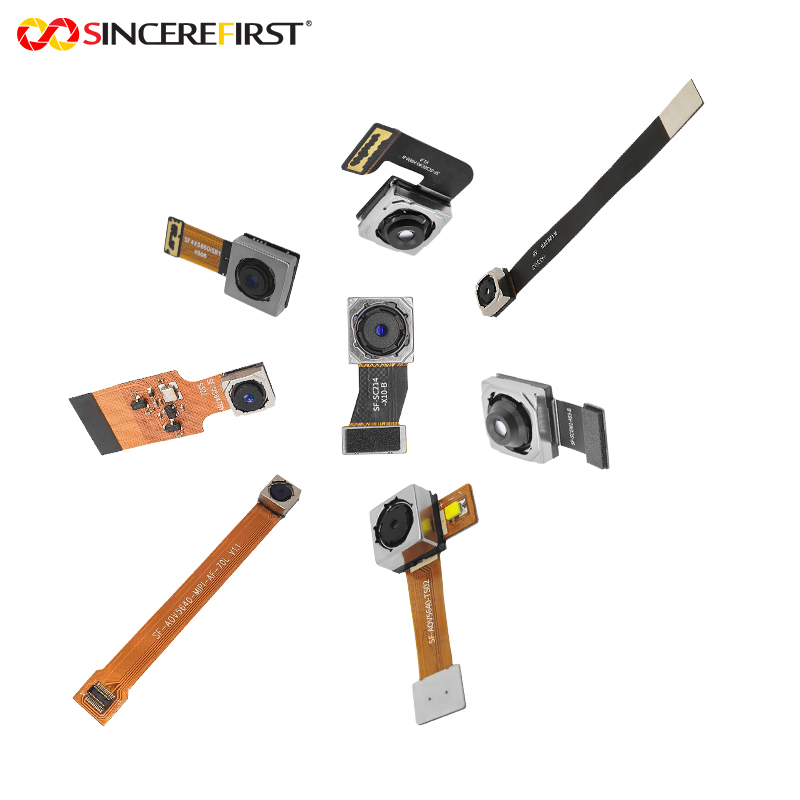
SincereFirst supports this process with standard and customized embedded camera modules, combining optical selection, interface adaptation, and scalable manufacturing for industrial and intelligent-device applications. A fast sample is useful, but a controlled path from prototype to repeatable volume production is what protects a product launch.
The AR0234 earns its place when the camera is engineered around the real scene it must see. Start with the visual decision your product must make, validate it under the hardest lighting conditions, and select the module partner that can carry those requirements into consistent production.