
A camera module can look correct on a development bench and still fail weeks later in a production device. When teams ask how long camera qualification will take, the useful answer is not a single number. Qualification time depends on how clearly the optical, electrical, mechanical, reliability, and manufacturing requirements are defined before samples arrive.
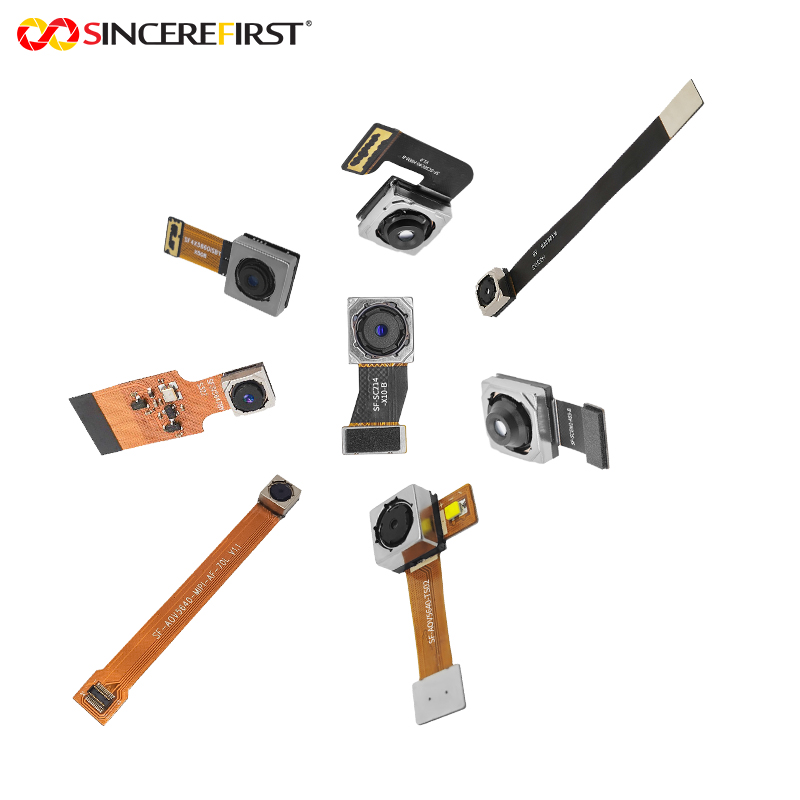
For a proven camera module used in a familiar design, qualification may take four to eight weeks. For a customized MIPI, USB, FPC, medical, endoscope, or machine vision camera module, a realistic production-ready program often requires 12 to 24 weeks. Projects can move faster, but only when the customer, module supplier, sensor vendor, lens source, and system engineering team are working from stable specifications.
What Camera Qualification Actually Covers
Camera qualification is the structured process of proving that a module will perform consistently in the final product and can be manufactured at the required volume. It is broader than checking whether the image appears sharp under office lighting.
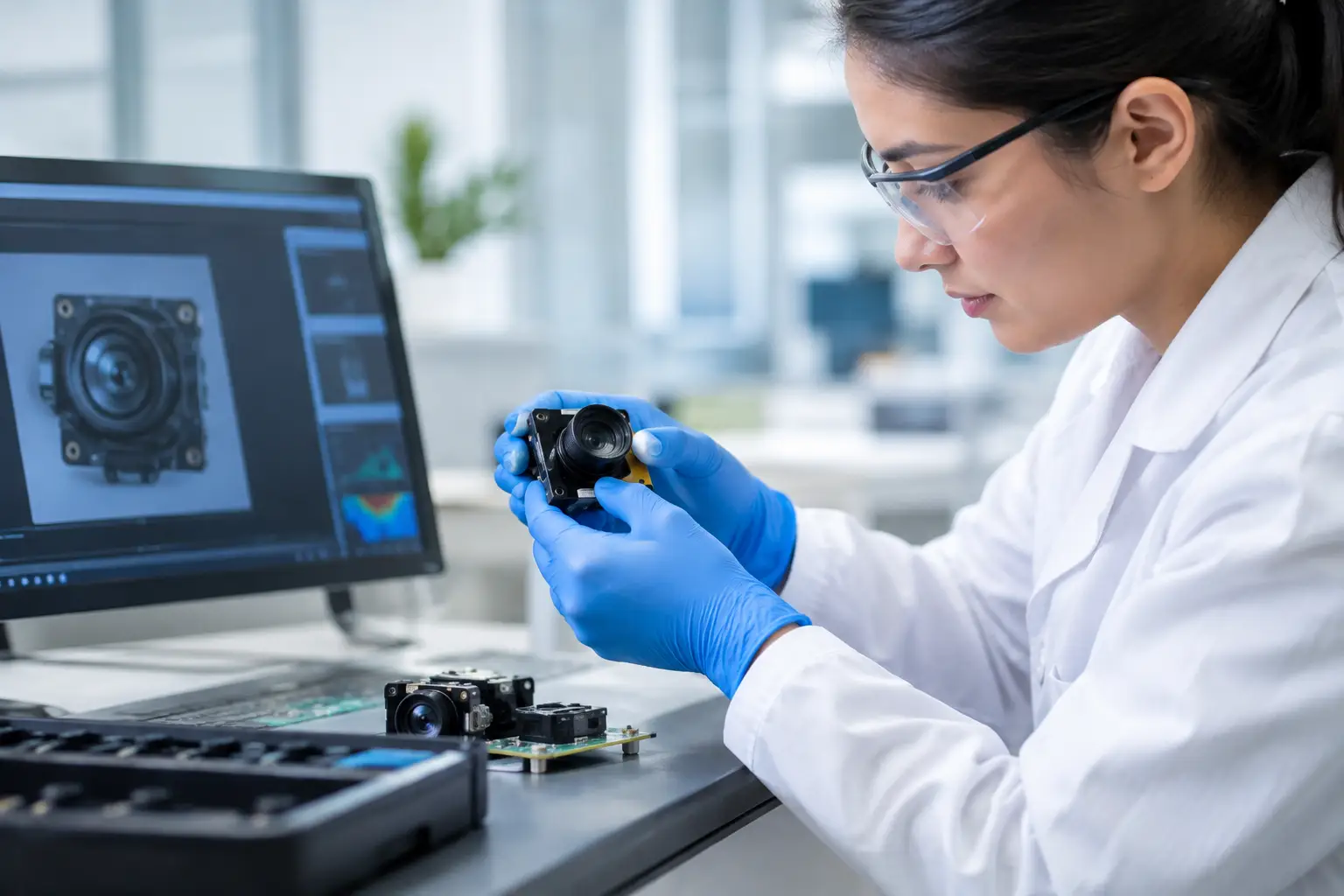
An OEM normally evaluates electrical integration, including interface compatibility, power sequencing, frame rate, driver support, and electromagnetic behavior. The team also validates image performance: resolution, field of view, focus range, distortion, color response, exposure stability, low-light behavior, dynamic range, and image artifacts.
Mechanical and environmental performance matter just as much. A compact module may need to withstand vibration, drop events, temperature cycling, humidity, dust, cleaning chemicals, or repeated cable flexing. In medical and industrial equipment, the camera may also face sterilization constraints, illumination heat, narrow insertion paths, or long operating hours.
Finally, qualification must confirm supply readiness. This includes component traceability, critical-dimension control, incoming inspection standards, image calibration methods, yield targets, packing, change-control procedures, and pilot-build consistency. A technically capable sample is not yet a qualified production part.
How Long Does Camera Qualification Take by Project Type?
The schedule below reflects common OEM programs. Actual timing changes with application risk, customization depth, and the maturity of the host device.
| Qualification scope | Typical duration | What drives the timeline | |—|—:|—| | Catalog USB or UVC module in a standard enclosure | 2-6 weeks | Host compatibility, image tuning, basic reliability checks | | Existing MIPI or FPC module adapted to a new device | 4-10 weeks | Mechanical fit, ISP tuning, firmware, cable routing, pilot verification | | Customized camera module with a new lens, flex cable, or housing | 10-18 weeks | Optical design, tooling, sample iterations, environmental validation | | Medical, endoscope, automotive-adjacent, or high-reliability system | 16-30+ weeks | Application-specific testing, documentation, traceability, regulatory requirements |
A short timeline is possible when the selected sensor, lens, interface, and module architecture have already been validated in a comparable product. A new optical stack or a tightly constrained mechanical design adds uncertainty, especially when focus distance, field of view, illumination, and image-processing requirements conflict.
A Practical Qualification Timeline
Requirements alignment: one to two weeks
The first stage is often underestimated. The customer should define the use case before selecting a sensor or resolution. A 13 MP sensor is not automatically better than a 2 MP sensor if the lens, working distance, illumination, bandwidth, and processing platform cannot support the intended result.
A strong requirements review establishes the interface, module dimensions, connector orientation, cable length, target frame rate, operating distance, field of view, illumination conditions, operating temperature, storage requirements, and expected annual volume. It should also identify pass-fail metrics for image quality. Terms such as “clear image” or “good low-light performance” need measurable acceptance criteria.
Sample selection and integration: two to four weeks
Once requirements are stable, the supplier can recommend a standard module or prepare an engineering sample. Standard USB camera modules may be integrated quickly, while MIPI and DVP designs typically require closer review of pin assignment, voltage rails, clocking, CSI lane configuration, driver support, and ISP settings.
This stage commonly exposes host-side issues that are not caused by the camera module: insufficient power stability, incorrect reset timing, limited memory bandwidth, poor shielding, or software handling that drops frames. Engineering teams should test with the final display, processor, cable, and illumination arrangement whenever possible. Evaluating a module in a simplified lab setup can create false confidence.
Image tuning and functional validation: two to six weeks
Image tuning takes time because the final image comes from the full system, not the sensor alone. Lens selection affects distortion, corner sharpness, flare, and depth of field. Illumination affects exposure, color rendering, motion blur, and noise. The image signal processor determines how the camera handles white balance, denoising, sharpening, high dynamic range, and auto exposure.
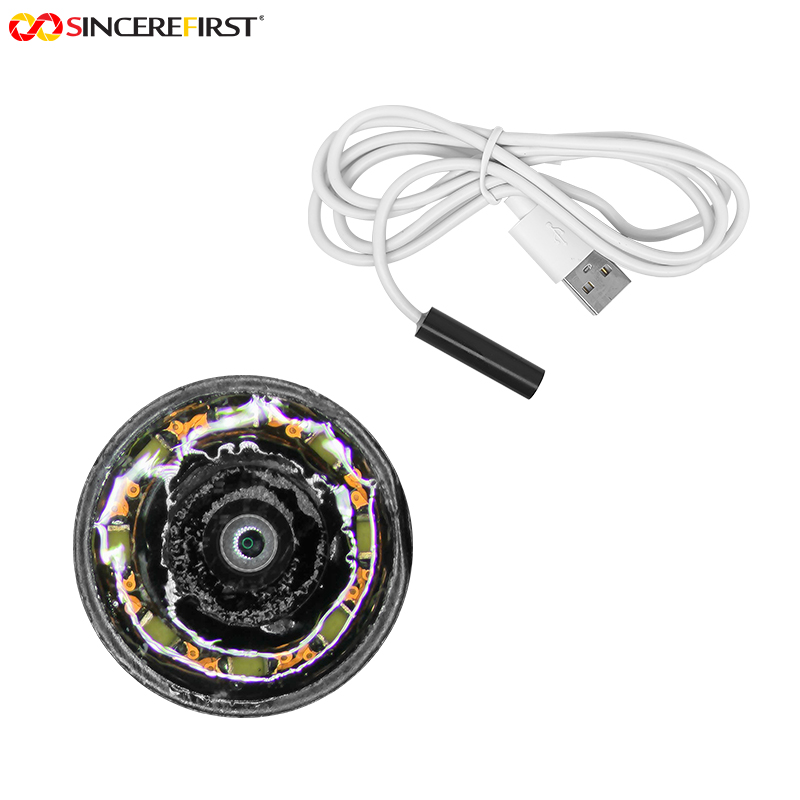
For robotics and industrial automation, testing should include actual object materials, movement speed, reflective surfaces, and working distances. For security applications, evaluate day-to-night transitions and difficult backlit scenes. For endoscope camera modules, assess image quality in the intended cavity, with the planned LED arrangement and cable length.
Reliability and compliance testing: three to eight weeks
Reliability testing can run in parallel with image validation after the design is sufficiently stable. Common tests include high- and low-temperature operation, temperature cycling, humidity exposure, vibration, shock, ESD, connector retention, cable bend testing, and continuous operation.
The exact test plan should match the device environment. A warehouse robot, portable diagnostic device, smart agriculture camera, and indoor conferencing product do not need the same qualification matrix. Over-testing raises cost and delays launch. Under-testing transfers risk into field failures, returns, and expensive production corrections.
Medical device programs may need additional biocompatibility considerations for exposed materials, documentation control, cleaning or sterilization validation, and system-level regulatory evidence. Camera module qualification is only one part of that broader process.
Pilot build and production release: two to four weeks
A pilot build verifies that the module can be assembled and tested repeatedly, not just produced as a small number of hand-tuned samples. This is where an OEM checks assembly yield, image-test consistency, cosmetic standards, packaging, lot traceability, and incoming quality procedures.
Pilot production also provides the best opportunity to lock the approved bill of materials. If sensor, lens, voice coil motor, connector, FPC, or LED availability is uncertain, the team should qualify alternates early. A last-minute component substitution can restart image verification and reliability work.
The Factors That Extend the Schedule
The largest delays usually come from late changes, not from the test itself. A housing revision that moves the lens by fractions of a millimeter can change focus performance. A longer flex cable may introduce signal-integrity problems. A different cover glass can create reflections or reduce transmission. New illumination can reveal banding, flicker, or color issues.
Supplier readiness also matters. A camera partner should be able to provide clear module drawings, interface definitions, optical data, sample lead times, inspection standards, reliability capability, and change-control processes. When information is incomplete, the customer spends valuable weeks resolving basic questions that should have been addressed before design freeze.
Volume expectations affect qualification as well. A program that needs thousands of units per month requires confidence in production capacity, process control, test coverage, and supply continuity. The standard for approving a prototype supplier is different from qualifying a long-term manufacturing partner.
How OEM Teams Can Reduce Camera Qualification Time
The fastest route is not skipping validation. It is removing avoidable uncertainty before the first sample order. Start with a measurable requirements document and use real operating conditions in the evaluation plan. Confirm the host processor, interface, connector, enclosure stack-up, and illumination strategy before customizing the module.
Keep one owner responsible for the acceptance criteria across R&D, quality, procurement, and manufacturing. Without that ownership, engineering may approve image performance while quality rejects the same part for documentation gaps or procurement discovers that the approved configuration cannot meet the target lead time.
It also helps to separate design questions from production questions. First prove that the selected sensor, lens, and interface can deliver the required image. Then prove that the approved design can be built repeatedly at volume. Combining those decisions too late creates compressed schedules and unnecessary risk.
SincereFirst supports this process with standard and customized camera modules, engineering evaluation, optical integration, and scalable manufacturing controls. For OEM buyers, the objective is not merely a fast sample. It is a camera solution that remains stable from prototype to mass production.
The right qualification schedule is the one that gives your team enough evidence to release with confidence. If the application has demanding optics, harsh environments, or a long production life, a few additional weeks of disciplined validation are usually far less costly than correcting a camera problem after launch.