
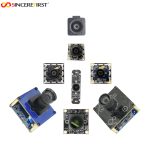
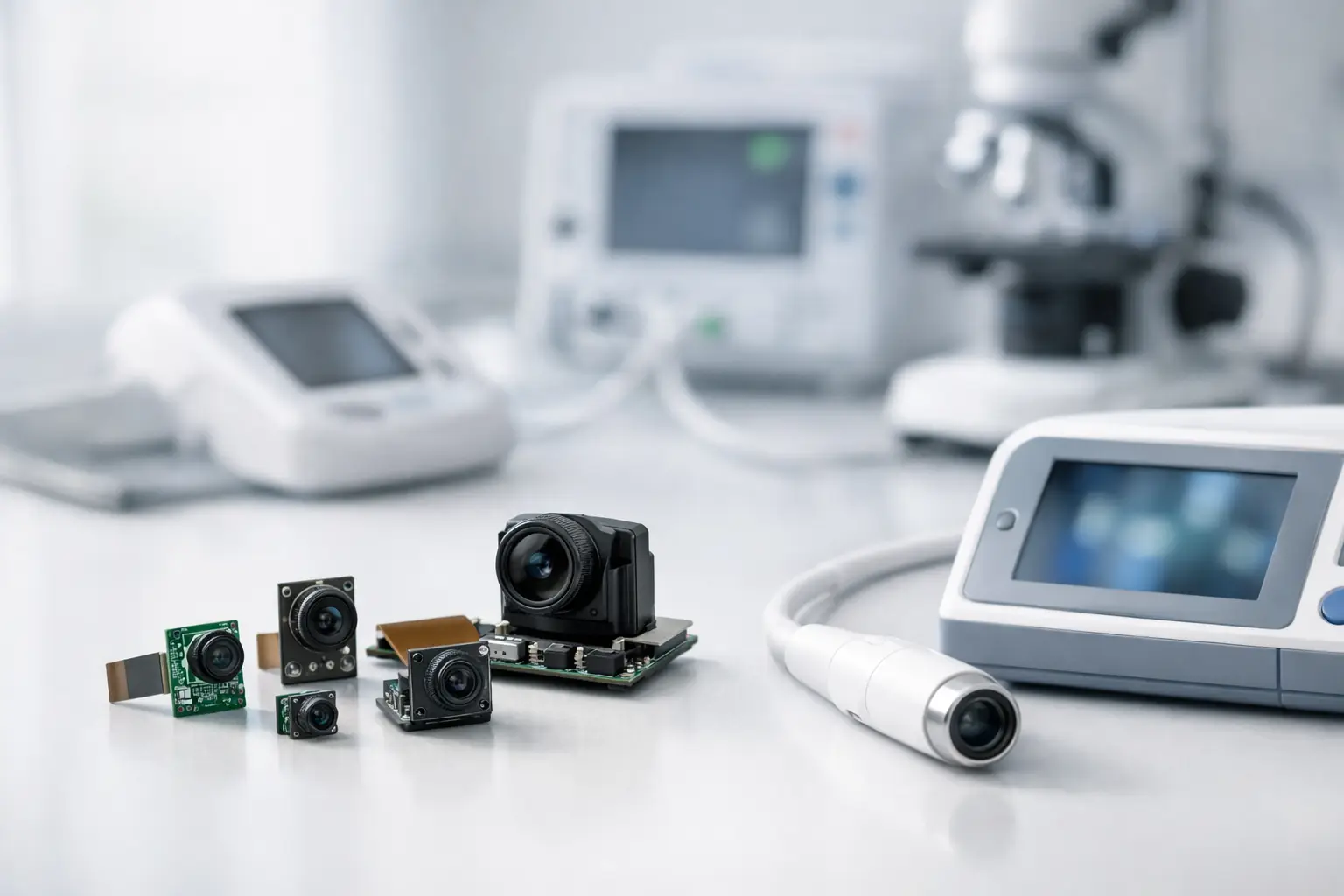
A camera module that performs well in a consumer device can fail a healthcare program before clinical evaluation even begins. The best camera modules for healthcare devices must fit a defined imaging task, survive the intended operating environment, integrate cleanly with the host electronics, and remain manufacturable at volume. Resolution matters, but it is rarely the first specification that should drive selection.
For OEMs, product managers, and engineering teams, the right choice starts with the image that must be captured: a broad facial frame for telehealth, fine skin texture for dermatology, tissue detail inside a narrow endoscope, or high-contrast markings on a diagnostic cartridge. That requirement determines the sensor, lens, illumination, mechanical design, and data interface. Treating the module as a commodity part usually creates longer validation cycles and costly redesigns.
What Makes a Camera Module Suitable for Healthcare?
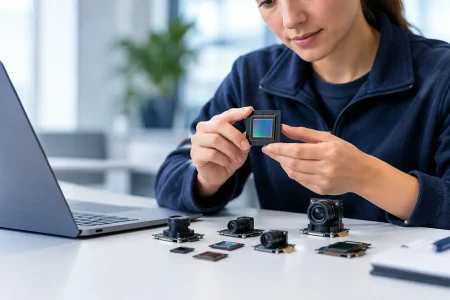
Healthcare is not one imaging application. A bedside monitoring camera, handheld examination device, dental imaging system, and single-use endoscope have sharply different optical and mechanical requirements. The best module is therefore not the one with the largest pixel count. It is the one that provides usable, repeatable images under the lighting, distance, motion, and cleaning conditions of the finished device.
A practical specification begins with field of view and working distance. If a device needs to inspect a 10 mm target from 20 mm away, a wide-angle lens intended for room monitoring will introduce distortion and waste sensor pixels. If an operator must view anatomy through a long, narrow insertion tube, lens diameter, depth of field, illumination placement, and cable flexibility become central design constraints.
Color performance is equally application-specific. Accurate color reproduction may matter for wound assessment, skin analysis, and mucosal imaging, while monochrome sensitivity can be the better choice for fluorescence-adjacent, low-light, or machine-analysis tasks. Automatic exposure and white balance are useful in general imaging, but their behavior should be controlled and validated when image consistency affects clinical workflow or software interpretation.
Best Camera Modules for Healthcare Devices: Match the Architecture
MIPI CSI-2 modules for compact embedded products
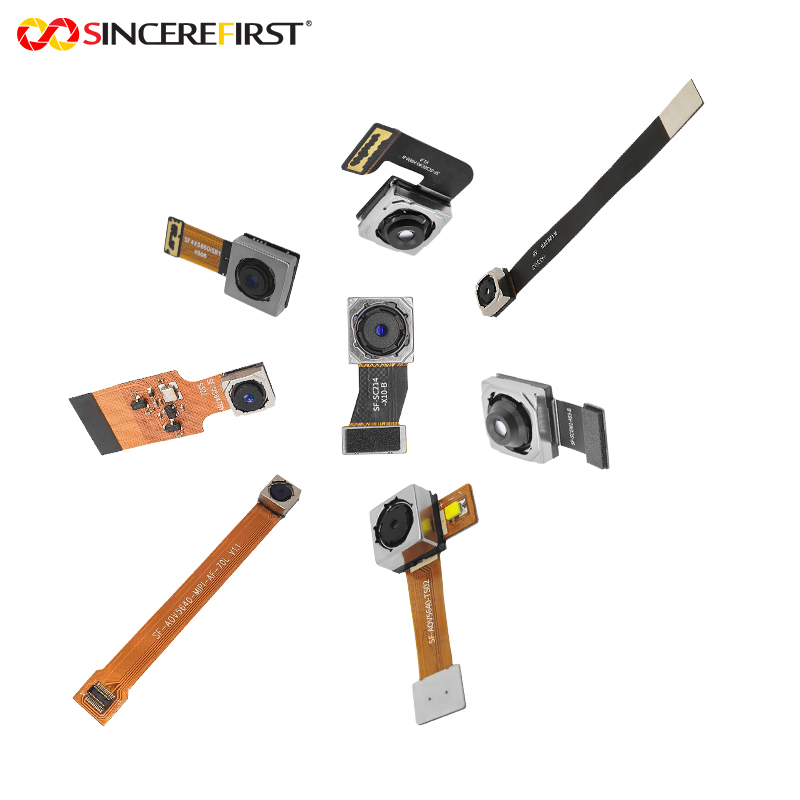
MIPI camera modules are often the strongest fit for compact healthcare devices built around mobile-class processors, embedded Linux platforms, or custom system-on-chip designs. They offer high throughput with low power consumption and can support high-resolution sensors in a small footprint. This makes them appropriate for portable diagnostic equipment, smart examination tools, and compact medical displays.
The trade-off is integration effort. MIPI signal routing is sensitive, processor support varies, and software teams need compatible drivers, image signal processor tuning, and board-level validation. A module may be electrically compatible with a host processor yet still require work to achieve stable frame rates, correct color processing, and predictable startup behavior.
USB and UVC modules for rapid system integration
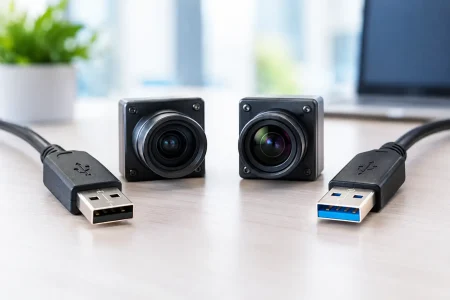
USB camera modules are practical when a healthcare device connects to a PC, tablet, kiosk, or embedded computer that already supports standard USB video. UVC compatibility can reduce driver development and speed early prototypes. USB 2.0 is often sufficient for moderate-resolution video or still capture, while USB 3.0 provides more headroom for higher resolutions, faster frame rates, and less-compressed image streams.
USB is not always the best mechanical answer. Cable routing, connector retention, power budget, and electromagnetic compatibility must be considered in portable equipment. For a camera located at the end of a thin probe, USB may be unsuitable at the camera head even if it is convenient at the system level. In those designs, the image sensor and optics may require a specialized transmission architecture before the data reaches the main controller.
DVP modules for established embedded platforms
DVP camera modules remain relevant for lower-cost platforms and legacy embedded processors. Their parallel interface can simplify certain designs and support applications where image resolution and frame rate requirements are modest. They are common candidates for basic inspection, patient presence detection, and compact devices using mature controller architectures.
However, DVP consumes more pins than serial alternatives and becomes less attractive as throughput increases. Engineering teams should assess the full host roadmap, not only the first production version. A design that is adequate at VGA or 720p may have limited upgrade capacity if future versions require greater image detail.
Endoscope modules for minimally invasive imaging
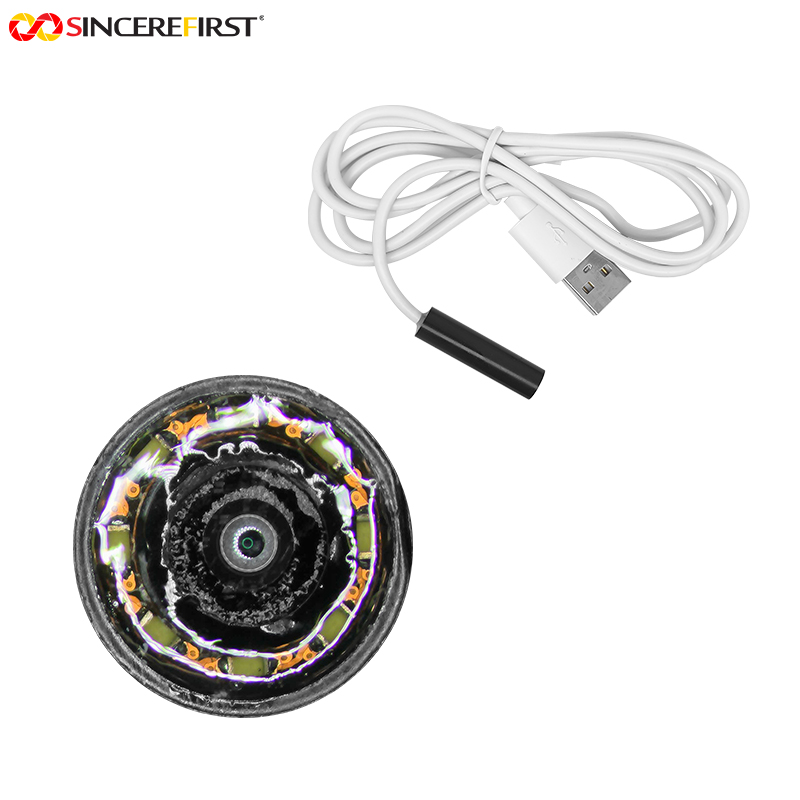
Endoscope camera modules demand the most specialized trade-offs. Diameter, sensor size, lens stack, LED integration, heat generation, cable construction, and viewing direction must be engineered as one system. A tiny module can support narrow access paths, but smaller optical formats usually place limits on low-light performance and resolution.
For reusable devices, teams must define how the imaging head will tolerate cleaning, disinfection, or sterilization processes. For single-use devices, cost, assembly yield, and supply stability often become more influential. Front-view, side-view, integrated, and separated camera configurations each solve different access and visualization problems. The correct choice depends on the clinical pathway and the mechanical envelope, not on a generic module ranking.
Prioritize Sensor and Optics Together
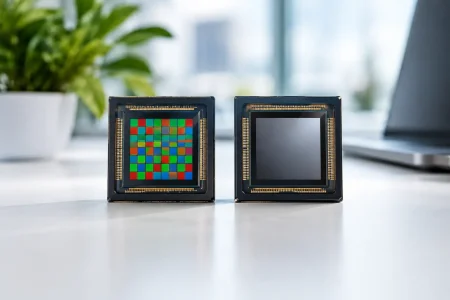
Sensor selection should start with pixel size, sensitivity, dynamic range, shutter type, and output format. High resolution is valuable when users need to magnify detail or when image analysis requires fine features. But a high-resolution sensor paired with a poor lens, inadequate illumination, or excessive motion blur will not create a useful image.
Rolling-shutter sensors are widely used and cost-effective for many healthcare devices. They can be appropriate for static examination scenes, telehealth, and controlled capture environments. Global-shutter sensors are preferable when the device, patient, or target moves quickly, or when pulsed LED lighting is used. They reduce geometric distortion caused by line-by-line exposure, though they may involve different cost and sensitivity trade-offs.
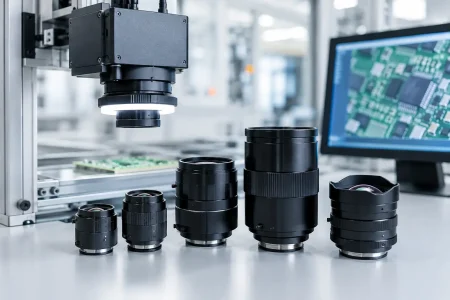
Lens selection must address more than focal length. Distortion, relative illumination, focus tolerance, chromatic aberration, and temperature stability influence image consistency. Fixed-focus optics can provide a simpler, more stable solution when working distance is controlled. Autofocus adds flexibility for handheld use but increases power, software, test, and reliability requirements. In a tightly defined examination geometry, fixed focus often delivers the more repeatable production result.
Design Illumination and Mechanics as Part of the Imaging System
Poor lighting is one of the most common reasons an otherwise capable camera fails in field use. LEDs must provide sufficient brightness without glare, uneven color, hot spots, or excess heat at the patient-contact end of the device. Ring lighting can improve close-range uniformity, while angled or side illumination can reveal surface texture. The right pattern depends on whether the product needs visual appearance, depth cues, or defect contrast.
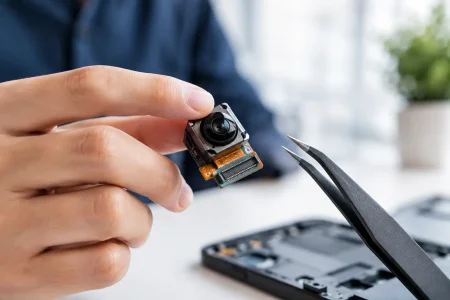
Mechanical integration also determines long-term image quality. Lens alignment, sensor positioning, adhesive selection, strain relief, connector retention, and FPC bending radius all affect reliability. Compact modules are especially sensitive to assembly tolerance. A small shift in lens-to-sensor spacing can move focus outside the intended working range.
Healthcare products may also face repeated vibration, drops, temperature cycles, fluid exposure, and chemical contact. The module enclosure, protective window, sealing strategy, and cable assembly should be evaluated against the actual use case. A module designed only for clean indoor electronics may not withstand repeated reprocessing or transport conditions.
Build Quality and Traceability into Supplier Qualification
For commercial healthcare programs, sample image quality is only the first gate. Procurement and engineering teams should assess whether the supplier can hold optical alignment, manage component changes, control incoming materials, and provide consistent inspection across pilot and volume production. A prototype that looks excellent from a hand-built sample is not enough.
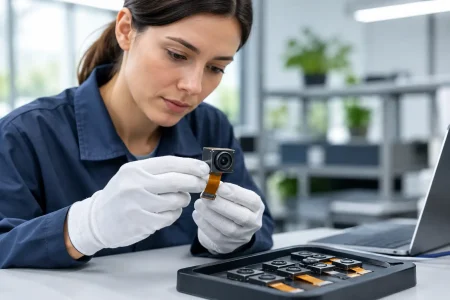
Ask how image testing is performed and whether the process checks focus, dead pixels, shading, color behavior, frame stability, and cosmetic defects. Confirm the approach to lot traceability, change notification, packaging, and failure analysis. For custom modules, clarify ownership of mechanical drawings, tuning parameters, firmware dependencies, and golden-sample acceptance criteria before tooling begins.
Cleanroom assembly capability is particularly relevant for modules with exposed sensors, precision lens assemblies, or small endoscope optics. Particle contamination can create visible defects that are difficult to correct after assembly. Production controls should match the sensitivity of the imaging path, not simply the price tier of the camera.
A Faster Path from Requirements to Production
The most efficient development process is to share the imaging requirement early, before the industrial design locks the available space. Provide target dimensions, working distance, field of view, illumination conditions, interface preference, frame rate, operating temperature, and expected annual volume. If cleaning or sterilization is involved, define the process and cycle count at the start.
A capable manufacturer can then recommend a standard module where it genuinely fits or develop a tailored optical, mechanical, and electrical configuration where the application demands it. SincereFirst supports this approach with embedded camera modules, medical imaging solutions, and custom development capabilities built for prototype speed and scalable production.
The right camera module should make the next engineering decision easier, not create a chain of compensating fixes in software, mechanics, and manufacturing. Select for the image your device must reliably produce, then qualify the supplier that can keep producing it the same way.