
A camera module can fit inside a few millimeters of product space, yet its performance can determine whether a device succeeds in the field. OEM camera manufacturing is therefore not simply a sourcing decision. It is the process of turning image requirements, mechanical limits, electrical interfaces, and production targets into a module that can be built repeatedly without destabilizing the final product.
For product managers, R&D teams, and procurement leaders, the critical question is not only, “Can this supplier make a camera?” It is whether the supplier can control the engineering and manufacturing variables that affect image consistency, integration speed, yield, and long-term supply.
What OEM Camera Manufacturing Actually Covers
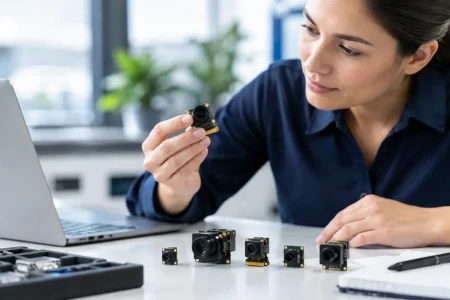
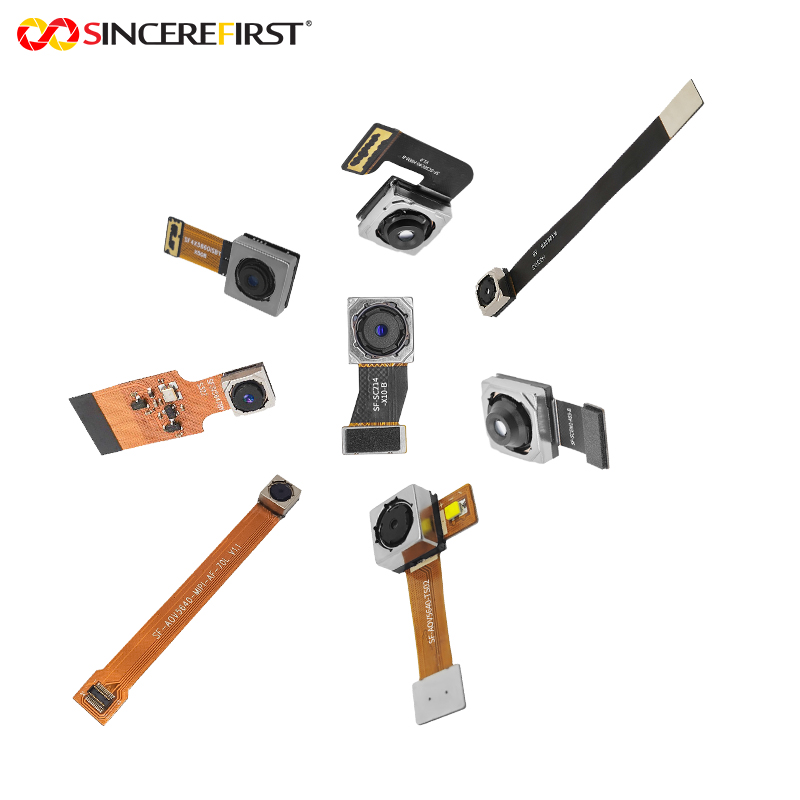
OEM camera manufacturing can range from supplying a proven catalog module under a customer’s product program to developing a fully customized imaging assembly. The right scope depends on the product. A standard USB camera module may be appropriate for a workstation terminal or evaluation system, while a medical device, compact robot, endoscope, or agricultural sensor may require a custom optical stack, FPC shape, cable length, connector, firmware setting, and housing arrangement.
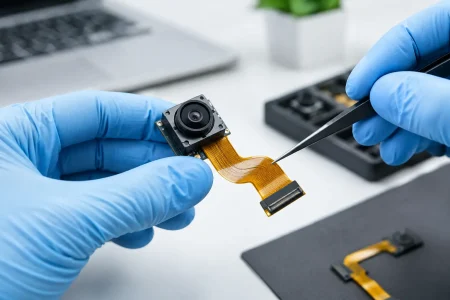
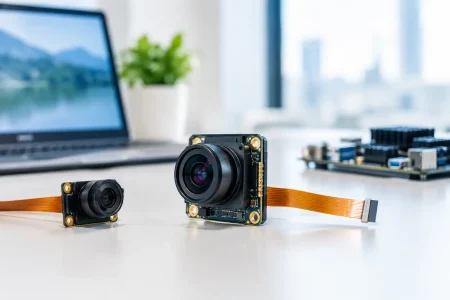
The camera module itself is an integrated system. It typically includes an image sensor, lens, lens holder, printed circuit board or flexible printed circuit, electronic components, connector, and sometimes LEDs, shielding, or a housing. Each element influences the others. Selecting a higher-resolution sensor, for example, may require a lens with greater resolving power, more processing bandwidth, different MIPI lane requirements, and tighter focus control.
That is why capable OEM production begins before the assembly line. It starts with a clear requirements review: application distance, field of view, illumination, target frame rate, output format, host processor, operating environment, dimensions, power limits, and compliance needs. A module that looks correct on a bench can still fail in the finished device if these conditions are not defined early.
Start With the Application, Not the Resolution
Resolution is easy to compare on a specification sheet, but it is rarely the best starting point. A 4K module does not automatically produce a better result than a 2MP module. If the lens cannot resolve the sensor’s detail, if lighting is poor, or if the system transmits compressed images over a constrained connection, extra pixels may add cost without improving the decision the device needs to make.
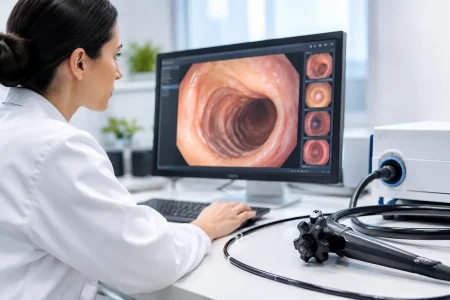
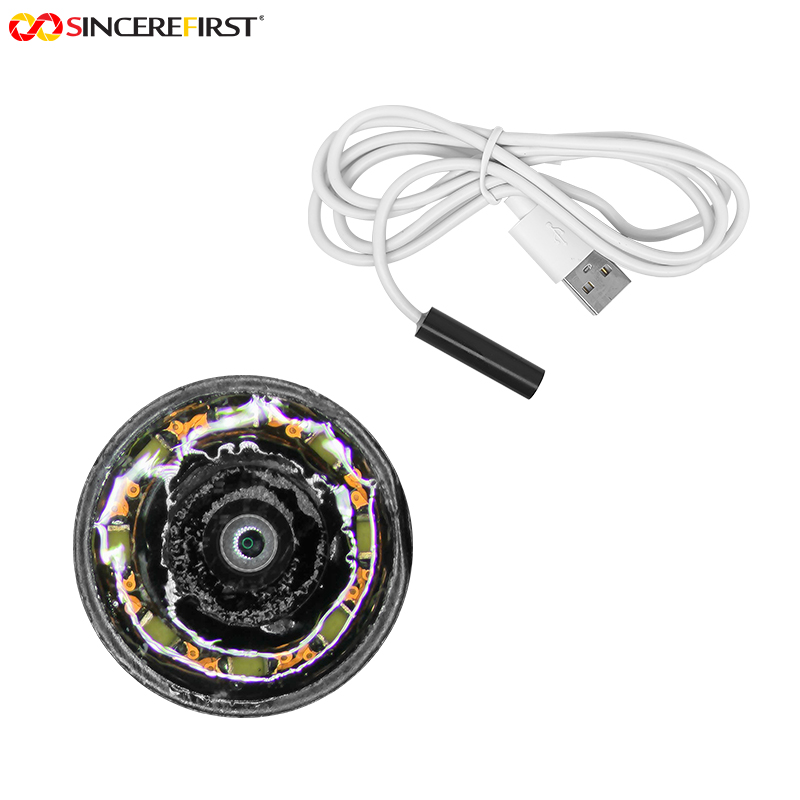
For industrial inspection, the key requirement may be motion performance, low distortion, global shutter behavior, or reliable color reproduction under controlled illumination. For a security device, low-light sensitivity, wide dynamic range, and stable streaming may matter more. For an endoscope module, diameter, depth of field, LED placement, heat, and flexible cable routing can be more limiting than sensor resolution.
A practical OEM specification should define what the image must accomplish. Is the module reading a barcode, detecting a defect, enabling remote diagnosis, documenting an event, or guiding a robotic action? That use case directs the sensor, lens, interface, and calibration choices. It also prevents expensive redesigns caused by an attractive but unsuitable initial specification.
Interface Choices Affect Integration Risk
The interface must match the host system and intended deployment. MIPI camera modules are compact and widely used in embedded Linux, Android, robotics, and smart-device designs, but they demand close coordination with the processor, driver, lane configuration, and board layout. DVP modules remain useful in selected legacy or lower-bandwidth embedded designs. USB2.0 and USB3.0 camera modules simplify connection and are often preferred for PCs, industrial terminals, and rapid integration. UVC modules can reduce software effort when standard video-class compatibility is required.
There is no universally superior interface. USB can accelerate early deployment, but MIPI may be the better choice when device space, power, and direct processor integration are priorities. The manufacturer should evaluate the complete signal path rather than supplying a module in isolation.
Engineering Decisions That Determine Production Quality
A sample image is only one checkpoint. Production quality depends on whether the design can hold its optical and electrical performance through high-volume assembly. This is where experienced OEM camera manufacturing separates a promising prototype from a dependable commercial component.
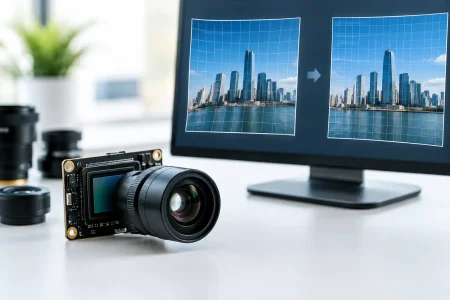
Lens selection and active alignment are central. Field of view, distortion, relative illumination, focus range, and module height need to be evaluated together. In close-focus applications, a small shift in lens position can visibly change image sharpness. In wide-angle designs, edge performance and distortion may be acceptable or unacceptable depending on the software correction available in the host system.
Sensor sourcing also requires a long view. Engineering teams should confirm sensor lifecycle, package availability, alternative supply options where practical, and firmware implications before committing to a production design. A low initial module price can become costly if the sensor reaches end of life shortly after the device launch.
The mechanical design deserves the same attention. FPC camera modules may need customized bend zones, reinforcement, connector orientation, and thickness control. A module installed behind cover glass requires consideration of reflection, dust, adhesive, tolerance stack-up, and focus position. In medical and industrial equipment, cleaning agents, vibration, temperature, and electromagnetic conditions can change the material and assembly requirements.
Validation Must Reflect the Final Device
A camera module should be verified in its intended operating condition, not only under ideal factory lighting. Effective validation commonly covers image quality, electrical function, interface stability, focus, color behavior, temperature performance, and mechanical reliability. The exact test plan should match the application and risk level.
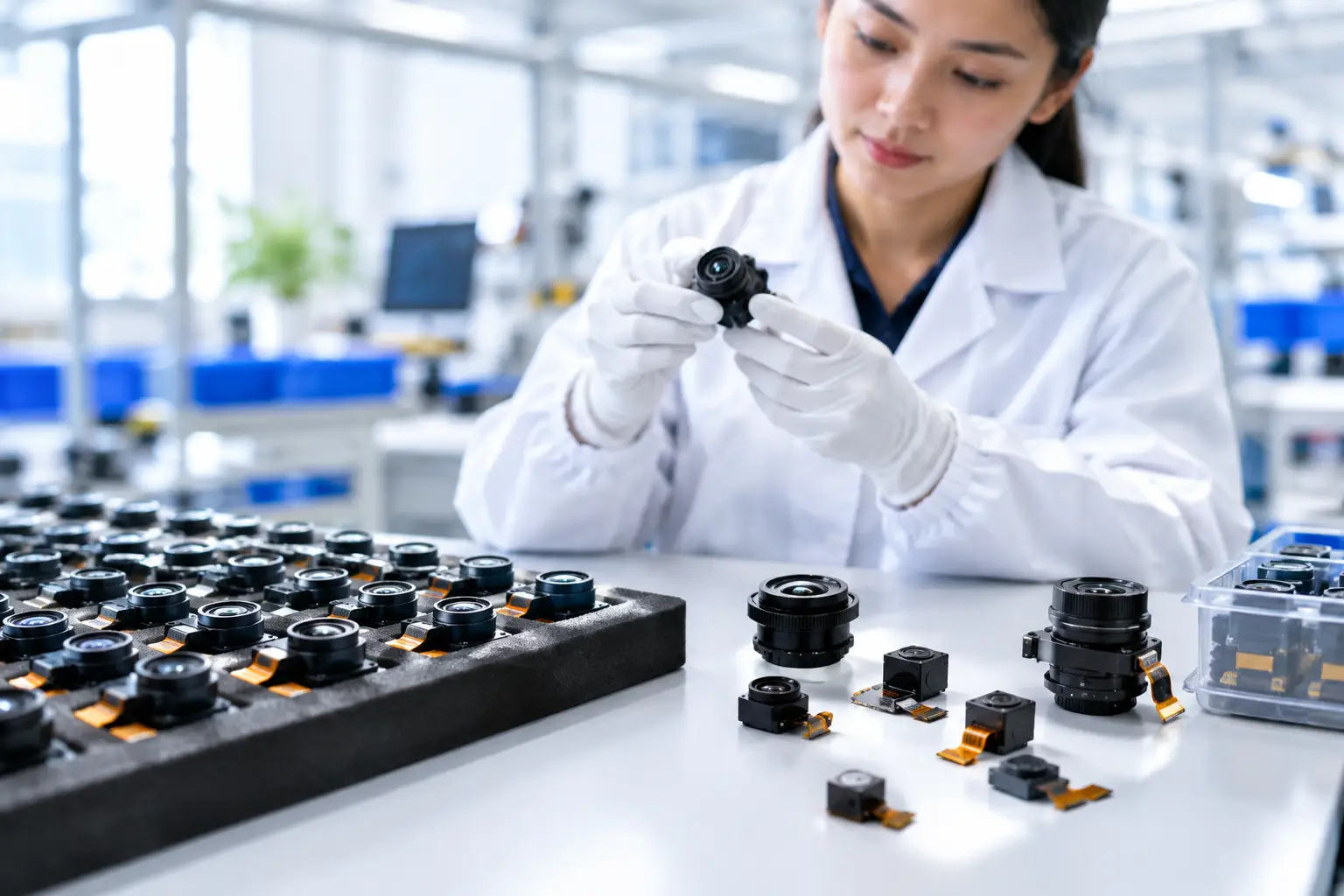
For a high-volume project, buyers should ask how the manufacturer manages the transition from engineering samples to mass production. The most useful questions concern process control: How are key components qualified? What inspection points are built into assembly? How is lens focus verified? How are failures traced by lot? What happens when a component substitution becomes necessary?
Four production controls are particularly valuable when camera performance must remain consistent:
- Incoming inspection for sensors, lenses, PCBs, connectors, and other critical materials.
- Defined assembly parameters for soldering, lens installation, curing, and active alignment.
- Image and functional testing with documented pass criteria.
- Traceability that connects finished modules to material lots and production records.
Not every project requires the same test depth. A consumer accessory and a medical imaging subsystem carry different quality and documentation expectations. The point is to align control methods with the real consequences of image failure, rather than treating all modules as commodity parts.
Customization Should Reduce Risk, Not Add Complexity
Custom development is valuable when it solves a real integration problem. Common requests include a different lens field of view, a specific sensor, custom FPC length, USB or MIPI output, board shape, connector location, fixed-focus tuning, LED illumination, and compact housings. For specialized systems, customization can also include image parameter tuning, low-light optimization, or a dedicated endoscope configuration.
However, every custom feature introduces a validation obligation. A custom lens holder might improve packaging but require new tooling and optical qualification. A nonstandard connector may simplify the customer’s assembly while increasing procurement dependence. A highly compact module may create thermal or serviceability limits. Good engineering makes these trade-offs visible before the design is frozen.
The most efficient path is often a controlled modification of a proven platform. Reusing a validated sensor board architecture, interface design, or optical concept can shorten development time while preserving room for the features that genuinely differentiate the device. Fast samples are useful only when the sample path is connected to a manufacturable production plan.
Choosing an OEM Camera Manufacturing Partner
Supplier qualification should combine technical and commercial review. A manufacturer needs the ability to communicate with R&D engineers at the level of sensor timing, optics, interfaces, and mechanical tolerances, while also giving procurement teams confidence in capacity, quality systems, lead times, and change management.
Look for evidence of both customization capability and scale. Cleanroom-controlled assembly, optical testing, production traceability, experienced engineering support, and stable component management are practical indicators. So is the ability to provide different module families, from FPC, MIPI, DVP, USB, and UVC camera modules to specialized medical and endoscope assemblies. Broad capability matters because a product roadmap may outgrow the first module selection.
SincereFirst brings more than 30 years of imaging R&D experience to this work, combining standard camera module supply with custom development and high-volume manufacturing support. For buyers, the value is not merely access to more options. It is the ability to move from requirement review and rapid sampling to a controlled production program with fewer handoffs.
Price still matters, but unit cost should be evaluated alongside yield, engineering response time, documentation quality, supply continuity, and the cost of field failures. The lowest quoted module is not always the lowest-cost manufacturing decision.
A productive OEM program begins with a detailed application brief and an honest review of constraints. When the camera manufacturer understands the image target, host platform, environment, mechanical envelope, and forecast, it can recommend a module design that supports the device well beyond its first production run.