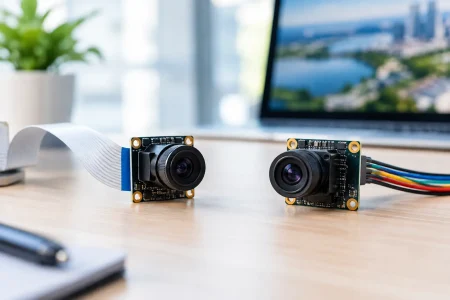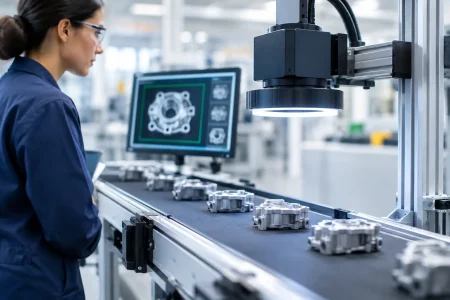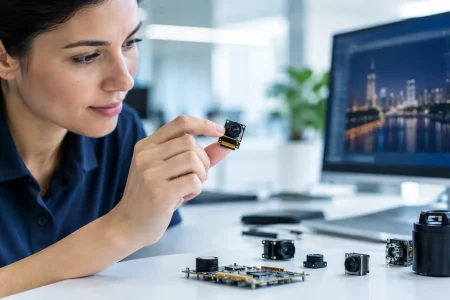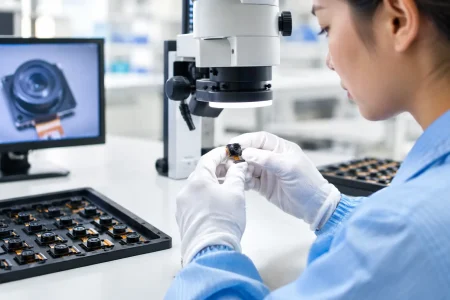

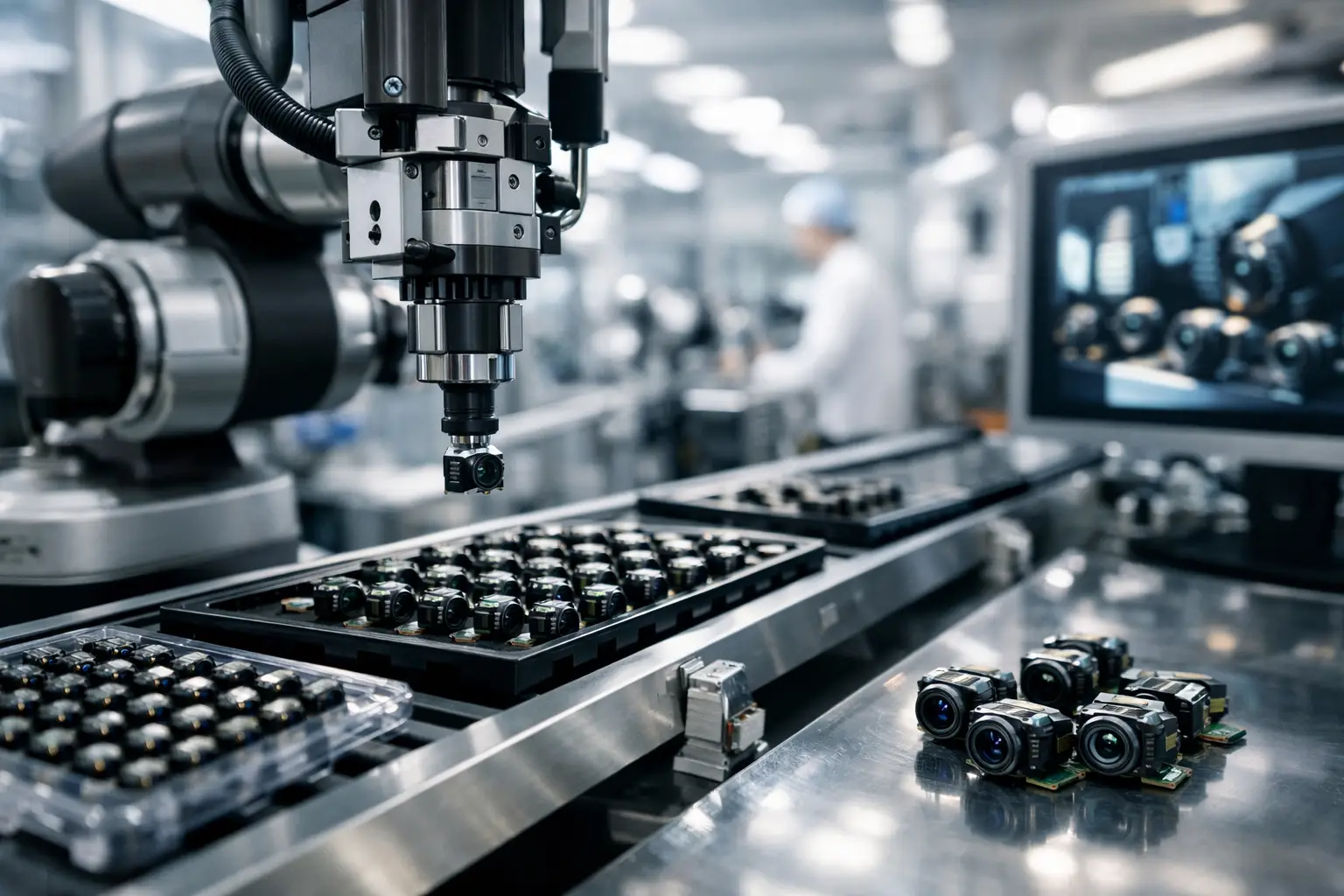
A camera module that performs well in EVT can still fail the real test when procurement asks for 50,000 units, operations needs consistent lead times, and field returns must stay low. That is where high volume camera module production stops being a sourcing exercise and becomes a manufacturing discipline.
For OEMs, system integrators, and embedded vision teams, the question is not just whether a supplier can build a camera module. The question is whether that supplier can hold optical, electrical, and mechanical consistency across every lot while still supporting customization, change control, and delivery schedules. In machine vision, medical devices, robotics, and smart equipment, scaling without process control creates downstream costs fast.
What high volume camera module production really means
At low volume, a camera module program can tolerate more manual adjustment, longer debug cycles, and wider variation between builds. At high volume, those same conditions create unstable yield, inconsistent image quality, and production delays. The standard changes.
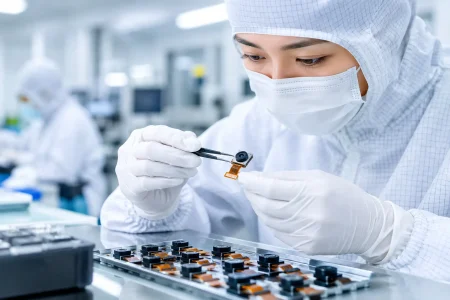
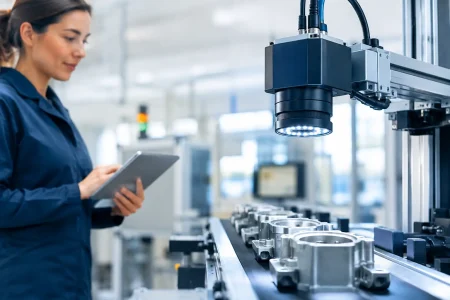
High volume camera module production means building repeatability into every stage – sensor sourcing, lens matching, FPC or PCB assembly, SMT, active alignment, bonding, cleanroom handling, image tuning, inspection, and final testing. It also means a manufacturer has to manage not only throughput, but process discipline. A line that can output large quantities is not enough if first-pass yield is weak or if quality drifts between batches.
For business buyers, this matters because the camera module is rarely an isolated part. It is integrated into a larger product with firmware dependencies, mechanical stack-up limits, thermal constraints, and compliance requirements. If the module changes unexpectedly, the entire device program feels it.
The production factors that separate scalable suppliers from risky ones
The first separator is component control. Image sensors, lenses, connectors, cables, and PCB materials all affect consistency. In volume production, incoming material variation becomes a major source of quality deviation. A supplier needs qualified component channels, lot traceability, and clear substitution control. If a sensor revision or lens vendor change is made without rigorous validation, image tuning and system performance can shift.
The second is process capability. Camera modules are sensitive assemblies. Focus, chief ray angle matching, infrared filtering, adhesive curing, dust control, and alignment precision all affect output. In a scaled program, manufacturers need controlled work instructions, calibrated equipment, in-line verification, and operators trained for optical assembly. Small assembly errors that look manageable in pilot runs often become yield loss in mass production.
The third is test coverage. Electrical continuity tests alone are not enough. A serious manufacturer verifies image output, resolution performance, color behavior, dead pixels, focus range, distortion, interface stability, and module reliability under defined standards. For some applications, this extends to vibration, temperature, humidity, and lifespan validation. The right test plan depends on where the module will be used.
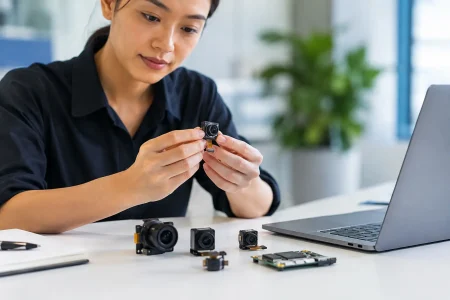
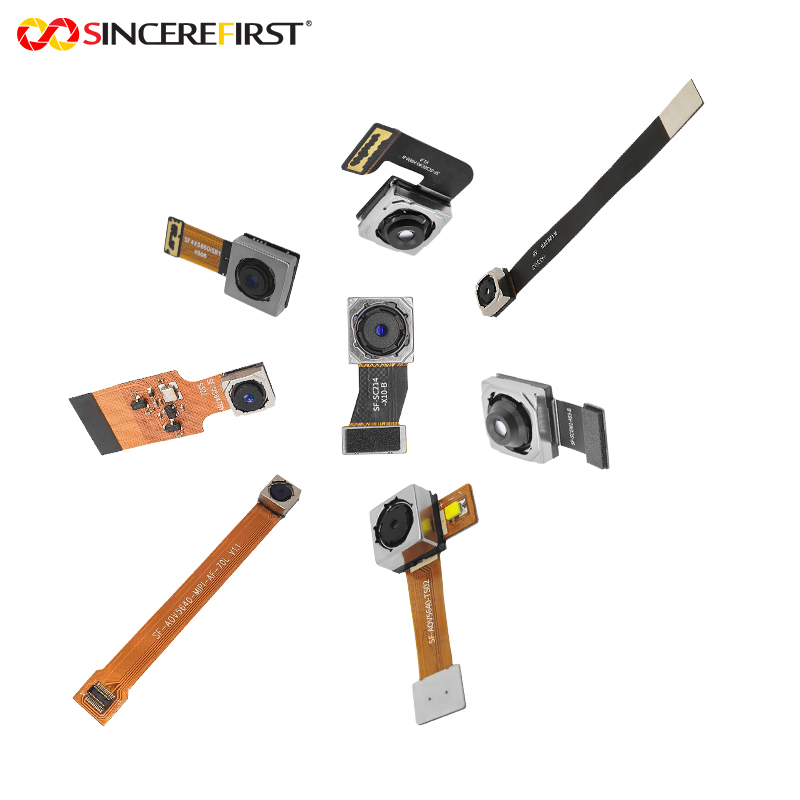
The fourth is engineering responsiveness. High volume does not remove the need for customization. In many programs, customers still require changes in sensor selection, lens field of view, board outline, cable length, connector type, image orientation, low-light tuning, or mechanical envelope. The supplier has to support design-for-manufacturing from the beginning so that a custom module can move into volume without redesigning the entire line later.
Why yield matters more than advertised capacity
Many suppliers talk about monthly output. Fewer talk clearly about yield stability. For buyers, that is the more useful metric.
A factory may claim high throughput, but if yield is inconsistent, actual deliverable volume falls short. Poor yield also raises hidden costs through rework, scrap, engineering support, delayed shipments, and field failures. In camera modules, yield loss often comes from optical contamination, alignment drift, soldering defects, cable damage, or inconsistent image tuning.
This is why mature manufacturers put strong controls around cleanroom conditions, operator handling, fixture precision, and in-process inspection. High speed without control is not scale. It is risk packaged as capacity.
High volume camera module production for custom programs
Some buyers assume custom camera modules and high-volume manufacturing are in conflict. In practice, the better question is whether the customization is engineered for production from day one.
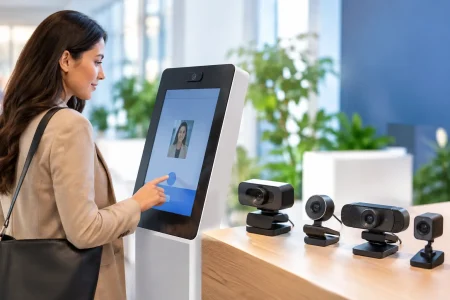
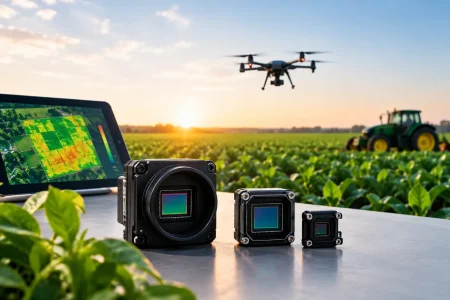
A custom module for a medical imaging device has very different priorities from one used in an agricultural system, a robot, or a smart security terminal. One may require compact size and strict signal integrity. Another may need stronger low-light performance, waterproofing support, or a wider operating temperature range. High-volume production is possible in all of these cases, but only when the module architecture, material choices, and test standards are defined with scale in mind.
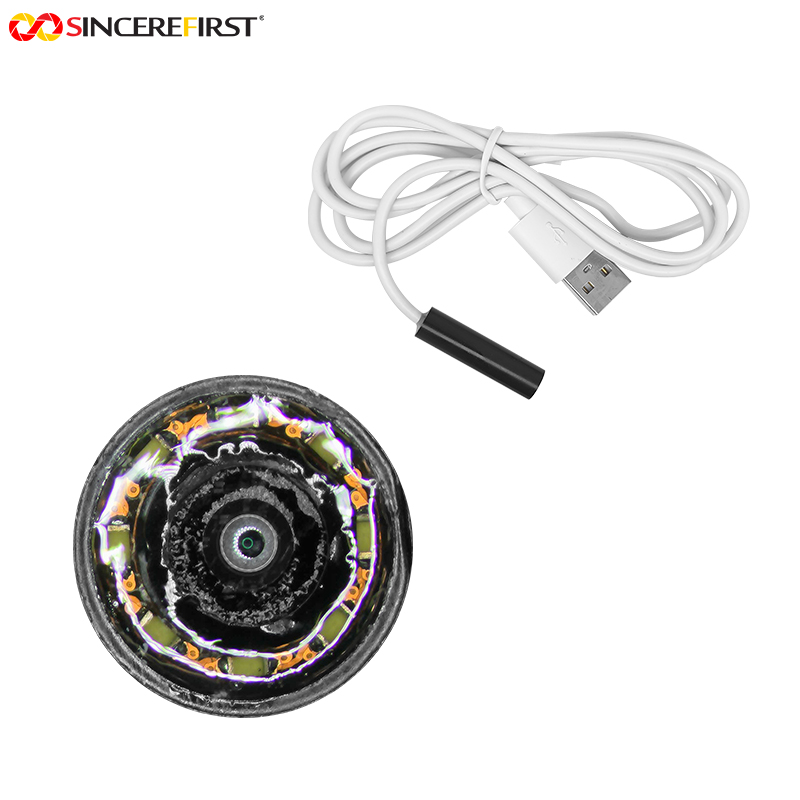
This is where early collaboration matters. If the supplier can review interface requirements such as MIPI, USB, DVP, or UVC, along with resolution targets, optics, ISP behavior, and mounting constraints, they can reduce later production friction. A design that works in a prototype enclosure but is hard to assemble repeatedly at volume will eventually create cost and timing problems.
The role of cleanroom assembly and optical process control
Camera modules are less forgiving than many other embedded components because the image itself reveals process variation. Dust, lens tilt, focus shift, bonding inconsistency, and sensor contamination are visible in output and measurable in test.
That is why cleanroom manufacturing is not a marketing add-on for serious camera module production. It directly supports yield and quality stability. Controlled assembly environments reduce contamination risk, while optical alignment equipment and standardized curing processes improve repeatability.
The level of control required depends on the product class. Industrial automation and smart devices may prioritize throughput and cost efficiency within defined image tolerances. Medical or high-end inspection programs often require tighter validation and more conservative process windows. A capable supplier understands that not every project needs the same production recipe, but every project does need a controlled one.
What OEM buyers should evaluate before awarding volume business
The strongest sourcing decisions usually come from looking beyond the sample itself. A good sample proves the concept. It does not prove manufacturing readiness.
Buyers should evaluate whether the supplier has real experience moving from prototype to pilot to mass production, whether they can document process controls, how they manage component changes, what their test methodology covers, and how fast they respond when engineering issues appear. It also helps to understand whether the supplier builds standard modules only or can also support OEM and ODM development for specialized applications.
Lead time discipline matters too. Fast sampling is valuable, but volume programs need stable planning, not just speed. A supplier should be able to explain how they manage production scheduling, material buffers, and inspection checkpoints during ramp-up. If answers stay vague, the risk usually appears later in delivery performance.
For embedded vision projects, interface and integration support should also be part of supplier qualification. Camera output is only useful if it works reliably with the host processor, firmware stack, lighting conditions, and end-product mechanics. Manufacturing and engineering support have to operate together.
Where volume production creates a competitive advantage
When camera module supply is stable, product teams move faster. Engineering spends less time solving vendor quality issues. Procurement gains predictability. Manufacturing avoids repeated line adjustments. End customers see fewer failures and more consistent device performance.
That advantage becomes more visible in sectors with long product lifecycles or regulated performance expectations. Medical devices, industrial systems, robotics platforms, and smart infrastructure products cannot afford supply instability every time demand rises. In these markets, a dependable manufacturing partner is part of the product strategy.
For companies scaling vision-enabled hardware, the best production partner is not simply the one with the lowest quote or the broadest catalog. It is the one that can align optical design, customization, testing, and factory discipline into a repeatable process. That is the difference between buying modules and building a supply chain that holds up under commercial pressure.
SincereFirst approaches this work from an engineering and manufacturing base shaped by long-term camera module development, cleanroom production, and custom integration support across embedded vision applications. For buyers, that combination matters because product success depends on more than image quality on day one. It depends on whether the same quality can be delivered again and again at production scale.
If you are qualifying a supplier for your next vision product, ask fewer questions about the sample and more about the process behind it. That is usually where the real answer lives.