
A camera that focuses quickly on a lab bench can still fail the commercial product test. It may hunt under low light, draw too much peak current, lose position after a drop, or become difficult to calibrate at production volume. A useful autofocus lens module comparison therefore starts with the device requirement, not the autofocus label. For OEMs building robotics, medical equipment, scanners, security devices, and industrial terminals, the right choice is the module that delivers repeatable image quality within the available space, power, cost, and manufacturing constraints.
What an Autofocus Lens Module Must Solve
Autofocus is a closed-loop imaging function. The camera module needs an optical system capable of changing focus, a sensor and image signal processor that can evaluate sharpness or receive distance information, and a control method that reaches the required focus position reliably. The mechanical implementation is only one part of the decision.
In compact camera modules, autofocus is commonly used to cover a working range from near-field reading or inspection to mid-range scene capture. The required range varies sharply by application. A handheld code reader may prioritize focus at 80 mm to 500 mm. A service robot may need to identify objects from 150 mm to several meters. A medical or industrial endoscope may require a different optical approach because diameter, illumination, depth of field, and sterilization or environmental requirements dominate the design.
The practical question is not simply whether autofocus is needed. It is whether autofocus creates enough measurable improvement in recognition accuracy, user experience, or inspection yield to justify its mechanical and integration demands.
Autofocus Lens Module Comparison: Three Core Designs
VCM autofocus modules
Voice coil motor, or VCM, autofocus is the most familiar solution in compact camera systems. An electromagnetic actuator moves the lens assembly along the optical axis. This design is widely available, compact, and well suited to consumer-derived imaging architectures using MIPI interfaces and mobile-class image sensors.
VCM modules can provide a useful balance of size, response speed, and cost at volume. They are a practical fit for smart terminals, access-control devices, document capture products, delivery lockers, and many robotic vision tasks. A VCM design also has an established component ecosystem, which can simplify sourcing when the specification matches standard lens and sensor combinations.
Its trade-offs need engineering attention. VCM movement consumes current during focusing, and actuator behavior can be affected by shock, vibration, orientation, temperature, and mechanical tolerance. Autofocus algorithms may hunt when contrast is weak, when the subject lacks detail, or when the scene changes quickly. For a product installed on moving machinery, focus time and repeated focus reliability should be tested under real vibration and lighting conditions, not only in a static image-quality setup.
Liquid lens autofocus modules
A liquid lens changes optical power electronically rather than moving a conventional lens barrel through a motorized travel range. This can reduce mechanical movement and allow very fast focus changes. It is especially attractive where repeated near-to-far focusing, vibration resistance, or high cycle life is central to product performance.
Liquid-lens modules are often evaluated for barcode reading, logistics automation, industrial inspection, and robotics. A scanner that must acquire items at varying distances may benefit from fast, repeatable focus transitions. The absence of a conventional moving lens group can also be valuable where mechanical wear and shock resistance are concerns.
The higher optical and electronic system cost may not be justified for every device. Liquid-lens selection requires careful validation of aperture, focal length, sensor format, optical aberration control, temperature performance, drive electronics, and algorithm compatibility. A fast actuator cannot compensate for a lens design that does not deliver sufficient contrast at the target field of view. For production programs, buyers should also confirm supply continuity for the lens, driver components, and qualified module assembly process.
Fixed-focus modules as the benchmark
Fixed-focus modules are not autofocus modules, but they belong in every purchasing decision. If the application has a narrow working-distance band or can use a smaller aperture and sufficient illumination to extend depth of field, fixed focus may provide a more stable, lower-cost solution.
This is common in fixed-position industrial cameras, smart-city installations, access panels, and dedicated machine-vision stations. Fixed focus removes actuator control, focus-search delay, and moving-part reliability concerns. It can also simplify validation. The trade-off is straightforward: image sharpness will fall outside the designed distance range, and a broad operating range may require a different optical architecture or multiple cameras.
Compare the Working Distance Before Comparing Resolution
Resolution is frequently overvalued in camera-module selection. A high-resolution sensor does not guarantee useful detail when the lens cannot resolve adequately at the intended object distance or when autofocus is slow to settle. Start the evaluation by documenting the closest and farthest critical targets, required field of view, target feature size, lighting conditions, and acceptable capture latency.
For example, a 13 MP module may look attractive for a smart inventory device, yet a 5 MP or 8 MP autofocus module can produce more consistent decoding results if its lens is optimized for the actual working range and its autofocus behavior is better controlled. Conversely, high-resolution medical imaging may demand both fine sensor detail and carefully matched optics because the user needs to inspect subtle structures at close range.
Depth of field changes with focal length, aperture, sensor size, and object distance. Increasing depth of field by stopping down the aperture can reduce the need for aggressive autofocus, but it also reduces light reaching the sensor. That can raise gain, increase noise, or require stronger illumination. The correct solution is usually a system-level compromise rather than a single specification win.
Interface, ISP, and Control Integration Matter
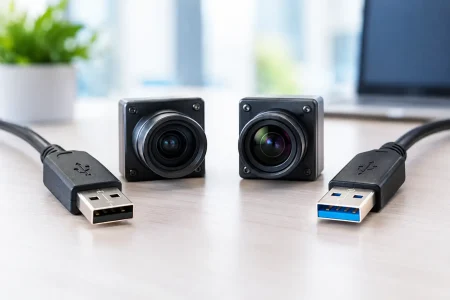
An autofocus module must fit the host architecture. MIPI CSI-2 modules are common for embedded Linux, Android, and high-performance processor platforms. USB UVC autofocus cameras can accelerate integration for PCs, kiosks, and systems that need plug-and-play video. DVP interfaces remain relevant for selected microcontroller and legacy embedded designs, although their bandwidth limits must be considered when resolution and frame rate increase.
Autofocus control can be managed through the host processor, a dedicated controller, or functions integrated within the module architecture. Confirm whether the supplied driver supports continuous autofocus, single autofocus, manual lens position control, and the focus status feedback needed by the application. Manual control may be especially useful in industrial workflows where focus must be locked at a measured working distance rather than continuously adjusted.
Image quality tuning is equally important. Sensor exposure, gain, denoise processing, edge enhancement, and autofocus metrics influence one another. A module that appears sharp due to strong sharpening may not deliver the clean edge data required for measurement, OCR, or machine-learning inference. Request test images and video from relevant distances, illumination levels, and target materials, including reflective, low-contrast, and moving objects where applicable.
Mechanical Design and Manufacturing Validation
The autofocus mechanism must survive the product, not merely the sample stage. Review module dimensions, lens height, connector location, FPC bend requirements, mounting datums, heat path, electromagnetic interference exposure, and enclosure clearance. Compact modules can be sensitive to mechanical stress introduced by an enclosure or fastening method.
For VCM designs, validate focus repeatability after drop, vibration, thermal cycling, and extended focus cycles. For liquid-lens designs, validate the driver architecture and focus performance across the full operating temperature range. In both cases, assess image-center shift, distortion, field curvature, and focus consistency across production lots. These factors can affect calibration accuracy in robotics and inspection systems.
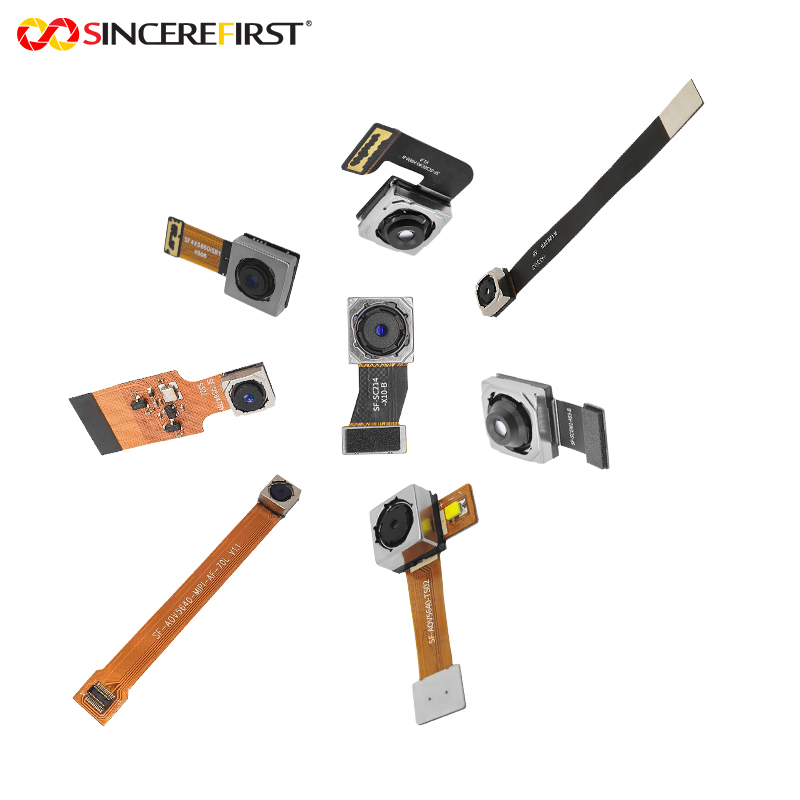
A qualified supplier should support more than a data sheet review. The program should include optical alignment control, incoming component management, cleanroom assembly, image-quality inspection, aging or reliability testing where required, and traceability appropriate to the end market. SincereFirst supports this process with standard camera-module options and customized optical, sensor, interface, and mechanical development for OEM production programs.
A Practical Selection Path for OEM Teams
Begin with the target scene and make the focus requirement measurable. Define the full working-distance range, the minimum acceptable sharpness, the time allowed to acquire focus, and the expected illumination. Next, compare VCM and liquid-lens samples against a fixed-focus baseline under those conditions. This prevents a more complex solution from being selected without a clear performance gain.
Then review electrical and software integration. Confirm interface bandwidth, supply voltage, peak current, control protocol, supported operating system, autofocus modes, and image tuning ownership. Finally, move to design-for-manufacturing validation early. A sample that meets optical targets but cannot be mounted repeatably, sourced consistently, or tested efficiently will delay commercialization.
The strongest autofocus choice is the one that holds focus where your product earns its value: on the moving package line, in the dim warehouse aisle, at the clinician’s working distance, or inside the deployed robot. Define that condition precisely, and the module specification becomes a production decision rather than a feature checklist.