
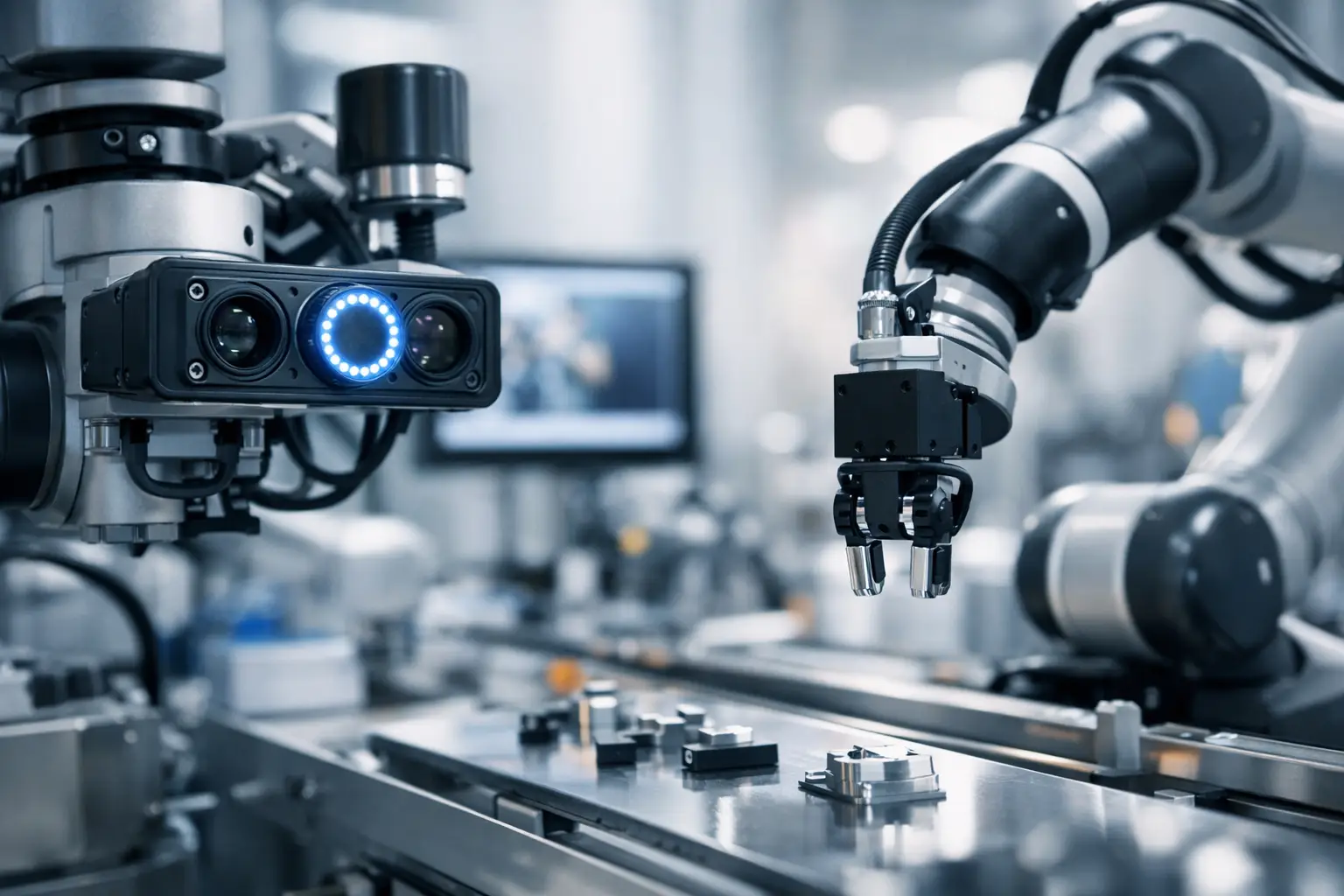
A robot that misses a reflective part, loses focus at the edge of a conveyor, or waits too long for an image decision creates a production problem, not just a vision problem. The most consequential robot vision hardware trends are therefore moving beyond headline resolution. Buyers are prioritizing imaging architectures that deliver usable data under real operating conditions: vibration, changing light, limited enclosure space, tight cycle times, and long production runs.
For robotics OEMs, system integrators, and industrial equipment builders, camera selection is becoming an early mechanical, electrical, and software decision. The right module must fit the robot, match the processor, support the required optics, and remain manufacturable when a prototype becomes thousands of units. That changes how engineering teams should evaluate vision hardware in 2026 and beyond.
Robot Vision Hardware Trends Moving Into Production
The central shift is from general-purpose imaging toward application-specific vision assemblies. A warehouse mobile robot, a surgical device, an agricultural sorter, and a six-axis pick-and-place cell may all use cameras, but their hardware priorities are materially different. One needs low-light sensitivity and efficient edge processing. Another requires miniature dimensions, controlled illumination, and strict consistency between units. A third needs high-speed capture and resistance to dust or moisture.
This is why sensor data sheets alone are no longer enough. A capable robot vision system depends on the sensor, lens, image signal processing, board layout, interface, illumination, thermal behavior, enclosure constraints, and production controls working together. Hardware teams that treat these as separate purchasing decisions often spend more time correcting integration issues later.
Compact cameras are becoming system components
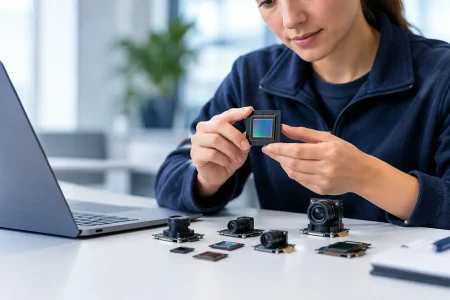
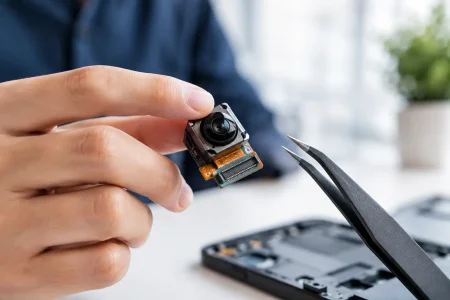
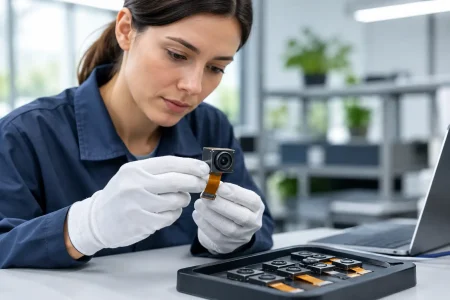
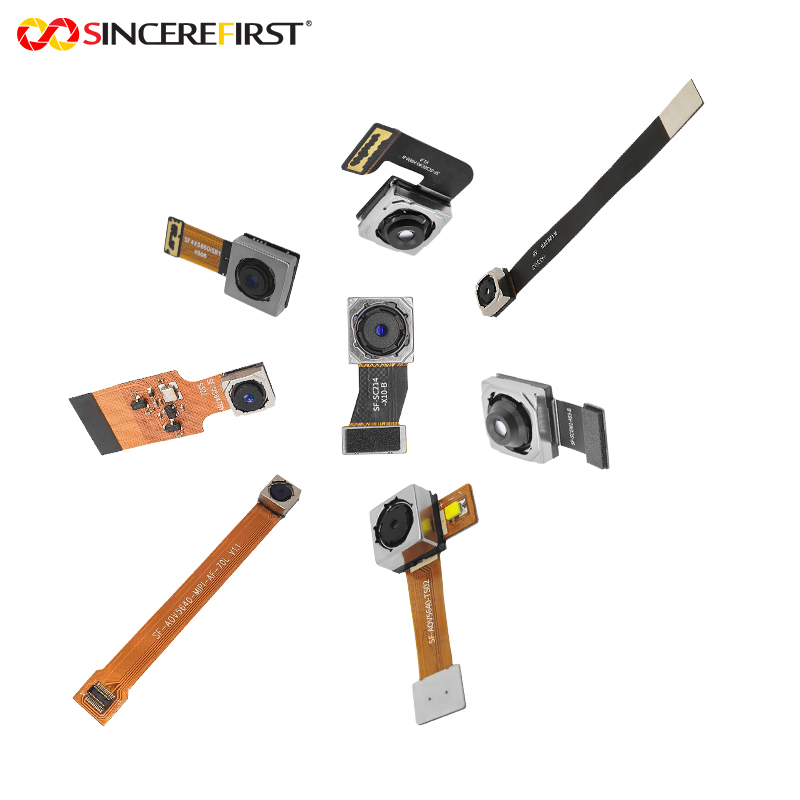
Smaller robots need smaller cameras, but miniaturization is not simply a matter of choosing the smallest module available. Engineers must balance module size against sensor format, lens height, focus range, heat dissipation, cable routing, and connector retention. A compact FPC camera module can be highly effective where the camera must sit in a gripper, robotic wrist, autonomous device, or narrow inspection head. Yet a flexible cable also requires careful strain relief and electromagnetic interference control.
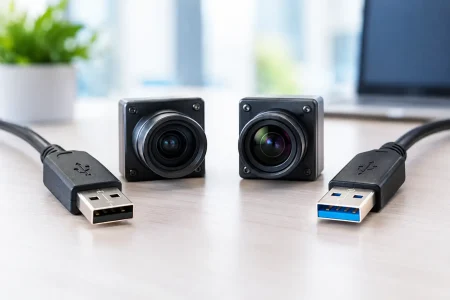
MIPI CSI-2 camera modules continue to gain ground in embedded robotic products because they provide a direct, efficient path to application processors and AI system-on-chip platforms. They are well suited to compact designs with short internal cable runs. USB camera modules remain valuable for development rigs, industrial PCs, and systems where plug-and-play UVC compatibility shortens integration time. USB 3.0 is often the stronger choice for high-resolution or high-frame-rate data, while USB 2.0 can remain practical for lower-bandwidth imaging tasks and cost-sensitive designs.
The interface should follow the full system architecture, not the prototype setup. A USB camera that performs well on a bench may not be the best final choice for a compact production robot with an embedded processor and demanding power budget.
Global shutter is expanding, but not universally required
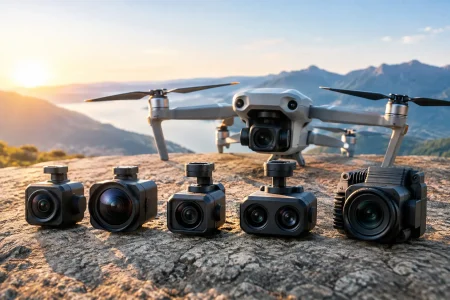
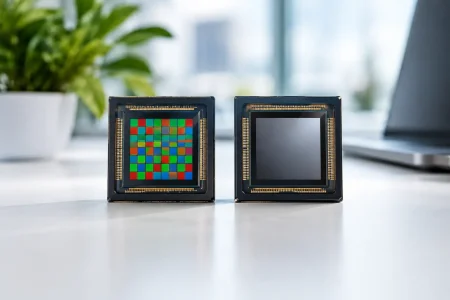
Motion blur remains one of the most expensive sources of vision failure in robotics. Global shutter sensors capture the entire frame at the same moment, making them particularly useful for fast conveyors, robot arms, drone navigation, moving tools, and barcode or label inspection. They reduce geometric distortion that can occur when rolling-shutter sensors image motion.
However, global shutter is not an automatic requirement. It can bring higher cost, different low-light performance, or fewer sensor options at a given resolution. For a stationary inspection target, a slow-moving collaborative robot, or a controlled capture sequence, a rolling-shutter sensor may provide the required image quality at a more favorable cost and power profile. The correct decision depends on target speed, exposure time, field of view, lighting stability, and the tolerance for positional error.
A useful engineering question is not, “Do we need global shutter?” It is, “What motion must be frozen, at what working distance and cycle time?” That turns a feature debate into a measurable specification.
Optics are gaining equal status with sensors
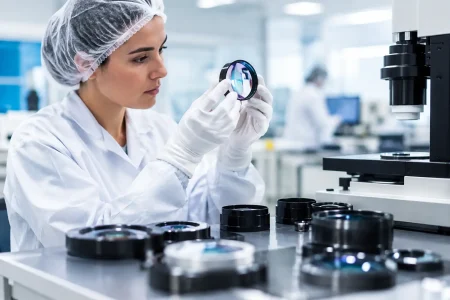
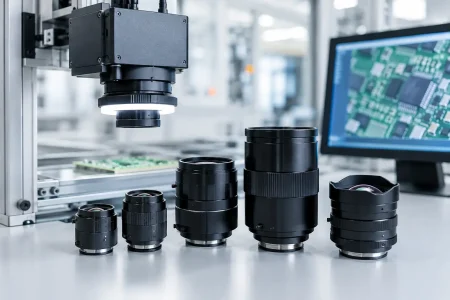
Higher resolution does not correct poor optical design. As robot vision moves into more demanding inspection and guidance tasks, lens selection is becoming a primary performance decision. Distortion, depth of field, focus stability, chromatic aberration, and corner sharpness can determine whether an AI model receives consistent images or confusing variation.
Wide-angle lenses help autonomous mobile robots see more of their surroundings, but they introduce distortion that must be calibrated and compensated. Narrower fields of view can improve target detail for inspection but demand tighter robot positioning. Fixed-focus modules are efficient where the working distance is controlled. Auto-focus designs can accommodate variable target distances, though they add mechanical complexity and may not suit high-speed, repeatable industrial inspection.
Telecentric optics are increasingly relevant in precision measurement and dimensional inspection, where perspective error is unacceptable. They are not necessary for every robotic vision task and can increase system size and cost, but they demonstrate a larger trend: optics are being selected around measurement requirements rather than treated as a standard accessory.
Edge AI is changing camera and processor partitioning
Robots need faster decisions, but sending every frame to a central server can add latency, bandwidth cost, and operational risk. Edge processing is moving image analysis closer to the camera, either on the embedded host processor, a dedicated AI accelerator, or increasingly within intelligent camera architectures.
This does not mean every robot needs a smart camera with onboard inference. Centralized processing may be better when multiple cameras feed one coordinated system, models change frequently, or compute resources are already available in an industrial PC. Edge AI is most compelling when the application needs immediate local response, operates with intermittent connectivity, or cannot transmit large image streams reliably.
The hardware implication is significant. Camera modules must be selected with output format, frame rate, power consumption, and processor compatibility in mind. A high-resolution sensor can create more data than the edge platform can process within the robot’s cycle time. In many cases, a lower-resolution sensor paired with the right lens, lighting, and model produces a more dependable result than a specification-heavy camera pipeline that cannot sustain its intended throughput.
The Rise of Multimodal Robot Vision Hardware
RGB imaging remains foundational, but robots are increasingly combining visual inputs to address the limits of a single 2D camera. Stereo camera assemblies support depth estimation for navigation and bin picking. Time-of-flight sensors can provide direct distance information. Near-infrared imaging can improve contrast in certain materials or lighting conditions. Thermal imaging can reveal temperature differences that visible-light cameras cannot detect.
Each modality adds capability and integration work. Stereo systems need precise camera alignment and calibration stability. Depth sensors can struggle with highly reflective, transparent, or outdoor targets depending on the underlying technology. Thermal systems provide different information from RGB cameras, not automatically better information. The practical goal is to use the minimum sensor combination that resolves the application’s failure modes.
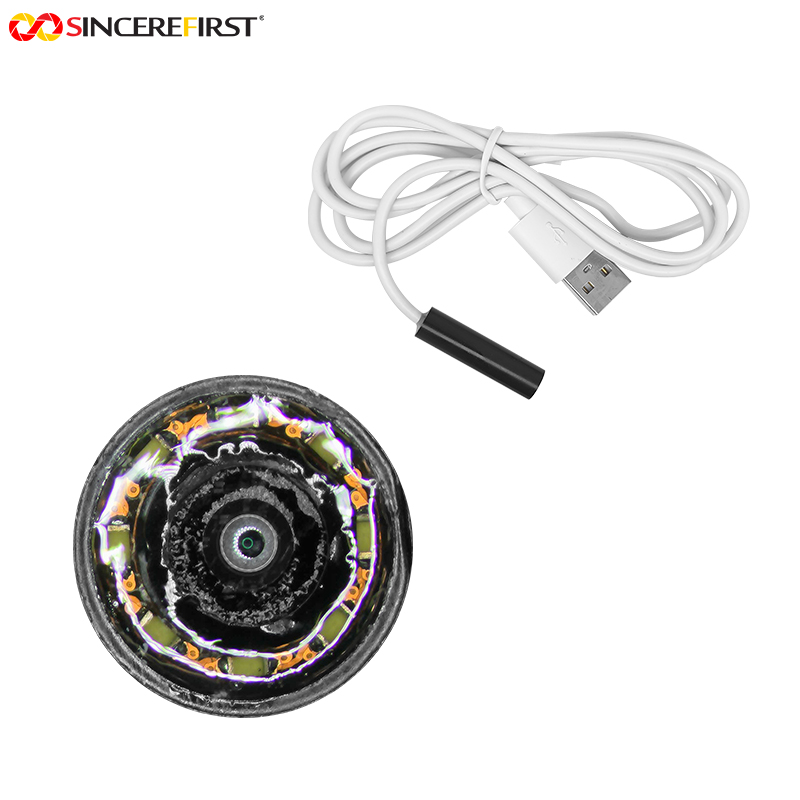
For example, a robot picking mixed parts from a tote may require RGB plus depth. A packaging inspection station may need only a properly lit high-resolution 2D camera. A medical or industrial borescope may depend on a miniature endoscope camera module with carefully controlled LEDs and a specific viewing direction. The best architecture follows the task, working environment, and acceptable error rate.
Design for Calibration, Service, and Scale
As camera count rises on robotic platforms, calibration becomes a hardware lifecycle issue. Lens distortion correction, camera-to-robot coordinates, stereo alignment, and illumination consistency all influence deployed accuracy. A system that is calibrated only during development may drift in production because of mechanical movement, cable replacement, thermal cycling, or module variation.
Camera hardware should support repeatable installation. Mechanical datums, secure connectors, stable lens mounting, and controlled module tolerances matter as much as image quality on the first sample. Teams should also decide whether a camera is field-replaceable. If it is, the system needs a practical recalibration procedure. If it is not, the design must prioritize durability and production verification.
Manufacturing scale adds another requirement: supply continuity. A sensor or connector chosen for a small pilot run may face allocation, end-of-life risk, or inconsistent availability later. Product managers should ask suppliers about component lifecycle planning, alternate options, quality controls, sample lead times, and the path from engineering validation to volume production. This is especially relevant for custom camera modules, where a change in optics, cable length, connector, or board shape can affect both performance and manufacturability.
What Buyers Should Specify Before Requesting Samples
A productive camera module request starts with the scene, not just desired resolution. Define the target size, working distance, field of view, motion speed, required frame rate, illumination conditions, color or monochrome need, and acceptable detection error. Then identify the host platform, preferred interface, mechanical envelope, cable constraints, operating temperature, and expected annual volume.
It is also useful to state what the image will drive. Is the camera supporting object detection, visual servoing, measurement, navigation, OCR, defect inspection, or remote viewing? A module optimized for one of these functions may be a poor fit for another. Sharing actual sample images and known failure cases gives an engineering partner a far stronger basis for recommending the sensor, lens, and illumination configuration.
SincereFirst supports this development path with standard and customized embedded camera modules, optical components, and scalable imaging assemblies. For teams building commercial robotics products, the value is not only access to MIPI, USB, FPC, DVP, and specialized camera options. It is the ability to align image performance, mechanical integration, and manufacturing requirements before a design reaches the expensive stage of production tooling.
The next successful robot vision platform will not necessarily use the highest-resolution camera or the most sensors. It will use hardware chosen with discipline: enough image quality to make the decision, enough speed to meet the cycle, and enough manufacturing control to repeat that result in every unit shipped.