

A camera module can look excellent on an evaluation board and still delay a product launch by months. The failure point is often not image resolution. It is an unconfirmed lens stack, a mismatched MIPI lane configuration, an unstable cable design, or a supplier that cannot hold the approved build through volume production. This OEM imaging project procurement guide is designed for buyers and engineering teams who need to source imaging hardware with fewer late-stage surprises.
Start the OEM Imaging Project Procurement Guide Before RFQ
A request for quotation should not be the first technical conversation. Before comparing unit prices, convert the device requirement into a controlled imaging specification. Procurement needs this document because camera modules are not interchangeable commodities, even when the sensor model and resolution appear identical.
Define the application environment first. A barcode-reading terminal, collaborative robot, patient-monitoring device, outdoor security camera, and industrial inspection system may all use a compact CMOS module, but they require very different priorities. Low-light performance, depth of field, motion blur, color accuracy, near-infrared sensitivity, power consumption, module height, and operating temperature can each change the correct sensor and lens selection.
The specification should state the required field of view, working distance, object motion, lighting condition, target resolution at the object plane, frame rate, and acceptable latency. It should also identify whether the camera is used for human viewing, computer vision, recording, measurement, or a combination of these functions. A 1080p module may be sufficient for a user-facing preview, yet inadequate for detecting a small defect on a moving production line.
Interface requirements deserve the same discipline. Confirm whether the host platform supports MIPI CSI-2, USB 2.0, USB 3.0, DVP, or another interface, along with lane count, data rate, connector constraints, cable length, and software driver expectations. A supplier can provide a technically capable module that is still wrong for the embedded platform.
Qualify the Module, Not Just the Sensor
Many purchasing comparisons begin with the sensor part number. That is useful, but it is only one part of the optical system. Final image output depends on the sensor, lens, lens holder, infrared-cut filter, PCB layout, firmware tuning, mechanical alignment, and illumination conditions.
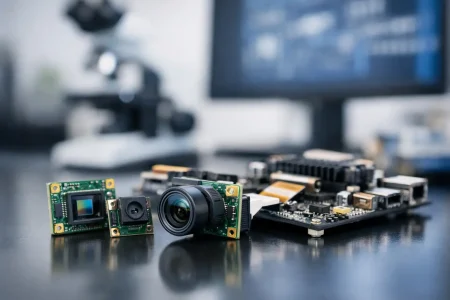
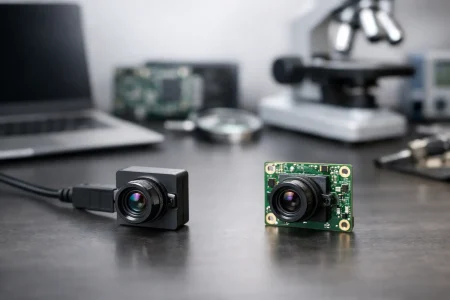
Ask suppliers to provide a complete proposed configuration rather than a sensor-only quotation. The proposal should identify the sensor manufacturer and model, optical format, lens focal length, aperture, field of view, focus method, IR filter arrangement, interface, output format, and module dimensions. For USB modules, clarify UVC compatibility and the supported operating systems. For MIPI modules, confirm the image signal processor path and whether tuning files or driver adaptation are included.
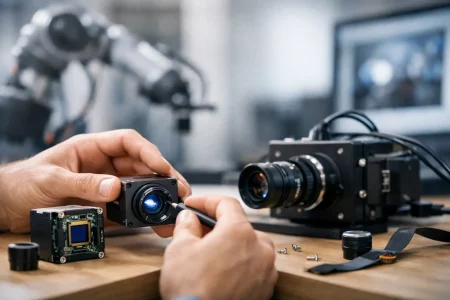
Lens selection is where many projects lose time. A wide-angle lens may fit the required scene coverage but introduce distortion that affects metrology or machine vision algorithms. Fixed focus reduces mechanical complexity, but only works when the working-distance range is tightly controlled. Autofocus may improve user convenience, while adding power, software, validation, and long-term supply considerations.
Ask for optical performance data that relates to the application. This can include distortion, relative illumination, modulation transfer function, color performance, signal-to-noise ratio, and low-light results. For machine vision applications, request images of real targets under representative lighting rather than relying only on ideal sample photos.
Validate image quality in your own product conditions
Supplier samples are qualification tools, not proof of production readiness. Test modules in the actual enclosure, with the planned display, cable routing, processor, illumination, and thermal load. Housing windows, protective glass, LED placement, electromagnetic interference, and heat can visibly change performance.
Build an acceptance plan before samples arrive. Define pass/fail criteria for image sharpness, dead pixels, color consistency, frame stability, boot time, current draw, focus position, and interface reliability. If the product uses computer vision, measure the downstream result: recognition rate, detection accuracy, false positives, or inspection repeatability. This keeps subjective image preferences from overriding the performance that matters.
Evaluate Customization Scope and Change Control
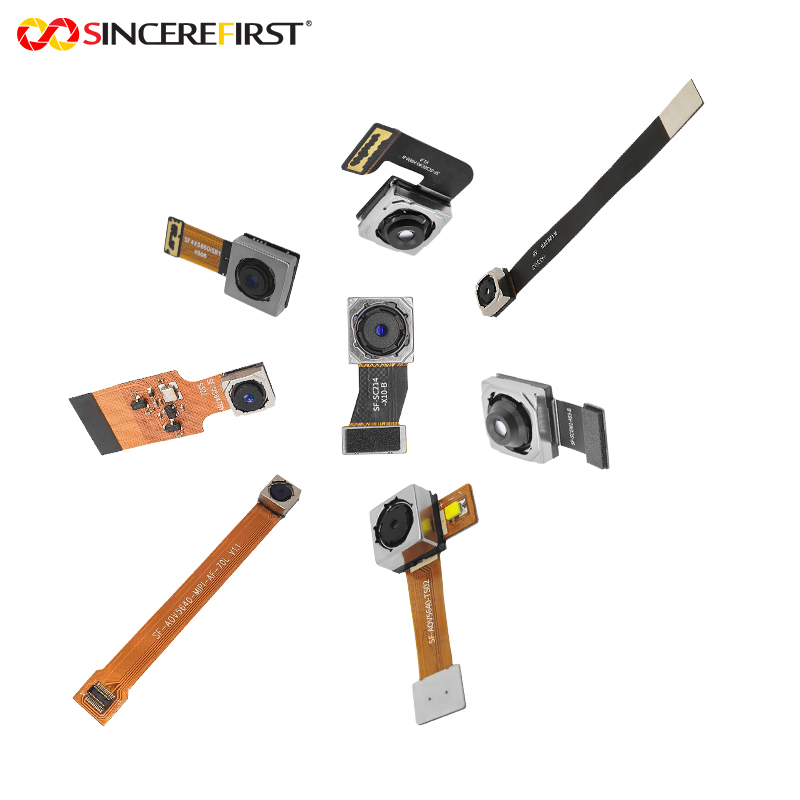
The right supplier should be able to distinguish between a catalog module that needs minor adaptation and a true custom development project. Customization can include PCB shape, FPC length, connector orientation, lens selection, infrared response, LED integration, housing design, waterproofing, firmware parameters, and factory image tuning.
Each requested change has a cost and schedule effect. A different connector may be straightforward. A new board outline can require signal-integrity review and tooling. A nonstandard lens holder or compact endoscope structure may involve optical alignment fixtures and additional reliability validation. Buyers should ask for a phased development plan that separates feasibility samples, engineering validation builds, design verification, and mass-production release.
Change control matters after the design is approved. Confirm how the supplier handles sensor end-of-life notices, lens substitutions, PCB component changes, firmware revisions, and manufacturing process updates. A supplier should not change a qualified bill of materials without written approval and documented revalidation requirements.
For medical, industrial, or security devices, request clear revision identification on drawings, sample labels, and production records. Traceability is not paperwork for its own sake. It is what allows a team to isolate the source of an image issue when units are already in the field.
Assess Manufacturing Capability Beyond the Quoted Price
The lowest quoted price can become the highest-cost decision if yield variation, late delivery, or inconsistent calibration interrupts production. Procurement should assess how the camera module will be built at scale, not only how it performs as a hand-assembled prototype.
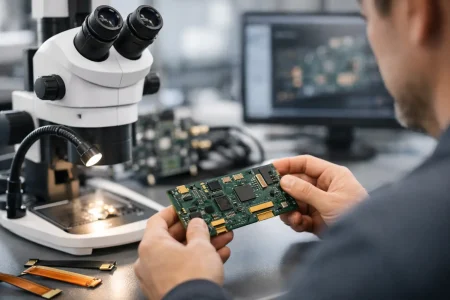
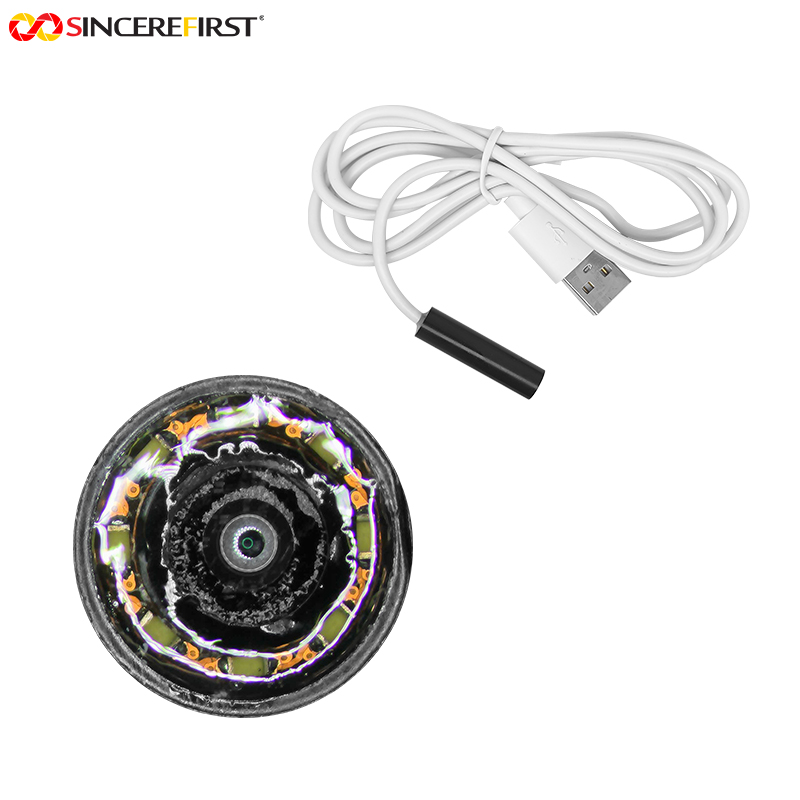
A capable manufacturing partner should explain its incoming inspection process, cleanroom controls where applicable, optical assembly methods, active alignment capability, image testing, aging procedures, final inspection, and packing standards. Ask how it manages lens contamination, focus drift, solder quality, and cosmetic defects. These details are especially relevant for small-format FPC modules, USB camera assemblies, and endoscope camera modules where mechanical tolerances are tight.
Capacity should be discussed in practical terms. Ask about minimum order quantities, sample lead times, normal production lead times, planned capacity reservation, critical component sourcing, and buffer-stock options. The answer may vary by sensor availability and custom content, so request assumptions in writing.
SincereFirst combines standard camera module supply with custom imaging development and scaled manufacturing support, which can reduce handoffs between optical selection, engineering validation, and production planning. For any supplier, however, the key question remains the same: can it reproduce the approved image and mechanical performance across every lot?
Put Commercial Terms Around Technical Risk
Camera module procurement requires commercial terms that reflect the cost of engineering changes. Establish ownership and access rights for custom mechanical drawings, PCB files where applicable, firmware deliverables, tuning parameters, test specifications, and dedicated tooling. The correct arrangement depends on the development model, but ambiguity can make future sourcing or product updates difficult.
Agree on sample charges, nonrecurring engineering costs, tooling costs, payment milestones, warranty conditions, failure-analysis response time, and replacement procedures before development begins. If the product has a long service life, discuss lifecycle support and last-time-buy planning early. A sensor selected for rapid prototype availability may not be the best choice for a platform expected to ship for seven years.
Quality agreements should define the acceptable quality level, inspection approach, defect reporting process, and corrective-action expectations. For critical applications, include lot traceability and retention of production test records. Procurement teams should also align these requirements with incoming inspection capabilities. There is little value in specifying extensive supplier data if nobody can use it to approve deliveries or investigate nonconformities.
Use a Cross-Functional Supplier Scorecard
The final decision should not sit with procurement or engineering alone. Imaging projects move faster when product management, hardware engineering, software, quality, operations, and sourcing evaluate the same facts. A weighted scorecard is useful when comparing suppliers with different strengths.
Evaluate technical fit, sample quality, customization capability, engineering responsiveness, documentation quality, manufacturing controls, capacity, lead time, commercial terms, and lifecycle risk. Weight the criteria according to the product. A consumer accessory may prioritize cost and time to market. A medical imaging accessory may place more weight on traceability, consistency, and controlled change management. Neither approach is universally correct.
Do not confuse a fast response with a complete response. A credible supplier will identify open technical questions, explain trade-offs, and challenge a requirement when it creates unnecessary risk. That engineering discipline is often more valuable than an immediate promise that every target can be met.
The most effective procurement process gives suppliers enough application detail to engineer the right answer, then requires them to prove that answer under defined conditions. When specifications, sample validation, manufacturing controls, and change procedures are aligned early, the camera module becomes a dependable part of the product rather than the reason the launch schedule slips.