
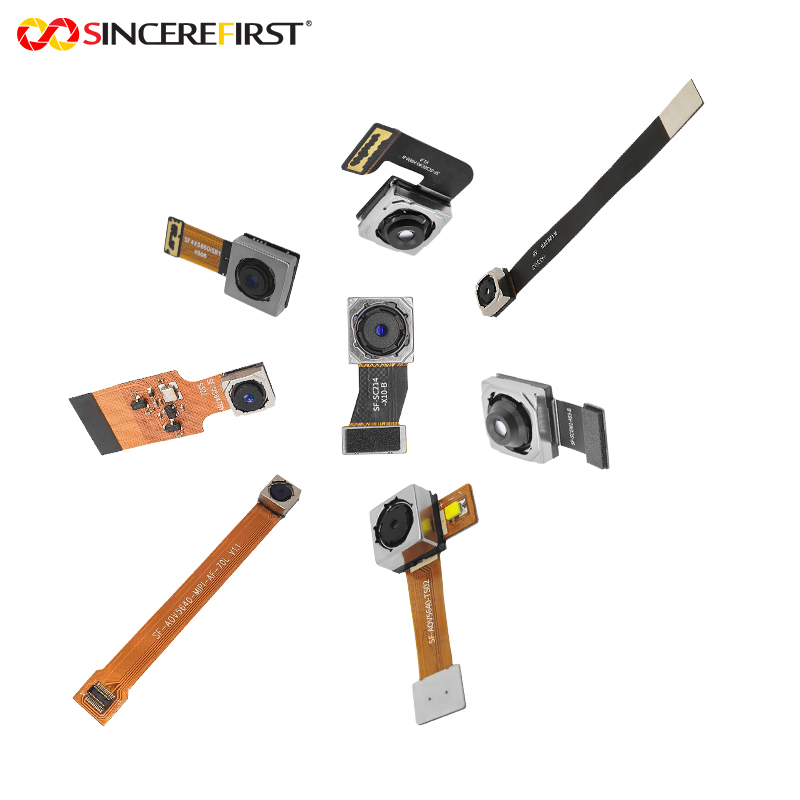
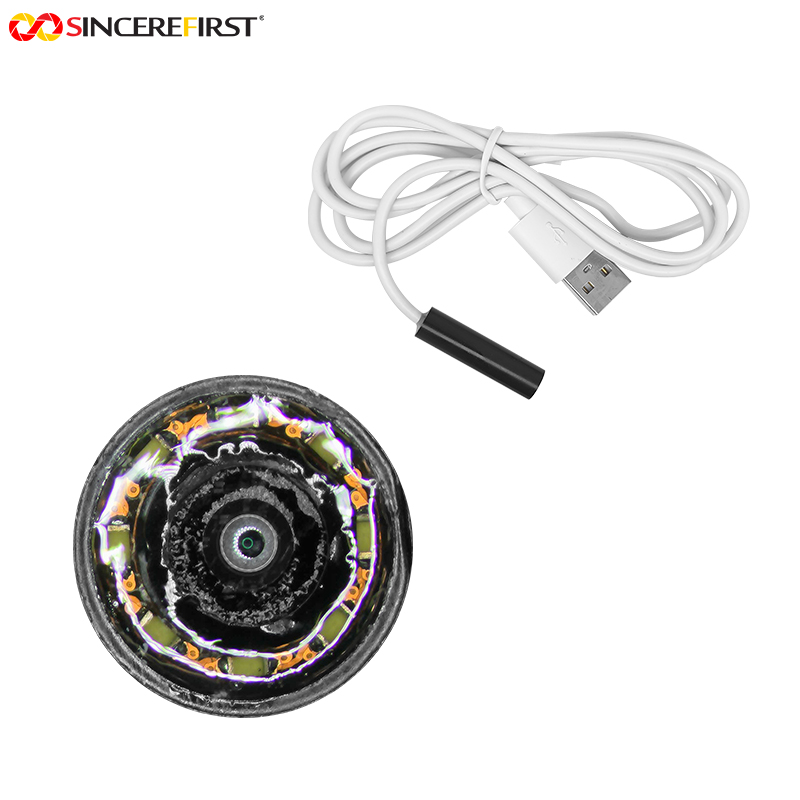

A drone camera that looks excellent on a bench can become the weak point of an airborne system after vibration, heat, propeller-induced lighting changes, and limited processing bandwidth enter the equation. The top compact camera modules for drones are not defined by resolution alone. They are defined by whether the sensor, lens, interface, mechanical package, and image tuning work together at the required flight weight, latency, and production volume.
For OEM drone builders, robotics teams, and payload integrators, the right module begins with the mission. A navigation camera, an inspection camera, and a mapping camera may all fit into a compact airframe, but their priorities are fundamentally different. Selecting a module by megapixel count first often leads to excess power draw, avoidable motion blur, or an imaging pipeline that cannot deliver frames when the flight controller needs them.
What Makes a Camera Module Suitable for a Drone?
Airborne imaging places unusual pressure on compact electronics. The camera must survive continuous vibration, maintain focus through temperature change, and transmit usable image data with predictable latency. At the same time, designers are working within strict SWaP limits: size, weight, and power.
A suitable module therefore has more than a small footprint. It needs a sensor mode that matches vehicle speed and scene motion, a lens selected for the required field of view and working distance, and an interface that the onboard processor can support without dropped frames. Fixed-focus modules are common in drone systems because they eliminate moving optics and simplify reliability. However, autofocus can be justified for inspection payloads that operate over a wide range of target distances.
Image quality should also be evaluated under the real flight environment. Sun glare, deep shadows, rapid exposure transitions, and propeller shadows can challenge an otherwise capable sensor. High dynamic range performance, automatic exposure behavior, and image signal processor tuning are frequently more valuable than an additional few megapixels.
Top Compact Camera Module Types for Drones
There is no single best module for every aircraft. The most effective choice depends on whether the drone needs to see, measure, navigate, or document.
Wide-Angle Global-Shutter Modules for Navigation
For visual odometry, obstacle avoidance, landing assistance, and autonomous indoor flight, a global-shutter sensor is often the practical choice. Unlike a rolling shutter, which reads image rows sequentially, a global shutter exposes the full frame at one time. This greatly reduces geometric distortion when the aircraft turns quickly or passes close to structures.
Global-shutter modules are especially valuable for forward-facing and downward-facing machine vision cameras. Resolution requirements are often moderate, typically selected around the processing capability of the embedded platform rather than around marketing specifications. A lower-resolution global-shutter stream at a stable high frame rate can produce more reliable navigation data than a high-resolution rolling-shutter stream with motion artifacts.
The trade-off is cost and, in some sensor families, lower low-light sensitivity or reduced resolution options. The integration team should validate exposure time at expected flight speed. A global shutter does not prevent blur when exposure is too long.
High-Resolution Rolling-Shutter Modules for Inspection and Mapping
Rolling-shutter camera modules remain a strong option for aerial inspection, photogrammetry, and general visual recording. They offer broad sensor availability, compact packaging, and high resolution in a cost-effective form factor. When the drone maintains controlled movement and uses a stabilized gimbal, rolling-shutter artifacts can be manageable.
For infrastructure inspection, a module with 8MP, 12MP, or higher resolution can preserve useful detail on panels, fasteners, roof surfaces, and utility assets. Lens choice matters as much as sensor resolution. A lens with weak edge performance can waste the usable pixels of a high-resolution sensor, particularly in wide scenes where inspection targets may appear near the frame boundary.
System designers should also consider whether still-image capture, video capture, or both are required. A mapping platform may favor high-quality stills with controlled triggering, while a live inspection platform needs consistent video output and low viewing latency for the operator.
Low-Light Modules for Security and Night Operations
Security patrol drones and search platforms need useful scene information after daylight falls. Compact low-light modules typically prioritize larger pixel sizes, sensitive sensor architecture, optimized lenses, and near-infrared response. A fast lens can improve nighttime imaging, but it also narrows depth of field and may make focus tolerances more demanding.
Near-infrared illumination can support close-range observation, though its effectiveness is limited by distance, power, and local operating conditions. For long-range nighttime identification, low-light visible imaging and thermal imaging are often evaluated together rather than as substitutes. Thermal cameras reveal heat contrast, while a visible or near-infrared camera provides contextual detail such as markings, edges, and scene geometry.
Stereo and Depth Modules for Obstacle Avoidance
Stereo camera designs use two matched cameras to calculate depth from image disparity. They are well suited to obstacle avoidance, autonomous landing, and close-range spatial awareness. Their value depends on precise alignment, synchronized capture, lens matching, and a processing platform capable of running the depth algorithm in real time.
Depth performance changes with texture, lighting, baseline distance, and target range. A compact baseline is easier to package but reduces depth accuracy at longer distances. Time-of-flight modules can provide direct depth data in some close-range applications, but bright sunlight, reflective surfaces, and interference between active sensors require careful validation before they are specified for outdoor drone use.
Sensor Interface and Processing Architecture
The interface determines how easily a camera module fits into the flight computer or companion processor. MIPI CSI-2 is a preferred option for compact embedded systems because it supports high data rates with low power and reduced cable bulk. It is well suited to short internal connections between an FPC camera module and a processor board.
USB camera modules simplify evaluation and can accelerate development on platforms with available USB ports. USB 3.0 provides the bandwidth needed for higher-resolution video and uncompressed streams, but cable routing, connector retention, and power demand must be managed carefully in an aircraft. For production drone designs where every gram matters, MIPI-based integration is often more compact than an external USB architecture.
The camera should not consume all available processing resources. Before finalizing a sensor, calculate the full data path: resolution, frame rate, bit depth, lane count, image signal processing, encoding, AI inference, storage, and radio transmission. A camera module may be electrically compatible while still overwhelming the system during peak operation.
Mechanical Design Is Part of Image Quality
A module that passes a static image test may fail in flight because the lens barrel, board, connector, or cable is not adequately secured. Vibration can shift optical alignment, loosen connectors, create intermittent data errors, or introduce visible jello effects. The camera mounting strategy should isolate harmful vibration without allowing excessive movement that affects calibration.
Thermal behavior also deserves early attention. Sensors and onboard processors generate heat, while the module may be exposed to cold airflow at altitude or direct solar loading on the ground. Temperature affects noise, color response, focus position, and long-term component reliability. Thermal cycling tests should reflect the actual operating envelope rather than only room-temperature validation.
FPC cable length and bend radius should be defined as mechanical requirements, not left to late-stage packaging. An FPC camera module enables very compact placement, but the cable must tolerate assembly, vibration, and repeated service operations without stressing the connector.
How to Qualify a Drone Camera Module Supplier
Drone programs move quickly, but an unsuitable supplier can extend development through inconsistent samples or poorly controlled optical variation. Request representative production-intent samples, not only engineering prototypes, and test them in the final compute, power, and mechanical environment.
A capable supplier should be able to discuss sensor availability, lens selection, module dimensions, MIPI or USB compatibility, image tuning, connector options, and manufacturing test coverage. For specialized aircraft, custom requirements may include a defined field of view, infrared-cut filter selection, module orientation, cable length, conformal protection, synchronized multi-camera capture, or controlled exposure settings.
SincereFirst supports this path with standard and customized embedded camera modules, combining optical and electronic integration with scalable cleanroom manufacturing. For drone OEMs, the practical advantage is reducing the gap between an early proof of concept and a module that can be built repeatedly at production volume.
Specify the Mission Before the Megapixels
The best compact drone camera module is the one that produces dependable information for the aircraft’s actual task. Start with flight speed, target distance, lighting conditions, required latency, onboard compute capacity, and allowable payload mass. Then select the sensor and optics around those constraints.
That approach may lead to a global-shutter navigation camera, a high-resolution inspection module, a low-light security camera, or a calibrated stereo pair. When the imaging requirement is specified as a system function rather than a resolution target, the final drone has a better chance of seeing clearly when the mission becomes demanding.