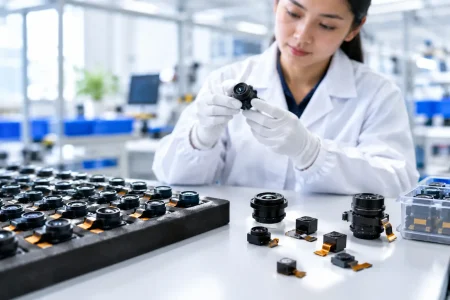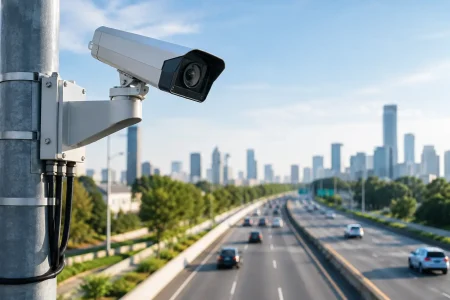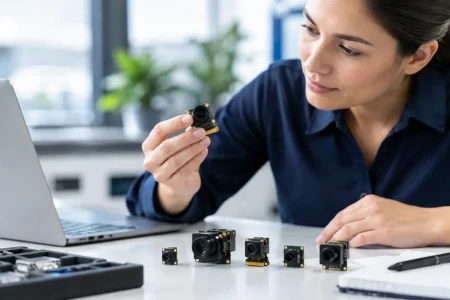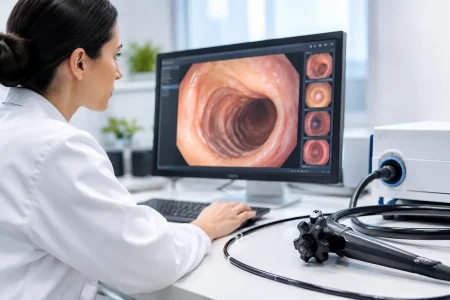

A camera module that looks correct on a bench can still fail the commercial program. It may drop frames when cable length changes, introduce noise near a motor, lose focus across temperature swings, or become unavailable after the first production run. This industrial camera sourcing guide is built for OEM teams that need to qualify an imaging supplier and a camera design as one decision.
For industrial automation, robotics, medical devices, smart agriculture, security equipment, and embedded hardware, the lowest unit price rarely defines the lowest total cost. The right sourcing process begins with the operating condition, moves through the imaging architecture, and ends with a manufacturing and quality plan that can hold performance over time.
Start With the Image the System Must Produce
Procurement specifications often begin with resolution. Resolution matters, but it is only one component of usable image quality. A 5 MP module may be more effective than a 12 MP module when it has a larger pixel size, better low-light performance, a suitable lens, and a stable frame rate at the required working distance.
Define the inspection target before selecting a sensor. What is the smallest feature that must be detected? How large is the field of view? Is the target stationary, moving, reflective, translucent, or poorly illuminated? A barcode reader, a pick-and-place robot, and an industrial endoscope can all use compact camera modules, but their optical and electrical requirements are very different.
Document measurable acceptance criteria. These should include minimum contrast at the target feature size, acceptable distortion, frame rate, motion blur limit, illumination condition, working distance, and allowable latency. If color is relevant, specify whether the application needs faithful color rendering or simply reliable separation between colors. For measurement applications, include calibration expectations and the permitted error after assembly.
Sensor Selection Is a System Decision
CMOS sensor selection should be based on pixel format, sensitivity, dynamic range, shutter type, output interface, availability, and software support. A rolling shutter sensor can provide excellent value for stationary inspection or controlled movement. For fast-moving parts, robotic arms, or vibration-prone equipment, a global shutter sensor may be necessary to avoid geometric distortion.
Ask for real image samples captured under conditions close to your application, not only promotional test charts. Test scenes should include the material, reflectivity, distance, motion, and lighting geometry your product will encounter. A sensor that performs well under diffuse office lighting may behave very differently inside a metal enclosure or under pulsed LED illumination.
Also consider lifecycle status early. Consumer-focused sensors can change quickly, while industrial programs may require years of supply continuity. A qualified supplier should explain whether the selected sensor is active, mature, or approaching end of life, and what alternate options can be evaluated if availability changes.
Match the Interface to the Product Architecture
The interface determines more than connector selection. It affects bandwidth, cable length, host processor requirements, firmware effort, electromagnetic compatibility, and serviceability.
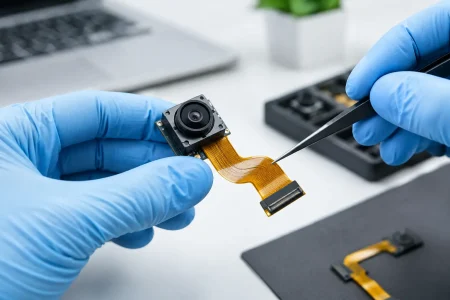
MIPI CSI-2 camera modules are common in compact embedded products because they support high bandwidth with low power consumption. They are well suited to short internal connections in devices built around compatible application processors or system-on-chip platforms. Their trade-off is integration complexity: lane configuration, driver support, signal integrity, and flexible printed cable routing need early engineering attention.
USB camera modules, including USB 2.0, USB 3.0, and UVC designs, are often practical for systems that need rapid integration with PCs, industrial computers, or standard operating systems. USB 3.0 offers substantially more bandwidth for higher resolution or frame rate requirements, while USB 2.0 can remain appropriate for modest imaging demands and cost-sensitive designs. UVC support can reduce driver work, but it does not replace application-level testing for latency, exposure control, or long-cable stability.
DVP modules can fit legacy embedded platforms and simpler processor architectures, although bandwidth limitations may restrict resolution and frame rate. For every interface, confirm the complete signal path: camera connector, flex cable or harness, board layout, host connector, power delivery, and software driver. A camera module cannot compensate for an underspecified host design.
Treat Optics, Mechanics, and Lighting as One Assembly
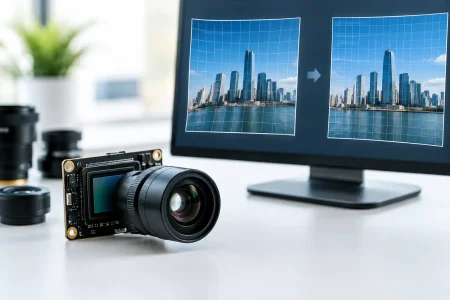
Many sourcing problems blamed on the camera module begin with the lens or mechanical stack-up. Lens focal length determines field of view, but it does not alone guarantee that the target will be sharp. Sensor format, working distance, depth of field, aperture, lens distortion, and assembly tolerance all influence the result.
A fixed-focus module is efficient when the working distance is tightly controlled. If subjects move through a broad range, autofocus, variable focus, or a purpose-designed optical solution may be required. Autofocus adds capability, but it also introduces power, control, reliability, and test considerations. It is not automatically the best choice for industrial equipment.
Confirm whether the supplier can control lens selection, lens shading correction, focus position, adhesive process, and active alignment where needed. For small modules, a fraction of a millimeter in focus position can materially affect image quality. If a product uses a narrow enclosure, angled camera, or long flexible connection, share the mechanical constraints during the quotation stage rather than after a standard module has been selected.
Lighting belongs in the same discussion. Backlighting, coaxial illumination, ring lights, infrared LEDs, and diffuse lighting each solve different imaging problems. For near-infrared applications, verify sensor response, lens transmission, IR-cut filter requirements, and the impact on visible-light performance. A camera selected without a lighting plan is being sourced with incomplete requirements.
Use a Practical Industrial Camera Sourcing Guide for Supplier Qualification
A supplier should be evaluated on its engineering and manufacturing controls, not only its sample quality. Samples can be hand-tuned. Production capability is demonstrated by repeatable processes, incoming material control, documented inspection standards, traceability, and a defined change-notification process.
Ask how the supplier manages sensor, lens, PCB, FPC, connector, and firmware changes. Determine which parameters are controlled on the production line and which are verified through outgoing inspection. For example, a program may require checks for cosmetic condition, current consumption, image output, dead pixels, color behavior, focus, field of view, and mechanical dimensions. The exact test plan depends on the application, but it should be agreed upon before pilot production.
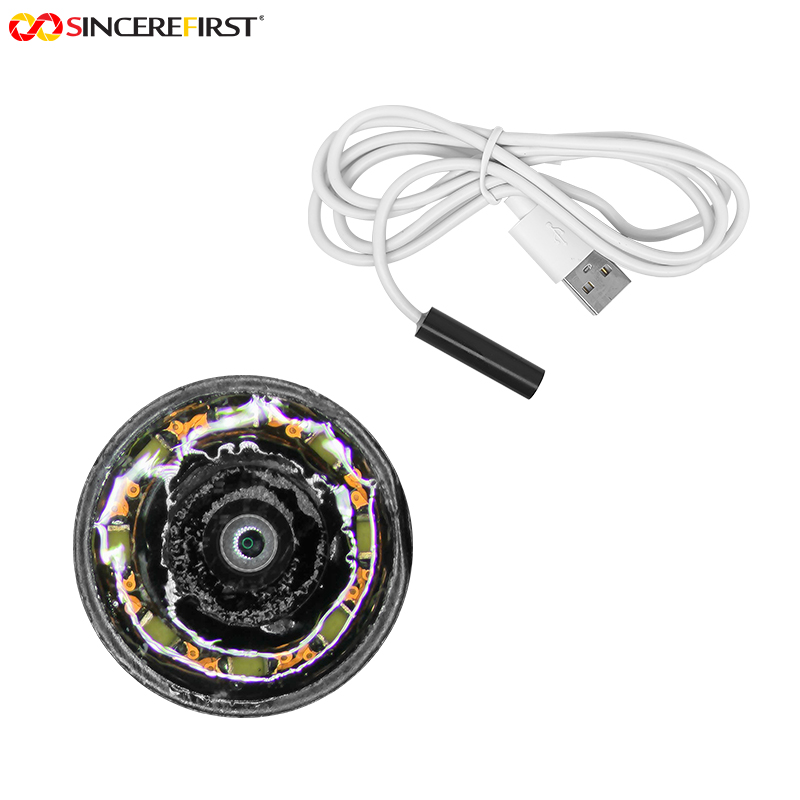
For medical, endoscopic, or harsh-environment equipment, qualification goes further. You may need evidence of performance after vibration, shock, temperature cycling, humidity exposure, repeated flexing, sterilization-compatible design, or extended illumination operation. Industrial endoscope modules also demand careful attention to diameter, cable construction, LED thermal behavior, and side-view or forward-view optical geometry.
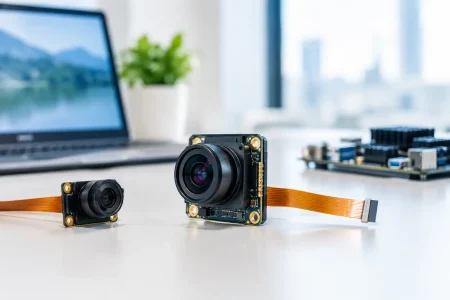
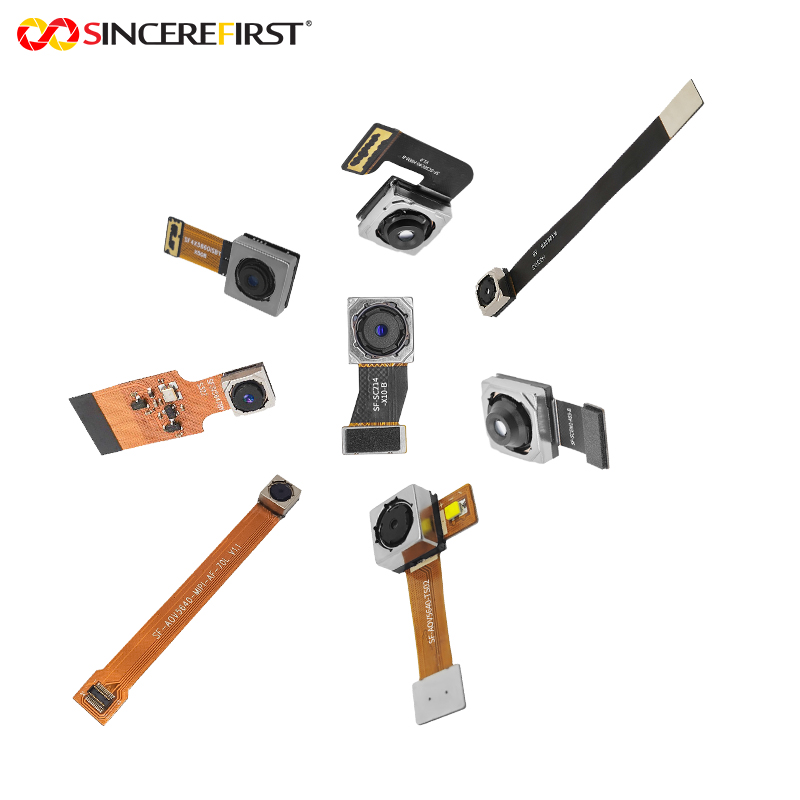
Engineering responsiveness matters when requirements change. A strong camera manufacturer can offer standard FPC, MIPI, DVP, and USB camera modules while also modifying sensor selection, lens parameters, cable length, connector orientation, housing, firmware settings, and image tuning. SincereFirst supports this path through direct module manufacturing, optical integration, rapid sample development, and scalable production for customized embedded vision programs.
Validate Before You Approve Mass Production
The pilot stage should reproduce the realities of production use. Test several samples from more than one build lot, and use the intended host board, cable, enclosure, power supply, lighting, and software. A single golden sample only proves that a design can work once.
Measure performance at environmental extremes, not just nominal room temperature. Check startup behavior, exposure stability, frame consistency, image artifacts, power consumption, and recovery after power interruption. Where wireless systems, motors, displays, or switching power supplies are nearby, evaluate electromagnetic interference in the assembled product.
Define what happens when a defect is found. The supplier and buyer should have a clear process for failure analysis, containment, root cause reporting, corrective action, and replacement material. This is especially valuable when production is distributed across North America, Europe, or Asia, where a delayed response can affect multiple assembly sites.
Commercial terms need the same discipline. Confirm minimum order quantities, sample lead times, production lead times, payment terms, warranty scope, packaging method, labeling, export documentation, and forecast expectations. If your program requires custom optics or tooling, clarify ownership, maintenance responsibility, and the circumstances under which tooling must be replaced.
Build for Continuity, Not Just the First Purchase Order
The strongest sourcing decision is one that keeps working when volumes rise, requirements evolve, or a component reaches end of life. Keep a controlled specification package that includes the approved bill of materials, drawings, interface settings, image tuning version, inspection criteria, and change-control requirements. This package reduces ambiguity between R&D, procurement, quality, and the factory.
Before releasing the next camera request for quotation, give suppliers the application facts they need to engineer accurately: target size, working distance, illumination, resolution, frame rate, interface, host platform, space envelope, expected annual volume, environmental conditions, and program lifecycle. Better inputs produce better samples, faster decisions, and a camera supply chain that supports the product long after launch.