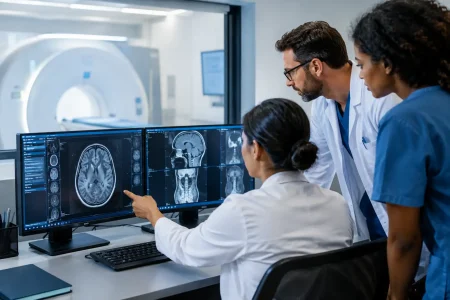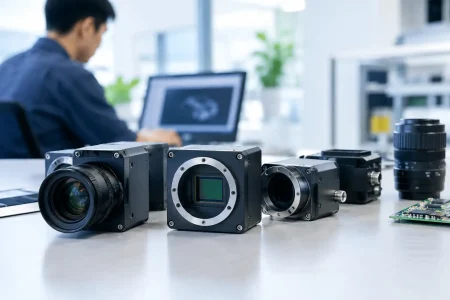

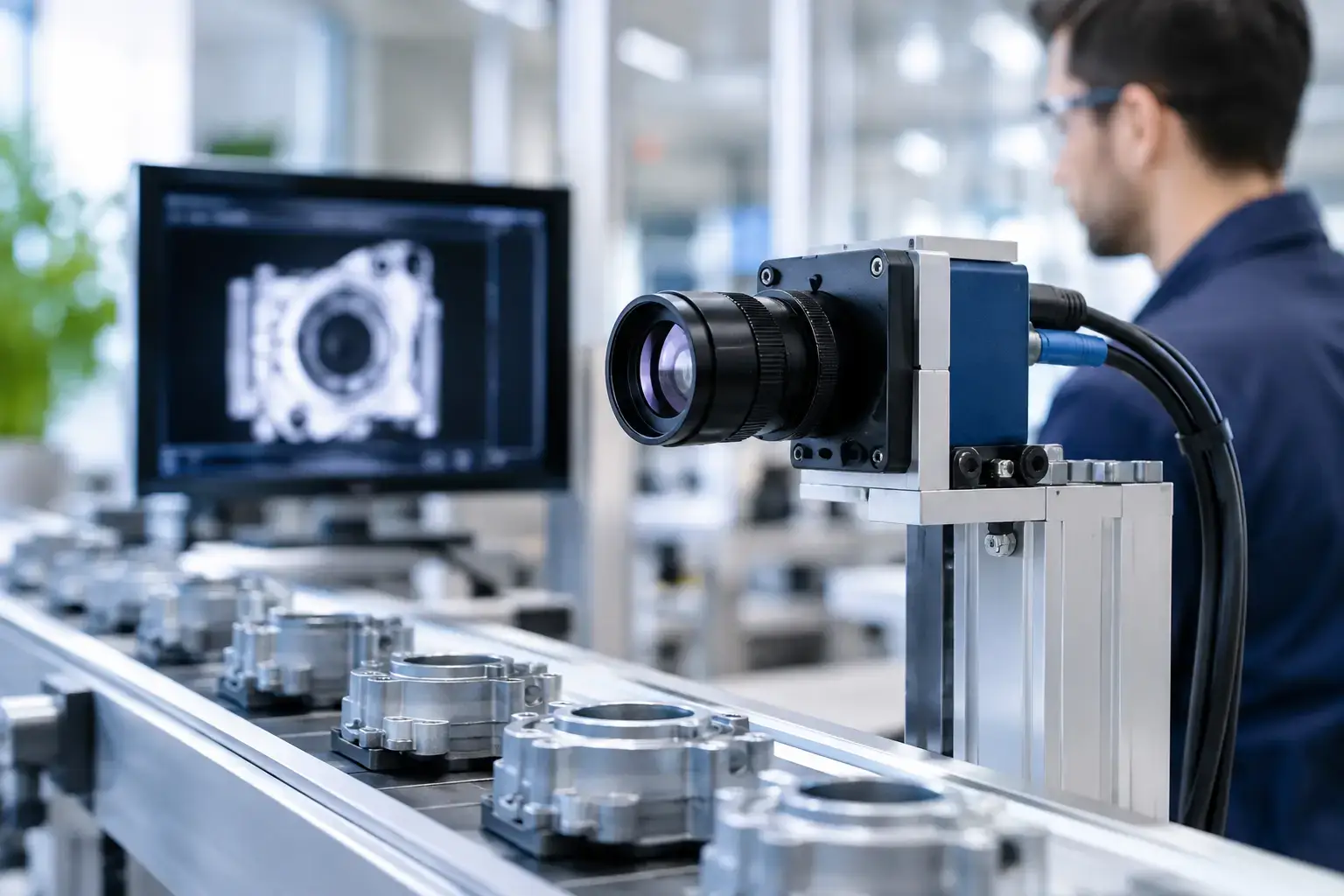
A production line can look perfectly normal under white light while a camera misses the defect that matters: a moisture variation in food, an unreadable mark beneath dark ink, a weak seal, or a foreign material hidden by its visible color. Near infrared cameras give machine vision systems access to a different contrast mechanism, allowing OEMs and integrators to see how materials absorb and reflect wavelengths beyond the visible spectrum.
For a product team, the question is not simply whether to add infrared capability. It is whether the sensor, optics, illumination, mechanical package, and image-processing pipeline will deliver repeatable contrast at production speed. A technically capable camera module only becomes a dependable commercial solution when those choices are engineered as one system.
What Near Infrared Cameras Detect
Near infrared, often abbreviated NIR, generally covers wavelengths from approximately 700 nm to 1,000 nm for conventional silicon image sensors. Some specialized imaging systems extend further, but silicon sensitivity falls sharply near its upper limit. This distinction matters because a camera specified as IR-sensitive may work very well with 850 nm illumination yet produce weak signal at 940 nm or above.
NIR imaging is valuable because materials that appear similar in visible light can behave very differently under near infrared illumination. Dark printing may become more transparent. Certain plastics, fabrics, coatings, and organic materials can separate more clearly. Water often absorbs portions of the NIR spectrum, making it useful for moisture-related inspection when the wavelength and lighting geometry are selected correctly.
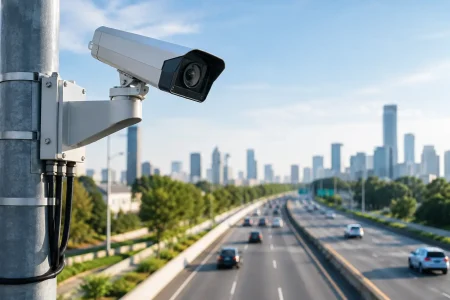
Common applications include code and document verification, agricultural sorting, pharmaceutical inspection, recycling, food quality screening, biometric devices, security monitoring, robotics navigation, and industrial process control. The application determines the right wavelength. There is no universal NIR configuration that performs equally well across every material and environment.
Selecting Near Infrared Cameras by System Requirements
The first specification to examine is spectral response, not resolution. A high-resolution sensor is of limited value if its quantum efficiency is insufficient at the operating wavelength. Sensor suppliers typically publish a spectral sensitivity curve. Engineering teams should compare that curve with the wavelength of the intended LEDs or laser source, then allow margin for lens transmission, working distance, exposure time, and production aging.
At 850 nm, silicon sensors usually offer stronger sensitivity and can achieve favorable exposure times. The LEDs can emit a faint red glow, which may be acceptable for many factory systems and security devices. At 940 nm, illumination is less visible to the human eye, making it attractive for consumer electronics, access control, and discreet monitoring. The trade-off is lower sensor response, which may require more illumination, longer exposure, a larger aperture, or a sensor with better NIR performance.
Monochrome sensors are usually the preferred choice when NIR contrast is the primary requirement. Without a Bayer color filter array, a monochrome sensor receives more infrared energy per pixel and avoids demosaicing artifacts. It can provide better low-light sensitivity, sharper detail, and more consistent inspection results. Color sensors can be suitable when a device needs both visible color imaging and NIR operation, but this dual-use approach requires careful filter design and calibration.
Resolution should follow the smallest feature that must be detected. Start with the field of view, required defect size, and inspection tolerance. Then calculate the necessary pixels across the target area, with margin for motion blur and optical distortion. Selecting excessive resolution raises bandwidth, processing load, storage requirements, and module cost without necessarily improving the pass-fail decision.
IR-Cut Filters Are a Critical Design Choice
Most standard color camera modules include an IR-cut filter. It blocks infrared light so visible images retain natural color. For NIR imaging, that filter must be removed, replaced, or mechanically switched.
A fixed NIR camera module typically uses an IR-pass filter that blocks visible light and passes the target infrared band. This approach improves contrast and reduces interference from ambient light. A day-night camera may use a movable IR-cut filter, retaining color performance in daytime operation and enabling infrared sensitivity in low light. It adds mechanical complexity, however, and may not be appropriate for compact, high-cycle embedded products.
Do not assume that removing an IR-cut filter automatically creates a useful NIR camera. Visible wavelengths may still dominate the image unless the optical stack and illumination are controlled. In inspection systems, a properly selected bandpass or long-pass filter is often the difference between a demonstrator image and a stable production result.
Optics and Illumination Determine Image Quality
Lens selection for NIR requires more than choosing focal length and aperture. Standard visible lenses are optimized for visible wavelengths. When infrared light reaches a different focus plane, the result can be soft images or focus shift between visible and NIR modes. This effect is known as chromatic focal shift.
For fixed-wavelength inspection, the lens can be focused specifically at the operating NIR wavelength. For cameras that alternate between visible and NIR modes, use an IR-corrected lens or validate image sharpness in both conditions. Lens coatings also affect transmission. A lens that performs well in visible light may lose meaningful transmission at 850 nm or 940 nm.
Illumination geometry is equally important. Ring lights, bar lights, backlights, coaxial lights, and diffuse dome lights can produce very different material contrast. A reflective metal surface may need diffuse illumination to control glare, while a translucent film may reveal defects more effectively with backlighting. If the target moves quickly, strobe control can reduce blur while limiting LED heat and power consumption.
Ambient sunlight is a frequent source of instability because it contains significant near infrared energy. Outdoor systems and factory stations near windows may need optical filtering, shielding, synchronized strobes, or exposure control to maintain repeatable results across shifts and seasons.
Choose the Right Camera Interface and Module Architecture
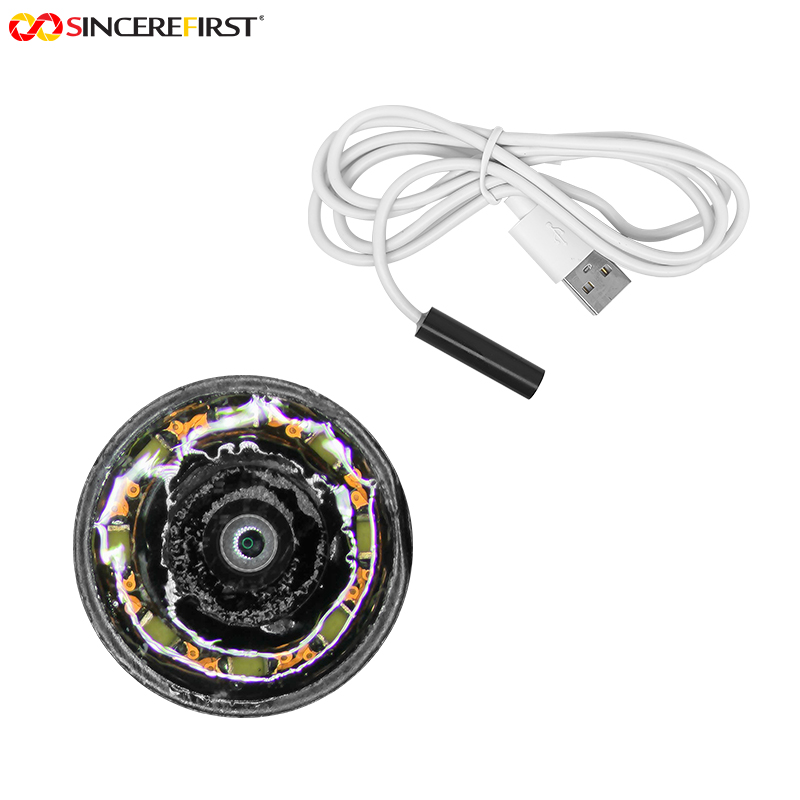
The interface should match the system architecture and data rate. MIPI CSI-2 is widely used in compact embedded devices where a processor board is located close to the camera module. USB camera modules support fast integration with industrial PCs and edge-computing platforms, while USB3.0 provides more bandwidth for higher-resolution or higher-frame-rate imaging. UVC support can simplify software deployment when standard driver compatibility is required.
DVP interfaces remain relevant for cost-sensitive embedded platforms and legacy processors, but their parallel signaling can complicate routing in dense hardware designs. For industrial products, the choice should account for cable length, electromagnetic environment, host processor capability, power budget, and long-term component availability.
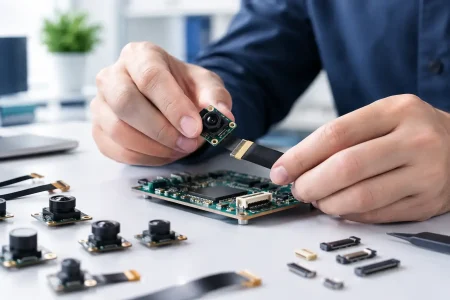
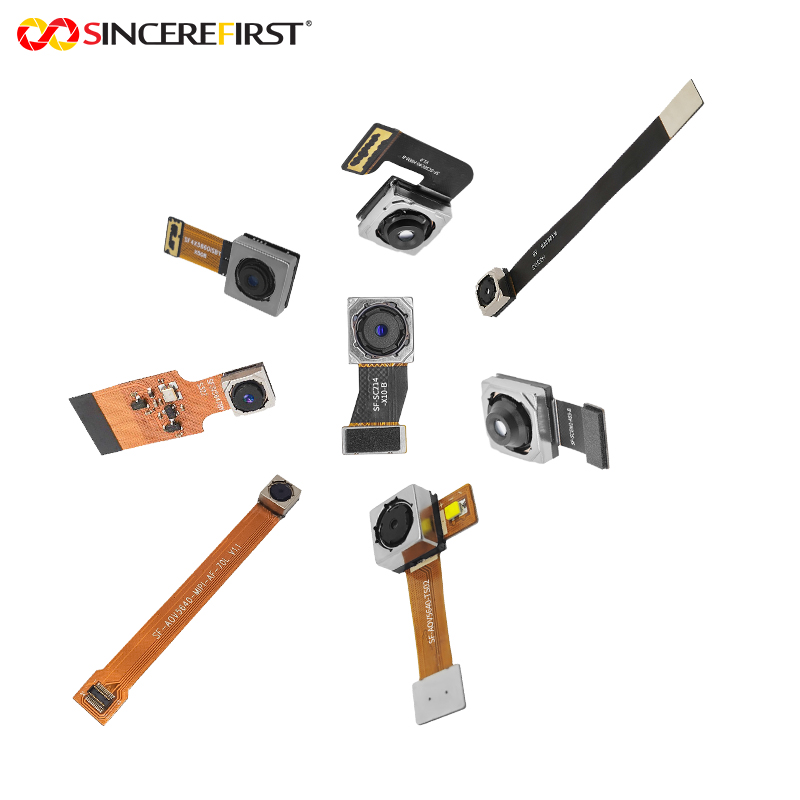
Mechanical integration deserves the same attention as electronic integration. Module dimensions, FPC bend radius, connector orientation, mounting tolerances, thermal paths, and lens retention all influence manufacturing yield. In mobile robotics, vibration and shock can change focus or damage connections. In medical or endoscopic equipment, diameter, heat, cleaning requirements, and image consistency become central design constraints.
Validate the NIR System Before Production Release
A useful prototype does not prove that a vision system is ready for scaled manufacturing. Validation should use real samples, including acceptable variation, known defects, surface changes, temperature effects, and the full range of expected working distances. Test under actual line speed and environmental light, not only in a controlled lab setup.
Teams should measure signal-to-noise ratio, contrast between pass and fail samples, motion blur, edge sharpness, frame stability, and exposure margin. If an algorithm will classify defects, collect data across shifts and production lots. A model trained on ideal samples can fail when material batches, illumination output, or part orientation changes.
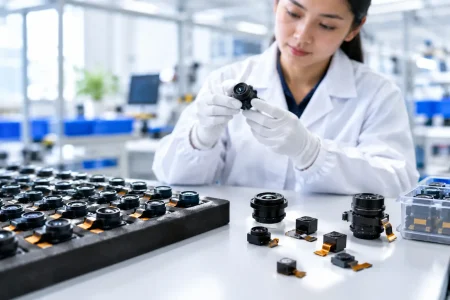
Supplier qualification should also cover incoming inspection, optical alignment controls, sensor traceability, firmware configuration, aging tests, and sample-to-mass-production consistency. For custom modules, locking the optical stack, illumination wavelength, lens focus method, and image-tuning parameters early prevents costly revisions after tooling and regulatory work have begun.
SincereFirst supports this process with embedded camera module engineering, optical component integration, rapid customization, and scalable cleanroom manufacturing. For OEM programs, the strongest path is to define the imaging target first, then develop the camera module around the actual inspection or sensing task rather than adapting the task to a generic visible-light camera.
Near infrared imaging delivers value when it makes a decision more reliable: identifying a material, verifying a process, separating a defect from an acceptable part, or enabling a device to operate when visible light is not enough. Specify it around measurable contrast and production conditions, and the camera becomes an intelligent eye built for the job it must perform.