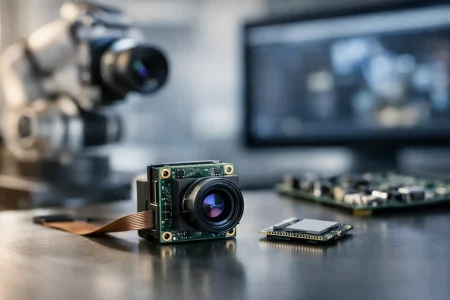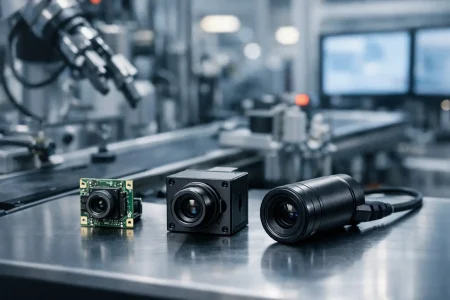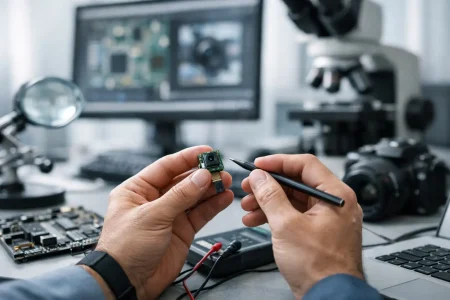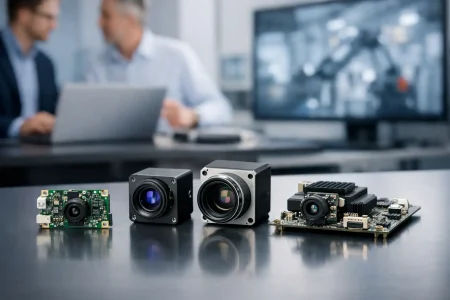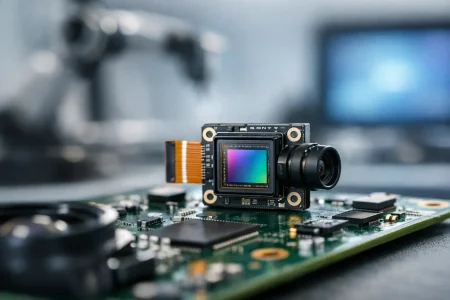

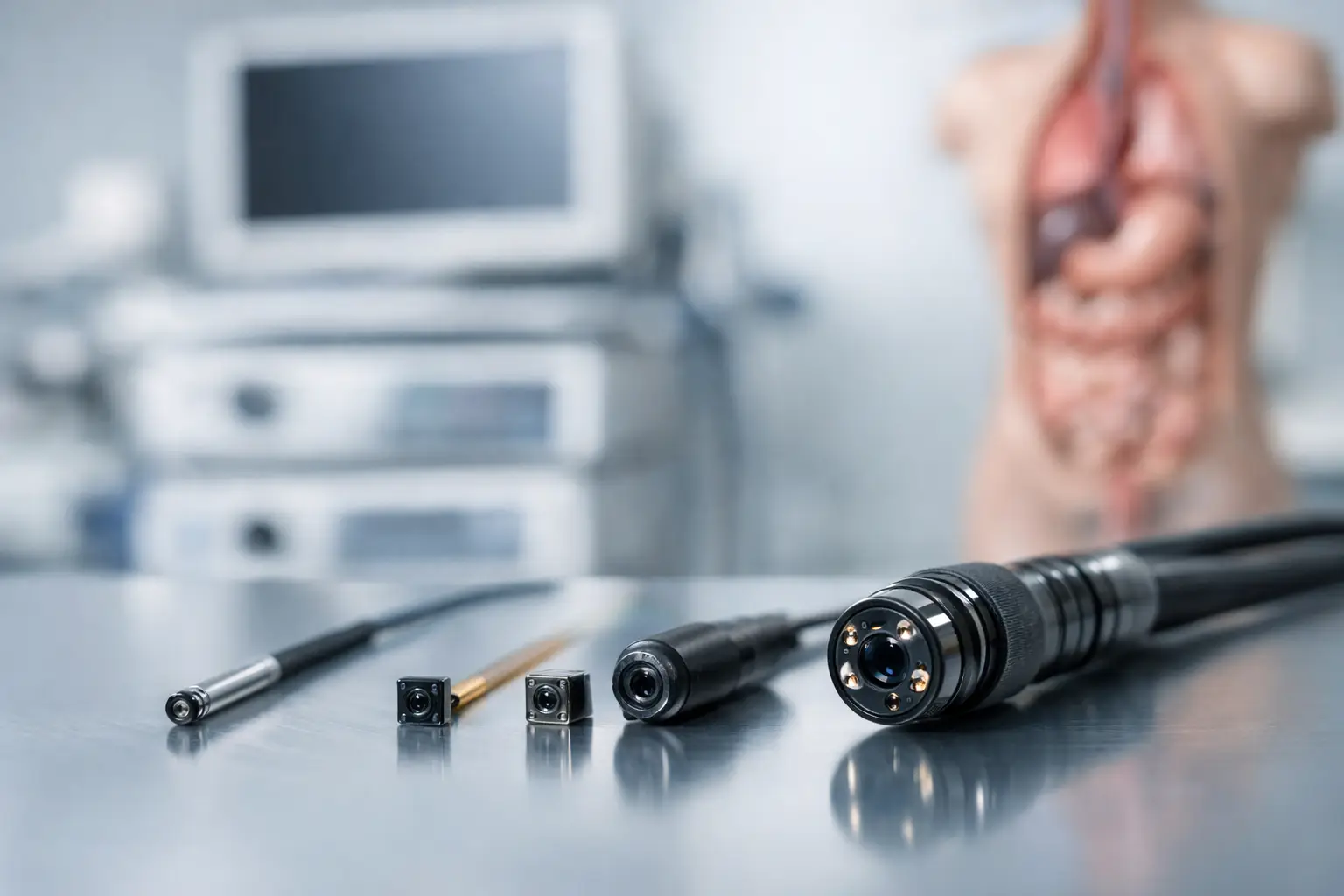
A medical endoscope program usually fails for predictable reasons, not dramatic ones. The image is too noisy in low light, the distal tip grows beyond the target diameter, the interface does not fit the processor board, or the supplier can sample quickly but cannot hold consistency at volume. That is why choosing the best medical endoscope camera modules is less about chasing the highest spec on paper and more about matching imaging performance, mechanical constraints, and manufacturing discipline.
For OEMs, integrators, and engineering teams, the real question is not which module looks best in a catalog. It is which module architecture will stay stable from prototype through regulatory validation and into production. In medical imaging, small mismatches become expensive late-stage redesigns.
What defines the best medical endoscope camera modules
The best medical endoscope camera modules balance six requirements at the same time: image quality, module diameter, illumination control, thermal behavior, interface compatibility, and production repeatability. If one of these is weak, the total system suffers.
Image quality starts with the sensor, but it does not end there. Resolution matters, yet sensitivity, color reproduction, dynamic range, and noise control often matter more in actual clinical viewing. A 1080p module with stronger low-light behavior can outperform a higher-resolution option when the working distance is short and the cavity is poorly illuminated.
Module size is equally decisive. In endoscopy, every fraction of a millimeter changes what is possible in the distal tip. A smaller diameter supports less invasive designs, but it also reduces room for optics, LEDs, shielding, and mechanical reinforcement. That trade-off is where many projects get stuck. The best module is not the smallest possible module. It is the smallest one that still delivers stable image performance and manufacturable assembly.
Then there is repeatability. A promising sample means very little if lens alignment, color consistency, cable reliability, or sealing quality drift during mass production. For medical devices, supplier process control matters almost as much as optical design.
Sensor choice is where performance starts
Resolution is only part of the picture
Buyers often begin with VGA, HD, or 1080p requirements, and that is reasonable. But in medical endoscope design, useful detail depends on more than pixel count. Sensor size, pixel size, signal-to-noise ratio, and ISP tuning all affect whether tissue boundaries, texture changes, and fluid reflections remain visible.
For compact medical modules, there is often a tension between smaller package size and better light capture. Smaller sensors help reduce distal-end dimensions, but larger pixels generally handle dim scenes better. If the procedure involves narrow cavities or variable illumination, low-light performance can matter more than headline resolution.
Color accuracy and white balance need application tuning
Medical viewing does not tolerate careless color output. Surgeons and clinicians rely on subtle visual cues, and overprocessed images can be misleading. The best medical endoscope camera modules are usually tuned for stable white balance, controlled saturation, and predictable response under the specific LED spectrum used in the device.
This is one reason custom tuning is often the better path for commercial devices. A standard module may provide a good starting point, but medical programs usually benefit from adjustments to exposure strategy, gamma, color matrix, and lens selection.
Size, optics, and lighting must be designed together
Small diameter changes everything
Endoscope modules are commonly selected by outer diameter first, because industrial design and clinical use set strict physical limits. But shrinking diameter creates immediate optical and electrical consequences. Lens stack options narrow. LED placement gets harder. Heat dissipation worsens. Assembly tolerance becomes tighter.
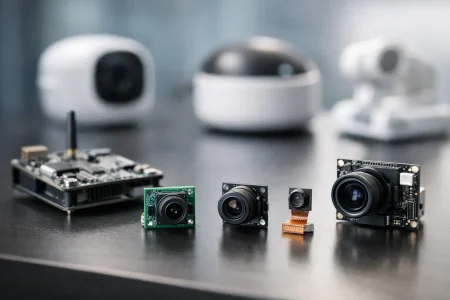
A 1.0 mm to 2.0 mm class module serves very different design priorities than a 5.0 mm to 10.0 mm module. Ultra-miniature formats help access tight anatomy, but larger assemblies can support stronger illumination, wider field of view options, and better signal integrity. There is no universal winner here. The right choice depends on insertion path, clinical objective, and processor architecture.
Illumination quality often separates usable images from unusable ones
In many endoscope systems, the sensor gets most of the attention while lighting gets treated as secondary. That is a mistake. Poor LED arrangement creates glare, hotspots, shadowing, and color shift. A strong module design considers LED count, placement symmetry, brightness control, thermal limits, and interaction with lens geometry.
This is especially important in reflective wet environments. A technically capable sensor can still produce poor results if the illumination causes constant flare or uneven exposure across the field.
Interface and system integration are where delays begin
The best medical endoscope camera modules are not just optically strong. They are easy to integrate into the target device. This is where interface selection matters.
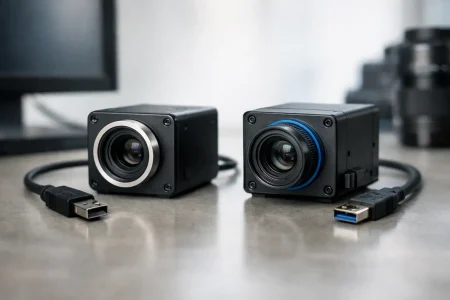
MIPI is attractive for compact embedded designs that need high-speed image transfer and low board space. USB is practical for development platforms, external processors, and systems that prioritize fast integration. DVP may still fit certain legacy or cost-sensitive architectures. The best choice depends on processor support, cable routing, power budget, and latency requirements.
Cable design also deserves more attention than it usually gets. In narrow medical devices, flex behavior, bend radius, shielding, and connector reliability can decide long-term field performance. A high-performing camera head paired with an unstable cable assembly is not a high-performing module in real use.
Manufacturing quality is a product feature
Sampling speed matters, but process control matters more
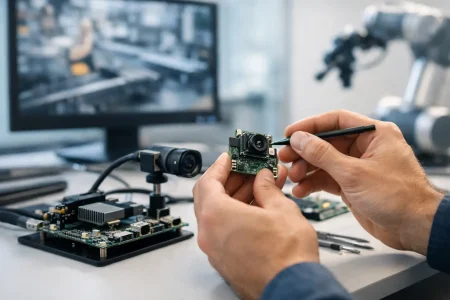
Procurement teams often feel pressure to move quickly, especially when prototype timelines are compressed. Fast sample turnaround is valuable, but only if it leads into a controlled production process. Medical device buyers should evaluate whether the supplier can maintain lens alignment accuracy, cleanroom assembly discipline, incoming inspection standards, and batch-to-batch consistency.
That is where an engineering-led manufacturer has a clear advantage. Teams that handle both module design and production engineering can solve issues earlier, before they become expensive sourcing problems.
Ask how the module will scale
A module that performs well in pilot builds may still become risky at commercial volume. Yield stability, component sourcing resilience, process documentation, and test coverage all affect whether the supplier can support a product after launch. For medical programs, this is not a secondary question. It should be part of qualification from the beginning.
Manufacturers with deep imaging experience and high-volume capability are generally better positioned to support custom variants, rapid iteration, and stable delivery. That is especially relevant when a device maker needs changes in sensor, field of view, LED layout, or cable configuration without restarting the whole design.
How to compare medical endoscope modules without getting misled
When teams compare options, they often overweight visible specs and underweight integration risk. A smarter evaluation starts with the use case. What anatomy is being viewed, at what working distance, under what lighting conditions, and through what processor pipeline? Once those answers are clear, the shortlist becomes more realistic.
The next step is to compare complete module behavior, not just sensor data sheets. Review image output in representative conditions, including low light, reflective surfaces, motion, and narrow spaces. Check how the module performs after cable movement and thermal cycling. Validate color stability and exposure control with the actual light source, not a lab substitute.
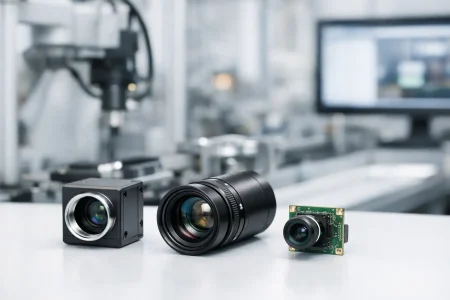
It is also worth asking whether a standard module is truly sufficient. In some cases, yes. If the device architecture is flexible and the clinical demand is straightforward, an off-the-shelf solution may reduce development time. But when diameter is constrained, image tuning is critical, or packaging is complex, a customized module usually delivers a better commercial result.
For buyers evaluating suppliers, the strongest signal is often responsiveness backed by engineering depth. A partner should be able to discuss sensor trade-offs, lens options, interface limits, and production feasibility in specific terms. General claims are easy. Practical design guidance is harder to fake.
Why custom development often wins
The market does not really have one single answer for the best medical endoscope camera modules because medical devices are too varied. A module for a disposable visualization product has different priorities than one for a reusable diagnostic system. One program may need the smallest possible distal end. Another may prioritize HD output, stronger illumination, or easier processor integration.
That is why many serious OEMs choose a manufacturer that can supply both ready-made formats and custom development. SincereFirst, through its endoscope-focused capability, fits this model well because it can support diameter ranges from 0.9 mm to 10.0 mm and adapt module structure, interface, and imaging configuration around the product requirement rather than forcing the product to fit a fixed catalog part.
The strongest buying decision usually comes from balancing what must be customized against what should remain standardized for speed and cost control. That balance is where experienced camera module manufacturers create real value.
The right module should make your device easier to launch, not harder to explain away after testing. If a supplier can speak clearly about optics, electronics, assembly tolerance, and scale production in the same conversation, you are probably looking in the right place.