
A barcode reader mounted 12 inches from a conveyor has a very different imaging problem from a handheld diagnostic device that must capture detail from 2 inches to 10 inches away. That distinction should drive the choice between fixed focus versus autofocus modules long before a camera reaches prototype stage. The wrong focus architecture can add avoidable cost, slow qualification, reduce reliability, or leave a finished product unable to deliver sharp images in its real operating range.
For OEMs, system integrators, and embedded product teams, the practical question is not which option is more advanced. It is which camera module will maintain the required image quality at the required working distances, under the mechanical, electrical, environmental, and production constraints of the device.
Fixed Focus Versus Autofocus Modules: The Core Difference
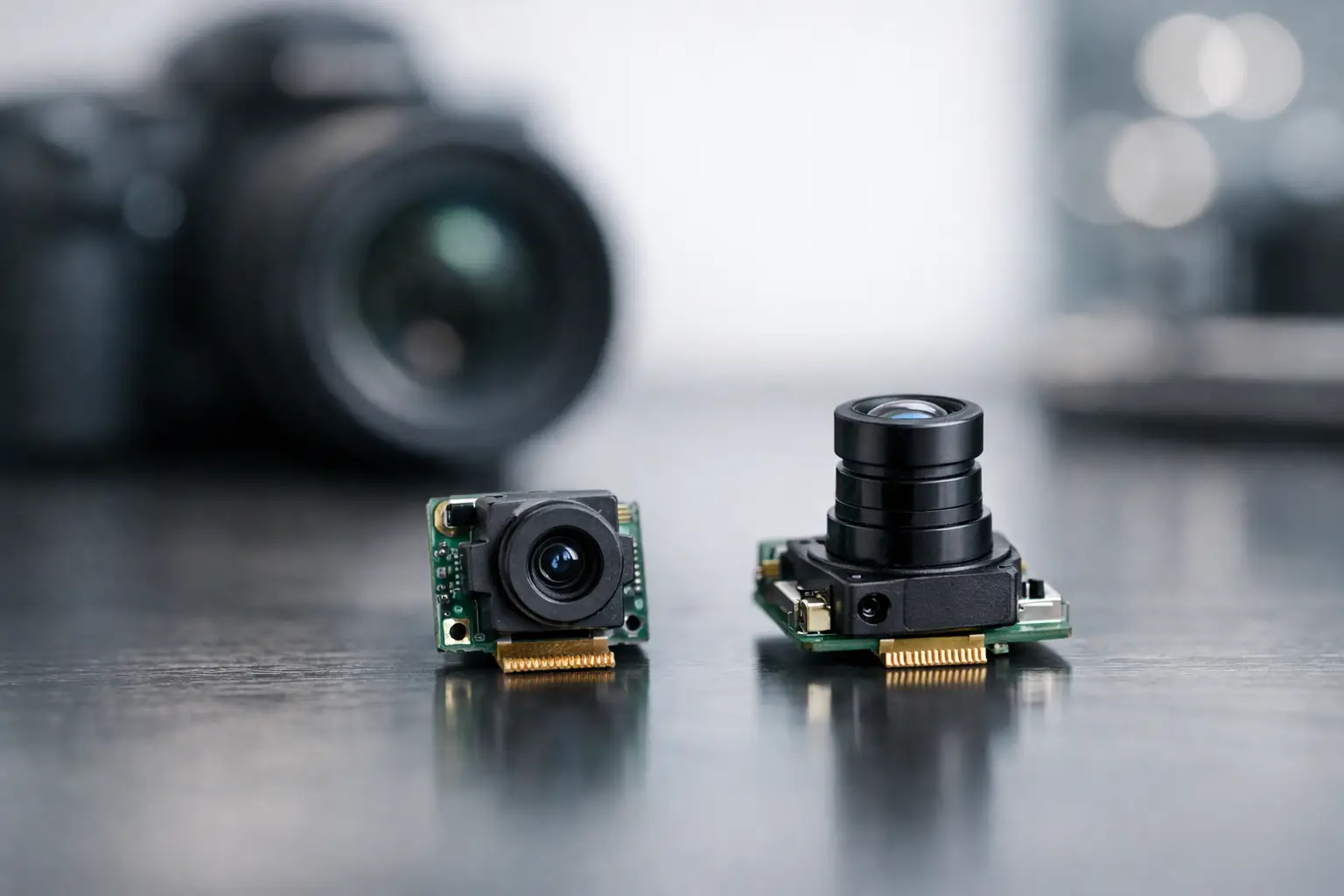
A fixed-focus camera module uses a lens positioned and secured at a predetermined focal setting. The module is optimized for a defined object-distance range, often called the working distance. Once assembled, the lens does not move during operation. The apparent simplicity is a major advantage when the target distance is controlled or when depth of field can cover the application range.
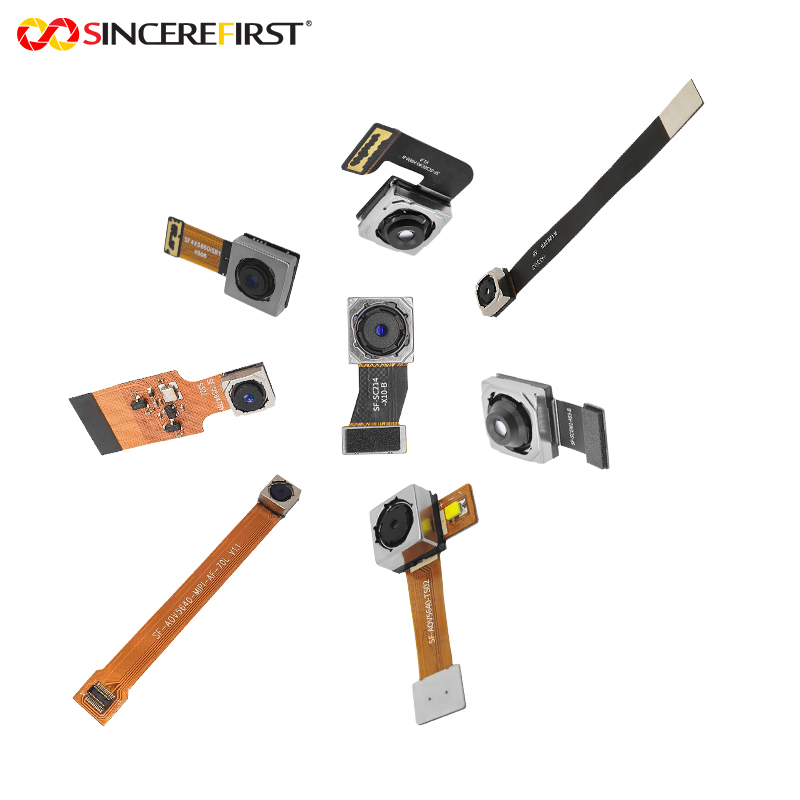
An autofocus camera module includes an adjustable optical element or lens mechanism. A voice coil motor, liquid lens, or similar actuator shifts the lens position to obtain focus at different distances. The module also requires a focus strategy, such as contrast detection, phase-detection support from the sensor, or host-side control logic. It can adapt to changing scenes, but it introduces moving components, power demand, tuning requirements, and a more complex validation path.
Neither is automatically superior. Fixed focus is often the stronger engineering choice for repeatable machine vision tasks. Autofocus becomes valuable when the end user or application cannot control object distance and a fixed optical setup cannot provide sufficient sharpness across the required range.
When Fixed-Focus Modules Deliver Better Results
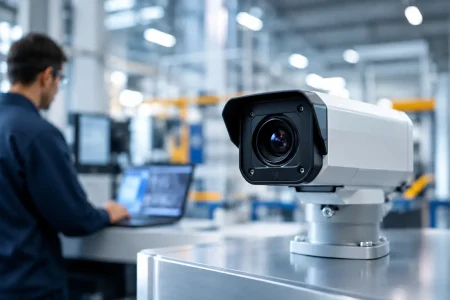
Fixed-focus modules are common in industrial automation, access control, smart appliances, fixed-position security devices, embedded scanning equipment, and many robotic systems. In these applications, the camera position and target range are known during product design. The module can therefore be tuned for the distance that matters rather than attempting to serve every possible distance.
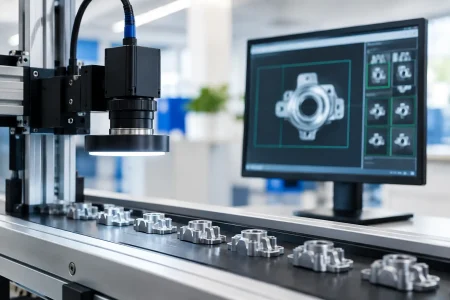
A fixed-focus design typically offers faster image availability. There is no focus hunt, no actuator movement, and no delay before capture. That matters for a conveyor inspection station, high-speed barcode capture, or a robot that needs predictable frame-by-frame imaging for guidance and defect detection.
Mechanical stability is another decisive benefit. A fixed lens assembly has fewer moving parts and fewer failure modes associated with repeated focus cycles, shock, vibration, or actuator wear. For devices expected to operate continuously in factories, warehouses, vehicles, or outdoor enclosures, this can simplify reliability planning.
Fixed focus also supports a compact bill of materials. It generally requires less mechanical space than a motorized lens design and avoids autofocus actuator cost. For high-volume devices where target distance is stable, those savings can be meaningful without compromising image performance.
The limitation is clear: focus quality falls outside the designed range. A module optimized for documents at 300 mm may not resolve fine features at 80 mm. Lens aperture, focal length, sensor format, pixel size, and required field of view all influence usable depth of field. Stopping down the aperture can extend that range, but it also reduces the light reaching the sensor. In low-light conditions, this may increase exposure time, gain, and image noise.
Fixed Focus Is Not the Same as Poor Flexibility
A well-designed fixed-focus module can cover a surprisingly practical distance range. The key is to define the near limit, far limit, field of view, illumination level, and smallest detail that must be resolved. Engineers should judge focus performance at real object distances, not only from a center-chart image captured under ideal lab lighting.
For example, an industrial reader may only need crisp results from 200 mm to 500 mm. A fixed-focus lens optimized around that zone can be more consistent than an autofocus module that must acquire focus before every capture. Conversely, a mobile inspection tool may encounter surfaces from 30 mm to 1,000 mm away. A single fixed setting may be too restrictive unless the system accepts lower resolution at one end of the range.
When Autofocus Modules Are Worth the Added Complexity
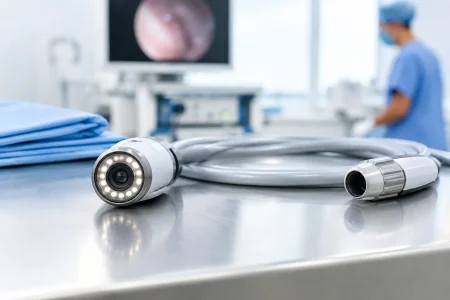
Autofocus modules are suited to products with variable working distances and user-controlled framing. Handheld medical accessories, consumer-facing smart devices, portable inspection tools, document capture equipment, and certain endoscope-related systems often benefit from active focusing.
The primary advantage is image sharpness across changing scenes. A user can move closer to inspect a component label, then pull back to capture the full assembly. With an appropriate focus mechanism and control algorithm, the camera can adjust to both conditions without requiring manual lens adjustment or a narrow fixed-focus compromise.
Autofocus can also help compact devices achieve close-up performance. As sensor resolutions rise, users expect fine detail to remain clear at short distances. A fixed lens may be tuned for a midrange target distance, while an autofocus solution can shift toward a near-focus position when small features matter.
That flexibility has costs. Voice coil motor modules consume power during focus movement, require mechanical clearance, and may be more sensitive to drop, vibration, and long-term actuator performance than fixed-focus alternatives. Focus time must be tested under low contrast, low light, reflective surfaces, repetitive patterns, and motion. A module that focuses quickly on a printed test chart can behave very differently on polished metal, translucent material, or a moving target.
Autofocus also places demands on the broader imaging system. The sensor, image signal processor, firmware, and operating system must support the selected autofocus approach. If the host processor has limited bandwidth or the product must boot and capture immediately, focus control can become a system-level constraint rather than a camera-module feature.
Select the Autofocus Mechanism for the Environment
Voice coil motor autofocus is widely used because it is compact and well established. It is suitable for many mobile and embedded designs, but the moving lens mechanism must be evaluated for lifecycle and mechanical stress.
Liquid lens technology can provide rapid focus changes with no conventional moving lens barrel. It can be attractive for demanding industrial applications, particularly where repeated focusing and speed are priorities. However, its cost, integration requirements, optical characteristics, and temperature behavior must be assessed against the complete application.
For either option, procurement teams should request evidence beyond a basic image sample. Focus range, focus time, repeatability, operating temperature, actuator lifetime, interface compatibility, and production test methods all belong in supplier qualification.
The Specifications That Actually Decide the Choice
Resolution alone does not determine whether a module will meet the application need. A 13 MP module with the wrong lens focal setting can produce less useful detail than a lower-resolution module optimized for the target distance and field of view.
Start with working distance. Define the nearest and farthest target positions, including manufacturing tolerances and user behavior. Then establish the required field of view and the smallest feature to inspect, read, or measure. These inputs determine lens focal length, sensor format, and the depth of field needed from the optical system.
Next, examine lighting. A small aperture can increase fixed-focus depth of field, but reduced light may force longer exposures. If targets move, motion blur may become a greater problem than focus. Infrared illumination, visible LEDs, ambient light variation, and surface reflectivity should all be part of the test plan.
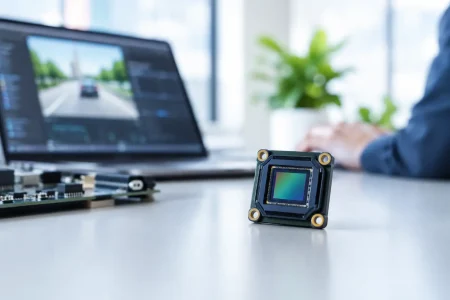
Interface and data requirements matter as well. MIPI CSI-2 modules are common in compact embedded products with compatible processors. USB and UVC camera modules can simplify connection for PCs, industrial controllers, and rapid prototypes. DVP interfaces remain relevant for specific legacy or resource-constrained designs. The focus choice must fit the module interface, available control signals, power budget, and software stack.
Finally, consider production variation. Lens alignment, sensor positioning, adhesive cure, active alignment methods, and final focus inspection influence module-to-module consistency. For fixed-focus cameras, the supplier should control the focal setting and verify image performance at the specified working distance. For autofocus cameras, production testing should confirm actuator travel, focus response, and optical performance across defined focus positions.
A Practical Selection Path for Product Teams
Choose fixed focus when the target range is controlled, capture must be immediate, mechanical durability is critical, and the required depth of field can be achieved with available illumination. This is often the most economical and dependable path for fixed industrial stations and purpose-built embedded equipment.
Choose autofocus when target distance changes substantially, close-up and midrange detail are both required, or end users control camera-to-object distance. It is justified when its ability to retain sharpness directly improves inspection accuracy, usability, or commercial value.
Before releasing a design, test representative modules inside the actual enclosure and at real operating distances. Evaluate image sharpness at the center and corners, focus behavior under expected lighting, startup time, thermal conditions, vibration, and the full production tolerance range. A camera module should be selected as part of an imaging system, not as an isolated specification.
For customized embedded imaging programs, SincereFirst can help teams align sensor selection, lens design, interface requirements, and manufacturing controls with the intended focus architecture. The most effective choice is the one that gives your device repeatable, useful image data every time it is deployed.