

A camera module chosen for a European automation project can look correct on a bench and still delay the product launch. The failure point is often not image quality alone. It may be interface compatibility with the host board, illumination behavior on a reflective part, documentation needed for the finished device, or a supplier that cannot maintain the approved build at volume. For buyers sourcing machine vision modules Europe projects, the specification must connect imaging performance with integration risk, regulatory planning, and manufacturing continuity.
This is especially true for compact robotics, smart retail equipment, medical devices, agricultural systems, security terminals, and industrial inspection tools. These products need more than a sensor attached to a board. They need a controlled optical, mechanical, electrical, and production solution that continues to perform after the prototype phase.
Machine Vision Modules Europe: Start With the Inspection Task
A useful specification begins with the object, defect, distance, motion, and environment the camera must handle. Resolution is necessary, but it is not a complete requirement. A 12 MP module may generate more data than an embedded processor can handle, while a lower-resolution global-shutter module may capture a fast-moving label or component much more reliably.
Define the required field of view and the smallest feature that must be recognized. Then determine the working distance, expected depth variation, part speed, lighting conditions, and acceptable inspection time. These details drive the sensor format, lens selection, shutter type, frame rate, and illumination strategy.
For example, a warehouse robot reading package labels may prioritize wide dynamic range, fast autofocus behavior, and low-light performance. A factory system checking connector pin alignment may require fixed focus, low distortion, controlled illumination, and repeatable mounting geometry. A medical imaging product may place greater weight on color consistency, compact dimensions, thermal management, and traceable production controls.
The right module is therefore application-specific. Buyers should resist comparing camera modules by resolution and unit price alone.
Select the Sensor for Motion, Light, and Compute Limits
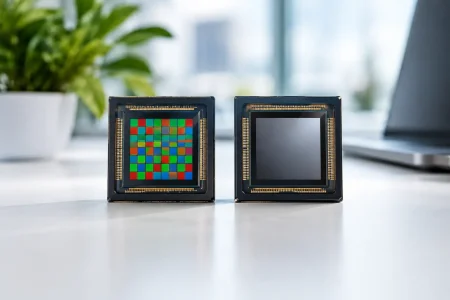
Sensor selection shapes the rest of the vision system. CMOS sensors are widely used because they support compact designs, high frame rates, and efficient power consumption. The trade-off is that sensor output, pixel size, shutter architecture, and onboard processing must be matched carefully to the task.
Global shutter versus rolling shutter
Global shutter sensors expose all pixels at the same time. They are a strong choice for moving objects, robotic guidance, barcode capture, metrology, and production lines where motion blur or geometric distortion creates false decisions. They can cost more and may offer fewer options at certain resolutions, but the operational benefit can justify the investment.
Rolling shutter sensors are often suitable for static scenes, access control terminals, document scanning, and cost-sensitive smart devices. With stable mounting, controlled lighting, and limited motion, they can deliver excellent image quality. If either the camera or target moves quickly, however, rolling shutter artifacts need to be tested under actual operating conditions rather than assumed away.
Resolution is only useful when the full system supports it
Higher resolution increases detail, but it also increases bandwidth, memory demand, processor loading, heat, and storage requirements. A 4K stream may be unnecessary when the algorithm only needs to verify the presence of a component. Conversely, insufficient resolution can make edge detection and character recognition unreliable.
Specify the usable resolution at the required frame rate, not only the sensor’s maximum advertised output. Confirm pixel format, image signal processor requirements, and whether the host platform can process the stream without dropping frames. For AI vision devices, determine whether preprocessing occurs in the camera, the embedded system-on-chip, or an external compute unit.
Choose an Interface That Fits the Product Architecture
The interface influences cable length, data throughput, software integration, mechanical design, and production test. MIPI CSI-2 camera modules are common in compact embedded products because they provide high-speed direct connection to supported processors with low latency and low power consumption. They work best when the camera is close to the host board and the processor platform has mature camera drivers.
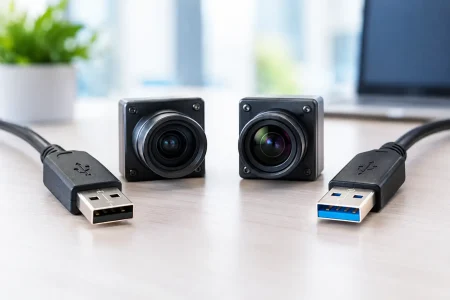
USB 2.0, USB 3.0, and UVC camera modules simplify connection to PCs, edge computers, and many industrial controllers. UVC support can reduce driver effort, which is valuable during prototypes and for systems requiring broad operating-system compatibility. USB 3.0 is generally the stronger option for high-resolution or high-frame-rate applications, while USB 2.0 remains practical for modest data rates and cost-sensitive designs.
DVP modules can be appropriate for legacy embedded platforms or simpler hardware architectures. They require careful attention to signal timing and board routing. For all interfaces, request information about connector type, cable options, pin assignment, supply voltage, electromagnetic behavior, and supported operating systems before finalizing the mechanical design.
Interface selection is not a standalone engineering decision. It should be made jointly by optical, embedded hardware, firmware, and manufacturing teams.
Optics and Illumination Decide Whether the Image Is Usable
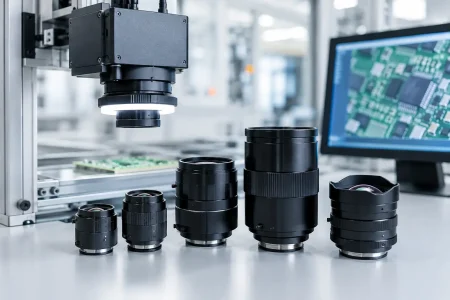
A high-quality sensor cannot compensate for an unsuitable lens or uncontrolled light. Lens focal length determines field of view, while aperture affects light collection and depth of field. Wide-angle lenses can capture a larger area but may introduce distortion that must be calibrated or corrected. Narrower fields of view can improve detail at distance but demand more accurate positioning.
Fixed-focus modules offer stability, lower cost, and simple mechanical integration when working distance is controlled. Autofocus can be beneficial when a device must inspect objects at changing distances, though it adds moving parts, tuning requirements, and possible cycle-time variation. In industrial installations, fixed focus with a properly selected lens is often the more repeatable choice.
Lighting should be specified alongside the module. Backlighting can reveal a part profile; low-angle illumination can expose scratches and raised features; diffuse light reduces glare on shiny surfaces. Test the full optical path with production-like materials. A sample printed with a simulated defect may not behave like the final molded, plated, coated, or reflective component.
Compliance and Documentation Need a Clear Boundary
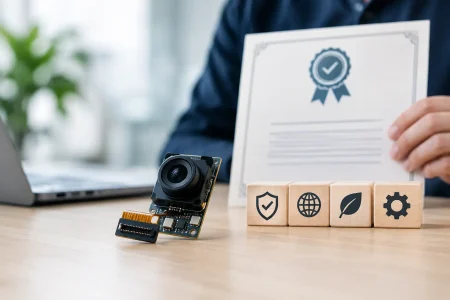
European buyers commonly require evidence related to RoHS, REACH, material declarations, and supply-chain traceability. These requests should be raised early, particularly for products entering regulated markets or serving large OEM programs.
A camera module is usually a component rather than a finished product. CE marking obligations typically apply to the final equipment placed on the market, not automatically to the module itself. Still, the module supplier should provide accurate electrical, mechanical, environmental, and material data that supports the finished-device compliance assessment. If the end product has wireless functions, medical use, safety functions, or strict EMC exposure, system-level validation becomes even more significant.
Documentation quality is a practical procurement issue, not paperwork for its own sake. A controlled datasheet, drawing revision, bill of materials process, test method, and change-notification procedure help protect a program from unapproved substitutions. Ask how long the selected sensor and key components are expected to remain available, and what happens when an end-of-life notice is issued.
Validate the Supplier Beyond the First Sample
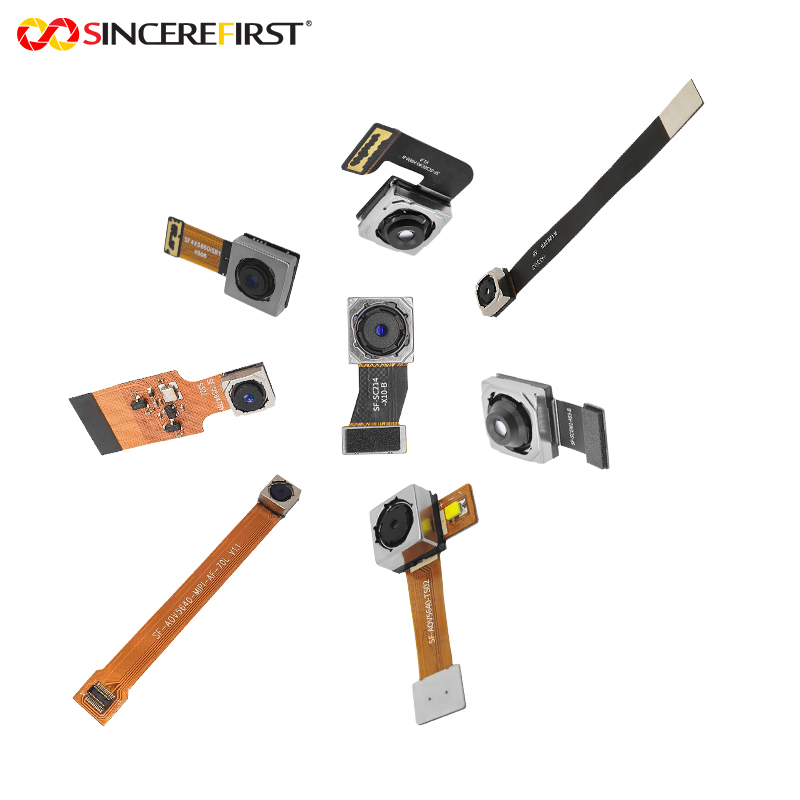
Fast samples are valuable, but a successful prototype does not prove production readiness. Evaluate how the supplier controls incoming components, optical alignment, focus setting, image testing, cleanroom assembly, and final inspection. For specialized modules, confirm whether the supplier can customize FPC shape, connector location, lens holder, cable length, mounting points, firmware parameters, and image tuning without creating an unmanageable design.
A disciplined qualification process should cover more than image quality. Buyers should assess these four areas:
- Sample consistency across multiple units, not one hand-selected sample
- Environmental and reliability expectations, including temperature, vibration, and cable stress where relevant
- Manufacturing capacity, lead-time planning, and traceability for volume orders
- Engineering response time for driver support, optical tuning, and design changes
The most economical module is not always the one with the lowest quoted price. A slightly higher component cost can reduce total program cost when it prevents repeated board revisions, field returns, or a late redesign caused by an unavailable sensor.
Build a Prototype Plan That Produces Useful Answers
Prototype evaluations should reproduce the conditions that will challenge the final device. Test at minimum and maximum working distances, the lowest expected illumination, worst-case target contrast, intended frame rate, and real motion speed. Include cable routing and enclosure constraints because these can affect signal integrity, heat, and mechanical stress.
Image-quality decisions should use measurable acceptance criteria. Depending on the application, this may include modulation transfer performance, distortion, color response, signal-to-noise ratio, exposure repeatability, focus position, dead-pixel limits, or barcode read rate. For AI systems, validate the module with the intended inference model. A camera that appears visually sharp can still reduce model accuracy if its color, noise pattern, or exposure behavior differs from the data used for training.
For European OEMs and integrators, a manufacturer with both standard module supply and custom development can shorten this cycle. SincereFirst supports embedded imaging programs with camera module engineering, optical component capability, rapid sample development, and scalable production control.
A well-specified module gives the vision algorithm a dependable image to work with. That is the practical foundation for a camera system that can move from a promising demonstration to repeatable performance on the factory floor, in the field, and across production volumes.